7
5. Measuring field strength level
• Turn on a pulsed 1kHz signal and increase the input gain of the amplifier input the
source is connected to until the AGC becomes active. Set the gain until three blue
LEDs light up. The red +12dB LED should not light up.
• Make sure that the MLC is turned off.
• Add current to the system by turning up the current control about 3/4.
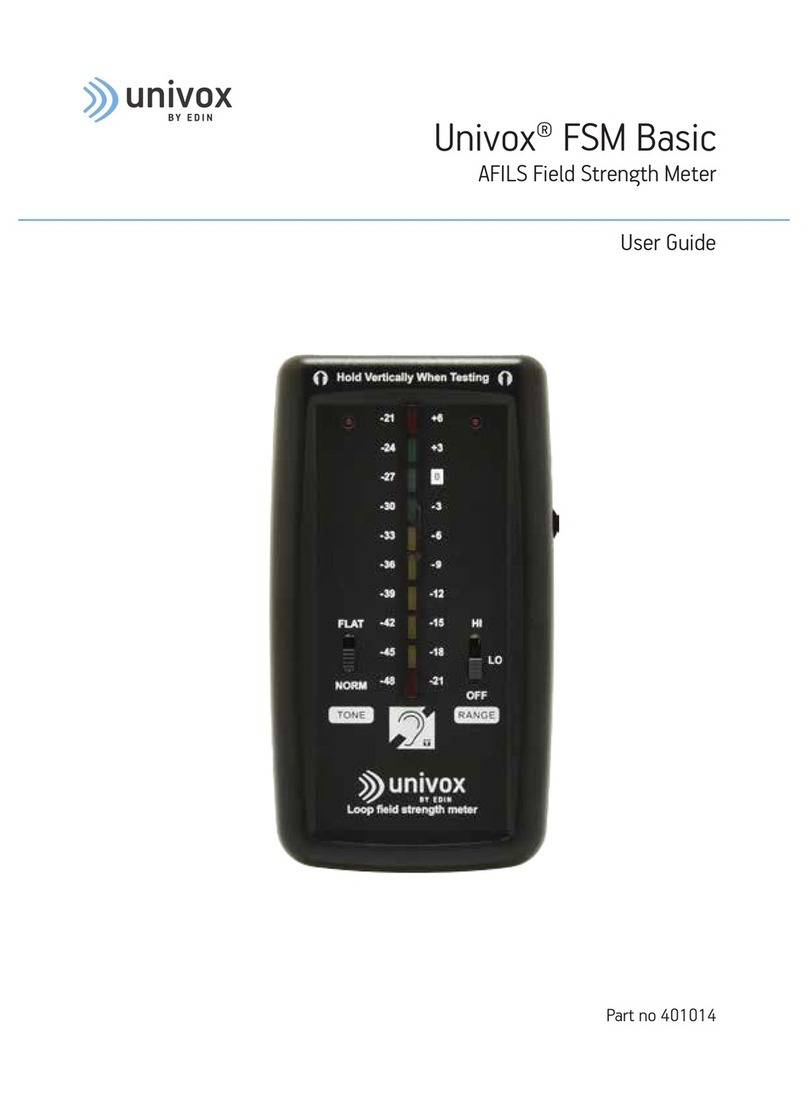
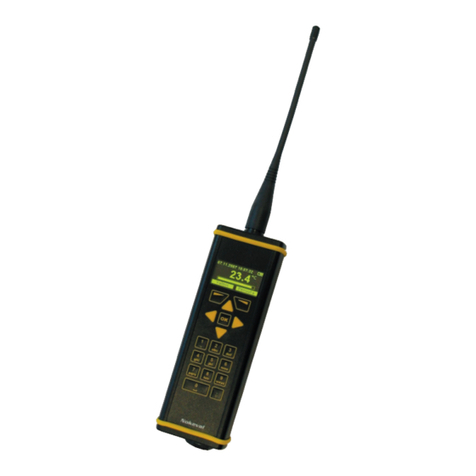
• With the FSM set to HIGH RANGE and FLAT frequency response, take
measurements with the FSM held in an upright vertical position at any of the
defined test points and intended height of use. Adjust the current output until the
FSM indicates that the field strength is 0dB. Check all test points and make any
adjustment necessary to achieve ±3dB across all test points.
6. Measuring frequency response
• Lower the output by 12dB.
• Play the Multi Frequency test signal and take readings. Listen with headphones
to determine which signal is playing. The multi frequency test signal consists of
pulsed 100Hz, 1kHz and 5kHz sine waves played in sequence.
• Record the measurements. 100Hz and 5kHz should be within ±3dB relative to
1kHz at each test point. If needed adjust the frequency response by using the
MLC.
• Aer the test is complete, increase the output by 12dB.
7. Live test
• Play a speech emulated test signal, HA speech or ITU, a prerecorded audio track
or speak into a microphone.
• At each test point, wait for and measure the peak value. The live audio signal
should peak at 0dB at one test point. Other test points should peak at ≥6dB.
• If needed, adjust the current output.
8. Measuring overspill
• If needed define test points outside of the intended area of use.
• Apply a pink noise test signal in the system.
• Set the FSM to LOW RANGE.
• Take measurements. The overspill is considered background noise and
measurements should be carried out whenever there is concern for overspill into
adjacent areas also fitted with induction loops or up on a stage, where live music
may be performed.
• If the FSM does not indicate any signal present, switch to HIGH RANGE and turn
FLAT off to verify that there is no high-level background noise emanating from
the system.
• Note: When checking overspill on a stage, the FSM should be tilted vertically
with the bottom of the FSM facing the area where an audience may be seated.
The FSM should be held waist high to emulate the position of an electric guitar.
The pickup coil of an electric guitar is susceptible to magnetic fields in this
orientation.
9. Once you have completed the commissioning, hand over the report to the venue,
and make sure to explain how the system operates and functions.