FC-0 Manual, Rev 10.11.00
5
ASSEMBLY
Overview
This FC-0 Faraday cage has been pre-assembled at the factory as a quality control
measure but is shipped disassembled to reduce transportation costs. These savings are passed
to the customer.
The general procedure for assembly is as follows:
a) Position the Faraday cage base on your vibration isolation table.
b) Complete the frame of the cage by attaching the back, front, and top panels.
c) Attach the side panels to the frame.
d) Make adjustments and electrical connections.
Components and tools
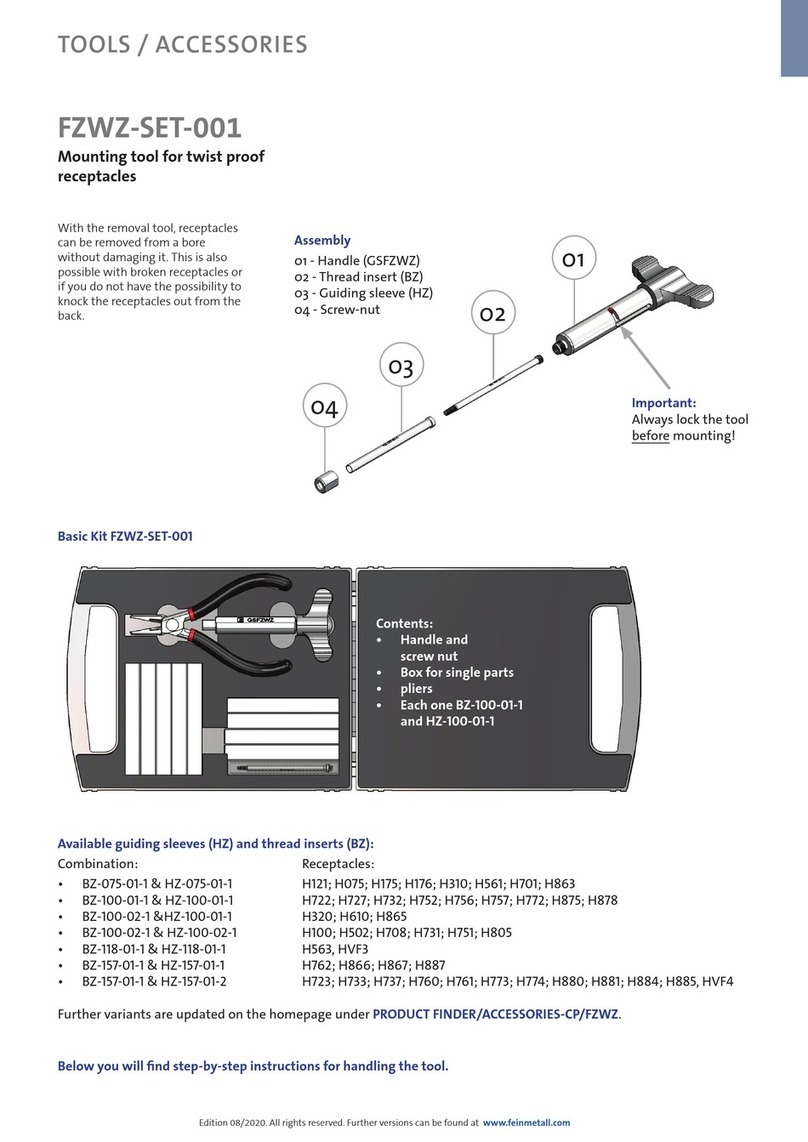
The unassembled Faraday cage is comprised of the following components:
•
CAGE BOTTOM
(base or pan): black, magnetic steel construction.
•
CAGE TOP
: black, has large door which opens to front
•
REAR PANEL
: black, has large brass grounding block and two small rectangular openings
for electrical access to cage interior.
•
SIDE DOOR PANELS
(2): blue-gray, left and right sides, large doors open to front.
•
FRONT DOOR PANELS
(2): blue-gray, left and right sides, fanfold doors, right side door
identifiable by Warner logo.
• package containing: 3/8” nuts with attached lock-washers (34)
• this manual.
You will need a 3/8” box-end wrench to complete assembly. The cage can be easily
assembled by a single user due to its slot-and-fit design.
Initial assembly
Unpacking
Begin by completely unpacking the cage from its shipping container. Check to ensure all
components are present and undamaged.
Placement
In general, the effectiveness of a vibration isolation table is optimized by placing it where
large amplitude building vibrations are at a minimum. These locations include the building
ground or basement floors, or near a main support column on upper floors. Unfortunately,
the best placement of a table is a pragmatic effort and you may find it necessary to relocate
the bilayer workstation if the noise contribution from the building is excessive.
Warner Instruments, Inc.