manuals.online logo
Brands
  1. Home
  2. •
  3. Brands
  4. •
  5. Xtant
  6. •
  7. Stereo Equalizer
  8. •
  9. Xtant PQM User manual

Xtant PQM User manual

Other Xtant Stereo Equalizer manuals

Xtant LFQ User manual

Xtant

Xtant LFQ User manual

Xtant PQM User manual

Xtant

Xtant PQM User manual

Xtant P500 How to use

Xtant

Xtant P500 How to use

Xtant P500 User manual

Xtant

Xtant P500 User manual

Xtant LFQ User manual

Xtant

Xtant LFQ User manual

Popular Stereo Equalizer manuals by other brands

Pyramid PM8600 owner's manual

Pyramid

Pyramid PM8600 owner's manual

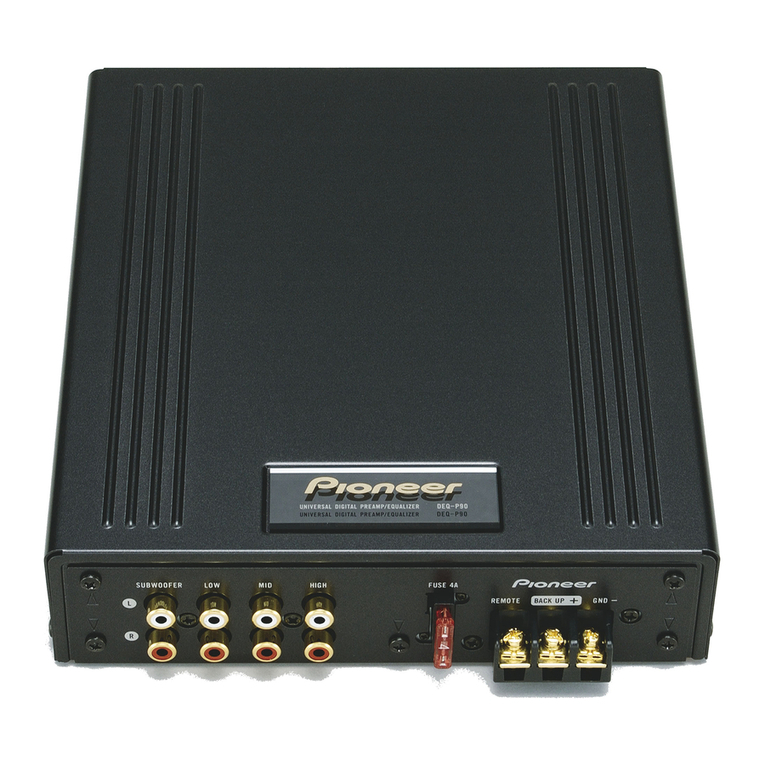
Pioneer DEQ-P90 owner's manual

Pioneer

Pioneer DEQ-P90 owner's manual

Roland E-660 owner's manual

Roland

Roland E-660 owner's manual

elysia mpressor manual

elysia

elysia mpressor manual

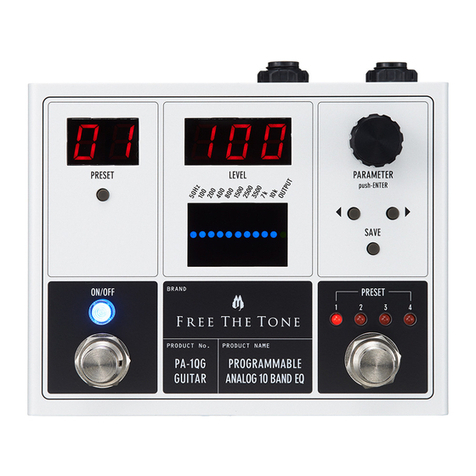
Free The Tone PA-1QG quick start guide

Free The Tone

Free The Tone PA-1QG quick start guide

Kenwood KRC-999II instruction manual

Kenwood

Kenwood KRC-999II instruction manual

AudioBahn AEX250X operating instructions

AudioBahn

AudioBahn AEX250X operating instructions

Onkyo EQ-08 Service manual

Onkyo

Onkyo EQ-08 Service manual

Samson D3500 owner's manual

Samson

Samson D3500 owner's manual

Me WM8 installation instructions

Me

Me WM8 installation instructions

Rob Papen RP-EQ user guide

Rob Papen

Rob Papen RP-EQ user guide

Kenwood GE-4030 instruction manual

Kenwood

Kenwood GE-4030 instruction manual

Rane RE 27 Operating and service manual

Rane

Rane RE 27 Operating and service manual

SPL SX2 owner's manual

SPL

SPL SX2 owner's manual

Rane MQ 302S Operator's manual

Rane

Rane MQ 302S Operator's manual

Aphex 9901 operating guide

Aphex

Aphex 9901 operating guide

Behringer Ultragraph Pro FBQ6200 Technical specifications

Behringer

Behringer Ultragraph Pro FBQ6200 Technical specifications

Black Rooster Audio VEQ-5 OVERVIEW & INSTRUCTIONS

Black Rooster Audio

Black Rooster Audio VEQ-5 OVERVIEW & INSTRUCTIONS

manuals.online logo
manuals.online logoBrands
  • About & Mission
  • Contact us
  • Privacy Policy
  • Terms and Conditions

Copyright 2025 Manuals.Online. All Rights Reserved.

The PQM is a one band parametric equalizer Adjustments are made using
the three circuit board mounted potentiometers These controls are
simple to operate and provide a ide range of adjustment
FFRREEQQUUEENNCCYY CCOONNTTRROOLL is used to select
the center frequency for equalization
A clock ise rotation increases frequency
hile a counterclock ise rotation decreases frequency
FFRREEQQUUEENNCCYYMMOODDUULLEE::The supplied frequency
modules divide the audible frequency range into
three bands The range of the modules are:  Hz
to  Hz  Hz to  kHz and  kHz to  kHz
Simply install one of the modules and its frequencies are selectable
via the FFRREEQQUUEENNCCYYCCOONNTTRROOLL
““QQ”” AADDJJUUSSTTMMEENNTT::“Q” is the property of
an equalizer that determines the range of
frequencies affected on either side of the cen
ter frequency “Q” is equal to the center frequency divided by the
band idth As “Q” goes up band idth decreases The PQM’s “Q”
adjustment ranges from a narro band idth of  to a very broad
band idth of  A clock ise rotation increases “Q” hile a coun
terclock ise rotation decreases “Q”
BBOOOOSSTT//CCUUTT::This control is used to boost
or cut the level of the center frequency
Its adjustment ranges from  ddBB ooff ccuuttat
full counterclock ise rotation to  ddBB ooff
bboooossttat full clock ise rotation Flat response ( dB – no cut or
boost) occurs at mid rotation hen the slot on the control is in
the horizontal position
Owner’s Manual – PQM
1 Band Parametric Equalizer
7676 South 46th Street Phoenix, AZ 85040
602.449.8268 Xtant.com
# NDM132
PQM OPERATION
All manuals and user guides at all-guides.com
all-guides.com
INSTALLING THE PQM
STEP 1: Locating the Connectors
INSTALLING THE PQM
STEP 2: Adjusting the PQM
INSTALLING THE PQM
STEP : Final Installation of the PQM
A Turnoff amplifier Remove PQM from its “vertical”
mounting position See Step 
B Align the hite standoff ith the hole on the rear of the
PQM circuit board Next align the blocked receptacle ith
the missing pin on the mounting port Press the PQM onto
the port and secure it to the standoff by applying do n
ard pressure
C Turn amp on and audition the system If further adjustment is
necessary the PQM may be adjusted hen mounted in this
final mounting position
A Remove the PQM from the packaging and inspect the
circuit board
B Locate the header connectors soldered onto the top and
bottom of the circuit board See illustration 
C Notice that one of the openings on both header connectors is
blocked by hite filler material The PQM’s mounting
system utilizes this blocked receptacle as the “key” to insure
proper positioning hen installing the PQM onto the
amplifier’s mounting port See illustration  and 
D During the “tuning process” the PQM may be installed
“vertically” using the right angle header connector See illustration 
Ho ever the final mounting position must be in a “horizontal”
position (using the header connector on the bottom of the circuit
board) to allo the cover to be reattached See illustration 
The PQM is designed to be adjusted ith
the aid of a Real Time Spectrum Analyzer
The analyzer ill provide visual feedback
hen follo ing this simple procedure
A Plugin one of the supplied frequency
modules into the PQM’s module socket It is
from this module’s range of frequencies
that you ill select your center frequency
B Turnoff amplifier Remove amplifier
cover and locate the Accessory Port
C Remove the t o header jumpers and
locate the missing pin (“key”) on the port
D Align the blocked receptacle on the
right angle header connector ith the
missing pin and press the PQM onto the
mounting port Note: after adjusting you
must follo Step  for final installation
E Set system to a moderate volume level
and play pink noise
F Rotate the boost/cut control clock ise
(fully) to  dB The RTA’s display ill
no sho you the position of the center
frequency and “Q” settings of the PQM
G Rotate the frequency control to the frequency you ish to adjust
H Next rotate the “Q” control to the idth of the dip or peak in
response that you are equalizing
I Finally adjust the gain control to achieve the desired response curve
STANDOFF MOUNTING HOLE
BOOST/CUT FREQUENCY
VERTICAL HEADER
ACCESSORY PORT
FREQMODULE
SOCKET
“Q”
iilllluussttrraattiioonn 
iilllluussttrraattiioonn 
BOTTOM OF PQM CIRCUIT BOARD TOP OF PQM CIRCUIT BOARD
HEADER CONNECTOR
LOCATING “KEY”
RIGHT ANGLE
HEADER CONNECTOR
iilllluussttrraattiioonn 

All manuals and user guides at all-guides.com