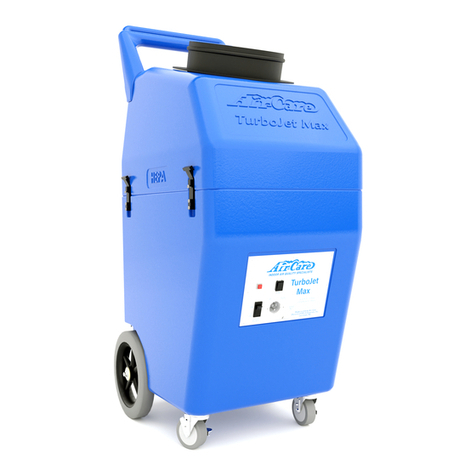
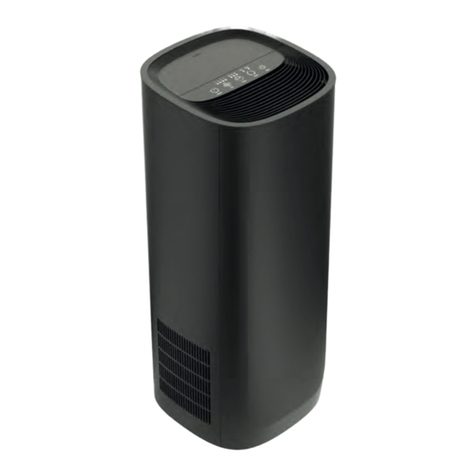
The TurboJet requires a minimum amount of maintenance, normally limited to cleaning or replacing
filters as they become filled with dirt and debris. Cleaning the 1st and 2nd stage filters daily will extend
the life of the 3rd stage HEPA filter.
1st and 2nd Stage Filter Replacement
1. The 1st stage disposable polyester pad is mounted in
the top section of the TurboMax and held in place with a
metal bracket at one end and a flip latch on the other end.
They should be cleaned when visibly dirty and at the end
of each workday. The duct debris captured in the upper
section and first stage filter can be collected in a trash bag
placed over the 12” Hose inlet and secured with the Velcro
strap.
Unlatch the top section and tip it back on its hinge so
the debris falls into the bag from the upper section of
the TurboJet and its first stage filter. Follow all local
regulations on disposing of material removed from the
ducts. In critical areas, such as hospitals, it is required
to cover the inlet with 6-mil plastic when the job is
completed to prevent the collected debris from escaping
and contaminating the area while it is removed from the building to be emptied in a non- critical area
where the trash bag can be disposed of safely. The first stage filter can be put into the same trash bag
for disposal.
2. When necessary, wash the 2nd stage filters with a garden
hose and nozzle at full force. First rinse in the opposite
direction of the airflow, then rinse both sides. Occasionally, a
degreaser such as Air-Care C.E.F electrostatic filter cleaner
may be required to restore this filter to its’ peak performance.
Let the filter air dry before reinstalling into the unit.
Note: When there is not suicient time to allow filters to
dry before using the TurboJet, simply dry vacuum the loose
debris o of the filters’ surfaces or use compressed air in an
appropriate outdoor area. Wear a protective mask.
When there is little “pull” at the inlet, and the 1st and 2nd
stage filters are clean, the 3rd stage HEPA filter should be
replaced (approximately once or
twice per year, if other filters are cleaned regularly). There is no safe way to clean the HEPA filter
without a risk of damaging it.
NOTE: NEVER WASH THE HEPA FILTER WITH WATER.
First Stage Filter
Second Stage Filter