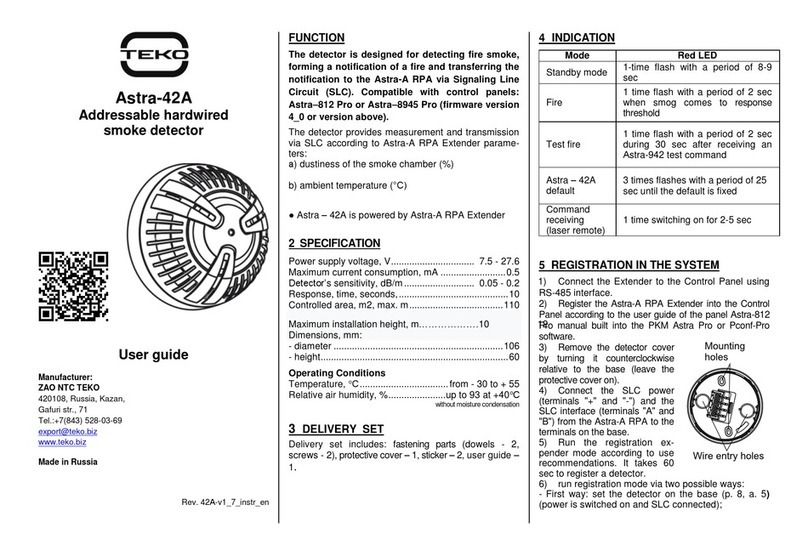
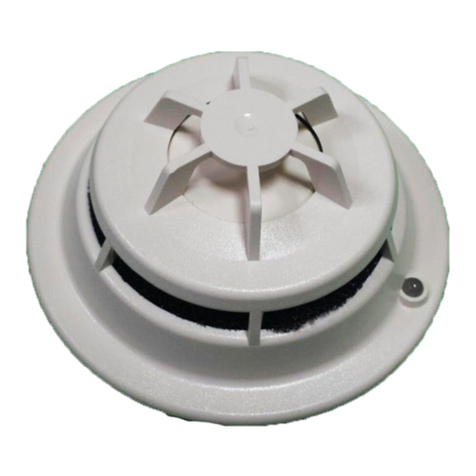
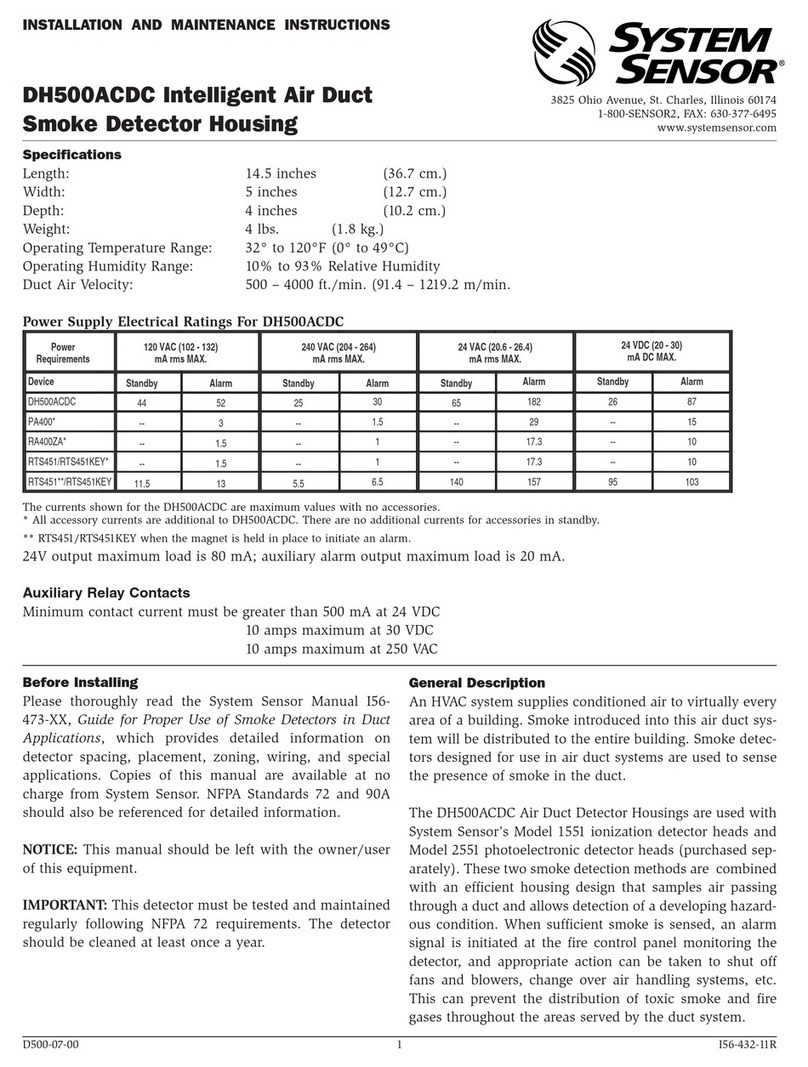
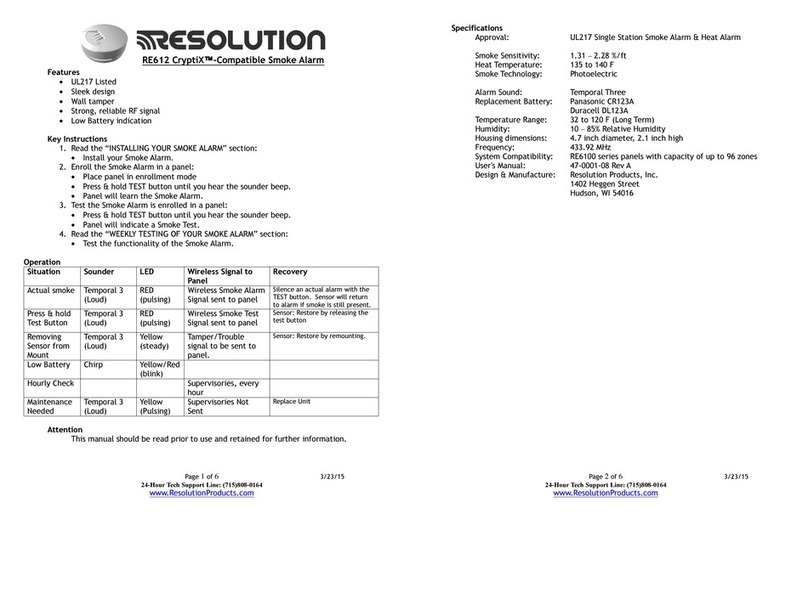
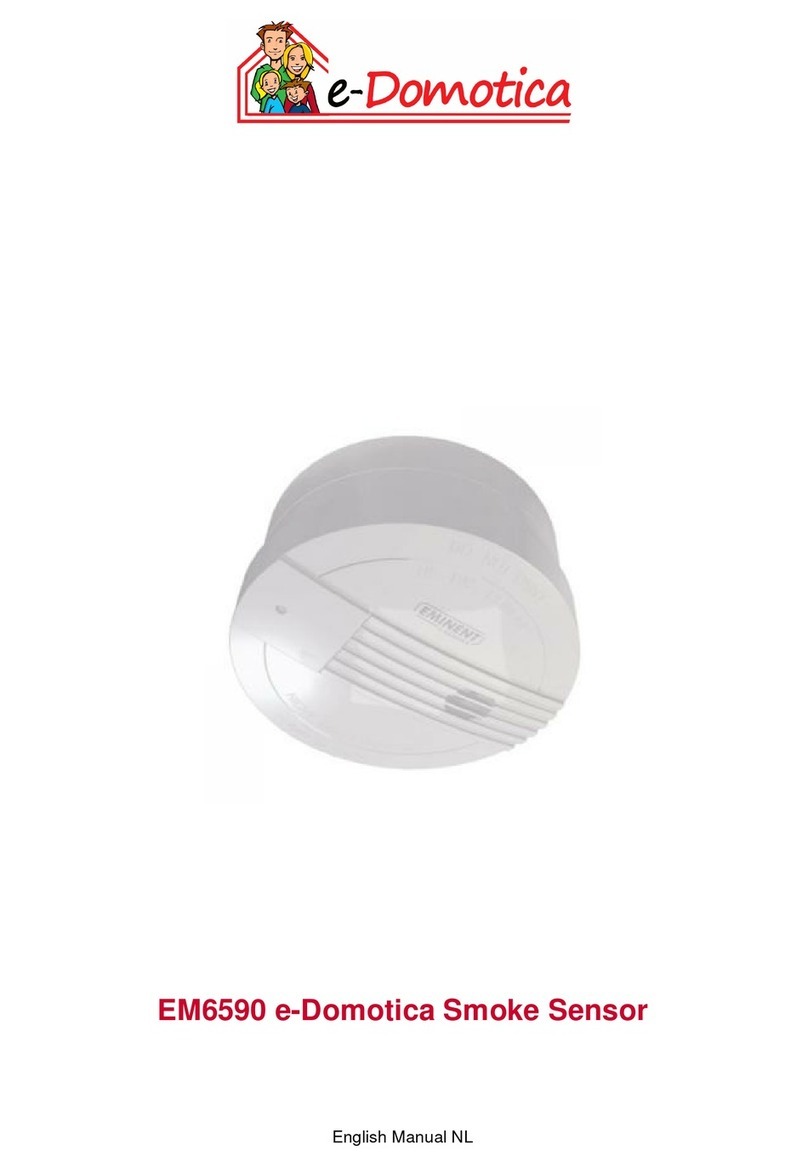
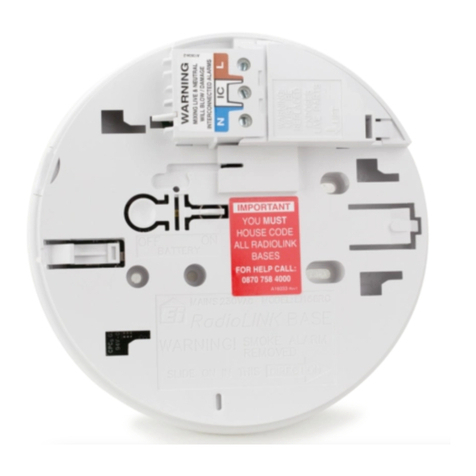
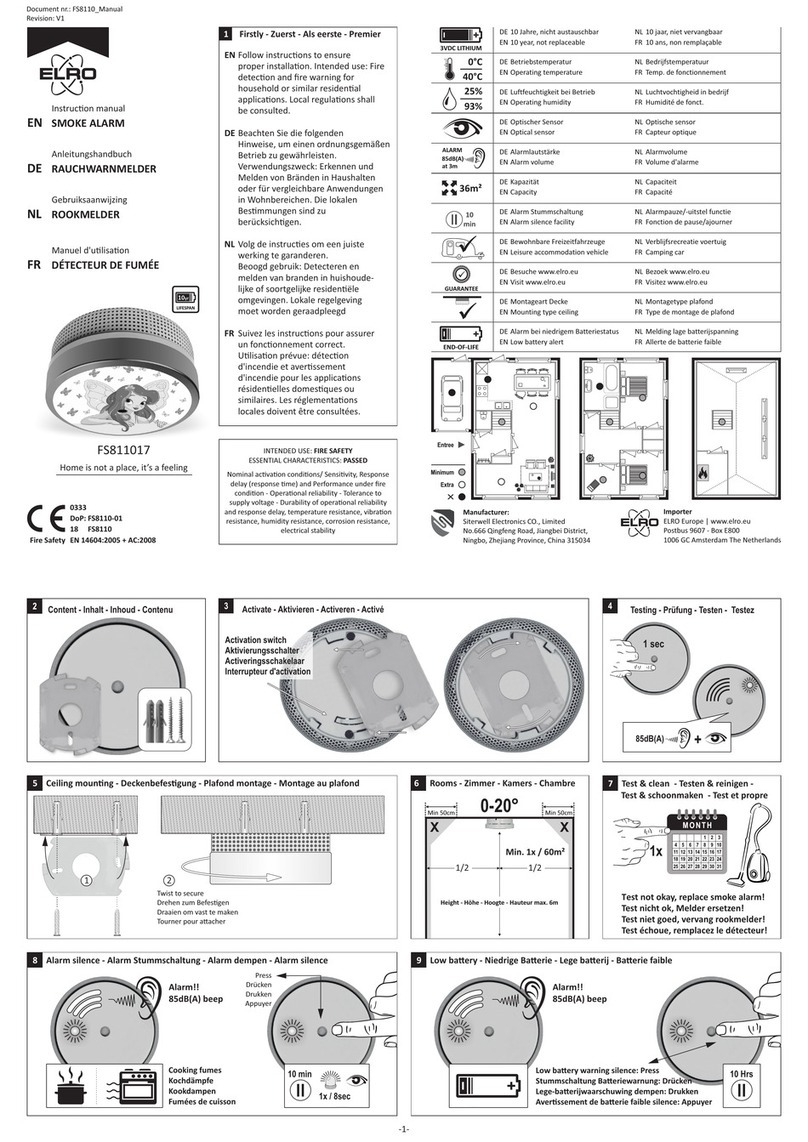
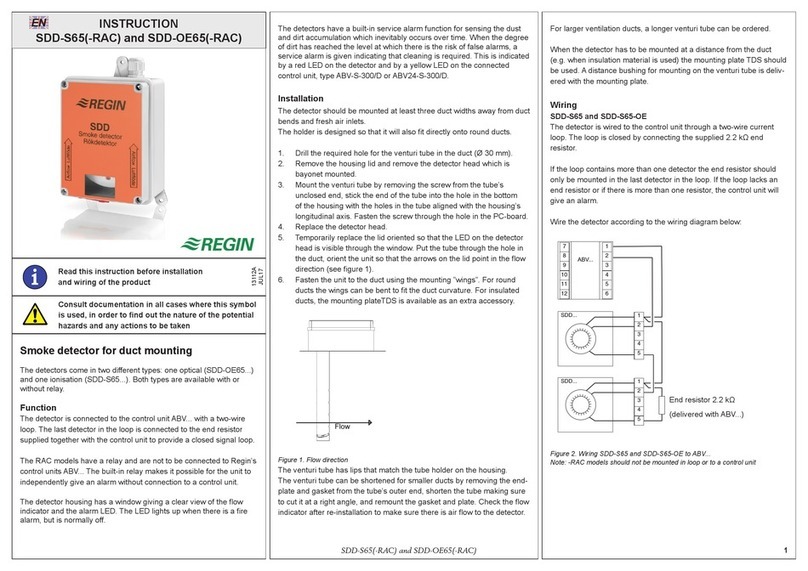
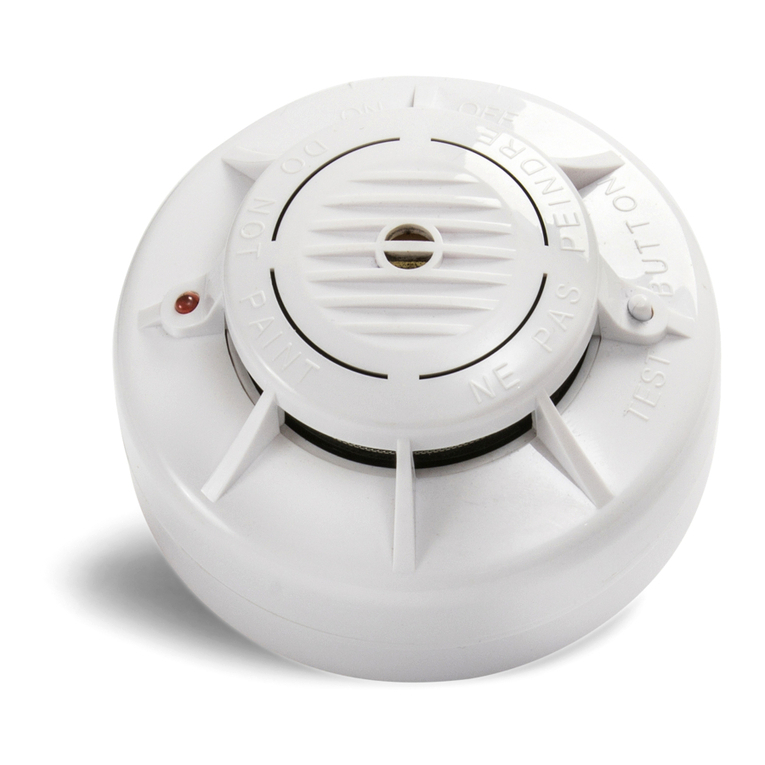
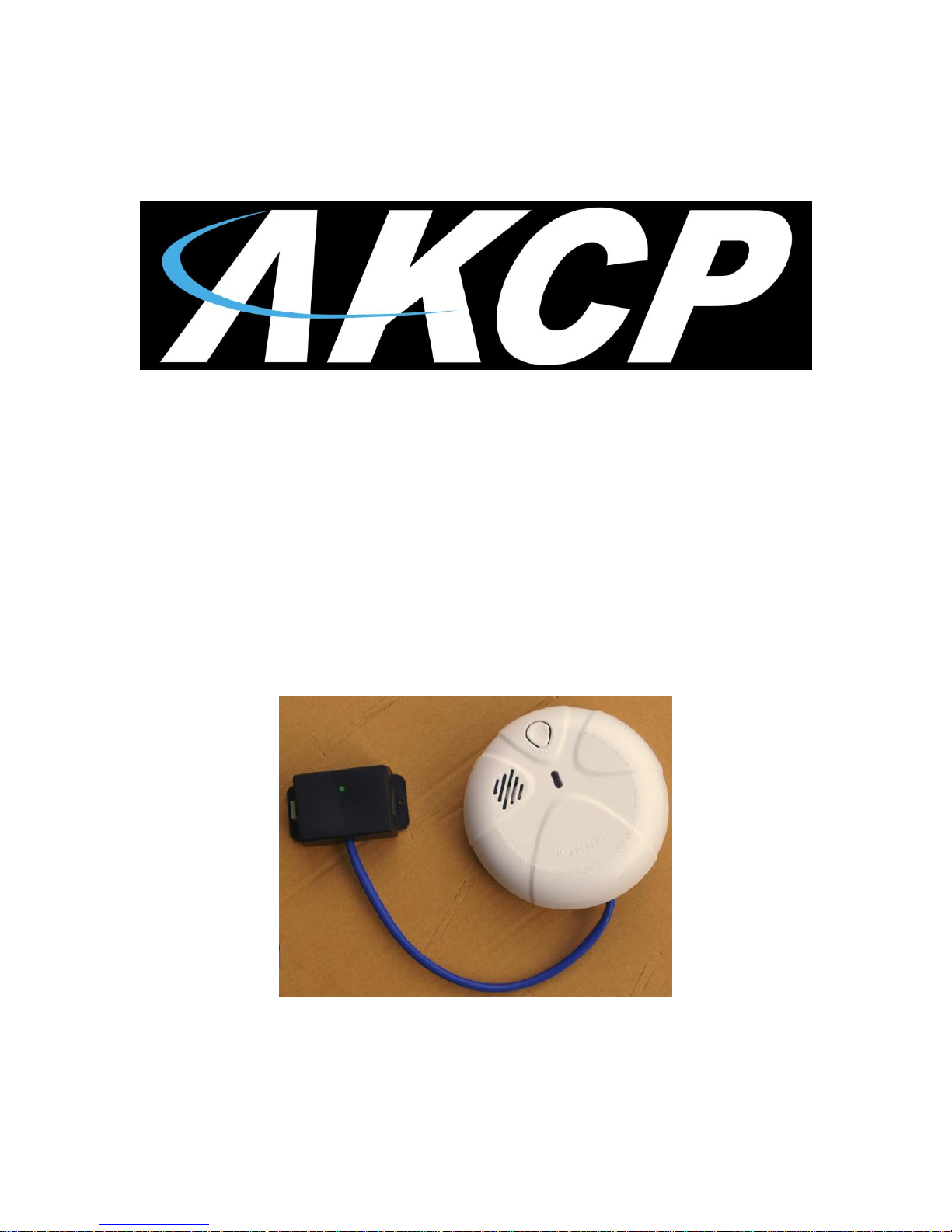
Smoke Detector
- 3 -
oThe unit auto detects the presence of the Smoke Detector (as Dry Contact sensor)
oDisconnect alarm (Note that the smoke detector will be detected as a Dry Contact
sensor. See more on this in the configuration of the sensor).
Specifications:
oSensor type - open/closed contact switch
oDetection type: Photoelectric Chamber
oPower Source: 9 VDC
oStandby Current: 15 uA max
oAlarm Current: 30 mA max
oAlarm Sound Level: 85 dB at 3 m
oOperating Temp: 5° C - 45° C
oAmbient Humidity: 10% - 90%
oSensitivity to Smoke: 3 - 6% Obs/m
oSize: 110 mm Ø
oAmbient Humidity: 10% to 90%
oMaximum CAT5/6 Extension Cable Run Length: 90 meters or 300 feet (1000 feet
when connected to the X20 or X60 dry contact inputs).
Important Safety Information
Observe and follow all local and national electrical and building codes for installation.
This smoke detector is designed to be used inside a single room only. In multi-room buildings,
each individual room should have its own smoke detector. This smoke detector is not a substitute
for a complete fire alarm system.
Smoke may not reach the smoke detector for many reasons. For example, if a fire starts in a
remote part of a building or home, on another level, wall, roof, or on the other side of a closed
door, smoke may not reach the smoke detector in time to alert personnel. In other words the
smoke detector will not promptly detect a fire except in the area or room in which it is installed.
The smoke detectors can only sound their alarms when they detect smoke. The smoke detectors
detect combustion particles in the air. They do not sense heat, flame , or gas. This smoke
detector is designed to give an audible warning of a developing fire. However, many fires are fast-
burning, explosive, or intentional. Others are caused by carelessness or safety hazards. So
always keep in mind that smoke may not reach the smoke detector alarm QUCKLY ENOUGH.
The smoke detectors have limitations. This smoke detector is not foolproof and is not warranted
to protect lives or property from fire. Smoke alarms are not a substitute for insurance. Business
owners are responsible for insuring their own lives and property. In addition it is possible for the
smoke alarm to fail at any time. For this reason, you must test the smoke detectors weekly and
replace them every 10 years.