33
• Study, understand, and follow all
instructionsprovidedwithandonthis
devicebeforeuse.
• All WARNING statements must be
carefullyobserved to help prevent
personalinjury.
•
No alteration shall be made to this
device.
• Alwayswear protective gearwhen
operatinghydraulicequipment.
• Keephydraulicequipmentawayfrom
ames and heat. Hydraulic uid can
igniteandburn.Donotoperateifleaks
aredetected.
•
Crush Hazard. Keephandsand feet
away from loading area.Avoid pinch
points or crush points that can be
created by the load, cylinder, or any
equipmentofsystem.
•
Toavoidcrushingandrelatedinjuries:
NEVERwork on, under oraround a
liftedloadbeforeitisproperlysupported
byappropriate mechanical means.
Neverrelyonhydraulicpressurealone
tosupportload.
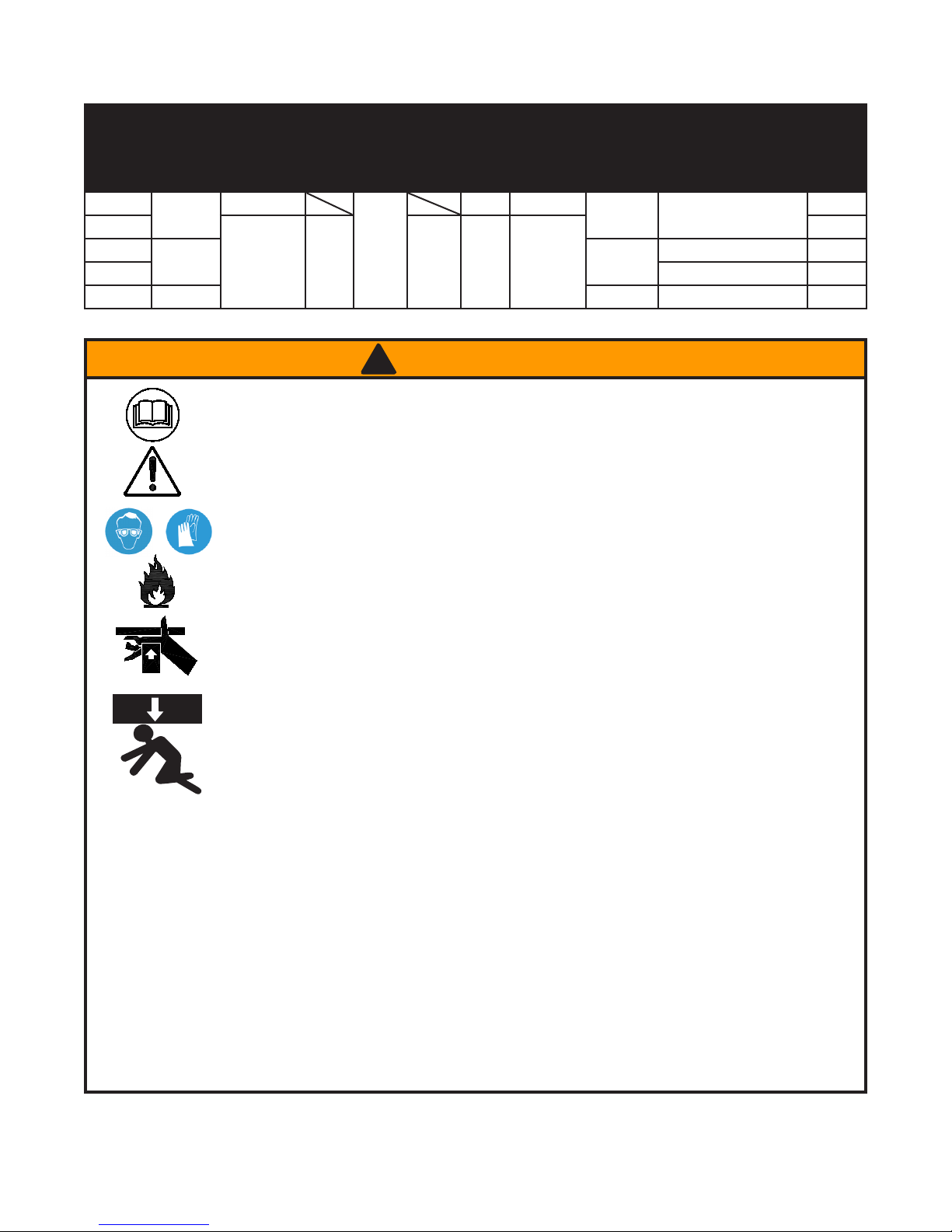
!WARNING
HYDRAULIC PUMPS
•
Theusermustbeaqualiedoperatorfamiliar withthe correct
operation,maintenance,anduseofpumps.Lackofknowledge
inanyoftheseareascanleadtopersonalinjury.
• Donotexceedratedcapacityofthepumporanyequipmentin
thesystem.
• Neverattempttoliftaloadweighingmorethanthecapacityof
thecylinder.
• Donotsubjectthepumpanditscomponentstoshockloads.
• Bursthazardexists if hose orconnectionpressureexceeds
ratedpressure.
•
Inspectpump,cylinder,hosesandconnectionsbeforeeachuse
topreventunsafeconditionsfromdeveloping.Donotuseifthey
aredamaged,alteredorinpoorcondition.Donotoperatethe
systemwithbentordamagedcouplerordamagedthreads.
• Neverhold orstand directlyinline withany hydraulic
connectionswhilepressurizing.
•
Usegaugeorotherloadmeasuringinstrumenttoverifyload.
• Never attempt to disconnect hydraulic connections under
pressure.Releasealllinepressurebeforedisconnectinghoses.
•
Useonlyapprovedaccessoriesandapprovedhydraulicuid.
•
NeverattachANYcomponentnotauthorizedbymanufacturer.
• Alwaysensurethatthechosenapplicationisstabletoworkon
andaround.
• Donotconnecttoapplicationwhichcanreturnmoreoiltothe
reservoirthanthepumpreservoircanhold.
• Donotconnectpumptohydraulicsystempoweredbyanother
pump.
• This device is not suitable for use as support device! As
thesystemloadislifted,useblockingandcribbingtoguard
againstafallingload.
• All personnel must be clear before lowering load or
depressurizingthesystem.
• Nevertrytodisassembleahydrauliccylinder,referrepairsto
qualied,authorizedpersonnel.
HYDRAULIC HOSES & FLUID TRANSMISSION LINES
• Avoidshortrunsofstraightlinetubing.Straightlinerunsdo
notprovideforexpansionandcontractionduetopressure
and/ortemperaturechanges.
• Reduce stress in tube lines. Long tubing runs should be
supportedbybracketsorclips.Beforeoperatingthepump,
tighten all hose connections with proper tools. Do not
overtighten. Connections should only be tightened securely
and leak-free. Overtightening can cause premature thread
failureorhighpressurettingstoburst.
• Should a hydraulic hose ever rupture, burst or need to be
disconnected,immediatelyshutoffthepumpandreleaseall
pressure.Neverattempttograspaleakingpressurizedhose
with your hands. The force of escaping hydraulic uid can
inictinjury.
• Donotsubjectthehosetopotentialhazardsuchasre,sharp
objects,extremeheatorcold,orheavyimpact.
• Donotallowthehosetokink,twist,curl,crush,cutorbendso
tightlythattheuidowwithinthehoseisblockedorreduced.
Periodicallyinspectthehoseforwear.
• Donotpull,positionormovesetupbythehose.
•
Hose material and coupler seals must be compatible with
hydraulicuidused.Hosesalsomustnotcomeincontactwith
corrosivematerialssuchasbatteryacid,creosote-impregnated
objectsandwetpaint.Neverpaintacouplerorhose.
•
FAILURE TO HEED THESE WARNINGS MAY RESULT IN
PERSONALINJURYASWELLASPROPERTYDAMAGE.
SPECIFICATIONS
Model
Usable
Oil
Capacity
(in3)
Pump Type
Pressure
Rating (psi)
Oil
Displacement
per Stoke (in3)Operating
Force
(lbs)
Mounting
Plate
Holes
Distance
(in)
Pump Size
(L x W x H)
Weight
(lbs)
1st
stage
2nd
stage
1st
stage
2nd
stage
P1201S 67
Singlespeed
10,000
0.13 89 3.74
23.07”x5.24”x6.73”
20.0
P1201
Twospeed 200 0.81 0.14 99
20.5
P2301
128
3.54
23.98”x5.31”x6.81”
27.7
P2301M
27.44”x4.72”x6.81”
32.3
P4301
250
3.74
22.87”x5.31”x7.68”
37.6