Page 7 of 18
Your local authority is responsible for implementing the Clean Air Act 1993 including designation and supervision of
smoke control areas and you can contact them for details of Clean Air Act requirements.
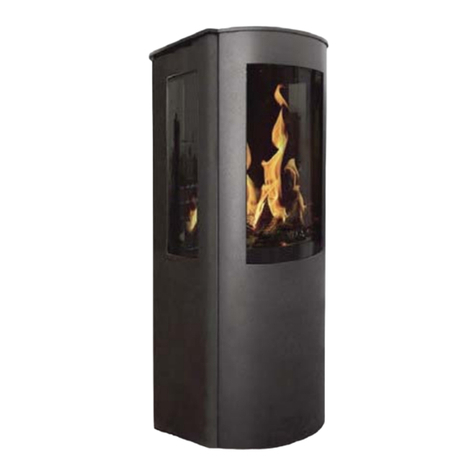
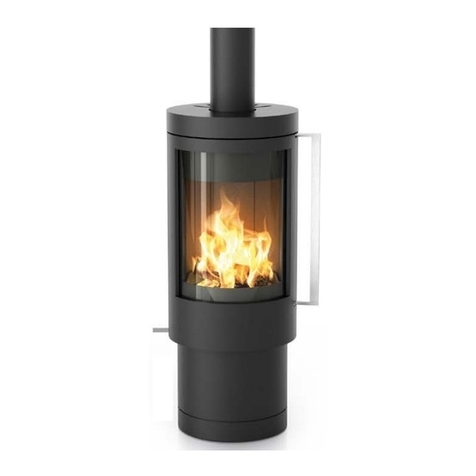
The Panamera and Vega Panamera stoves may be used in smoke control areas strictly in accordance with these
instructions and (UK) when fitted with a modified air control to prevent closure of the secondary air control beyond
10% open when burning untreated wood logs. Anthracite and other Authorised smokeless fuels (Authorised under
Section 20 of the Clean Air Act 1993) may also be used in smoke control areas. RoI: Wood logs, smokeless fuels or
peat briquettes, but not petroleum coke (Control of Atmospheric Pollution Regulations 1970)
Refuelling on to a low fire bed: If there is insufficient burning material in the firebed to light a new fuel charge, excessive
smoke emission can occur. Refuelling must be carried out onto a sufficient quantity of glowing embers and ash that the
new fuel charge will ignite in a reasonable period. If there are too few embers in the fire bed, add suitable kindling to
prevent excessive smoke.
Fuel overloading: The maximum amount of fuel specified in this manual should not be exceeded, overloading can cause
excess smoke.
Operation with door left open: Operation with the door open can cause excess smoke. The appliance must not be
operated with the appliance door left open except as directed in the instructions.
Dampers left open: Operation with the air controls or appliance dampers open can cause excess smoke. The appliance
must not be operated with air controls or, appliance dampers left open except as directed in the instructions.
STOVE SAFETY
Installers must work accordingly under the Health and Safety at Work Act 1974.
This appliance becomes extremely hot and can produce poisonous gases. A fire guard should
be used if children or the infirm are present. The installer is required to exactly follow these
instructions and to completely comply with all relevant local, national and international
standards.
Installing a stove is a ‘controlled service’, the law expects that it is either supervised by a qualified
installer or that the building inspector is informed. Check with your local authority.
Health and Safety Precautions: Special care must be taken when installing the stove such that the
requirements of the Health and Safety at Work Act are met.
Handling: Adequate facilities must be available for loading, unloading and site handling.
Fire Cement: Some types of fire cement are caustic and should not be allowed to come into
contact with the skin. In case of contact wash immediately with plenty of water.
Asbestos: This stove contains no asbestos. If there is a possibility of disturbing any asbestos in
the course of installation then please seek specialist guidance and use appropriate protective
equipment. Metal Parts: When installing or servicing this stove care should be taken to avoid
the possibility of personal injury.
Weight: Your stove is heavy –take great care when moving it and ensure that the intended
fireplace can support the weight –consider fitting a load distributing plate.
Fireguard Safety: A fireguard must be used in the presence of children, and old and/or infirm
people. The fireguard should be manufactured in accordance with BS 8423:2002, Fireguards for
use with solid fuel appliances.
Your Chimney
Once warm, your chimney makes the gas inside it rise, pulling fresh air into the stove to make it
work. Your chimney must:
⚫Generate a draught in use of at least 12 Pa (0.05ins wg) and not in excess of 25 Pa.