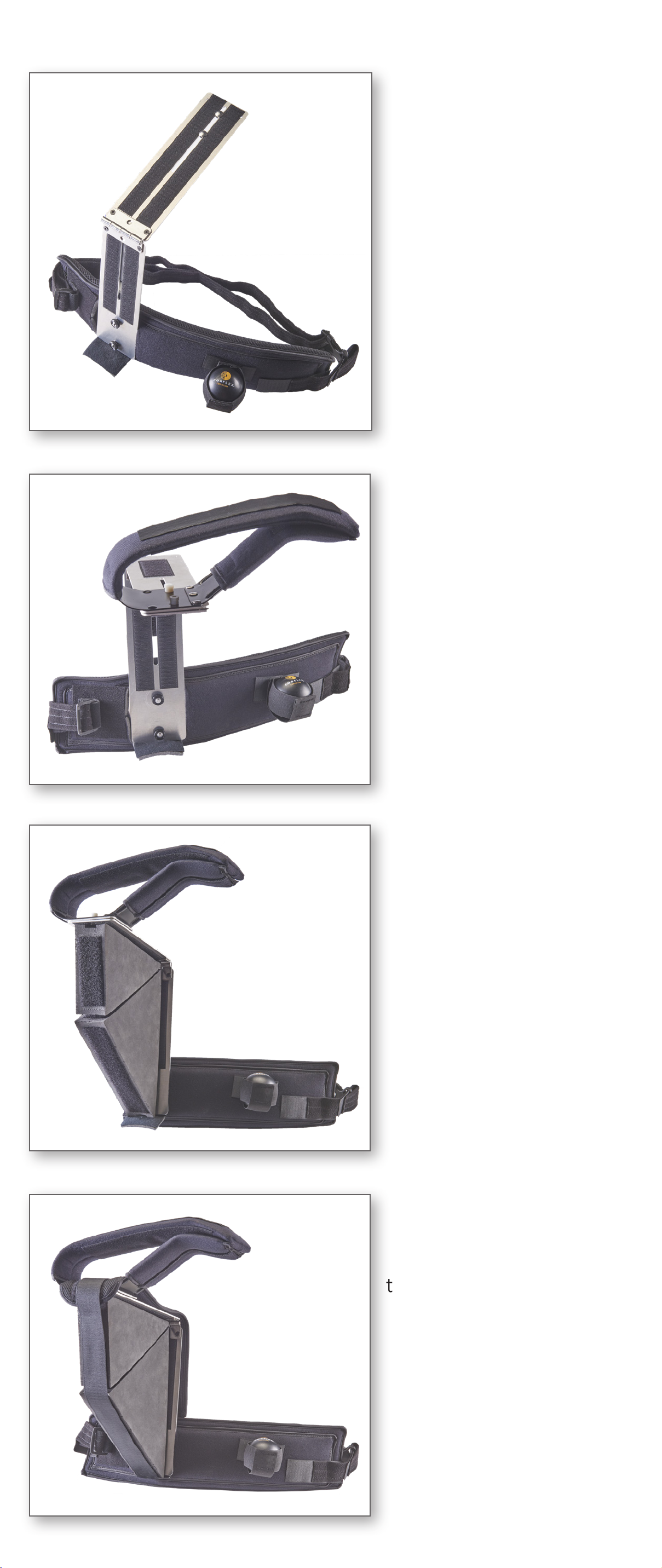
A. Orient waistband so the long at section is toward body and
exercise ball is in front. For use on
left arm remove elastic ball holder
and rotate 180°, reattach to front
end of waistband/strap.
B. Curve waistband to match patient's
waistline, this will provide a stable
platform for the arm support and reduce migration.
C. Shape outer frame section for desired abduction/rotation.
Waistband can be adjusted to provide shoulder abduction from 10°
to 45° and from full internal rotation to 70° of external rotation as
specied by the physician or other qualied healthcare provider.
D. Apply at patient’s waist on their affected side. Wrap strap around
the patient’s waist and secure buckle at the front of waistband.
E. If the waistband can be easily pushed down, tighten waist strap.
Strap should be snug but not cause discomfort.
F. Go to Steps 5 through 7 for set-up of sling. When both the sling
and waistband are properly t attach the sling to waistband by
securing hook and loop portions together.
A. Unscrew the 2 threaded knobs to remove the arm support from
the waistband. (You will nd temporary thread locking liquid on the
fasteners which may make initial removal
difcult but helps prevent accidental
loosening - Pliers may be needed).
B. Orient waistband so the long at
section is toward body and exercise
ball is in front. For use on left arm
remove elastic ball holder and rotate 180°, reattach to front end of
waistband/strap.
C. Curve waistband to match patient's waistline, this will provide a
stable platform for the airplane splint and reduce migration.
D. Continue with Steps 4 through 7.
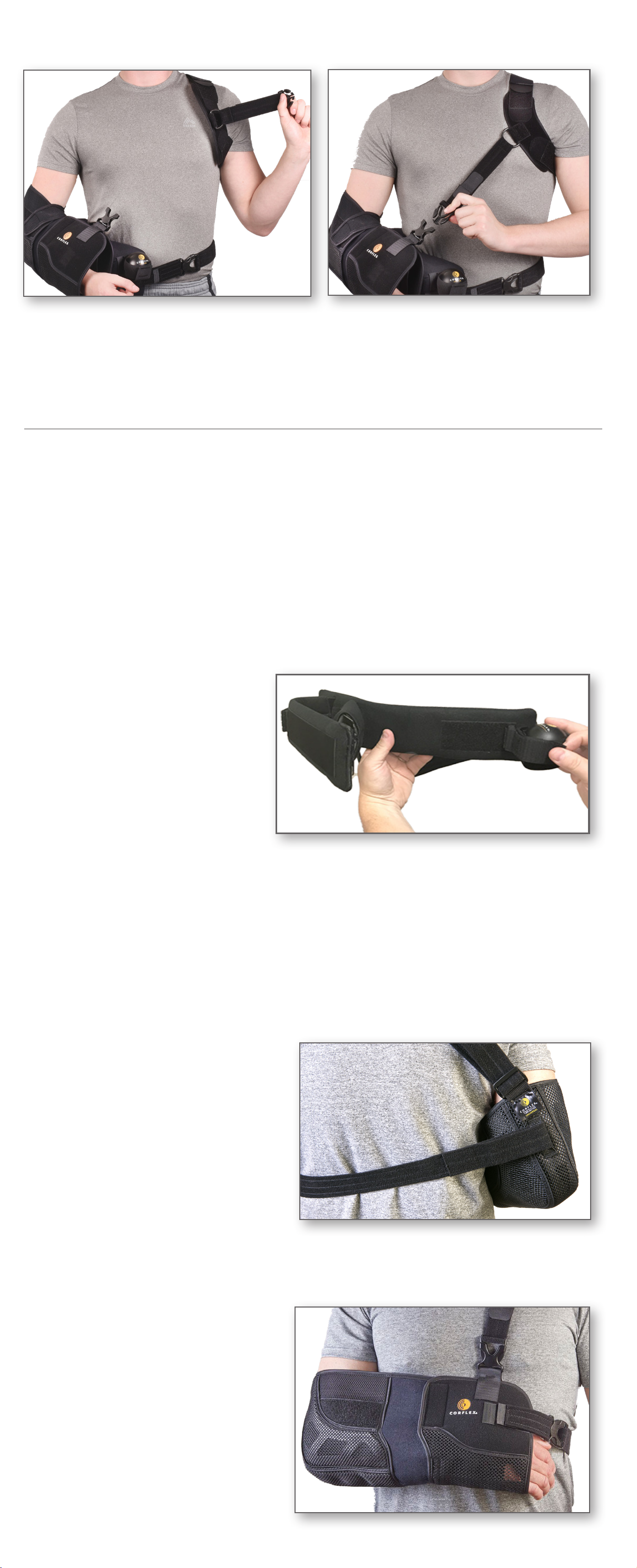
Adjusting Strap Lengths
A. Unbuckle Comfort Harness Strap and guide strap around the
back, sliding opposite arm through the sling loop.
B. Secure front buckle at sling, leaving the strap loose at this time.
APPLICATION INSTRUCTIONS
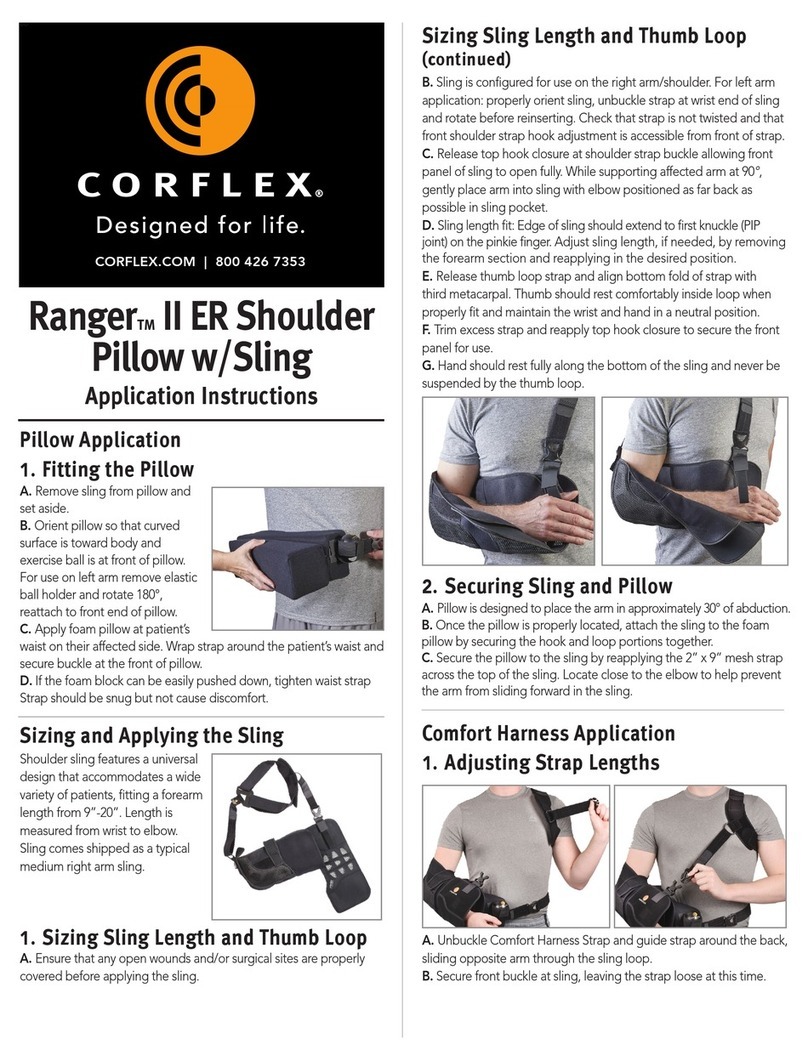
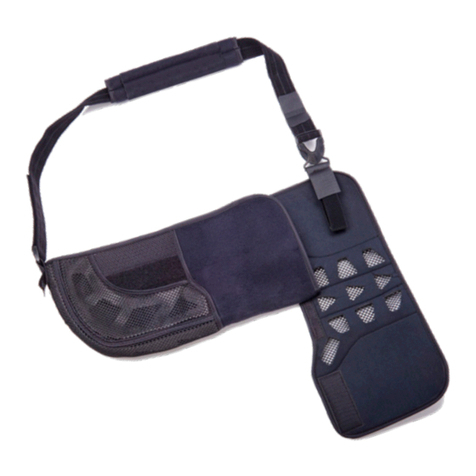
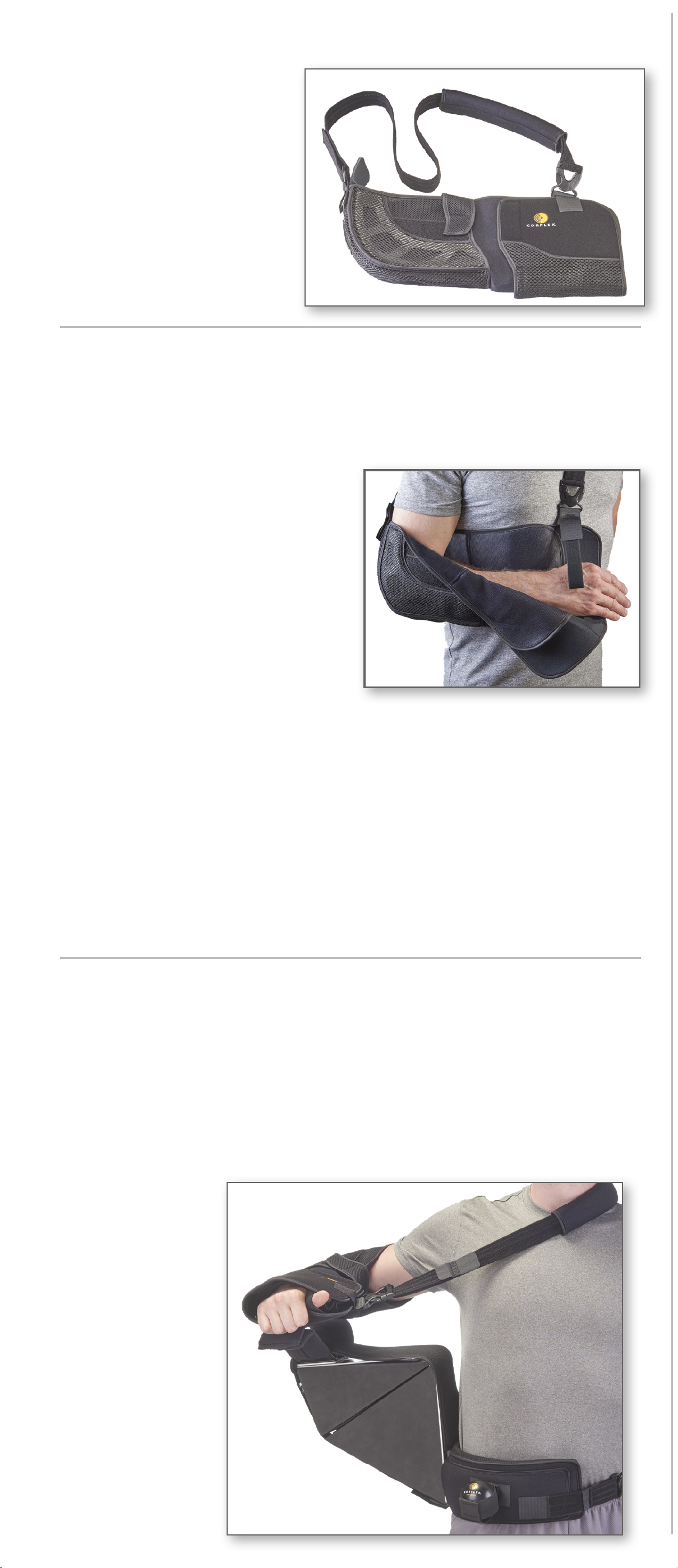
5. Sizing and Applying the Sling
Shoulder sling features
a universal design that
accommodates a wide
variety of patients, tting
a forearm length from 9”-
20”. Length is measured
from wrist to elbow. Sling
comes shipped as a typical
medium right arm sling.
2. Fitting and Securing the Waistband
(10to 45)
1. Shoulder Abduction (10to 90)
6. Sizing Sling Length and Thumb Loop
A. Release front hook closure at shoulder strap buckle. Adjust sling
length by removing the forearm section and reapplying in the
desired position.
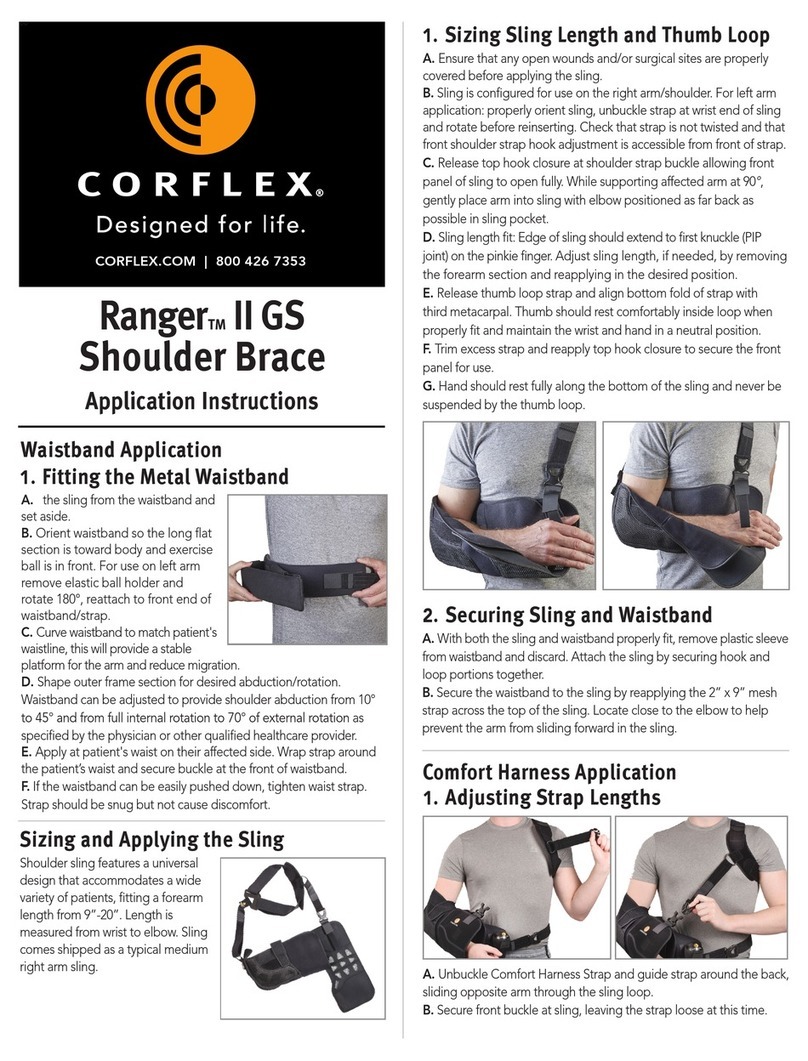
B. Proper t: Edge of sling should
extend to rst knuckle (PIP joint)
on the pinkie nger, ensure elbow
is positioned as far back in the
pocket as possible.
C. Release thumb loop strap and
align bottom fold of strap with
third metacarpal.
D. Thumb should rest comfortably inside loop when properly t.
E. Hand should rest fully along the bottom of the sling and never be
suspended by the thumb loop. Trim excess strap and secure to hook
at top.
F. Secure the pillow to the sling by reapplying the 2” x 9” mesh strap
across the top of the sling. Locate close to the elbow to help prevent
the arm from sliding forward in the sling.
G. Reapply front hook closure to secure the front panel for use.
D. Apply the Mesh
Airplane Platform Cover
to the airplane platform
and position to cover all
metal edges.
E. Attach the Retaining
Strap to properly secure
positioning blocks.
3. Fitting the Metal Waistband (45to 90)
4. Setup of Airplane Components (45to 90)
C. Insert the foam
positioning blocks into
the airplane platform for
60° or 90° abduction.
The foam blocks should
fit tight to the Airplane
Platform with the thumb
knobs aligning with the
cutouts in the foam.
A. Remove arm support
from waistband and
place the airplane
platform on the
waistband and secure
with 2 threaded knobs.
B. Attach the arm
support to airplane
platform with 2 screws
and threaded knobs.
Adjust along the slots
based on patient’s arm
length.
A. With both the sling and waistband properly t apply the
waistband and airplane components to patient’s waist on their
affected side. Wrap strap around the patient’s waist and secure
buckle at the front of waistband.
B. Attach the
sling to the
arm support by
securing hook
and loop portions
together.
C. If the
waistband can
be easily pushed
down, tighten
waist strap.
A. Remove the sling from the
waistband and set aside.
B. Go to Step 2 or Step 3
for Fitting the Waistband
(Instructions shows right arm
assembly).
NOTE: When using product
with shoulder abduction from
10° to 45° it is not necessary
to attach airplane platform.
7. Fitting and Securing the Waistband
(45to 90)A. Locate webbing loop on the
back end of the sling.
B. Thread hook end of strap
through webbing loop and
secure back onto strap.
A. Wrap strap around the
patient’s waist and secure the
hook fastener to the front sling
panel.
B. Adjust waist strap length as
needed for a secure t. Strap
should be snug but not cause
discomfort.
2. Attaching Strap to Sling
3. Final Waist Strap Fit
Converting to Shoulder Immobilizer
This product can also be stepped-down to a shoulder immobilizer.
Use as a shoulder immobilizer should only be at the direction of
the patient’s physician or other qualied healthcare provider.
A. Remove waist strap from
waistband by releasing the
hook fastener attached to
the front end of waistband.
B. At the opposite end of
the waist strap, release the
hook fastener and thread
the strap out through the plastic buckle.
C. Remove waistband from sling by detaching the hook and loop
fasteners. 2” x 9” mesh strap should now be secured to the front
and back sling panels close to the upper arm.
1. Strap Removal