(please make sure the connector is firmly plugged)
3. Connect the AV connector to your second video source.
(see Pictures 1-2 )
4. Stick the another IR extender to the IR window of the second video device.
(see Pictures2 )
NOTE: I9058D has 2 input sources capabilities, selection of these sources
are dependant on the LAST Video appearance on which input. In
some scenarios, DVD player or another video device when it is on
the “STANDBY Mode”, it still with Video output (BLUE
BACKGROUND). So when you want to change the video source
of I9058D, you need to make sure the previous video device is
totally “OFF”. Otherwise, you will not to change the source.
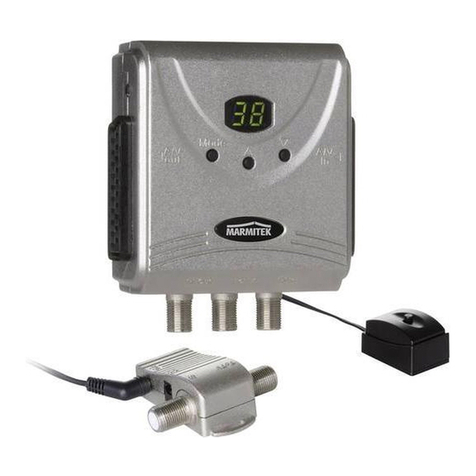
RECEIVER
a. by Composite Video (RCA)
1. Take a suitable RCA to RCA(included) cable and connect one end to A/V socket of
Receiver.(see Pictures 3 )
2. Connect the other end to the Audio / Video INPUT port of the TV. (see Pictures 3 )
b. by S-Video
1. Take a RCA to RCA cable(included),take Audio RL connected to the Audio RL In
socket of Receiver. Take a S-Video to S-Video (not included) cable connect one end to
S-Video input socket of Reciever. (see Pictures 3 )
2. Connect the other end of Audio RL to the Audio RL Input Port of the Television and
also connect other end of S-video to S-Video Input Port of the Television (see
Pictures 3 )
3. Connect the power adaptor to the power outlet. Turn power ON.
**DC 9V 300mA, AC 120V or 230V Adaptor (see Pictures 3 )
4. Choose one of the 8 channels by pushing the selection button (must be set to
same channel on both transmitter & receiver) (see Pictures 4 )
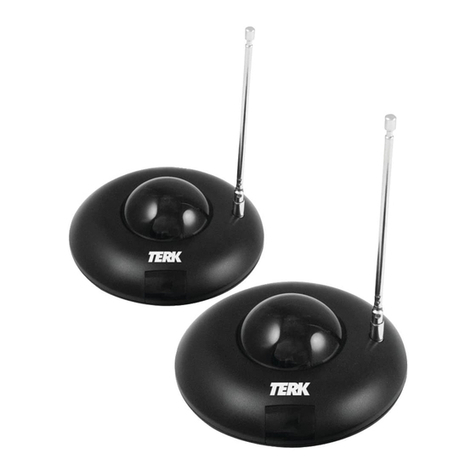
5. Please make sure this unit is set a little forward to the top of TV in order to have the
best IR performance. (see Pictures 7 )
Special note : The operation between S-VHS and Composite Video are exclusive. i.e. so when
the S-VHS port of either Transmitter or Reciever is being connected, you can
not connect the Composite Video.