manuals.online logo
Brands
  1. Home
  2. •
  3. Brands
  4. •
  5. Duerkopp Adler
  6. •
  7. Sewing Machine
  8. •
  9. Duerkopp Adler 4120-5 Troubleshooting guide

Duerkopp Adler 4120-5 Troubleshooting guide

Other Duerkopp Adler Sewing Machine manuals

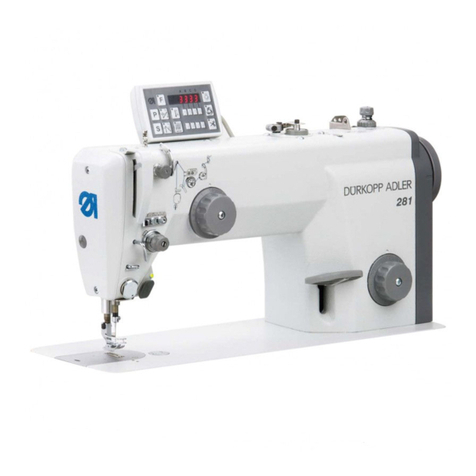
Duerkopp Adler 281 Operating instructions

Duerkopp Adler

Duerkopp Adler 281 Operating instructions

Duerkopp Adler 523 User manual

Duerkopp Adler

Duerkopp Adler 523 User manual

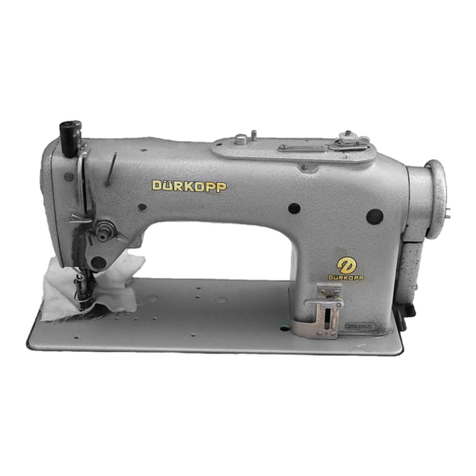
Duerkopp Adler 219 Guide

Duerkopp Adler

Duerkopp Adler 219 Guide

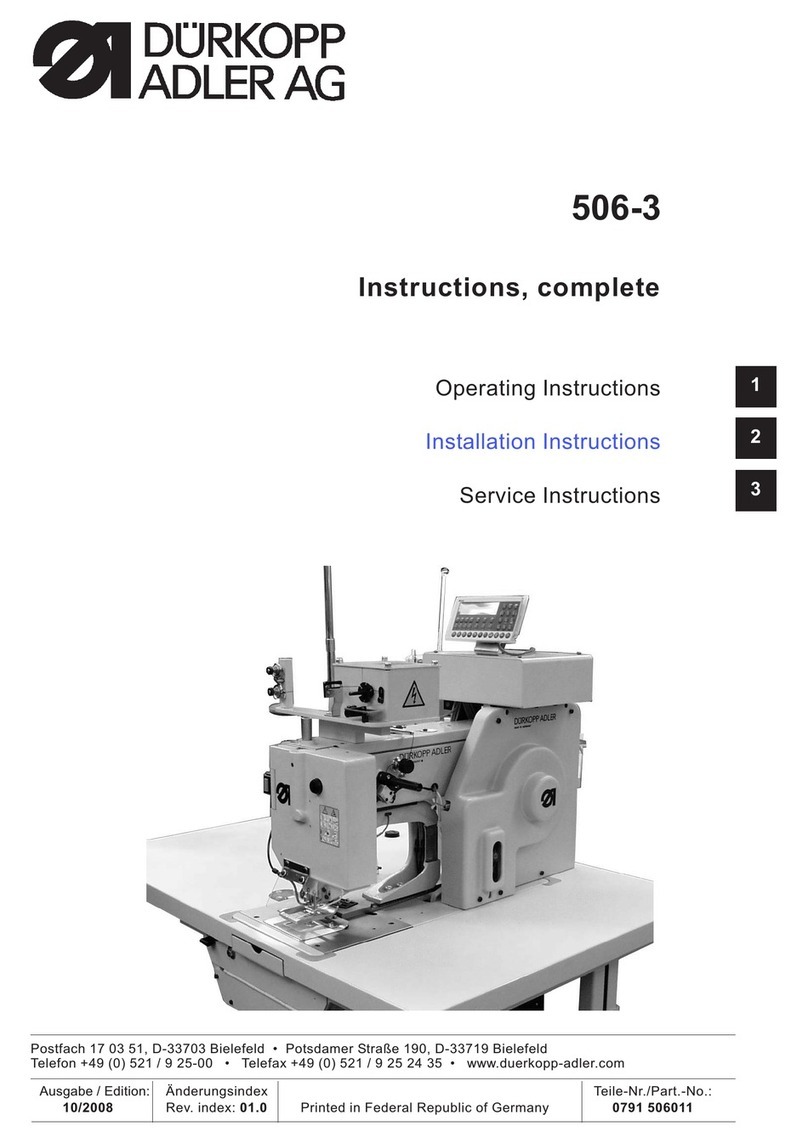
Duerkopp Adler 506-3 User manual

Duerkopp Adler

Duerkopp Adler 506-3 User manual

Duerkopp Adler 525-105 Guide

Duerkopp Adler

Duerkopp Adler 525-105 Guide

Duerkopp Adler 212 Guide

Duerkopp Adler

Duerkopp Adler 212 Guide

Duerkopp Adler 975-1-5 Guide

Duerkopp Adler

Duerkopp Adler 975-1-5 Guide

Duerkopp Adler 669 Premium User manual

Duerkopp Adler

Duerkopp Adler 669 Premium User manual

Duerkopp Adler 251-140040 User manual

Duerkopp Adler

Duerkopp Adler 251-140040 User manual

Duerkopp Adler 609 Operating instructions

Duerkopp Adler

Duerkopp Adler 609 Operating instructions

Duerkopp Adler 167-372 Guide

Duerkopp Adler

Duerkopp Adler 167-372 Guide

Duerkopp Adler 929 Guide

Duerkopp Adler

Duerkopp Adler 929 Guide

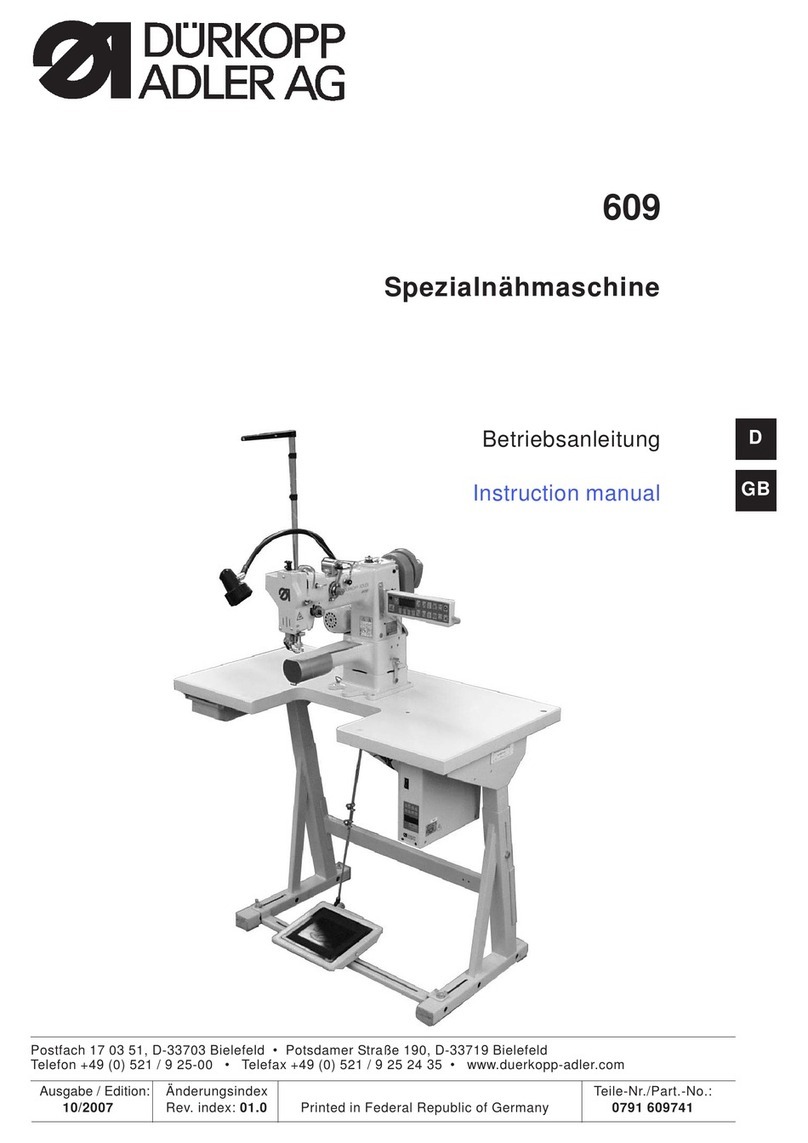
Duerkopp Adler 609 User manual

Duerkopp Adler

Duerkopp Adler 609 User manual

Duerkopp Adler 69-373 Operating instructions

Duerkopp Adler

Duerkopp Adler 69-373 Operating instructions

Duerkopp Adler 511 User manual

Duerkopp Adler

Duerkopp Adler 511 User manual

Duerkopp Adler FLP Series Additional  guide User manual

Duerkopp Adler

Duerkopp Adler FLP Series Additional guide User manual

Duerkopp Adler 745-22 Operating instructions

Duerkopp Adler

Duerkopp Adler 745-22 Operating instructions

Duerkopp Adler 559 Operating instructions

Duerkopp Adler

Duerkopp Adler 559 Operating instructions

Duerkopp Adler 4182i-1 Troubleshooting guide

Duerkopp Adler

Duerkopp Adler 4182i-1 Troubleshooting guide

Duerkopp Adler 589 User manual

Duerkopp Adler

Duerkopp Adler 589 User manual

Duerkopp Adler 195 User manual

Duerkopp Adler

Duerkopp Adler 195 User manual

Duerkopp Adler 467 User manual

Duerkopp Adler

Duerkopp Adler 467 User manual

Duerkopp Adler 269 Troubleshooting guide

Duerkopp Adler

Duerkopp Adler 269 Troubleshooting guide

Duerkopp Adler 175 User manual

Duerkopp Adler

Duerkopp Adler 175 User manual

Popular Sewing Machine manuals by other brands

Brother PE-180D Service manual

Brother

Brother PE-180D Service manual

Singer 569U1100 Operator's guide

Singer

Singer 569U1100 Operator's guide

ELNA 2002 instruction manual

ELNA

ELNA 2002 instruction manual

Siruba DL7200D-NM1 Instruction book

Siruba

Siruba DL7200D-NM1 Instruction book

Silver Viscount 9500e instruction manual

Silver

Silver Viscount 9500e instruction manual

Pfaff 3588-05/020 instruction manual

Pfaff

Pfaff 3588-05/020 instruction manual

JUKI DDL-9000A instruction manual

JUKI

JUKI DDL-9000A instruction manual

Pfaff 284 Instruction book

Pfaff

Pfaff 284 Instruction book

Reliable MSK-335B Specification sheet

Reliable

Reliable MSK-335B Specification sheet

Kenmore 385. 19000 owner's manual

Kenmore

Kenmore 385. 19000 owner's manual

Brother FD4-B271 instruction manual

Brother

Brother FD4-B271 instruction manual

Brother Computerized Embroidery Machine Operation manual

Brother

Brother Computerized Embroidery Machine Operation manual

Husqvarna Viking Designer SE user guide

Husqvarna Viking

Husqvarna Viking Designer SE user guide

Singer 645 owner's manual

Singer

Singer 645 owner's manual

Riccar RL634DE user manual

Riccar

Riccar RL634DE user manual

ZOJE ZJ9800 Operation manual

ZOJE

ZOJE ZJ9800 Operation manual

Siruba C007JP Instruction book

Siruba

Siruba C007JP Instruction book

IKEA SY user guide

IKEA

IKEA SY user guide

manuals.online logo
manuals.online logoBrands
  • About & Mission
  • Contact us
  • Privacy Policy
  • Terms and Conditions

Copyright 2025 Manuals.Online. All Rights Reserved.

Instructions for service
4120 - 5
Minerva Boskovice, a.s., Sokolská 60, CZ - 680 17 Boskovice
Tel.: +420-501-453434, 453433, 494111 Fax: +420-501-452165 http://www.minerva-boskovice.com
Edition: 08/2002 Printed in Czech Republic S735 000558
CONTENTS:
1. General safety instructions .............................................................................................................................................................. 1
2. Introduction .......................................................................................................................................................................... 1
3. Head of the sewing machine .............................................................................................................................................. 2
3. 1 Hook and hook post ................................................................................................................................................................ 2
3.1.1 Description
3.1.2 Height setting of the hook
3.1.3 Setting the distance of the hook from the needle
3.1.4 Angular setting of the hook (timing)
3.1.5 Protection of the needle and of the hook point
3.1.6 Setting of the bobbin case opener
3.1.7 Setting the regulation of the hook lubrication
3.1.8 Replacement of the hook
3.1.9 Setting the gear
3.1.10 Dismantling of the hook post
3.2 Needle and thread mechanism ................................................................................................................................. 5
3.2.1 Description
3.2.2 To check the handwheel angular adjustment
3.2.3 Height setting of the needle bar
3.2.4 Side setting of the needle bar holder
3.2.5 Setting the needle (the needle bar holder)
3.3 Throat plate and its post ........................................................................................................................................................ 7
3.3.1 Description
3.3.2 Mounting and removing the throat plate and its insert
3.3.3 Side setting of the throat plate post
3.4 Thread tensioners and limiter ................................................................................................................................. 8
3.4.1 Description
3.4.2 Setting the tension of main and auxiliary tensioners
3.4.3 Setting the tensioning mechanism of the main tensioner
3.4.4 Setting the adapting spring
3.4.5 Setting the thread limiter
3.5 Feeding mechanism of the bootom feed ...........................................................................................................................10
3.5.1 Description
3.5.2 Stitch length mechanism
3.5.2.1 Setting of the horizontal component of the feeder movement
(setting of the upper feeding eccentric)
3.5.2.2 Setting of the vertical component of the feeder movement
3.5.2.3 Setting of the feeder position against the throat plate
3.5.2.4 Setting of the height of the feeder teeth, setting of the feeding balance beam
3.5.2.5 Forward and rearward stitch length distribution (rough)
3.5.2.6 Forward and rearward stitch length distribution (fine)
3.5.2.7 Setting of the control knob (including the stitch length limitation)
3.5.2.8 Feeder replacement
3.6 Feeding mechanism of the top roller ................................................................................................................................14
3.6.1 Description
3.6.2 Feeding clutch
3.6.2.1 Description
3.6.2.2 Setting of the feeding pitch
3.6.2.3 Setting of the lower eccentric
3.6.2.4 Setting the engagement and disengagement of the clutch
3.6.3 Side setting of the indented lower pulley
3.6.4 Side setting of the indented upper pulley
3.6.5 Setting the tensioning roller
3.6.6 Replacement of the indented belt
3.6.7 Setting the feeding difference
3.6.8 Replacement of the friction wheels of the drive conversion unit
3.6.9 Top roller
3.6.9.1 Selection of the top roller diameter
3.6.9.2 Forward, rearward and side setting
3.6.9.3 Setting the gear clearance and in the mounting of the top roller
3.6.9.4 Setting of the height and of the pressing force of the top roller
3.6.9.5 Replacement of the top roller
3.7 Setting the presser foot lift .................................................................................................................................................. 20
3.8 Bobbin winder ....................................................................................................................................................................... 20
3.8.1 Description
3.8.2 Setting the bobbin winder stop
3.8.3 Setting the friction gear
3.9 Safety clutch .......................................................................................................................................................... 21
3.9.1 Description
3.9.2 Setting the disengaging moment
3.10 Indented belt transmission ................................................................................................................................... 21
3.10.1 Setting the tensioning roller of the indented belt
3.10.2 Replacing the indented belt
3.11 V-belt, motor - head .............................................................................................................................................. 22
3.11.1 Tensioning
3.11.2 Replacing the V-Belt
3.12 Lubrication .............................................................................................................................................................................. 23
3.12.1 Description
3.12.2 Refilling oil
3.12.3 Multiple oil use
4. Thread trimming ................................................................................................................................................................................. 24
4.1 Description of the trimming mechanism
4.2 Setting the pickup roller
4.3 Setting the cam
4.4 Setting the fork
4.5 Setting the moving knife
4.6 Setting the fixed knife
4.7 Setting the retaining spring of the hook thread
4.8 Setting switching of the electromagnets
5. Lifting the top roller by electromagnet ........................................................................................................................... 26
5.1 Description
5.2 Setting the electromagnet pin
5.3 Setting the electromagnet current
5.4 Assembly of the top roller lifting electromagnet
6. Backtacking using electromagnet .................................................................................................................................... 27
6.1 Description
6.2 Electromagnet height setting
6.3 Setting the position of push-buttons
6.4 Change of the function of push-buttons
7. Connecting the electric elements on the machine head ................................................................................................ 28
8. Drive, control panel, position sensor ........................................................................................................................... 28
9. Lighting ........................................................................................................................................................................... 28
9.1 Mounting on the machine head
9.2 Lamp replacement
10. Maintenance (table of operations) ................................................................................................................................. 29
11. Setting the machine according to the sewing category .................................................................................................. 29
11.1 Introduction
11.2 Table of setting the machine according to the sewing category
1
1. General safety instructions
The non-observance of the following safety instructions can cause bodily injuries or damages to the machine.
1. The machine must only be commissioned of the instruction book and operated by persons with appropriate training.
2. Before putting into service also read the safety rules and instructions of the motor supplier.
3. The machine must be used only for the purpose intended. Use of the machine without the safety devices is not permitted.
Observe all the relevant safety regulations.
4. When gauge parts are exchanged (e.g. needle, top roller, needle plate, feed dog and bobbin) when treading, when the
workplace is left, and during service work, the machine must be disconnected from the mains by switching off the master
switch or disconnecting the mains plug.
5. Daily servicing work must be carried out only by appropriately trained persons.
6. Repairs, conversion and special maintenance work must only be carried out by technicians or persons with appropriate
training.
7. For service or repair work on pneumatic systems the machine must be disconnected from the compressed air supply system.
Exceptions to this are only adjustments and functions checks made by appropriately trained technicians.
8. Work on the electrical equipment must be carried out only by electricians or appropriately trained persons.
9. Work on parts and systems under electric current is not permitted, except as specified in regulations DIN VDE 0105.
10. Conversion or changes to the machine must be authorized by us and made only in adherence to all safety regulations.
11. For repairs, only replacement parts approved by us must be used.
12. Commissioning of the sewing head is prohibited until such time as the entire sewing unit is found to comply with EC
directives.
It is absolutely necessary to respect the safety instructions marked by these signs.
Danger of bodily injuries !
Please note also the general safety instructions.
IMPORTANT WARNING
In spite of all safety measures made on the machines, inappropriate actions of the operator may lead to dangerous situations. In
industrial sewing machines, attention should be paid to the following still remaining possible sources of injury:
1. Moving sewing needle
- risk of injury when sewing with raised pressure foot or top roller, because the finger guard is then positioned too high.
2. Moving thread take-up lever
- risk of injury when inadvertently or intentionally inserting the finger(s) between the thread take-up lever and its guard.
3. Moving pressure member
- risk of injury when holding sewn work in immediate vicinity of the pressure member and beginning to insert under the
pressure member a considerably thicker sewn work portion,
- risk of injury when sinking the pressure member.
4. When switched off, the clutch motor slows down by inertia but would be reactivated by an accidental treading down of the
motor treadle. To avoid such risk, it is advised to hold the handwheel by hand and slightly to depress the motor treadle.
2. Introduction
This service book contains instruction for regulating the mechanisms of the sewing machine head.
The instructions for use and for putting the machine into operation and for the control of the stopmotor are not included in this
service book, but they are supplied as separate publications.
This service book is universal for all subclasses of the machine - it contains setting procedures for all elements which may be
placed on the machine of the given class. When the supplied subclass of this machine does not include some element, then it is
possible to leave out the respective parts of the instructions. The optional equipments of the machine and the respective
configurations of the subclasses of the machine are given in the operating instructions.
This sewing machine disposes of a large extent of its use. The machine should be set with respect to the parameters of the sewn
material, the sewing thread etc. The setting for the individual categories is given in the chapter 11.2.
For setting the machine, simple setting aids are used which are included in the accessory of the machine. Besides these aids,
universal measuring devices are used, such as slide calliper, feeler gauges and dynamometer for measuring the thread tension.
2
3. Head of the sewing machine
3.1 Hook and the hook post
3.1.1 Description
The hook (1) is mounted on the shaft (2) and is driven by the
gear (3) from the shaft (4).
The shaft of the hook (2) is mounted on the top in a sliding
bearing and, on the bottom, in a needle bearing.
The hook is provided with a lever (6) which is tilted when
removing the bobbin (7). The protecting sheet (8) protects
against the collision of the needle with the hook point. The
bobbin case lifter (9) is driven by the eccentric (10) on the
shaft (2).
The lubricating tube (11), on which a lubricating wick is
fastened in the tube (12), feeds oil for lubricating the sliding
bearing (5) of the eccentric (10) and the hook path.
The screws (13) serve for taking up the clearance of the gear.
The screws (14) fasten the post to the bedplate.
The lubricating felt (15) is connected by the wick (16) with the
main lubricating system and serves for lubricating the gear
(3).
3.1.2 Height setting of the hook
The designated distance A should be 6.1 mm (distance
between the upper surface of the throat plate and the surface
of the middle part of the hook).
Caution! Danger of injury!
Switch off the main switch ! Before starting the
setting operation, wait until the motor stops!
- Loosen both screws (2).
- By turning the screws (3 and 4), set the required distanceA.
After having set it, tighten carefully the screws.
- By axial shifting of the gear wheel (5), set the axial clearance
in such a way that this clearance is the least possible, but
sufficient for turning easily the hook.
- Tighten carefully the screws (2). Caution ! One of these
screws must bear on the flat of the shaft 6).
3.1.3 Setting the distance of the hook from
the needle
The hook point (1) is set up to the maximum distance of 0.1
mm from the bottom of the needle recess (2). For the sewing
categories 1 and 2, the needle size 100 is set, for the sewing
categories 3 and 4, it is the needle size 160.
Caution! Danger of injury!
Switch off the main switch ! Before starting the
setting operation, wait until the motor stops!
- Shift the plate (3).
- Loosen only one screw (4).
- Loosen the screws (5) and tighten them only slightly.
- Shift the hook post (6) at the determined distance between
the needle and the hook point.
- Tighten carefully the screw (4) (be sure not to damage the
threads!)
- Tighten duly the screws (5).
- Check up the setting using a narrow strip of thin paper and
proceed to the eventual correction of setting.
Caution!
When changing substantially the sewing catego-
ry, the protecting sheet of the hook (7) should
be set up.
5
1
2
3
4
67
8
9
10
11
12
5
13
14
15
16
A
3
4
2
6
6
4
5
5
3
1
7
max. 0,1
2
4
3
1
2
3
4
205o
57
6~ 0,5
1
2
5
31
1
2
5
295o
34
6
87
A
9
3.1.4 Angular setting of the hook (timing)
The hook is to be angularly set in such a way that the hook
point (1) is opposite the needle at the moment, when the
needle shifts by 2.5 mm from its bottom dead center. This
corresponds to the 2O5°on the scale of the handwheel (3).
Caution! Danger of injury!
Switch off the main switch! Before starting the
setting operation, wait until the motor stops!
- Remove the throat plate.
- Turn the handwheel (3) to the 2O5°and fix it with the screw
(4) which is component part ot the accessory of the machine
(tighten it carefully).
- Loosen the screws (5).
- Turn the hook into the required position.
- Set up the distance of about 0,5 mm between the gear wheel
(6) and the pin (7).
- Tighten the screws (5).
3.1.5 Protection of the needle and of the hook point
The protecting sheet (1) is to be set up in such a way that the
clearance between the protecting sheet and the needle (2) is
the least possible.
Caution ! Danger of injury!
Switch off the main switch! Before starting the
setting operation, wait until the motor stops!
- Remove the throat plate.
- Unscrew the screw (3) of the gib.
- Put the screwdriver into the hole of the screw (3) and, using
the regulating screw, set up the required clearance between
the needle (2) and the protecting sheet (1). When turning to
the right, the clearance is being reduced and vice versa.
- Check up the protecting effect in pushing against the needle
in the sense of the arrow (5). The hook point must not catch
the needle. If so, set up the protecting effect, correct
eventually the setting of the distance of the hook point
from the needle according to the paragraph 3.1.3.
- Screw in the screw (3).
3.1.6 Setting of the bobbin case lifter
The bobbin case lifter (1) is to be set in such a way, so that in
the moment, when the lifter is in its dead centre, there is a
clearing A between the lifter (1) and the retaining nose (2) of
the bobbin case, where the finger (3) fits onto the projection
(4) of the throat plate, A = 0.7 mm for the sewing category 1
and 2, A = 0.3 mm for the sewing category 3 and 4.
Caution ! Danger of injury!
Switch off the main switch! Before starting the
setting operation, wait until the motor stops!
- Remove the sheet guard of the hook post.
- On the handwheel (5), set the angle of 295°(the hook is in
its dead centre).
- Loosen the screw (6).
- Turn the eccentric (7) in such a way that the required
clearance between the elements (1) and (2) is attained.
- Set the height of the eccentric (7) in such a way that it is in
its highest position in retaining the minimum clearance
between the slide (8) and the fork (9).
- Tighten duly the screw (6).
4
1
2
3
4
5
12
1
3
4
5
6 7
11
0,4
8
10
9
15
o
1
5
2
43
7
6
205o
9
8
10
10
~0,5
3.1.7 Setting the regulation of the hook lubrication
By turning the lubricating tube (1) in the sense of the arrow
(2), the size of the contacting surface between the wick (3)
and the felt insert (4) is regulated. In this way, the speed of the
capillary lift of oil into the felt insert (5) is influenced, from
which oil is wiped on the surface (6) and is driven by centrifugal
force into the hook path (7).
Setting of full lubrication
- Turn the screw (8) into the position (9).
Setting of limited lubrication
- Turn the screw (8) into the position (10).
After having ended the regulation, set the height of the
lubricating tube (1) at 0.4 mm from the eccentric (11).
3.1.8 Replacement of the hook
Caution! Danger of injury!
Switch off the main switch ! Before starting the
setting operation, weit until the motor stops!
- Remove the throat plate and the trimming knife.
- Unscrew the screws (1) and remove the gib (2).
- After having suitably turned a bit the hook, remove the
bobbin case (3).
- Unscrew thorougly the screw (4).
- Remove the body of the hook (5) upwards.
- When mounting, the procedure is inverse.
3.1.9 Setting the gear
The mutual angular orientation of the gear wheel (1) relative
to the gear wheel (2) should ensure the accessibility of the
screw (5) at the moment when the hook point comes to lie
opposite the needle (4). The wheel (2) is to be set with its gear
rim symmetrically to the centre of the gear wheel (1). The
clearance between the gear wheels is to be the least possible.
Caution ! Danger of injury!
Switch off the main switch! Before starting the
setting operation, wait until the motor stops!
- Set the angle of 2O5°on the handwheel (6) and lock it with
the screw (7).
- On the removed post of the hook (8), according to the pa-
ragraph 3.1.10, the hook point (3) is to be turned a bit
according to the illustration.
- Turn the gear wheel (2) into the suitable position and insert
the post of the hook into the machine according to the
respective arrows. Check up, whether the screw (5) is
accessible and, if not, repeat the procedure.
- Set the the distance of the hook from the needle according
to the paragraph 3.1.3.
- Set the precise angular displacement of the hook according
to the paragraph 3.1.4.
- Loosen the screw (10) and tighten them slightly.
- Set the clearence in the gear in turning the screws (9). Check
up, whether the gear has a clearance during the whole
revolution of the hook. Turn the handwheel step by step by
15°and, with each step, grasp the hook and try, if there is an
angular dead travel. Tighten carefully the screws (9).
- Tighten duly the screws (10) and try anew the clearance of
the gear.
5
6
11
4
7
10
3
5
8
9
2
1
1
2
3
4
5
6
0o
1
1
7
1
6
3
2
6
5
4
3.1.10 Dismantling of the hook post
When dismantling the post (1), the supplies of lubricating oil
are to be disconnected first, the fastening screws unscrewed
and, thereafter, the post is removed.
Caution ! Danger of injury!
Switch off the main switch! Before starting the
setting operation, wait until the motor stops!
- Unscrew the screw (2).
- Push the lubricating tube (3) downwards into the post.
-Disconnect the hose (4) from the box (7).
- Loosen only one screw (5).
- Unscrew the screws (6).
- Shift the post in the sense of the arrows and remove it out
from the machine.
- When mounting it, proceed inversely. Ensure the contact of
the wick in the hose (4) with the greasing felt of the box (7).
3.2 Needle and thread mechanism
3.2.1 Description
The take-up lever (1) is mounted in ball bearings both at the
spot of being suspended on the connecting rod (2) and at its
being mounted on the crank (3). The take-up lever is of alumi-
num and is provided with an eye for passing the thread.
The connecting rod (2) is mounted on the pin (4) in the
machine arm.
The holder of the take-up lever (5) is fastened with the pin (6)
in the machine arm (7). In the upper part, the needle bar holder
(5) is fixed in its correct position with the screw (8) in the pin
(9) fastened on the machine arm.
The connecting rod (10) of the needle bar (11) is mounted on
the crank (3) in a ball bearing, on the needle bar carreer it is
mounted in a sliding way.
The greasing system of the mechanism is central  with a
wick.
3.2.2 To check the handwheel angular adjustment
The handwheel (5) must be situated in its precise position
relative to the needle and thread mechanism. This position is
given by a pin (2), which locks the connecting rod of the
needle rod (1) through a hole in the arm (3). In this position,
the indicator (6) of the handwheel must show O. The position
is fixed by the handwheel screw (4) contacting a small flat
surface provided on the upper shaft.
The correct adjustment of the angular position has been car-
ried out at the producers.
Caution ! Danger of injury!
Switch off the main switch! Before starting the
setting operation, wait until the motor stops!
3.2.3 Height setting of the needle bar
At the moment, when the hook point passes around the needle,
the upper edge of the needle eye must be about 1 mm below
the hook point. In an opposite case, it is necessary to set the
height of the needle bar as follows:
Caution ! Danger of injury!
Switch off the main switch! Before starting the
setting operation, wait until the motor stops!
- Remove the front guard.
- Loosen the screw (1) of the needle bar carrier
- Set the correct height of the needle bar and tighten anew
the screw (1).
Caution !
An incorrect setting of the needle bar height may
cause the striking of the hook point against the
needle.

6
1
3
4
2
A
2
1
3.2.4 Side setting of the needle bar holder
The correct position of this holder is in such case, when the
needle bar is lined up with the presser-foot bar. The needle bar
holder can be set as follows:
Caution! Danger of injury!
Switch off the main switch! Before starting the
setting operation, wait until the motor stops!
- Loosen the screw (1) of the pin (2).
- Loosen the screw (3) of the fixing pin (4).
- In shifting the pin (2) set the needle bar holder on the
measure A = 7.5 mm (distance of the front faces of the
arm and of the needle bar holder) /at the same time the
fixing pin (4) shifts/.
- Tighten the screws (1 and 3).
3.2.5 Setting the needle (the needle bar holder)
When moving the needle through the throat plate, the needle
must pass through the centre of the hole in the insert of the
throat plate.
Caution ! Danger of injury!
Switch off the main switch! Before starting the
setting operation, wait until the motor stops!
-Using the handwheel, set the needle in the position, when
the needle starts passing into the the throat plate.
- Loosen the screw (1) fixing the needle bar holder.
- Moving the needle in the longitudinal direction  around
the pin (2), set the needle into the axis of the hole.
- Tighten the screw (1) and check the given setting.
Caution!
A faulty setting may cause bending or breaking of
needles against the throat plate insert.
7
71
5
42
6
7
2
A
3
4
1
5
6
3
3.3 Throat plate and its post
3.3.1 Description
The throat plate (1) is universal for all categories of sewing. In
the throat plate there is mounted an exchangeable insert (2).
The machine is supplied with several types of inserts differing
in the width of their needle aperture (3), see tab. in the par.
11.2).
3.3.2 Mounting and removing the throat plate and
its insert
When mounting the throat plate (1), the finger (4) of the bobbin
case must fit into the recess (5) of the throat plate. When
dismantling the throat plate insert (2), it is necessary to
unscrew both screws (6) and to remove the throat plate insert.
Caution! Danger of injury!
Switch off the main switch! Before starting the
setting operation, wait until the motor stops!
- Turn the finger (4) in the sense towards the throat plate (1).
-Place the throat plate (1) onto the post.
- Screw in the screws (7).
-Mount the throat plate insert (2).
- Tighten the screws (6).
- When removing the insert, proceed in an inverse sequence.
3.3.3 Side setting of the throat plate post
The post of the throat plate (1) is to be side set in such a way
that the axis of the hole in the insert of the throat plate (2) is at
the distance A = 0.1 mm to the right from the axis of the
needle (3).
Caution! Danger of injury!
Switch off the main switch! Before starting the
setting operation, wait until the motor stops!
- Loosen the screws (4 and 5) (from the rear side of the post
as well).
- Shift the post (1) in the sense required for attaining the
distance A = 0.1 mm.
- Tighten the screws (4 and 5) and check up for the correct
setting.