manuals.online logo
Brands
  1. Home
  2. •
  3. Brands
  4. •
  5. Duerkopp Adler
  6. •
  7. Sewing Machine
  8. •
  9. Duerkopp Adler 4181i-3 User manual

Duerkopp Adler 4181i-3 User manual

Other manuals for 4181i-3

3

Other Duerkopp Adler Sewing Machine manuals

Duerkopp Adler 739-23 User manual

Duerkopp Adler

Duerkopp Adler 739-23 User manual

Duerkopp Adler 1140-5 Troubleshooting guide

Duerkopp Adler

Duerkopp Adler 1140-5 Troubleshooting guide

Duerkopp Adler 550-16-23 User manual

Duerkopp Adler

Duerkopp Adler 550-16-23 User manual

Duerkopp Adler 467 User manual

Duerkopp Adler

Duerkopp Adler 467 User manual

Duerkopp Adler 868 User manual

Duerkopp Adler

Duerkopp Adler 868 User manual

Duerkopp Adler 550-12-12 Operating instructions

Duerkopp Adler

Duerkopp Adler 550-12-12 Operating instructions

Duerkopp Adler 550-12-12 User manual

Duerkopp Adler

Duerkopp Adler 550-12-12 User manual

Duerkopp Adler 559 Operating instructions

Duerkopp Adler

Duerkopp Adler 559 Operating instructions

Duerkopp Adler 525-105 Guide

Duerkopp Adler

Duerkopp Adler 525-105 Guide

Duerkopp Adler 550-767 User manual

Duerkopp Adler

Duerkopp Adler 550-767 User manual

Duerkopp Adler 540-100-1 User manual

Duerkopp Adler

Duerkopp Adler 540-100-1 User manual

Duerkopp Adler 669 Premium User manual

Duerkopp Adler

Duerkopp Adler 669 Premium User manual

Duerkopp Adler 4220-6 Troubleshooting guide

Duerkopp Adler

Duerkopp Adler 4220-6 Troubleshooting guide

Duerkopp Adler 1230i-6 Guide

Duerkopp Adler

Duerkopp Adler 1230i-6 Guide

Duerkopp Adler 4181i-1 Guide

Duerkopp Adler

Duerkopp Adler 4181i-1 Guide

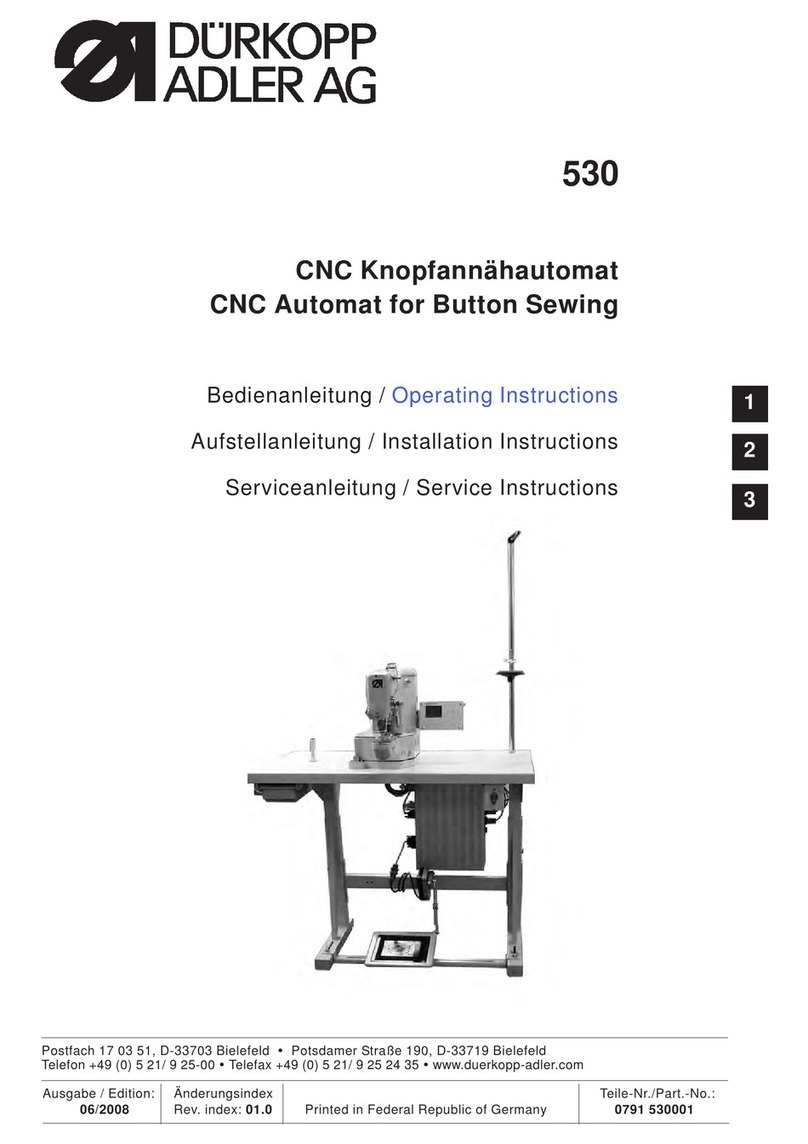
Duerkopp Adler 530 User manual

Duerkopp Adler

Duerkopp Adler 530 User manual

Duerkopp Adler 540-100-1 User manual

Duerkopp Adler

Duerkopp Adler 540-100-1 User manual

Duerkopp Adler 4182i-1 Troubleshooting guide

Duerkopp Adler

Duerkopp Adler 4182i-1 Troubleshooting guide

Duerkopp Adler 745-34 Manual

Duerkopp Adler

Duerkopp Adler 745-34 Manual

Duerkopp Adler 1180i-5 Troubleshooting guide

Duerkopp Adler

Duerkopp Adler 1180i-5 Troubleshooting guide

Duerkopp Adler 281 User manual

Duerkopp Adler

Duerkopp Adler 281 User manual

Duerkopp Adler 528-105 Guide

Duerkopp Adler

Duerkopp Adler 528-105 Guide

Duerkopp Adler 4180i-1 Troubleshooting guide

Duerkopp Adler

Duerkopp Adler 4180i-1 Troubleshooting guide

Duerkopp Adler 467 Operating instructions

Duerkopp Adler

Duerkopp Adler 467 Operating instructions

Popular Sewing Machine manuals by other brands

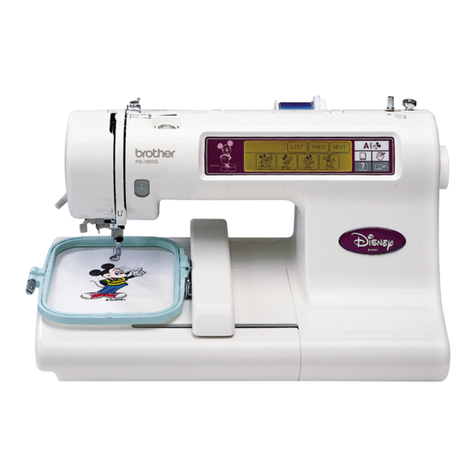
Brother PE-180D Service manual

Brother

Brother PE-180D Service manual

Singer 569U1100 Operator's guide

Singer

Singer 569U1100 Operator's guide

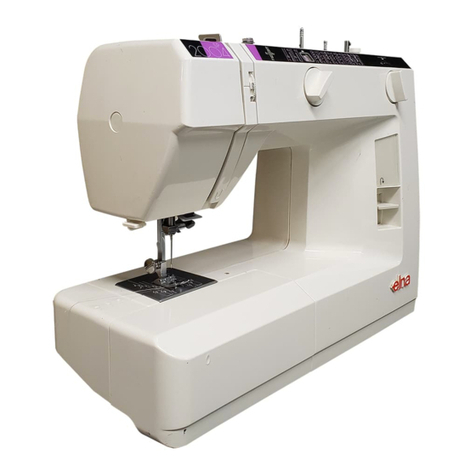
ELNA 2002 instruction manual

ELNA

ELNA 2002 instruction manual

Siruba DL7200D-NM1 Instruction book

Siruba

Siruba DL7200D-NM1 Instruction book

Silver Viscount 9500e instruction manual

Silver

Silver Viscount 9500e instruction manual

Pfaff 3588-05/020 instruction manual

Pfaff

Pfaff 3588-05/020 instruction manual

JUKI DDL-9000A instruction manual

JUKI

JUKI DDL-9000A instruction manual

Pfaff 284 Instruction book

Pfaff

Pfaff 284 Instruction book

Reliable MSK-335B Specification sheet

Reliable

Reliable MSK-335B Specification sheet

Kenmore 385. 19000 owner's manual

Kenmore

Kenmore 385. 19000 owner's manual

Brother FD4-B271 instruction manual

Brother

Brother FD4-B271 instruction manual

Brother Computerized Embroidery Machine Operation manual

Brother

Brother Computerized Embroidery Machine Operation manual

Husqvarna Viking Designer SE user guide

Husqvarna Viking

Husqvarna Viking Designer SE user guide

Singer 645 owner's manual

Singer

Singer 645 owner's manual

Riccar RL634DE user manual

Riccar

Riccar RL634DE user manual

ZOJE ZJ9800 Operation manual

ZOJE

ZOJE ZJ9800 Operation manual

Siruba C007JP Instruction book

Siruba

Siruba C007JP Instruction book

IKEA SY user guide

IKEA

IKEA SY user guide

manuals.online logo
manuals.online logoBrands
  • About & Mission
  • Contact us
  • Privacy Policy
  • Terms and Conditions

Copyright 2025 Manuals.Online. All Rights Reserved.

Instruction manual
4181i - 3
Minerva Boskovice, a.s., Sokolská 60, CZ - 680 17 Boskovice
Tel.: +420-516-453434, 453433, 494111 Fax: +420-516-452165 http://www.minerva-boskovice.com
Edition/Vydáno/Herausgegeben: 09/2004 Printed/Tisk/Druck: Czech Republic S735 000678
www.promelectroavtomat.ru
All manuals and user guides at all-guides.com
Contents - part A - Instruction manual:
1. Proper use of the machine ................................................................................................................................................ 1
2. Machine description .......................................................................................................................................................... 1
3. Machine subclasses and sewing categories ................................................................................................................... 2
3.1 Subclass ................................................................................................................................................................. 2
3.2 Sewing categories ................................................................................................................................................... 2
4. Survey of equipment ........................................................................................................................................................ 2
4.1 Basic necessary equipment .................................................................................................................................... 2
4.1.1 Needles ...................................................................................................................................................... 2
4.1.2 Wheel feeders .............................................................................................................................................................. 2
4.1.3 Top roller holders ......................................................................................................................................................... 2
4.1.4 Top rollers ................................................................................................................................................................... 2
4.1.5 Throat plate ................................................................................................................................................................. 3
4.1.6 Throat plate inserts ..................................................................................................................................................... 3
4.1.7 Trimmer knife .............................................................................................................................................................. 3
4.1.8 Guide ........................................................................................................................................................................... 3
4.1.9 Connecting cables of the head to the drive ............................................................................................................. 3
4.2 Optional eqiupment ................................................................................................................................................ 3
5. Technical data .................................................................................................................................................................. 3
6. Operation of the machine ................................................................................................................................................. 5
6.1 Threading a thread ............................................................................................................................................... 5
6.2 Bobbin thread winding ......................................................................................................................................... 5
6.3 Inserting the bobbin and threading the lower thread ............................................................................................ 5
6.4 Regulating the thread tension .............................................................................................................................. 6
6.5 Needle replacement .............................................................................................................................................. 7
6.6 Regulation of pressing the top roller ..................................................................................................................... 7
6.7 Lifting the top roller up .......................................................................................................................................... 7
6.8 Reverse stitching .................................................................................................................................................. 8
6.9 Stitch length adjustment ....................................................................................................................................... 8
6.10 Safety clutch ........................................................................................................................................................... 8
6.11 To exchange and set the trimmer knife .................................................................................................................. 8
7. Electronic control of the machine ................................................................................................................................... 9
7.1 Control of sewing by means of control elements .................................................................................................. 9
7.1.1 Via treadle ................................................................................................................................................... 9
7.1.2 Via control pushbutton panel ...................................................................................................................... 9
7.1.3 Via control panel V810/V 820 ...................................................................................................................... 9
7.2 Adjustment of automatic functions via control panel for stop motor ................................................................... 10
7.2.1 By using stop motor Efka with panel V 810 ............................................................................................... 10
7.2.1.1 Adjustment by means of buttons with fixed setting function ........................................................ 10
7.2.1.2 Setting by means of parameters ................................................................................................... 11
7.2.2 By using stop motor Efka with panel V 820 ............................................................................................... 12
7.2.2.1 Adjustment by means of buttons with fixed setting function ........................................................ 13
7.2.2.2 Setting by means of parameters ................................................................................................... 13
8. Maintenance ....................................................................................................................................................................................... 14
Operating instructions for eventual trouble shooting .............................................................................................................. 15
www.promelectroavtomat.ru
All manuals and user guides at all-guides.com
Foreword
This instruction manual is intended to help the user to become familiar with the machine and take advantage of its application
possibilities in accordance with the recommendations.
The instruction manual contains important information on how to operate the machine securely, properly and economically.
Observation of the instructions eliminates danger, reduces costs for repair and down-times, and increases the reliability and life
of the machine.
The instruction manual is intended to complement existing national accident prevention and environment protection regulations.
The instruction manual must always be available at the machine/sewing unit.
The instruction manual must be read and applied by any person that is authorized to work on the machine/sewing unit. This
means:
- Operation, including equipping, troubleshooting during the work cycle, removing of fabric waste
- Service (maintenance, inspection, repair and/or)
- Transport.
The user also has to assure that only authorized personnel work on the machine.
The user is obliged to check the machine at least once per shift for apparent damages and to immediatly report any changes
(including the performance in service), which impair the safety.
The user company must ensure that the machine is only operated in perfect working order.
Never remove or disable any safety devices.
If safety devices need to be removed for equipping, repairing or maintaining, the safety devices must be remounted directly after
completion of the maintenance and repair work.
Unauthorized modification of the machine rules out liability of the manufacturer for damage resulting from this.
Observe all safety and danger recommendations on the machine/unit! The yellow-and-black striped surfaces designate permanend
danger areas, eg danger of squashing, cutting, shearing or collision.
Besides the recommendations in this instruction manual also observe the general safety and accident prevention regulations!
www.promelectroavtomat.ru
All manuals and user guides at all-guides.com
General safety instructions
The non-observance of the following safety instructions can cause bodily injuries or damages to the machine.
1. The machine must only be commissioned of the instruction book and operated by persons with appropriate training.
2. Before putting into service also read the safety rules and instructions of the motor supplier.
3. The machine must be used only for the purpose intended. Use of the machine without the safety devices is not permitted. Observe
all the relevant safety regulations.
4. When gauge parts are exchanged (e.g. needle, presser foot, needle plate, feed dog and bobbin) when tread-ing, when the workplace
is left, and during service work, the machine must be disconnected from the mains by switching off the master switch or disconnecting
the mains plug.
5. Daily servicing work must be carried out only by appropriately trained persons.
6. Repairs, conversion and special maintenance work must only be carried out by technicians or persons with appropriate training.
7. For service or repair work on pneumatic systems the machine must be disconnected from the compressed air supply system.
Exceptions to this are only adjustments and functions checks made by appropriately trained technicians.
8. Work on the electrical equipment must be carried out only by electricians or appropriately trained persons.
9. Work on parts and systems under electric current is not permitted, except as specified in regulations DIN VDE 0105.
10. Conversion or changes to the machine must be authorized by us and made only in adherence to all safety regulations.
11. For repairs, only replacement parts approved by us must be used.
12. Commissioning of the sewing head is prohibited until such time as the entire sewing unit is found to comply with EC directives.
It is absolutely necessary to respect the safety instructions marked by these signs.
Danger of bodily injuries !
Please note also the general safety instructions.
IMPORTANT WARNING!
To the feeding network cord, it is necessary to connect the respective network plug which has been approved in the country
of utilizing the machine. This operation should be performed by a worker acquainted with the electric safety rules being in
force in the given country. The supplier is not responsible for any damages caused by defective plug or owing to incorrect
assembly of the plug.
In spite of all safety measures made on the machines, inappropriate actions of the operator may lead to dangerous situations. In
industrial sewing machines, attention should be paid to the following still remaining possible sources of injury:
1. Moving sewing needle
- risk of injury when sewing with raised pressure foot or top roller, because the finger guard is then positioned too high.
2. Moving thread take-up lever
- risk of injury when inadvertently or intentionally inserting the finger(s) between the thread take-up lever and its guard.
3. Moving pressure member
- risk of injury when holding sewn work in immediate vicinity of the pressure member and beginning to insert under the pressure
member a considerably thicker sewn work portion,
- risk of injury when sinking the pressure member.
4. Moving trimming knife
- risk of injury when sewing and trimming with lifted presser element (roller, foot), because the finger guard is high
- risk of injury when inadvertently threading down of the motor threadle.
5. When switched off, the clutch motor slows down by inertia but would be reactivated by an accidental tread-ing down of the
motor treadle. To avoid such risk, it is advised to hold the handwheel by hand and slightly to depress the motor treadle.
www.promelectroavtomat.ru
All manuals and user guides at all-guides.com
Contents - part A - Instruction manual:
1. Proper use of the machine ................................................................................................................................................ 1
2. Machine description .......................................................................................................................................................... 1
3. Machine subclasses and sewing categories ................................................................................................................... 2
3.1 Subclass ................................................................................................................................................................. 2
3.2 Sewing categories ................................................................................................................................................... 2
4. Survey of equipment ........................................................................................................................................................ 2
4.1 Basic necessary equipment .................................................................................................................................... 2
4.1.1 Needles ...................................................................................................................................................... 2
4.1.2 Wheel feeders .............................................................................................................................................................. 2
4.1.3 Top roller holders ......................................................................................................................................................... 2
4.1.4 Top rollers ................................................................................................................................................................... 2
4.1.5 Throat plate ................................................................................................................................................................. 3
4.1.6 Throat plate inserts ..................................................................................................................................................... 3
4.1.7 Trimmer knife .............................................................................................................................................................. 3
4.1.8 Guide ........................................................................................................................................................................... 3
4.1.9 Connecting cables of the head to the drive ............................................................................................................. 3
4.2 Optional eqiupment ................................................................................................................................................ 3
5. Technical data .................................................................................................................................................................. 3
6. Operation of the machine ................................................................................................................................................. 5
6.1 Threading a thread ............................................................................................................................................... 5
6.2 Bobbin thread winding ......................................................................................................................................... 5
6.3 Inserting the bobbin and threading the lower thread ............................................................................................ 5
6.4 Regulating the thread tension .............................................................................................................................. 6
6.5 Needle replacement .............................................................................................................................................. 7
6.6 Regulation of pressing the top roller ..................................................................................................................... 7
6.7 Lifting the top roller up .......................................................................................................................................... 7
6.8 Reverse stitching .................................................................................................................................................. 8
6.9 Stitch length adjustment ....................................................................................................................................... 8
6.10 Safety clutch ........................................................................................................................................................... 8
6.11 To exchange and set the trimmer knife .................................................................................................................. 8
7. Electronic control of the machine ................................................................................................................................... 9
7.1 Control of sewing by means of control elements .................................................................................................. 9
7.1.1 Via treadle ................................................................................................................................................... 9
7.1.2 Via control pushbutton panel ...................................................................................................................... 9
7.1.3 Via control panel V810/V 820 ...................................................................................................................... 9
7.2 Adjustment of automatic functions via control panel for stop motor ................................................................... 10
7.2.1 By using stop motor Efka with panel V 810 ............................................................................................... 10
7.2.1.1 Adjustment by means of buttons with fixed setting function ........................................................ 10
7.2.1.2 Setting by means of parameters ................................................................................................... 11
7.2.2 By using stop motor Efka with panel V 820 ............................................................................................... 12
7.2.2.1 Adjustment by means of buttons with fixed setting function ........................................................ 13
7.2.2.2 Setting by means of parameters ................................................................................................... 13
8. Maintenance ....................................................................................................................................................................................... 14
Operating instructions for eventual trouble shooting .............................................................................................................. 15
www.promelectroavtomat.ru
All manuals and user guides at all-guides.com
Foreword
This instruction manual is intended to help the user to become familiar with the machine and take advantage of its application
possibilities in accordance with the recommendations.
The instruction manual contains important information on how to operate the machine securely, properly and economically.
Observation of the instructions eliminates danger, reduces costs for repair and down-times, and increases the reliability and life
of the machine.
The instruction manual is intended to complement existing national accident prevention and environment protection regulations.
The instruction manual must always be available at the machine/sewing unit.
The instruction manual must be read and applied by any person that is authorized to work on the machine/sewing unit. This
means:
- Operation, including equipping, troubleshooting during the work cycle, removing of fabric waste
- Service (maintenance, inspection, repair and/or)
- Transport.
The user also has to assure that only authorized personnel work on the machine.
The user is obliged to check the machine at least once per shift for apparent damages and to immediatly report any changes
(including the performance in service), which impair the safety.
The user company must ensure that the machine is only operated in perfect working order.
Never remove or disable any safety devices.
If safety devices need to be removed for equipping, repairing or maintaining, the safety devices must be remounted directly after
completion of the maintenance and repair work.
Unauthorized modification of the machine rules out liability of the manufacturer for damage resulting from this.
Observe all safety and danger recommendations on the machine/unit! The yellow-and-black striped surfaces designate permanend
danger areas, eg danger of squashing, cutting, shearing or collision.
Besides the recommendations in this instruction manual also observe the general safety and accident prevention regulations!
www.promelectroavtomat.ru
All manuals and user guides at all-guides.com
General safety instructions
The non-observance of the following safety instructions can cause bodily injuries or damages to the machine.
1. The machine must only be commissioned of the instruction book and operated by persons with appropriate training.
2. Before putting into service also read the safety rules and instructions of the motor supplier.
3. The machine must be used only for the purpose intended. Use of the machine without the safety devices is not permitted. Observe
all the relevant safety regulations.
4. When gauge parts are exchanged (e.g. needle, presser foot, needle plate, feed dog and bobbin) when tread-ing, when the workplace
is left, and during service work, the machine must be disconnected from the mains by switching off the master switch or disconnecting
the mains plug.
5. Daily servicing work must be carried out only by appropriately trained persons.
6. Repairs, conversion and special maintenance work must only be carried out by technicians or persons with appropriate training.
7. For service or repair work on pneumatic systems the machine must be disconnected from the compressed air supply system.
Exceptions to this are only adjustments and functions checks made by appropriately trained technicians.
8. Work on the electrical equipment must be carried out only by electricians or appropriately trained persons.
9. Work on parts and systems under electric current is not permitted, except as specified in regulations DIN VDE 0105.
10. Conversion or changes to the machine must be authorized by us and made only in adherence to all safety regulations.
11. For repairs, only replacement parts approved by us must be used.
12. Commissioning of the sewing head is prohibited until such time as the entire sewing unit is found to comply with EC directives.
It is absolutely necessary to respect the safety instructions marked by these signs.
Danger of bodily injuries !
Please note also the general safety instructions.
IMPORTANT WARNING!
In spite of all safety measures made on the machines, inappropriate actions of the operator may lead to dangerous situations. In industrial
sewing machines, attention should be paid to the following still remaining possible sources of injury:
1. Moving sewing needle
- risk of injury when sewing with raised pressure foot or top roller, because the finger guard is then positioned too high.
2. Moving thread take-up lever
- risk of injury when inadvertently or intentionally inserting the finger(s) between the thread take-up lever and its guard.
3. Moving pressure member
- risk of injury when holding sewn work in immediate vicinity of the pressure member and beginning to insert under the pressure
member a considerably thicker sewn work portion,
- risk of injury when sinking the pressure member.
4. When switched off, the clutch motor slows down by inertia but would be reactivated by an accidental tread-ing down of the motor
treadle. To avoid such risk, it is advised to hold the handwheel by hand and slightly to depress the motor treadle.
www.promelectroavtomat.ru
All manuals and user guides at all-guides.com
1
Part A - Instruction manual
1. Proper use of the machine
The machine can be used in the shoe uppers production for sewing with simultaneous trimming of the lining edge. The machine
is also used for setting together shoe parts and for decorative stitching. The combined feed provides for uniform slip-free feed
of all sewn work layers. The machine also can be used for similar operations in the fancy goods industry. It is used for upper
leather and similar materials, natural or man-made leather, also in combination with textile materials The trimming system used is
intended for a relatively stiff material, not for a soft or textile one The knife is driven by an auxiliary motor and ensures top-grade
trimming of the lining material, in particular in inner and outer arches and in sharp angles.
The machine sews with two-thread lockstitch. It is standardly equipped with needles of the 134 LL system which are suitable for
sewing leather. When sewing textile materials it is necessary to install needles of the 134 system. Only a dry material up to 6 mm
thick when depressed by top roller can be used. The material cannot contain any hard subjects, otherwise the use of an eye-
protective shield is imperative. Such a shield is not yet available to delivery. Synthetic, cotton, or core threads up to labelled
number 20 should be used. The use of other special threads is at the risk of the user who should take appropriate safety
measures, as the case may be.
For joining very hard or compact materials, the sewing speed must be reduced substantially below the value given in Table 3.
These special machines may be installed and operated only in dry and kept up rooms.
We as industrial sewing machine producers expect that our products are operated by trained workers so that all usual operation
steps and their possible risks can be considered known to them.
Machine noise level
The machine noise level has been measured in accordance with the standards ISO3746, ISO 11204 at the top sewing speed.
Laeq = equivalent noise level of the machine proper on its working place, converted to the % of machine operating time (dB) -
see the Table.
2. Machine description
It is a single-needle post bed sewing machine with two-step upper feed and lower wheel feed, with needle feed during the first
feeding step. The principal mechanisms are seated in antifriction bearings, rocking shafts and pins, in plain bearings. The feed is
transmitted from the stitch length regulation mechanism via friction clutch to the lower feed shaft, and from it by a roller chain
to the feed wheel. The top roller is driven from the lower feed shaft via indented belt, upper feed shaft, through the gear
transmission, vertical articulated shaft, and bevel gearing. The needle feed is derived from the same mechanism as the top roller/
feed wheel feed.The stitch length can be adjusted by a dial situated on the machine arm.
Caution!
Sewing speed prescribed as top limit speed for a given operation must not be exceeded under the risk of damage to
the feeding mechanism.
The reverse stitching is controlled by a hand lever or by a microswitch. A sewing set with interchangeable throat plate inlays
corresponding to the chosen needle size and distance between the needle axis and the work trimmer is mounted on the machine.
Top rollers with ø25 or ø 35 mm are available.The vertical hook is fitted with positive bobbin case opening and is secured by
overload release clutch with adjustable release moment. The machine uses a wick lubrication system with central oil supply.
The machine is fitted with standard vertical hook situated to the left of the needle, with friction-type bobbin winder. The machine
can be fitted with thread trimmer, electromagnetically actuated top roller lifting and reverse stitching, accessory lighting with
halogen lamp and, as the case may be, with further equipment. In machines without electromagnetically actuated top roller
lifting, the lifting is actuated by a knee lever or, for deliveries to Czech customers, by left-side treadle. In higher sub-classes, the
stop motor is either situated on the machine table top or as a minimotor integrated on the machine head.
The machine stand is fitted with a wedge and, depending on the top roller lifting version, with one or two treadles. The lower
horizontal work trimmer, spring-biassed both upwards, serves to trim he lining edge in inner and outer arches as well as in acute
angles. The trimmer knife is driven by a lever system from a separate motor situated under the bed plate. When switched out by
a press-button, it automatically takes up its inoperative position, and automatically switches on again when returned by the lower
lever to its operative position. The trimming motion length is adjustable. Various trimmer knives and a tilting sewn work guide can
be ordered with the machine.
Machine Noise level % of machine
type in dB operating time
4181i-3XX-100 82 20
4181i-3XX-200 79 20
4181i-3XX-300 73 20

www.promelectroavtomat.ru
All manuals and user guides at all-guides.com
2
3. Machine sub-classes and sewing categories
3.1 Sub-class
Table 1
* only for Czech republic
3.2 Sewing categories
This code indication includes the equipment assembled on the machine head, both necessary equipment and optional equip-
ment. The standard configuration of the equipment has been preset, according to the under mentioned table, in the factory which
includes only necessary equipment. If the buyer demands a different configuration then the factory allocates a new code
indication.
Table 2
Standard configuration - the numbers in brackets stand for ordering Nos. when ordering separately the Equipment in question
(needles - delivered in 10 pcs pack).
4. Survey of equipment
This survey does not include the equipment assembled on the stand.
4.1 Basic necessary equipment (at least one of each from the following group of equipment is assembled)
4.1.1 Needles
M 159 - needle 134 LL size 80
M 160 - needle 134 LL size 100
M 161 - needle 134 LL size 130
4.1.2 Wheel feeders
M 060 - wheel feeder with pitch of teeth 0.4 mm
M 059 - wheel feeder with pitch of teeth 0.6 mm
M 058 - wheel feeder with pitch of teeth 1.2 mm
4.1.3 Top rollers holders
M 156 - holder for the top roller ø 25 mm
M 157 - holder for the top roller ø 35 mm
M 295 - holder for the top roller ø 45 mm
4.1.4 Top rollers
M 172 - top roller ø 25 mm
M 173 - top roller ø 35 mm
M 174 - rubberized top roller ø 25 mm
M 175 - rubberized top roller ø35 mm
M 310 - smooth top roller ø 25 mm
M 311 - smooth top roller ø 35 mm
M 296 - top roller ø 45 mm - width 3.8 mm
M 297 - top roller ø 45 mm - width 2.0 mm
Type of the Hook Top roller lift Reverse stitching Thread
machine trimmer
Class-sub-clas Standard Via knee Treadle Via electro Via electro Via hand Via electro
-sewing small lever mag. + mag. + lever mag. +
category knee lever treadle hand lever
4181i-311-XXX
4181i-321-XXX*
4181i-347-XXX
4181i-357-XXX*
••••
•
••
••
•
Type Needle size Top roller Wheel feeder Throat plate insert Throat plate
Width of hole/distance
between the needle axis
Class-sub-class Diameter Pitch of teeth and the work trimmer line
-sewing category 0.01mm mm mm mm -
80 35 0,4 1,2/0,8
4181i-3XX-100 (S548 000220) (M 173) (M 060) (M 096)
100 35 0,4 1,5/1,2
4181i-3XX-200 (M 093)
(S548 000250) (M 173) (M 060) (M 097)
4181i-3XX-300 130 35 0,6 2/1,5
(S548 000245) (M 173) (M 059) (M 150)
•
•
•
•
www.promelectroavtomat.ru
All manuals and user guides at all-guides.com
3
4.1.5 Throat plate
M 091 - throat plate
4.1.6 Throat plate inserts
M 096 - insert for throat plate (for needle 60-80; trimmed edge 0.8)
M 097 - insert for throat plate (for needle 80-110; trimmed edge 1.2)
M 150 - insert for throat plate (for needle 110-140; trimmed edge 1.5)
M 199 - insert for throat plate (for needle 60-80; trimmed edge 0.8; stitch length max. 2 mm)
M 200 - insert for throat plate (for needle 80-110; trimmed edge 1.2; stitch length max. 2 mm)
4.1.7 Trimmer knife
M 170 - trimmer knife 119 202
4.1.8 Guide
M 018 - sewn work guide
4.1.9 Connecting cables of the head to the drive
M 163 - connecting cable to the drive EFKA DC 1600/DA82GA; EFKA VD 552/6F82FA and EFKA VD 554/6F82FA
M 055 - connecting cable without any specified drive (with free cable end)
Note: For the machine provided with a minimotor, the cable is component part of the drive thereof.
4.2 Optional equipment
M 010 - built-in lighting (including transformer 230/12V)
M 242 - setting gauge
4181 311001V - high mortality spare parts kit in plastic box for sub-class without thread trimmer
4181 347001V - high mortality spare parts kit in plastic box for sub-class with thread trimmer
S794 222012 - halogen lighting (12 V, 20 W - contains transformer)
5. Technical data
Table 3
Stitch type Double thread lock-stitch 301
Stitch length max. 5 mm ±10%
Top roller stroke 5.5 ±0.5 mm - via hand lever
12.5 ±1 mm via knee lever, treadle, electromagnet
Hook R 816 - vertical small
Needle System 134 LL; LR; EK; D
Trimmer knife 119 202 (in table No. 4 indicated *)
Driving unit Stopmotor min. 0.4 kW
Weight of the head max. 52 kg
Weitght of the stand max. 60 kg
Height of post bed 173 mm
Opening space of machine head 270 x 298 mm
Dimension of bed plate 178 x 518 mm
Sewing Sewn material Distance be- Stitch length Labelled Number Sewing Hook
category tween the number of of needle speed
needle axis polyester
and the work thread
trimmer line
Standard
mm - mm mm mm - - 0,01mm 0,01mm SPM SPM
-100
-light 0,8 2 0,8 2 3 70 80-60 80 60-80 2500 3500 R 816
-200
-medium 1 2 1,2 2,5 5 40 50-30 100 80-110 2500 3000 R 816
-300 -me-
dium heavy 1,5 2 1,5 3 5 20 30-20 130 110-140 2000 2000 R 816
Thickness of one
layer
Number of layers
Standard
Standard
Maximum
Standard
Range
Standard
Range
Standard
Maximum
www.promelectroavtomat.ru
All manuals and user guides at all-guides.com