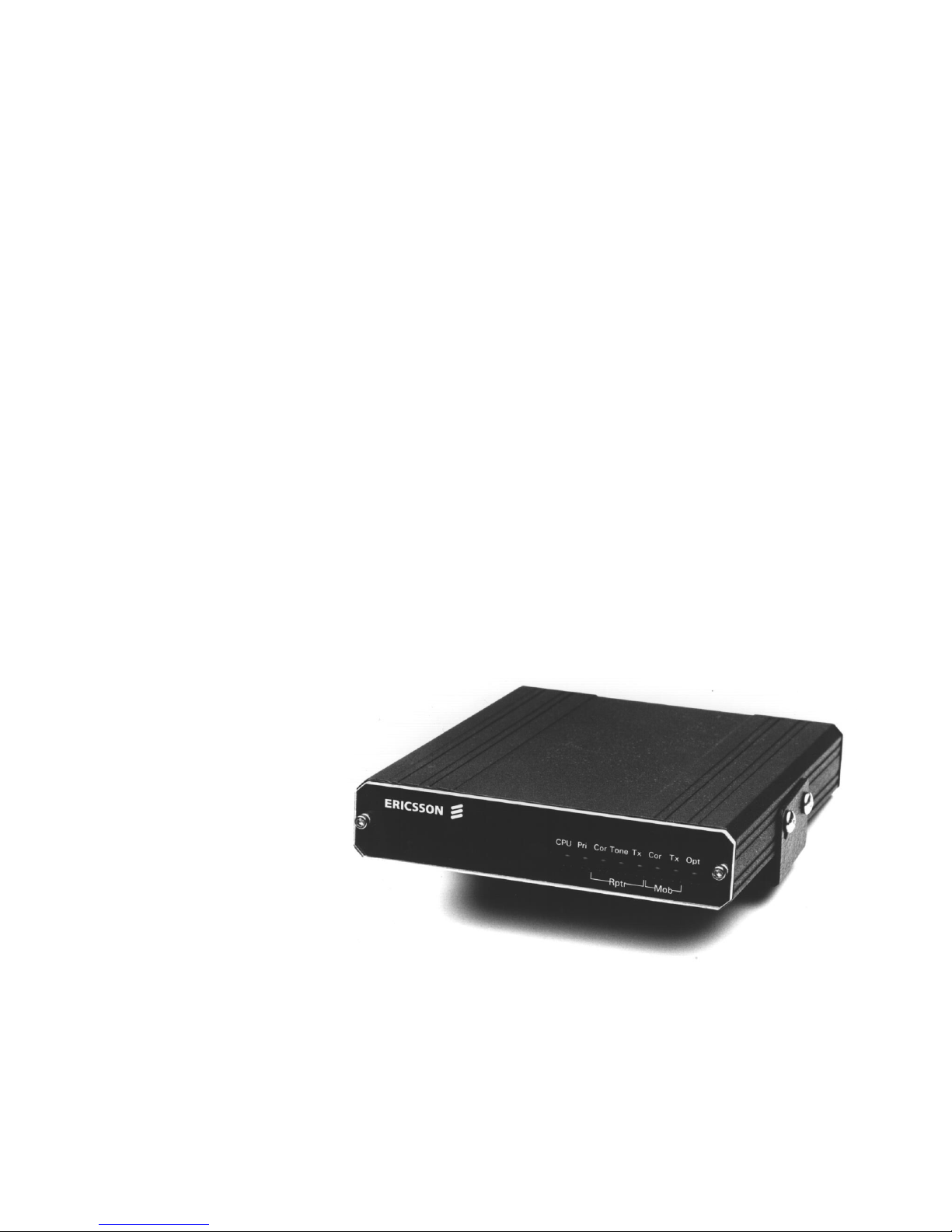
When the user leaves the vehicle, the VRC must be acti-
vated via the mobile radio front panel or a separate switch.
When the mobile radio is receiving carrier and proper CTCSS
tone, the VRC will begin transmitting on the portable’s receive
frequency. The user is able to hear and respond to all radio
messages, including other portables at the site. The VRC can
be programmed to give the portables priority in a conversation
by periodically sampling for portable activity (carrier and
proper CTCSS tone) during base-to-portable transmissions.
During sampling, if the VRC detects a portable transmission,
it will cease transmission, key the mobile radio and repeat
portable-to-base. This allows the portable to respond during
repeater hang time or during full duplex interconnect calls.
Priority sampling can be enabled/disabled through PC pro-
gramming and interval can be programmed between 0.25
seconds and 2.5 seconds in 0.25 second increments.
The VRC has a fixed 3-minute time out timer for base-to-
portable transmissions. If the mobile carrier operated relay
(COR) is active for more than 3 minutes (and the VRC is the
priority unit), the VRC will send a double blip and cease
transmission until the mobile COR is inactive. The 3 minute
time-out is in effect regardless of whether the VRC is pro-
grammed for priority sampling or not.
MULTI-VEHICLE OPERATION
When the VRC is first activated, it will transmit a short
“lock tone” that alerts the user that the system is functioning.
It will then assume the priority status and be ready to repeat
any base-to-portable or portable-to-base transmissions. If an-
other unit arrives on scene and is activated, it too will transmit
a “lock tone”. WhenthefirstVRC detectsthe“lock tone”from
the second unit, it will increment a “priority counter” and will
8