Notes on Woodburning
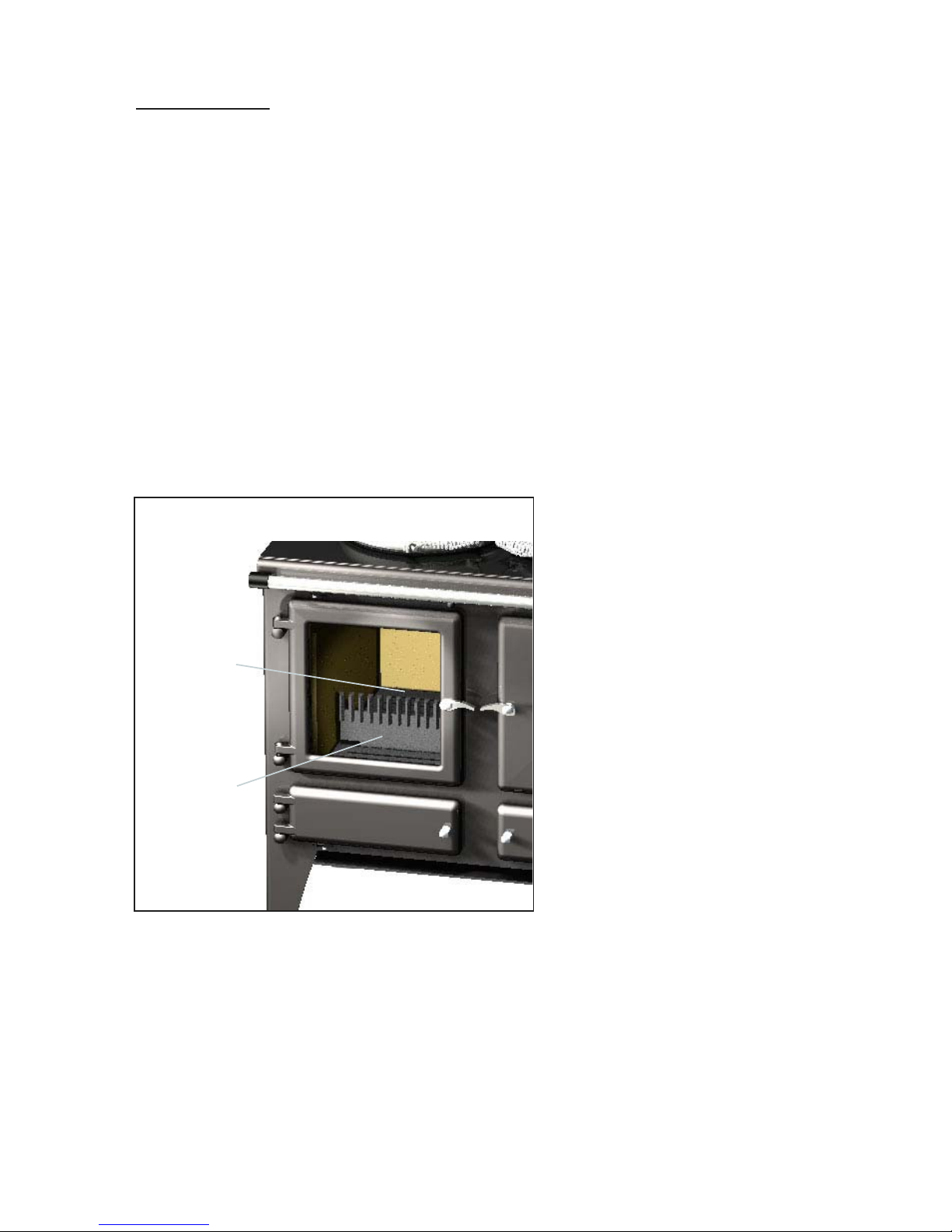
Wood burn mo t efficiently when the air for combu tion i upplied from above the fire bed rather than
below. The air upplied above the fire bed provide the oxygen nece ary for the volatile ga e
( moke), given off by the wood a it heat , to combu t. Thi en ure that the ga e are burnt and u ed
to heat the tove in tead of being wa ted up the chimney or conden ing and forming tarry depo it
in ide the tove, in the flue or on the tove gla . Running the tove with the primary air control open
and the air wa h control clo ed will provide oxygen for the wood to burn on the fire bed but will not
provide air for the volatile ga e above the fire bed to combu t re ulting in a moky inefficient fire.
With the above in mind it i plain to ee that the tove hould ideally be run with the primary air inlet
clo ed and the air wa h control open whenever po ible. Another advantage of running the tove with
the air wa h open i that the air being drawn into the tove travel acro the gla forming an air
barrier between the gla and the fire bed helping to prevent moke particle ticking to the gla .
If the fire die down too low, opening the primary air control for a hort period will revive it.
orrect running temperatures for wood burning
To get the be t re ult from your tove it i recommended that a wood tove thermometer (available
from your tove dealer) be fitted to the flue pipe above the tove, at eye level if po ible. The figure
below how the recommended temperature of the flue ga e :
115 °C 245°C (240°F - 475°F)
The flue ga e hould be in thi temperature band for the afe t, mo t efficient and mo t economical
operation of your tove.
Below 115°C (240°F)
Thi i below the conden ation point of wood ga e and may cau e the build up of tar in the chimney,
dirty the to5ve gla and re ult in the inefficient burning of fuel.
Above 245 °C (475°F)
Too hot. Heat will be wa ted up the chimney. Exce heat may damage the tove or ignite an exi ting
accumulation of tar re ulting in a chimney fire.
Don not overfire the cook tove. If the tove or chimney connector glow , you are overfiring.
Extended Wood Burning
Loading a large amount of wood into the tove all at once will reduce the temperature in ide the tove.
If the temperature i too low, the ga e given off from the wood will be too low to combu t re ulting in a
lot of moke covering the in ide of the tove, including the gla , with oot. To combat thi problem it i
a good idea to increa e the temperature of the tove before loading by further opening the air inlet .
Load the wood and leave the air control open until the moi ture i driven out of the wood and the tove
i back up to an efficient operating temperature. The air inlet can then be reduced to hold the
temperature of the tove. Loading the tove little and often will help keep the tove temperature teady.
Note: The above text hould be u ed a a guide only. The ideal operation of your tove depend on a
number of factor , which vary with each in tallation, and o gaining experience operating your tove i
the only way to learn it be t operation.
reosote - Formation and Need for Removal
When wood i burned lowly, it produce tar and other organic vapour , which combine with expelled
moi ture to form creo ote. The creo ote vapour conden e in the relatively cool chimney flue of a low
burning fire. A a re ult, creo ote re idue accumulate on the flue lining. When ignited thi creo ote
make an extremely hot fire.
The chimney and chimney connector hould be in pected at lea t once every two month during the
heating ea on to determine if creo ote build up ha occured. If creo ote ha accumulated, it hould be
removed to reduce the ri k of a chimney fire.
5