manuals.online logo
Brands
  1. Home
  2. •
  3. Brands
  4. •
  5. Freetalker
  6. •
  7. Two-way Radio
  8. •
  9. Freetalker R8 User manual

Freetalker R8 User manual

Other Freetalker Two-way Radio manuals

Freetalker RD866 User manual

Freetalker

Freetalker RD866 User manual

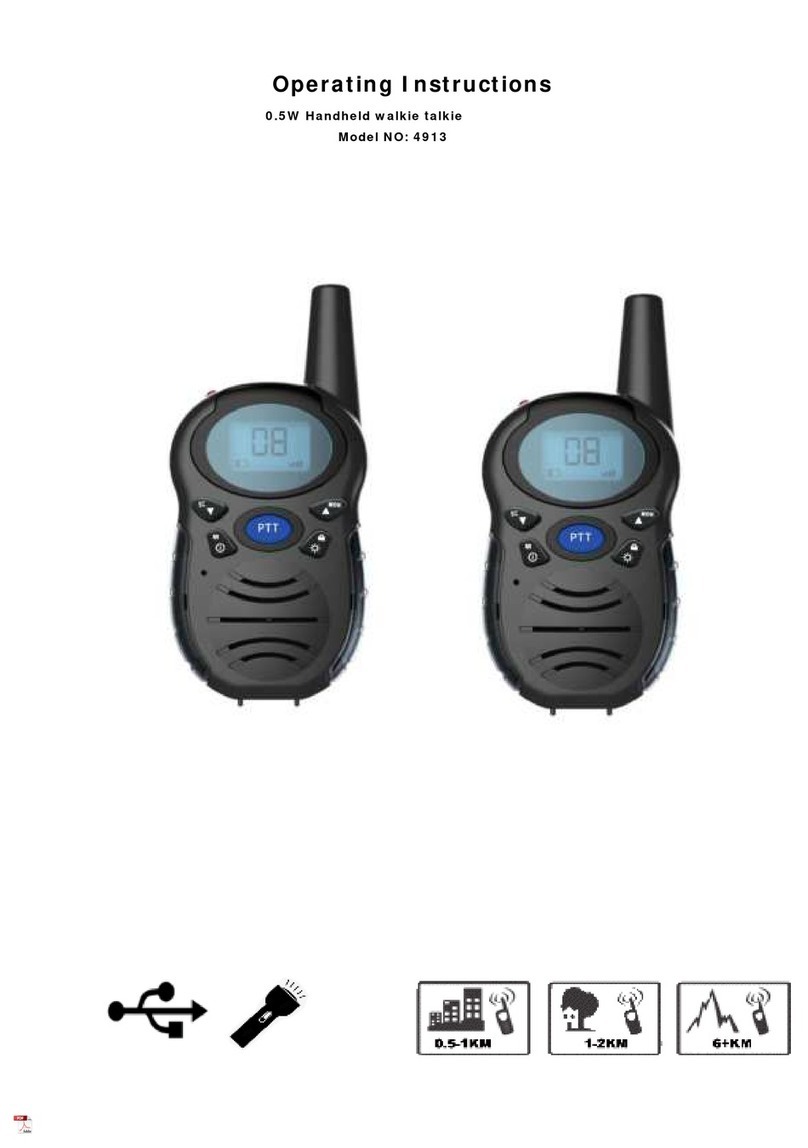
Freetalker 4913 User manual

Freetalker

Freetalker 4913 User manual

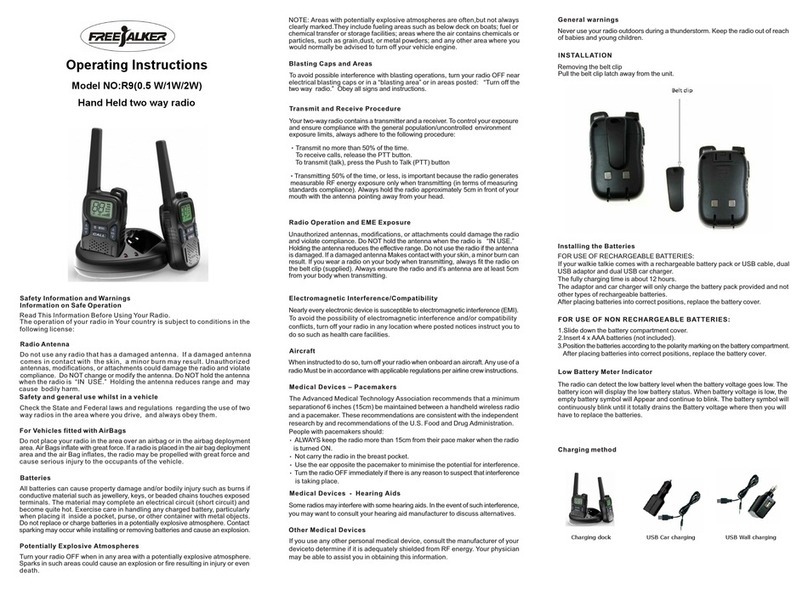
Freetalker R9 User manual

Freetalker

Freetalker R9 User manual

Popular Two-way Radio manuals by other brands

West Marine VHF85 owner's manual

West Marine

West Marine VHF85 owner's manual

Wouxun KG-UV9G manual

Wouxun

Wouxun KG-UV9G manual

Motorola T7100 Series user guide

Motorola

Motorola T7100 Series user guide

Motorola TLKR T40 user manual

Motorola

Motorola TLKR T40 user manual

DNT Space100 owner's guide

DNT

DNT Space100 owner's guide

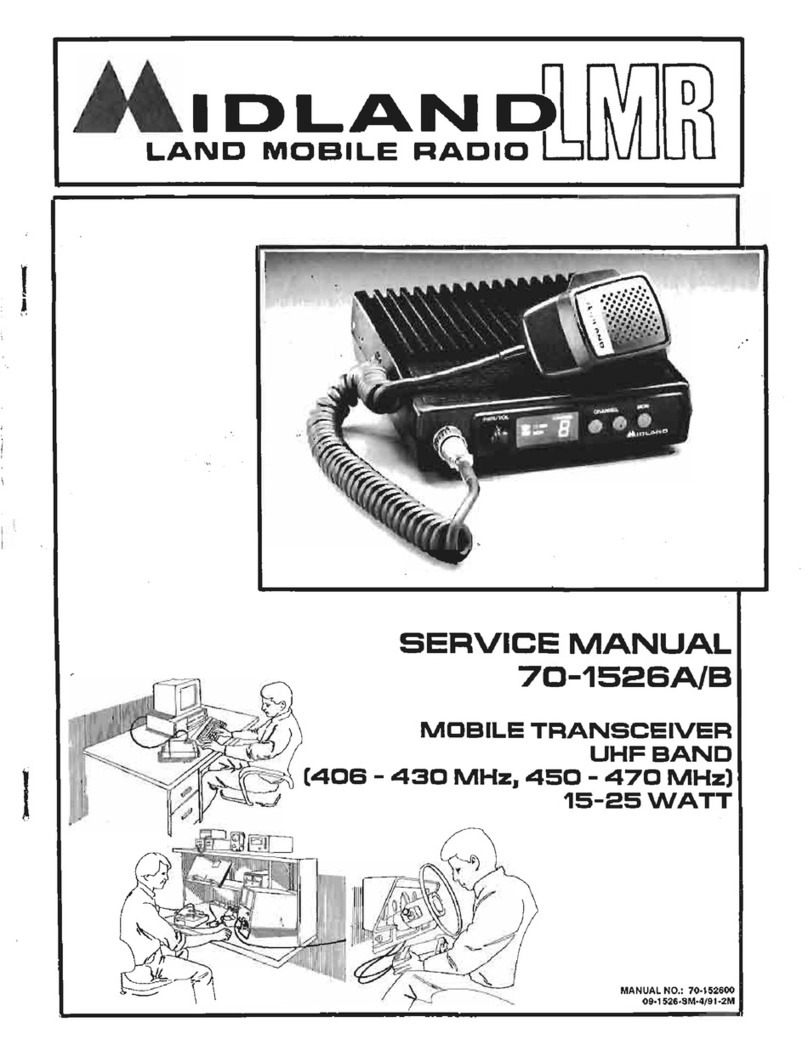
Midland 70-1526A/B Service manual

Midland

Midland 70-1526A/B Service manual

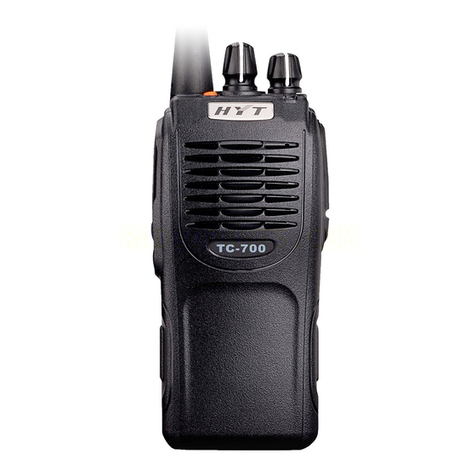
HYT TC700 Service manual

HYT

HYT TC700 Service manual

Legacy ProLine Series operating instructions

Legacy

Legacy ProLine Series operating instructions

Evolveo FreeTalk XM2-2 manual

Evolveo

Evolveo FreeTalk XM2-2 manual

AWC AWR1688+ manual

AWC

AWC AWR1688+ manual

Motorola XT665d quick start guide

Motorola

Motorola XT665d quick start guide

Cobra 2-Way Radio operating instructions

Cobra

Cobra 2-Way Radio operating instructions

Klutch KR-400 user manual

Klutch

Klutch KR-400 user manual

Garmin Rino 655t owner's manual

Garmin

Garmin Rino 655t owner's manual

Midland MXT275J manual

Midland

Midland MXT275J manual

Motorola DTR410 - On-Site Digital Radio Feature

Motorola

Motorola DTR410 - On-Site Digital Radio Feature

Cobra CXT645 owner's manual

Cobra

Cobra CXT645 owner's manual

Tait TM9100 user guide

Tait

Tait TM9100 user guide

manuals.online logo
manuals.online logoBrands
  • About & Mission
  • Contact us
  • Privacy Policy
  • Terms and Conditions

Copyright 2025 Manuals.Online. All Rights Reserved.

TURN-UP INFORMATION
MODEL: R8
1. TRANSCEIVER SETTING
A) Power Supply: By using three pieces of AAA size battery, the nominal power supply voltage is 3.6V, the operating voltage
can be ranged from3.3V to 4.5V.
B) TX/RX Channel Setting:
Press and hold the MENU PWR key for 3 seconds to switch on the transceiver. At standby mode, the primary digit displays
the channel number and supplemental digit displays the CTCSS / DCS number.
Press the MENU PWR key one time, the CH will flash, then press or to select the Channel and press PTT to
confirm and back to receiving mode interface.
C) CTCSS/DSC Number Setting
Press the MENU PWR key two time, the sub-channel will flash, then press or to select the CTCSS or DCS and
press PTT to confirm and back to receiving mode interface. Press and hold the MENU PWR key for 3 seconds to switch off
the transceiver, press PTT key to confirm and back to receiving mode interface.
2. TRANSMIT
A) Press and hold the “PTT”button while speaking at about 5cm from the microphone for transmission. LCD will display
out TX icon. Release the “PTT”button to return to standby mode.
B) Press the MENU PWR key one time to enter into channel selection sub-manual, and short press MENU PWR key three
times to enter into VOX(voice-operated transmission) sub-manual,
Use or to select OFF & the desired VOX level ( OFF –03). Without pressing the PTT button, the voice
signal can be transmitted through the microphone.
3. ADJUSTMENT DESCRIPTION
The transceiver can be adjusted manually , Manual adjustment procedure for R8 is summarized as follows.
A) Instrument Lists:
Radio Communication Test Set(HP8924C) „„„„„„„„„„„„„1 set
15V/2A DC Power Supply„„„„„„„„„„„„„„„„1 set
multimeter „„„„„„„„„„„„„„„„„„„„„1 set
B) Preparation for tuning the transceiver
i. Before attempting to tune the transceiver, connect the device under test (DUT) to a 4.5V DC power supply.
ii. Whenever the transmitter is tuned, the antenna port of DUT must be connected to a 50Ωdummy load iii. The speaker
output must be terminated to an 16Ωdummy load and connected to a Radio Communication Test Set(HP8924C) at all
times during tuning.
C) Adjustment Procedures
i. Common Section

C) Adjustment Procedures
i. Common Section
Item
Condition
Measurement
Adjustment
Specification/Remark
s
Test Instrument
Terminal
Part
Method
1.Power
supply
1.Power supply
voltage DC4.5V
15V/2A DC power
supply
BAT+&BAT-
ii.Receiver Section
Item
Condition
Measurement
Adjustment
Specification/Remark
s
Test Instrument
Terminal
Part
Method
2. Sensitivity
1. RX low
Channel
Radio
Communication
Test Set Signal
Generator
i. Output: ≤
-119dBm
ii. Modulating
signal: 1KHz
iii. Frequency
Dev: ±1.5KHz
Antenna port: RF
I/P
Speaker Jack: Audio
O/P
with 16Ωdummy
load
Check
SINAD: 12dB or
higher
2. RX center
channel
3. RX high
Channel
Distortion
4.Audio
power
1. RX center
channel
Radio
Communication
Test Set Signal
Generator
i. Output: -60dBm
Antenna port: RF
I/P
Speaker Jack: Audio
O/P
with 16Ωdummy
load
Check
Audio Distortion ≤
5% @ 0.05W
Audio power
output > 0.2W
iii. Transmitter Section
Item
Condition
Measurement
Adjustment
Specification/Remark
s
Test Instrument
Terminal
Part
Method
5. TX
Frequency
Error
1.TX center
channel
Radio
Communication
Test Set @ TX
Mode
Test Set is
connected
to antenna port of
DUT
Error
≤±200Hz
6. TX Power
1.TX power
- Radio
Communication
Test Set @ TX
Mode
- multimeter
Test Set is
connected
to antenna port of
DUT
Adjust it to :
RF PWR <
0.5W l≤
350mA
Check RF power
level
7. Max.
Frequency
Deviation
1.TX center
channel
Radio
Communication
Test Set @ TX
Mode
FILTER:
0.3-3.4KHz
AF O/P:1KHz
100mV
‘- Test Set is
connected
to antenna port of
DUT - AF O/P is
connected
to MIC Jack with 2K
Ω
dummy load
Check
deviation at
<2.5KHz
2. TX low
channel
3. TX high
channel
8.
Modulation
Sensitivity
1. TX center
channel
Radio
Communication
Test Set @ TX
Mode
FILTER:
0.3-3.4KHz
AF O/P:1KHz
12mV
’- Test Set is
connected
to antenna port of
DUT
- AF O/P is
connected
to MIC Jack with 2K
Ω
dummy load
Check
deviation:
1.2KHz-1.8KHz
Check
9.
Modulation
Distortion
≤5%
10. CTCSS
Frequency
Deviation
1. TX center
channel
Radio
Communication
Test Set @ TX
Mode
FILTER LPF: 300Hz
Test Set is
connected
to antenna port of
DUT
Adjust
deviation to
0.3KHz ±
0.2KHz
11. CDCSS
Frequency
Deviation
2. TX center
channel
Radio
Communication
Test Set @ TX
Mode
FILTER LPF: 300Hz
Test Set is
connected
to antenna port of
DUT
Adjust
deviation to
0.3KHz±
0.2KHz
Tune-up Power Range
Description
Tune-up Power (dBm)
Tune-up Power Range (dBm)
FRS
19.60 ± 0.7
18.90 ~ 20.30
GMRS
19.70 ± 0.6
19.10 ~ 20.30