Section 20 00-02-0185
2016-05-16 - 5-
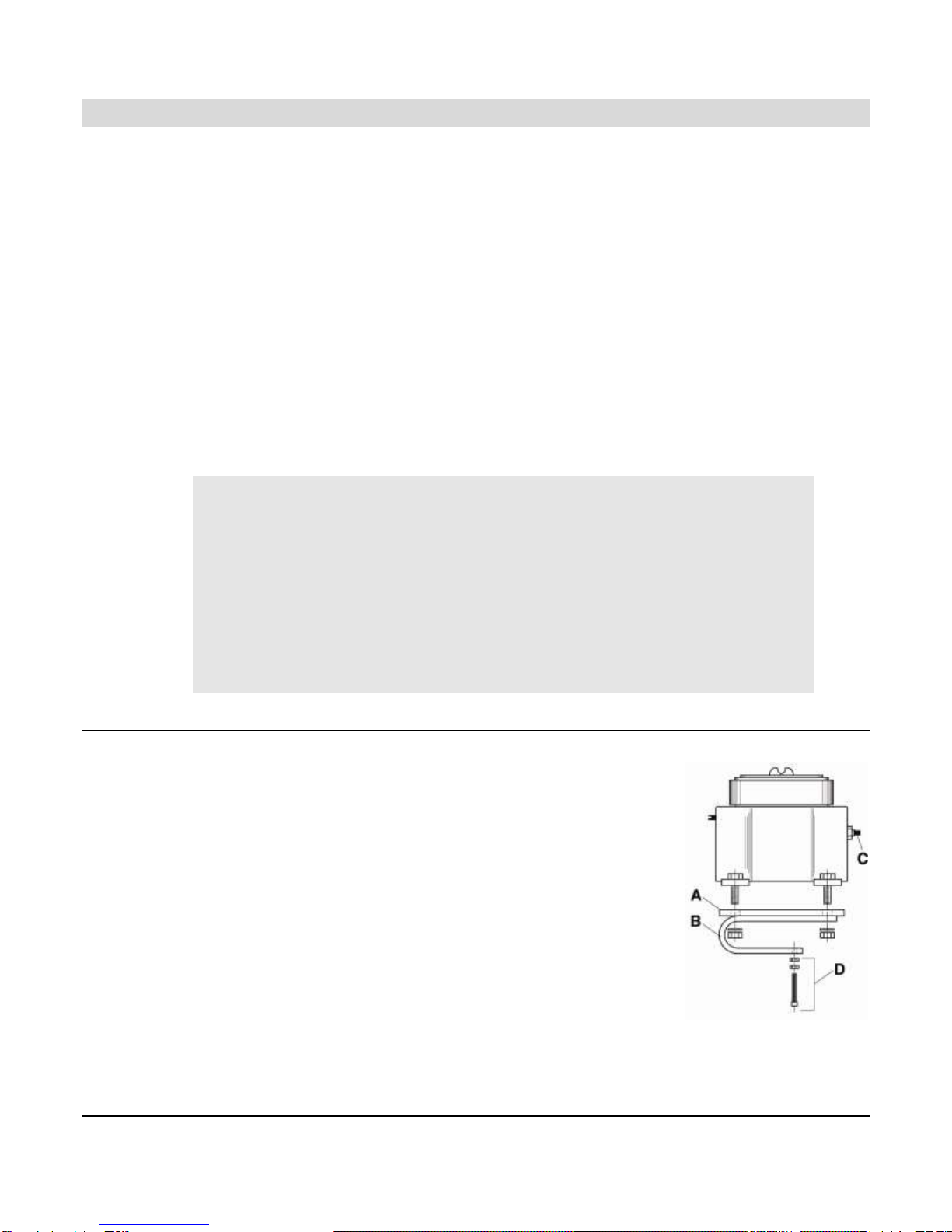
3. The hardened set screw and nuts (D) are used to tighten the switch to an I-Beam or
cross member such as a Sampson post of an oil well pump jack.
CAUTION: Conduit fittings, especially for explosion-proof
enclosures, are not weatherproof. Make sure to mount the products
horizontally to minimize water ingress. The conduit opening should
NEVER be pointing up. An NPT plug is installed in the conduit
opening as a temporary measure to prevent moisture or dust
intrusion until permanent installation.
All Models
WARNING: STOP THE MACHINE AND DISCONNECT ALL
ELECTRICAL POWER BEFORE BEGINNING INSTALLATION.
1. Firmly secure the unit to the equipment using the base foot mount or C-Clamp, if
applicable. See C-Clamp Installation.
For oil well pump jacks, attach the VS2 and VS94 Series to the Sampson post or
walking beam. See Typical Mounting Locations.
2. Make the necessary electrical connections to the vibration switch. See Internal
Switches for electrical terminal locations and for typical wiring diagrams. DO NOT
EXCEED VOLTAGE OR CURRENT RATINGS OF THE CONTACTS. Follow
appropriate electrical codes/methods when making electrical connections. Be sure that
the run of electrical cable is secured to the machine and is well insulated from electrical
shorting. Use of conduit is recommended.
NOTE: If the electrical cable crosses a pivot point such as at the pivot of
the walking beam, be sure to allow enough slack in the cable so that no
stress is placed on the cable when the beam moves.
If the conduit is not used for the entire length of wiring, conduit should be used from the
electrical supply box to a height above ground level that prevents damage to the
exposed cable from the elements, rodents, etc. or otherwise required by applicable
electrical codes. If conduit is not directly attached to the VS2 and VS94 Series switch,
use a strain relief bushing and weatherproof cap on the exposed end of the conduit. A
drip loop should be provided in the cable to prevent moisture from draining down the
cable into the conduit should the weatherproof cap fail.
NOTE: Hazardous area enclosures installed in hazardous areas require
explosion-proof, poured conduit seals. Installation should only be done by
qualified personnel trained in hazardous area electrical practices.