To activate the transportation lock
5. Remarks in respect of the determined use
5.1 Operation
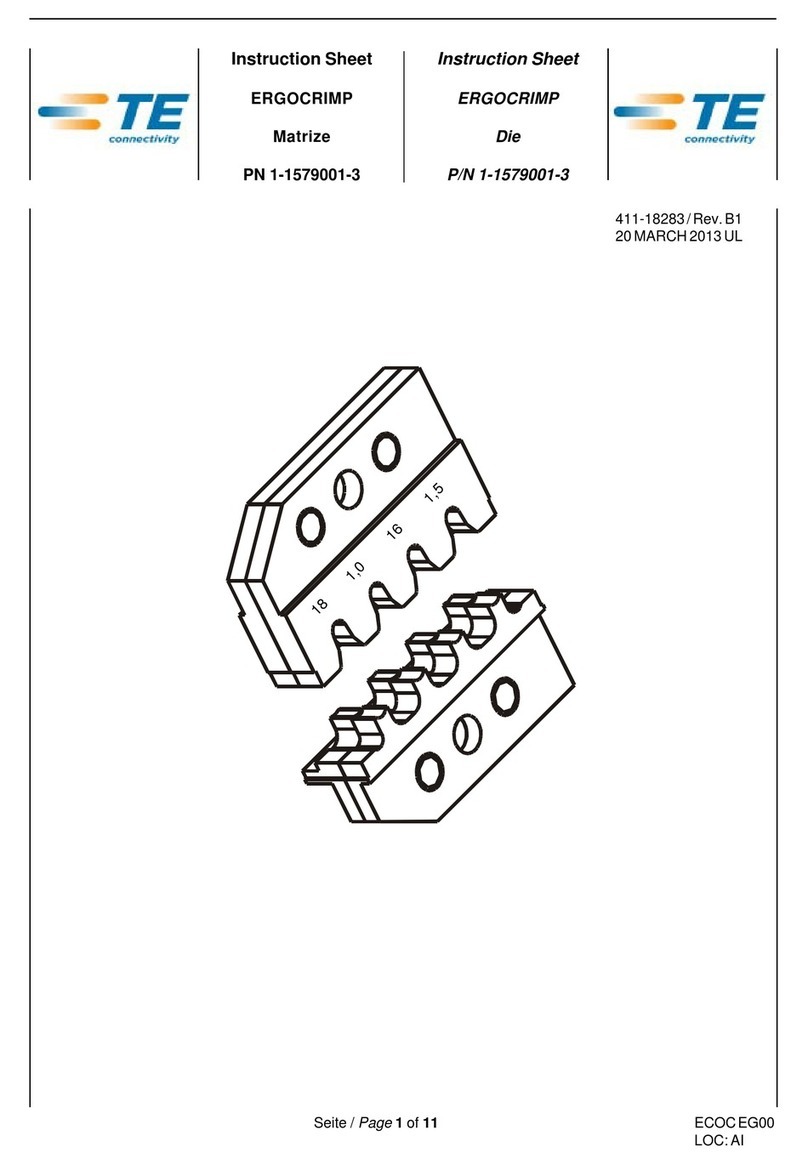
First you have to select the right dies for the intended application.
Attention:
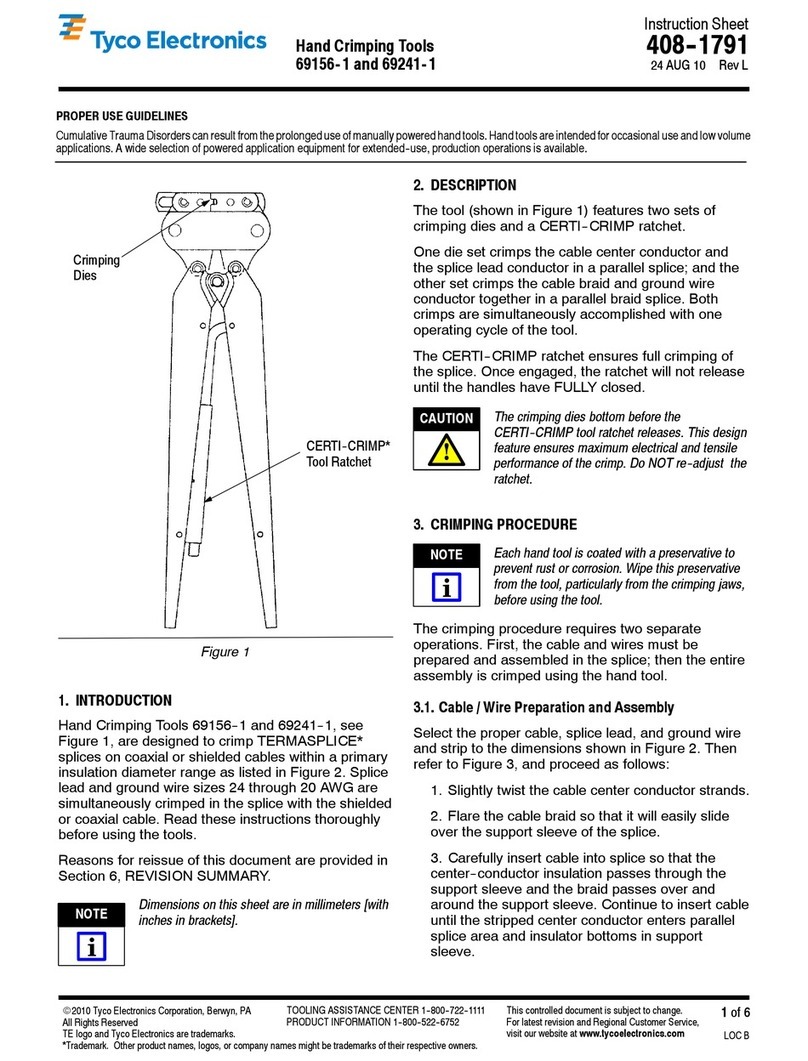
Don’t use the tool without dies
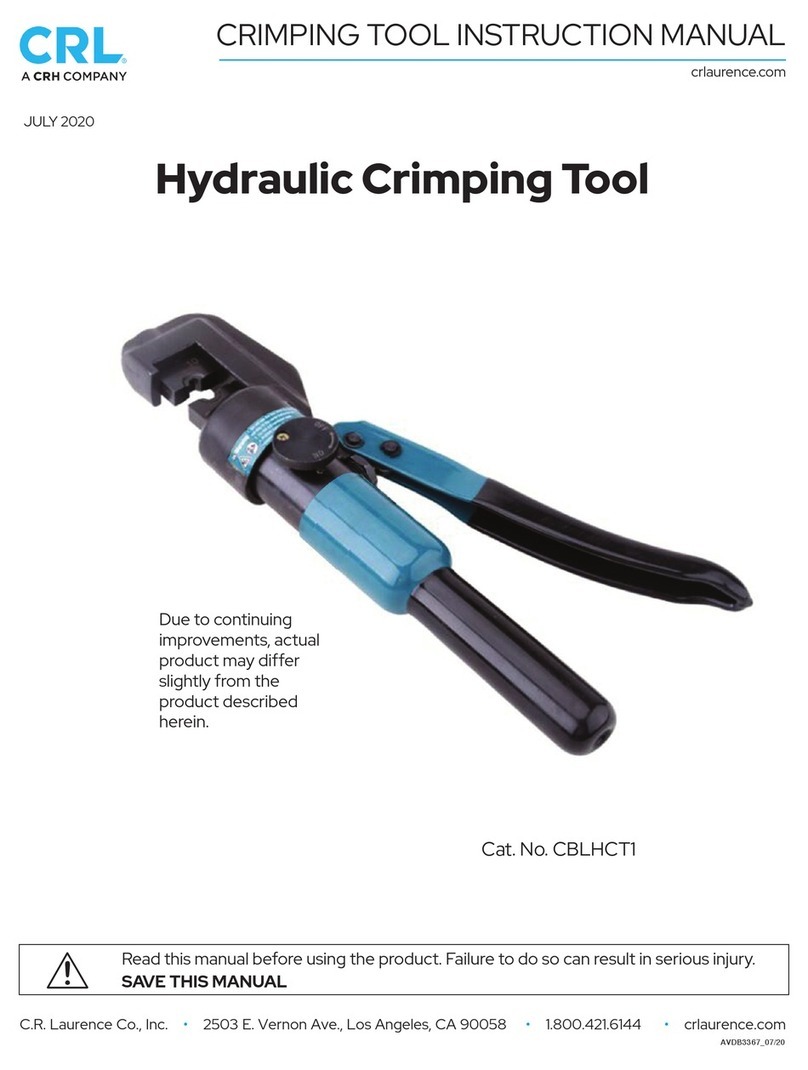
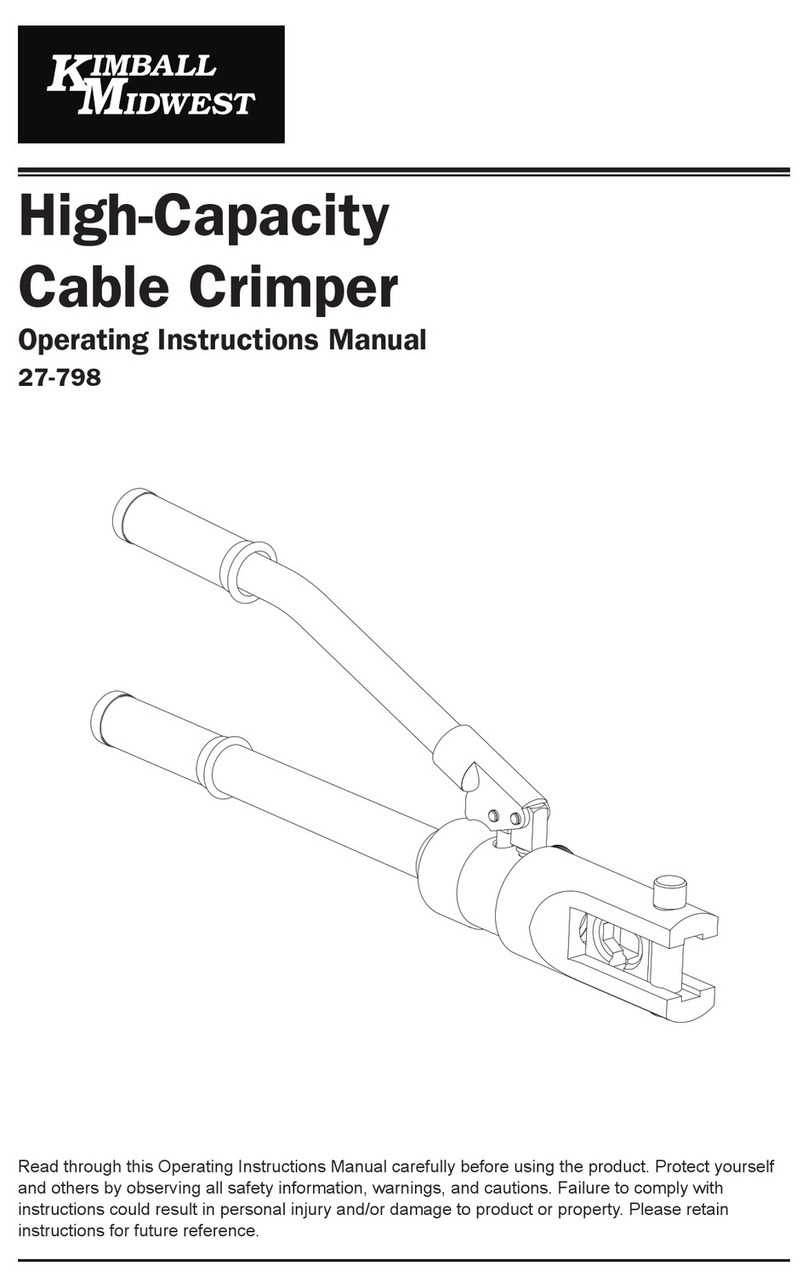
1. Afterwards the dies will be inserted laterally into the crimping head until the die
lock engages and locks the die securely. Then the connecting material must be
positioned in the crimping. In order to start the crimping procedure, the turn screw
must be turned 180°while the pump lever is pushed towards the handle.
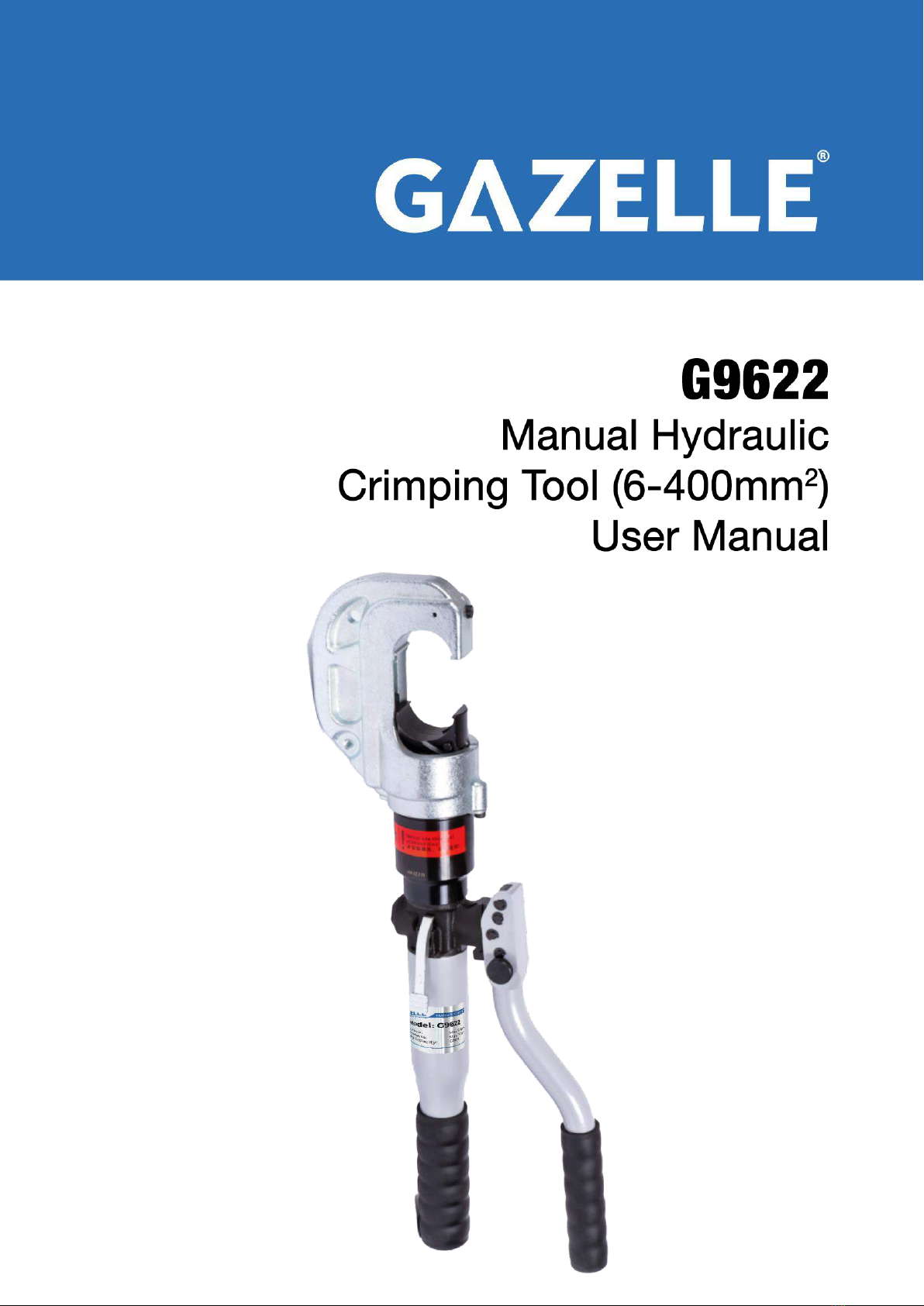
2. A crimping process is initiated by activating the pump lever. It is defined by the
closing motion of the dies. The connecting material is positioned in the stationary half
of the crimping dies and the moving part is approaching the compression point.
3. The tool is equipped with a double piston pump which is characterized by a fast
approach of the die towards the connecting material and a slow working speed with
forces to crimp the connector. In the low-pressure mode, the fast approach is realized
while opening the pump lever and the slow by closing it. In the high-pressure mode,
the compression is realized by closing the pump lever only.
4. A crimping cycle is terminated when the dies contact each other and when the
maximum crimping force is reached. This is indicated by a significant decrease of the
handle force.
5. After the crimping is completed, if the rated pressure value is not reached, the
return lever can be used to manually return the piston to the starting position to
achieve pressure relief and return oil; if the rated pressure value has been reached, the
tool will automatically release the pressure and the piston will automatically retract.
Afterwards a new crimping cycle can be initiated or the crimping process can be
terminated and the connecting material removed out of the crimping head.
6. Before storing the tool the turn screw has to be turned 180°and the handles must
be closed until the lock is activated.
5.2 Explanation of the application range
Our hydraulic crimping tool has a large number of various dies available to
crimping primarily copper and aluminum but other connecting materials.
Table 2