EnglishDeutsch
 logo
Brands
  1. Home
  2. •
  3. Brands
  4. •
  5. GE
  6. •
  7. Dishwasher
  8. •
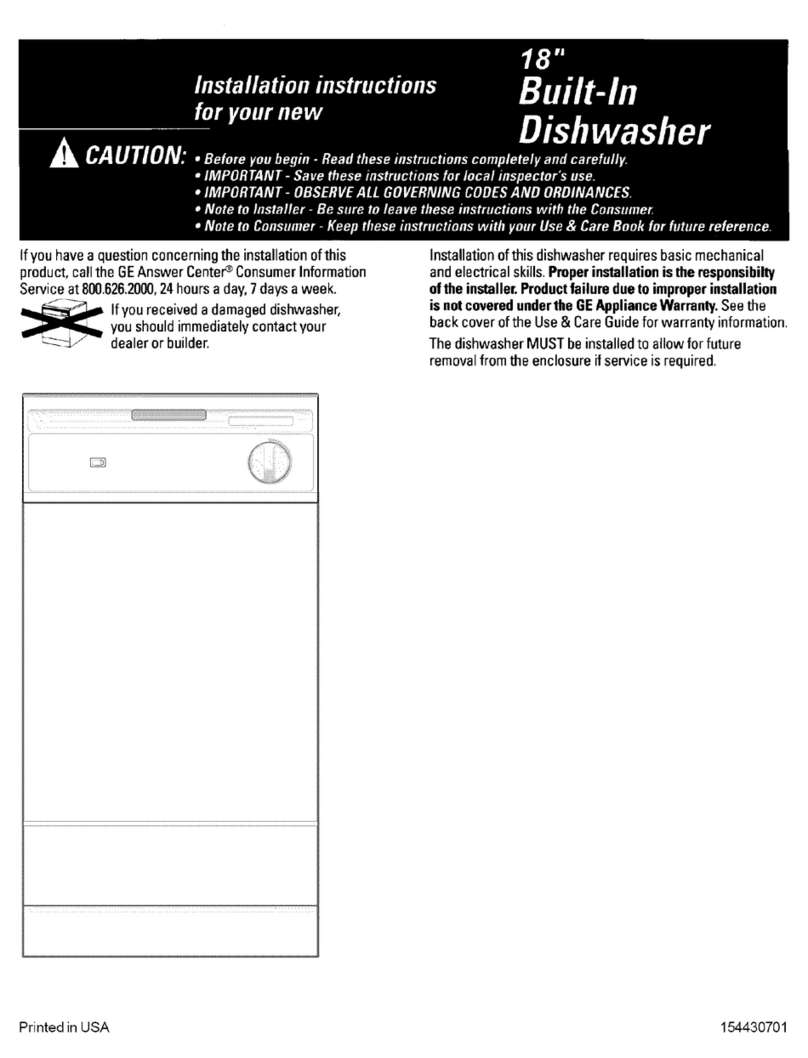
  9. GE GSS203 Installation instructions

GE GSS203 Installation instructions

Other GE Dishwasher manuals

GE WQP12-6501 How to use

GE

GE WQP12-6501 How to use

GE GLDT696J-SS User manual

GE

GE GLDT696J-SS User manual

GE GSD2300 series User manual

GE

GE GSD2300 series User manual

GE GSD2000 series User manual

GE

GE GSD2000 series User manual

GE GHD1106 User manual

GE

GE GHD1106 User manual

GE GSD800 User manual

GE

GE GSD800 User manual

GE GDT550HGD How to use

GE

GE GDT550HGD How to use

GE GSM2260VSS User manual

GE

GE GSM2260VSS User manual

GE GLDA696FSS Assembly instructions

GE

GE GLDA696FSS Assembly instructions

GE Mabe GLD9312 How to use

GE

GE Mabe GLD9312 How to use

GE GDF510PGDBB User manual

GE

GE GDF510PGDBB User manual

GE Monogram ZBD0710 User manual

GE

GE Monogram ZBD0710 User manual

GE CDT 725-765 Series User manual

GE

GE CDT 725-765 Series User manual

GE GE Profile Triton GPF475 User instructions

GE

GE GE Profile Triton GPF475 User instructions

GE Monogram ZBD5600 User manual

GE

GE Monogram ZBD5600 User manual

GE EDW4000 Series User manual

GE

GE EDW4000 Series User manual

GE Profile PDW8000 Series User manual

GE

GE Profile PDW8000 Series User manual

GE Monogram ZBD3000 User manual

GE

GE Monogram ZBD3000 User manual

GE GLD4604V Manual

GE

GE GLD4604V Manual

GE GSS1800 User manual

GE

GE GSS1800 User manual

GE gsd2400 User manual

GE

GE gsd2400 User manual

GE GLDA696FSS User manual

GE

GE GLDA696FSS User manual

GE GSD6900J10BB User manual

GE

GE GSD6900J10BB User manual

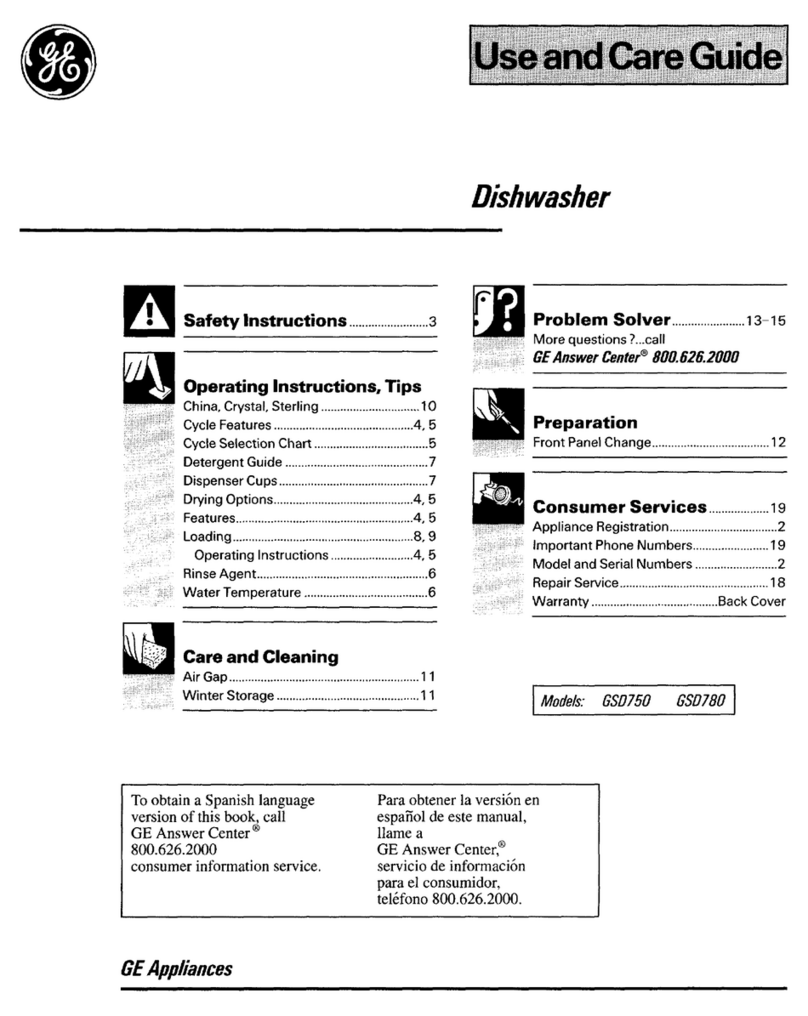
GE GSD750 User manual

GE

GE GSD750 User manual

Popular Dishwasher manuals by other brands

Electrolux ESI5211LOX user manual

Electrolux

Electrolux ESI5211LOX user manual

KitchenAid KUDB230B Use and care guide

KitchenAid

KitchenAid KUDB230B Use and care guide

Brandt BDJ424DB instruction manual

Brandt

Brandt BDJ424DB instruction manual

Asko DSD767UXXL.AU user manual

Asko

Asko DSD767UXXL.AU user manual

Beko DFN26210W instruction manual

Beko

Beko DFN26210W instruction manual

NEFF S153ITX00E INFORMATION FOR USE

NEFF

NEFF S153ITX00E INFORMATION FOR USE

Midea SV 4.45 wi manual

Midea

Midea SV 4.45 wi manual

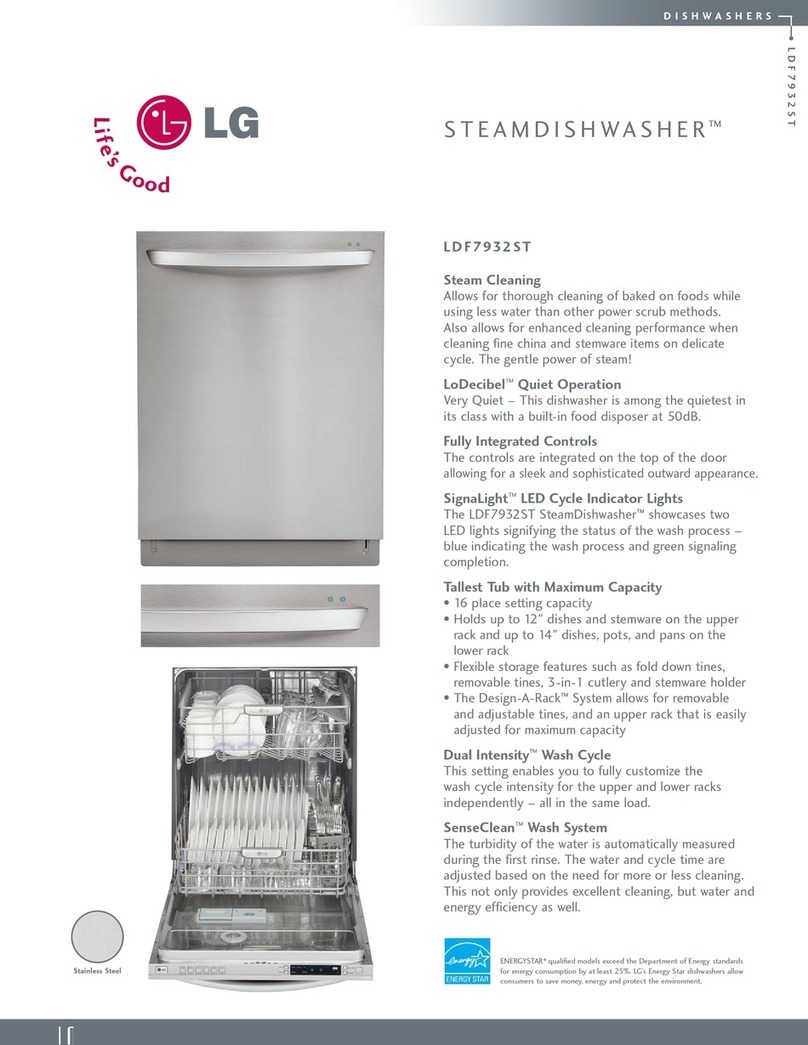
LG LDF7932 Specifications

LG

LG LDF7932 Specifications

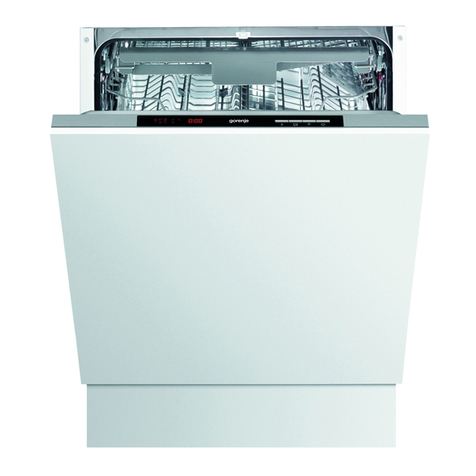
Gorenje GV63214 instruction manual

Gorenje

Gorenje GV63214 instruction manual

Hotpoint HDA1100ZWH Installation information

Hotpoint

Hotpoint HDA1100ZWH Installation information

Blomberg LDFN2240W instruction manual

Blomberg

Blomberg LDFN2240W instruction manual

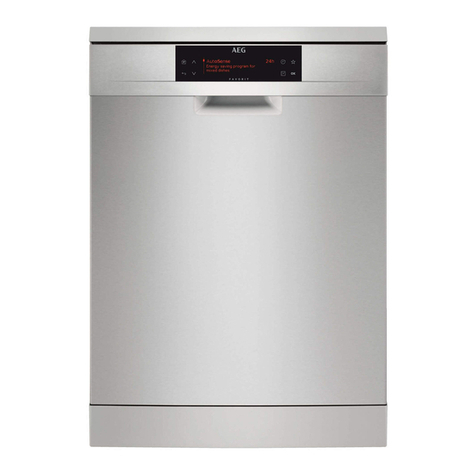
AEG FFB83836PM user manual

AEG

AEG FFB83836PM user manual

Cylinda DM3220RFD user manual

Cylinda

Cylinda DM3220RFD user manual

Atag DW8214MB manual

Atag

Atag DW8214MB manual

Siemens SN23HI02KE INFORMATION FOR USE

Siemens

Siemens SN23HI02KE INFORMATION FOR USE

Omega ODW717X instruction manual

Omega

Omega ODW717X instruction manual

BORETTI BVW-683 operating instructions

BORETTI

BORETTI BVW-683 operating instructions

Siemens SN 56N591 operating instructions

Siemens

Siemens SN 56N591 operating instructions

https://manuals.online logo
https://manuals.online logoBrands
  • About & Mission
  • Contact us
  • Privacy Policy
  • Terms and Conditions

Copyright 2026 Manuals.Online. All Rights Reserved.

. ..
..
.*=-
‘,
., .
&
Operating Instructions leaflet carefully;They .tomer Care” servicers. Youl find them in the
contain detailed information on the operation
and recommended maintenance of your new
dishwasher. Once you have read them keep them
handy for answers to questions you may have.
If you have any additional questions concern-
ing the operation of your dishwasher, u@e—
including your phone number— to:
Consumer Affairs
General Electric Company
Appliance Park
Louisville, Kentucky 40225
If you reaeiveadamaged dishwasher,imrnedi-.
ately contact the dealer (or builder) from whom
you purchased it. They have been informed of
the proper procedure to take care of such mat-
ters and can handle it for you.
Before you call for service, check the Problem
Solver on pages 8-12of this book. It lists
many minor causes of operating problems that
you can correct yourself and may save you an
unnecessary service call.
Need service? In many cities, there’s aGeneral
Electric Factory Service Center. Call, and a
radio-dispatched truck will come to your home
by appointment –morning or afternoon. Charge
the work, if you like. Ail the centers accept
both Master Charge and Visa cards. (Phone
numbers are on pages 13-14.)
“~Yellow Pages under “GENERAL ELECTRIC
CUSTOMER CARE” SERVICE.”
Locate your dishwasher’s modeI and serial .
number. Should you ever need to call for ser- .
vice you will need these numbers. Youll find
‘them on aplate on the side of the door.
Modal Numhar
Seriai Numbar
Enter both of these numbers in the spaces
above. Give both these numbers if you ever
need to call for service. 4$=’.
You will also find it convenient to have the $
following information: ‘.-
-4
Deaiar’s Nama
Date Purchase~
KEEP PURCHASE RECEIPT WITH THIS
BOOK FOR FUTURE REFERENCE.
If you needservice literature,parts lists, parts
or accessories,contact one of the Factory Serv-
ice Centers, afranchised Customer Carem
servicer or your dealer.
Extended ServiceContracts. The terms of your
warranty provide free service for adefinite
period of time. (See the back cover of this
book. )After this warranty expires you may
Contents
Model and Serial Number Location. . . . ...1 How To Fill the Dual Detergent Dispenser 7
Important Safety Information. . . . . . . . . . . .2 Preparation of Dishwasher for
Energy -Saving Tips . . . . . . . . . . . . . . . . . ...3 Winter Storage . . . . . . 8
How To Prepare Your Tableware, Care and Cleaning 8
Pots and Pans . . . . . . . . . . . . . . . . . . . . . ...3 Problem Solver . . . . . . . . . . . . .8-12 .,
How To Load Your Dishwasher. . . . . . . ...3-5 Factor Service Centers. 13-14 ‘-
How To Wash Special Items ., . . . . . . . . ...6 Warranty Back Cover
1
——..-.
I

— —
hissing or sputtering sound as the gas
escapes from the faucet as the hot
water begins to flow. There should be
no smoking or open flame near the
faucet at the time it is open.
*Be careful not to touch the Calrod
heating unit at the bottom of the tub
during or immediately after the cycle
is completed— it may be hot.
~Load light plastic items S@ they will
not become dislodged and drop to the
bottom of the dishwasher–they might
come into contact with the heating
unit and be damaged.
~Use on/y special Iow-sudsi ng deter-
gents developed especially for auto-
r}~atic dishwashers.
HD{shwasber detergents and wetting
z~g<.~i~t
~~i-~qpOiJ ncis s170u Id not be taken
lnts;-nai Iy-keep them OUt of reach of
$[‘/1[-]iI(-j~-1/~(_j[’e~~
Energy-SavingTips
The powerconsumptionof yourdishwashercan
be minimized
if you follow thesesuggestions,
●Adishwasherwill usually hold awhole day’s
dishes.Tb saveelectric power as well as time+
detergentandwater,operatethedishwasheronly
whenitisfull,Whenyou haveonlyapartialload
and you do not plan to washdishes untilthe
dishwasherisfull,rinseheavysoilsoff dishesand
utensilsbefore loading,and be sureto rinseoff
ForBest
●Hot Wateris amust. Use only hot water in
yourdishwasher–water enteringtubshouldbe
between 1400 and 150° F. See how to measure
water temperatureon page 9.
silverwareto preventitfromgarnishing.
.AlwaysselecIthe shortestcycle thatwill re-
movethesoilfrom theIom.i.
●When fast dryingof dishes is not necessary,
turndishw~sheroff when washand rinsepor-
tionof the cycle is finished.Some modelshave
anEnergySaverpushbuttonthatdoes thisauto-
matically.
Results
●Automatic DishwasherDetergentis amust.
Use only fresh detergents designed for auto-
matic dishwashers(seepage 7). Do not useold
detergent that is very hard or caked in the
container.
HowTo PrepareYour Tableware,PotsAnd Pam
Hardfood wastes,suchas bonesandcorn cobs, cereals,becausethey do not readilydissolve in
must beremoved.Thesebelong in afood waste water.Loosen baked-onfood from utensilsand
disposer. Large amounts of food soil on table- casseroledishesby soakingin hot waterbefore
ware must be removed—particularly starchy loading them into dishwasher.
foods such as mashed potatoes, rice or cooked
HowTo LoadYourDishwasher
‘J’hisis arandom“mixed-load”’... themost com-
mon type you willhave.
130thracks of your dishwashermay be loaded
at random as illustrated. As you pull out the
racks, you’]] finclthe upper rack rests on the
lower rack supports. tt’hen loading the dish-
washer,set the upper rack on Y)UI’ C~UntertW
and load it there.Fill thelowerrackin the dish-
washer.
Pots anc~pans, casseroles and other items with
hen~s~+driecf-on anti baked-on soils must be
loaded in the lower rack with the open end
down, [acing directly toward the wash arm be-
low the lower rack. Shallow. items may be
an,glcdpro~ridwlthe IOWQI-sicic dom not shield
soil~~c!surface insidi’ from (iirect w’at~’raction.
1,ix}lt]l’.~oi](~(]i[~JIIISInal- [)c Ioacicd in either
thc’Hppt’r (}1-loJv(’rrac’k.~vithth(l soilt~(isurfaces
facing dow”nt~’mitolt-ard th(’ center as illust rar(xi.
LoadingtheUpperRack
GLASSES, CUPS, SAUCE DISHES
Load glasses, cups, saucers, dishwasher-safe
plastic and wood items in the upper rack of
your dishwasher,using theseillustrationsas a
guide.
Load shallow items such as cups and small
glasses a~ongsides of upper rack. Tall, deep
glasses should be loaded in the second rows of
vertical pins so they rest firmIy against the
pinsasshown.
UTENSILSAND BOWLS
Saucepansand lids, beaters, spatulas, mixing
bowls and other small food preparationitems
may be placed at random in the upper rack.
Remember, when loading any item, it should
face toward the water source, in the center.
Notice dee~ items are loaded o~en-end down
so soiledsurfacesface directly toward primary
washarm.
Load small pots, pans and bowls along with
other items in upper rack.
Long-handledcooking forks, spoons and other
flat utensilsare placed flat in rack with soiled
surface facing downward.
Position stemware in the upper rack as shown
S()the bowl rests a.qainst the vertical pins and
the hase a~ainst the side. Do not allow items to
toUCh cwch (Ither.
LoadingtheLowerRack
IMPORTANT
WashTowerrisesthroughcenterof lowerrack
during washandrinseportion of cycle to wash
upper rack.
tM not blockthisarea of lower rack,
or loadtall items directly beside it.
PLATESAND SAUCERS
Plates and saucers fit between the pins, as
shown. Load ulatters aloruzthe sides, in cor-
ners or in the back. Do not place large dishes a
across the front of the rack preventingwater v
from reachingthe Dual Detergent Dispenser.
Placing glassesin the lower rack is not recom-
mended due to the powerful water action.
UTENSILS
ITEMS WITH HEAVY, DRIED-ON AND
BAKED-ON SOILS SUCH AS POTS, PANS
AND CASSEROLES MUST BE LOADED IN
THE LOWER RACK wITH THE OPEN END
DOWN, FACING DIRECTLY TOWARD THE
WASH ARM BELOW THE LOWER RACK.
Place siiierw)m-e in basket with handles up to
protect .vourhandswhenunloading.Best wash-
in~ results are obtained i~’hensilverware is
mixed an{l evenly distributed. not nested to-
:r(~t II(J r. IksuIT slcn der iten]s do not pr(~trud(’
~hrough I)ott011)of bnsk{lt
Shallowitemsmay beangledprovided thelower
side does not shield soiled surface inside from
direct wateraction.
You will probably have to tilt the broiler pan
to clear the upper rack.
CHINA
Chinais normallysafe in your automatic dish-
washer.However, antique, metal trimmed,
hand painted china or over-the-glazepatterns
are vulnerableto fading with high water tem-
perature and detergent solutions and shc)uld
not be washedin adishwasher.
If there is any c]uestion,check with the manu-
facturerof thechinaware,ortest washonepiece
dailyfor atleastonemonthforcomparison with
the rest of the set.
CRYSTAL
Load securely to prevent mo~’ement. On models
mquipped with aL’hina &-Crystal cycle, the pow-
~~rfu1~~ater action is reduced with aeration to
help prcwent it~~ms from being knocked into
[’ach other.
PLASTICS
\lost manu[acturei-s Hill tell j’ou if their plas-
Licware is sat’ein the dishwasher; if they CIOnot,
>rournaj wish tou.rite and ask for their reconl-
m(~n(lotions. Test one piece in the dishwasher
l)(~for(~}~iishin~ the (~ntire set, Plac(~in the uppc~r
rack an(l cllinlin:~te tho he;ited drj’ part of the
~.,.{.](}[() r(~d[ICCt.II(Jrisk ()1’1$LIrpin~~.
‘iiI1’lorl-L():IIL~(lif(Ims I?I:IJ I)(I}~asl)c(i in the (iish-
METALS
NOTE: Dry detergenton aluminumand silver
may causeblackspoflswhicharedifficult to re-
move. Avoid placingthem underthe detergent
cup.
STAINLESS STEEL utensils and tableware
washbeautifullyinadishwasher.
ALUMINUM WARE will clean satisfactorily
in your dishwasher.Some darkeningor spot-
ing of aluminummay take place due to the
mineralcontent of thewater anddetergent. If
thishappens,scour allsurfaceswithsoap-filled
steelwool pads,
Some colored anodized aluminumcan fade in
the dishwasher.
,——— .
IRON SKILLETS shouldnot be placed in the
dishwasher.In order to prevent their rusting,
they areoil-seasonedby the manufacturer.The
highly efficient washing action in your I)ish-
washerwillremet’ethisseasoning.
——-—..-..——-..—.——.—..—----..—---——.--———-——.—
PEWTERWARE shouldnot be placed in dish-
washer- it willtarnish.
—-.—..——-— —— —..—-—
WOCJD
lltx;]~ls(~ Jtoo[i maj warp, crack or lose its finish
\\it hordinarj- washing, there is apossibility
this might h:~ppcn more (]u icklj in adish-
li :1sI1(’1’.
Fill theDud
DetergentDispenser
This dispenser has two sections (one covered)
because some cycles include two washes. Use
the following chart as aguide for the amount
of detergent to use.
The Dual Detergent Dispenser is located in-
side thedishwasherdoor.
Add detergentto cups as recommendedbelow
and swing cover closed on the ALL WASH
CYCLES CUP.
WATER HARDNESS
Yourlocalwaterdepartmentor areawatersoftener companycantell youthe hardnessof your water.
CYCLES SOFT WATER MEDIUM HARD
(O-3grainshardness) (4-9 grains) (10-15 grains)*
Normal Cycle Use both the main and Fill both the main Fill both the main and
extra cups 1tablespoon and extra cups 1/2 full extra cups completely
minimum.
Short Cycle Use main cup only 1Fill the main cup Fill the main cup completely
tablespoon minimum. only 1/2 full
Detergentbrandshave varying amounts of phos-
phates. Phosphate is awater softening ingredi-
ent in detergents which can help prevent hard
water minerals from forming spots or films on
dishes, glasses, etc. l“ou may need to increase
det,c~rgentwhen the phosphate content is low
(8.7[%or less) and the water is hard (10 grains
or more), Read the detergent package label cli-
rect]y under the pouring spout, to find the phos-
phate content.
IMJ?ORTANT: Do not, put detergent, into the
dispenser until -you’re read}’ to wash (iishes.
Fresh, dry detergent is necessary for best wash-
ing results. REAIEMBER: Use on]}’ detergents
designed for automatic dishwashers.
‘h-xtremely Hard (15grains and up). Water softener is
recommended;detergent alone may not be enough. In
extreme conditions, lime may build up over time in the
water valve, causing it to stick open and possibly flood
if awater softener is not used.
,PHOSPH/4TE
CONTENT
CareandCleaningof YourDishwasher
CAREOF EXTERIORFINISHES CARE OF INTERIOR
TheDishwashercabinetisfinishedwithdurable Normally the interior is self-cleaning.Avoid
baked-onsyntheticenamel.Usehighgradewax scouring pads and harshcleanserswhich may
cleaner.Avoidharshor grittycleanersor scour- marfinish.Useamildcleansingpowder.
ingpadswhichmayscratchfinish.
Preparationof Dishwasherfor Winter Storage
If dishwasheris to be left unusedin unheated ●lbrn off watersupplyto dishwasheranddrain
location during winter months, have service waterinletline.
techniciantake the followingsteps to prevent ●Remove water valve from dishwasher and
machinefrom freezing: blow on smallplastic outlet to removewater.
~Remove fuses or trip circuit breakers to re- cRemove plug in bottom of rubber boot and
move electricpowerfrom dishwasher. drain completely.
The Problem Solver
Save timeand money ..beforeyou call for service,checkthefollowing:
If theproblempersists afteryou havefollowedtherecommendations,callyour Factory ServiceCenter
(see pages 13-14)or afranchised Customer Care servicer. The service technician can detect mal-
functions quickly. If you try to fix it yourself, it could be more costly or possibly causebodily harm.
PROBLEM POSSIBLE CAUSE AND REMEDY
DISHWASHER WILL Makesuredoor latch is closed completely.
NOT RUN House fuse may be blown, or circuit breaker may be open. Replace
fuseor reset.circuit breaker. Removeotherappliancesfromcircuit.
An especially small Item may have moved from its original platie,
Be sureall itemsare securely p~acedin dishwasher.
(continued next page)
8
PROBLEM POSWBLECAUSEANOREMEDY
DISHES DO NOT ORY Water temperaturetoo low. For best results,temperatureshouldbe
140°F.to1500F.
Unload lower rack first-water from items in upper rack may fall
intolower rack.
Improperloading: Dishesshouldnot nesttogether.Avoidoverloading.
Rinseagentdispenseris empty (on dishwashershavingthis feature).
“Drying Heat On” button not pushed (on m~dels equipped with
Energy Saveroption).
Improperly prepareddishee.Excessfood soil shouldbe removedfrom
dishesbeforeloading. .
~o}lowluadingdirecti~n~”13esuredish~asherisnot
overloaded.Makesuredishesorutensilsdonot block sprayarmsor
telescopingspraytower.
Improperdetergent, insufficientamount,or olddetergent, DOnot use
detergent that is hard Orcaked. Use onlyfresh detergentsdesigned.
for~t~~o~~~ic dishwashers.Seepage7.