SMOKE CONTROL AREAS
The Clean Air Act 1993
and Smoke Control Areas
Under the Clean Air Act local
authorities may declare the whole or
part of the district of the authority to be
a Smoke Control Area. It is an offence
to emit smoke from a chimney of a
building, from a furnace or from any
fixed boiler if located in a designated
Smoke Control Area. It is also an
offence to acquire an ‘unauthorised
fuel’ for use within a Smoke Control
Area unless it is used in an ‘exempt’
appliance (‘exempted’ from the controls
which generally apply in the Smoke
Control Area).
The Secretary of State for Environment,
Food and Rural Affairs has powers
under the Act to authorise smokeless
fuels or exempt appliances for use
in Smoke Control Areas in England.
In Scotland and Wales this power
rests with Ministers in the devolved
administrations for those countries.
Separate legislation, the Clean Air
(Northern Ireland) Order 1981, applies
in Northern Ireland. Therefore it is
a requirement that fuels burnt or
obtained for use in smoke control areas
have been ‘authorised’ in Regulations
and that appliances used to burn
solid fuel in those areas (other than
‘authorised’ fuels) have been exempted
by an Order made and signed by the
Secretary of State or Minister in the
devolved administrations.
Further information on the
requirements of the Clean Air Act can
be found here:
www.smokecontrol.defra.gov.uk.
Your local authority is responsible for
implementing the Clean Air Act 1993
including designation and supervision
of Smoke Control Areas and you can
contact them for details of Clean Air
Act requirements.
RECOMMENDED FUELS
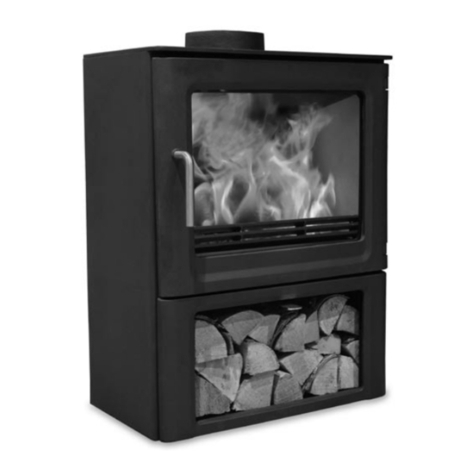
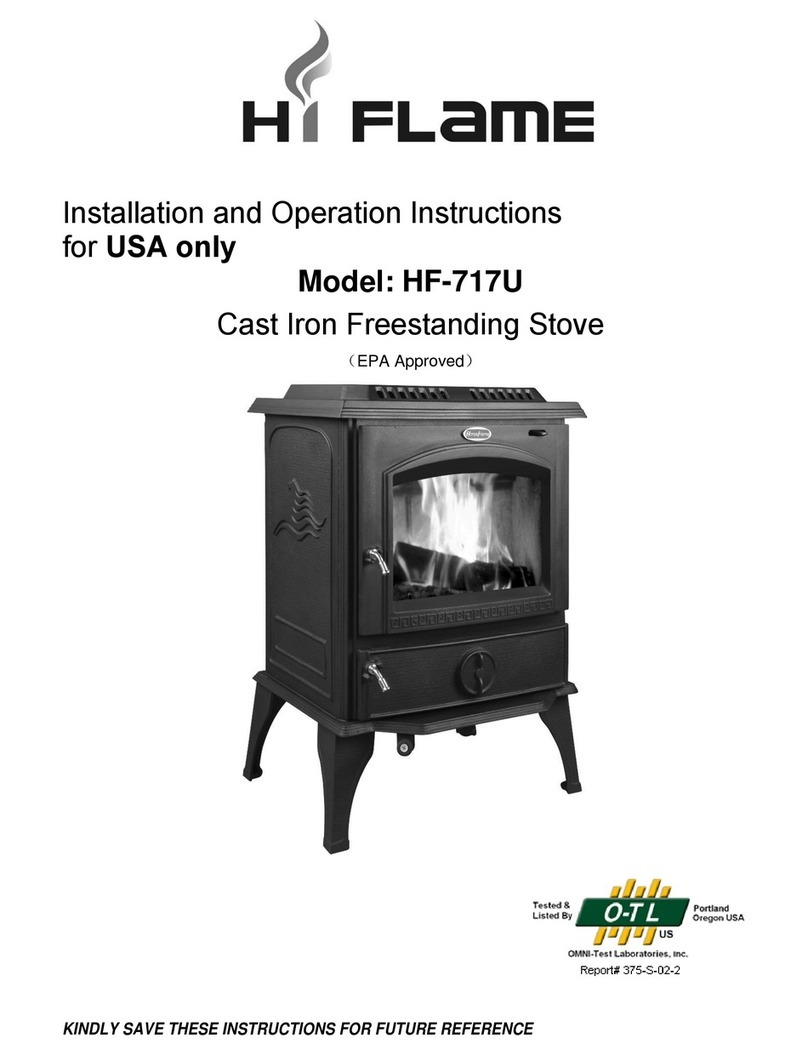
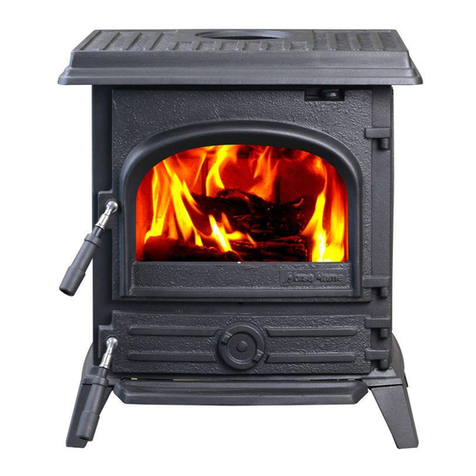
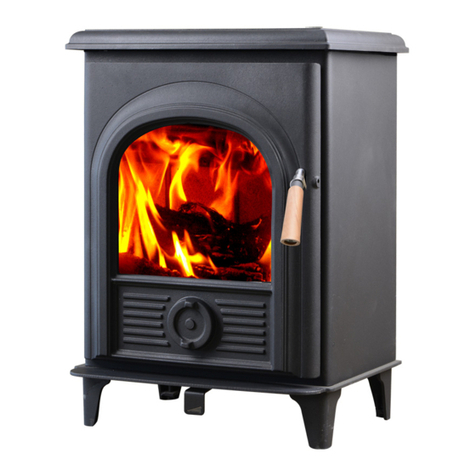
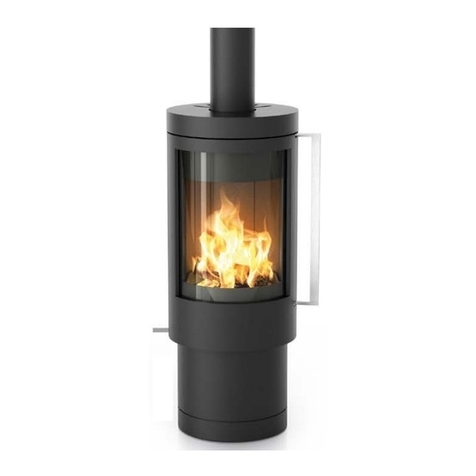
The Precision I HF905-SE stove is
approved by DEFRA as an ‘exempted
appliance’ to allow the burning of
wood in designated UK Smoke Control
Areas. It must, at all times, be operated
in accordance with the instructions to
minimise the amount of smoke
produced.
The following fuels are approved by
Horse Flame® for use in the HF905-SE:
• Wood Logs Only ever use dried, fully
seasoned chopped wood logs with a
moisture content of less than 20%.
Wood which is well seasoned makes
a distinctive ‘clack’ rather than a dull
‘thud’ when knocked together. It will
also feel much lighter than an
unseasoned log. Other indicators
include bark peeling away and cracking
and splitting around the outside.
Ideally wood should be seasoned
outdoors for between 18 to 24 months
– the harder the wood then the longer
the seasoning. It should be stacked off
the ground with plenty of space
between the logs to allow air
movement and with the top covered
to keep rain and snow out. Seasoned
wood will give you approximately 50%
more heat output than the equivalent
unseasoned log.
10