being measured and work down from there. Note these areas
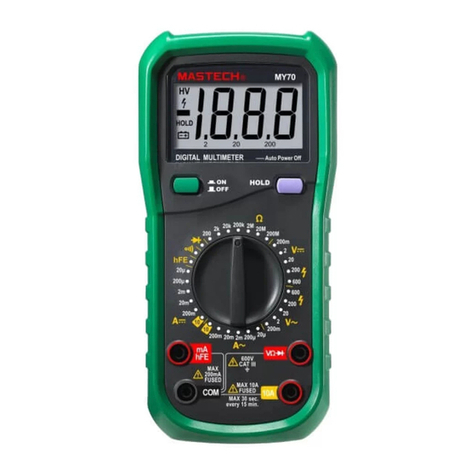
of the selection range are red in color, to match the color of
the proper jack in which the red test probe should be inserted
for this type of measurement. CAUTION: To avoid possible
electric shock, instrument and/or equipment damage, do not
attempt to take any voltage measurements if the voltage is
above 200V DC or if the voltage is unknown. The “GROUND”
jack potential should not exceed 500V measured to ground.
3. Apply the test probes to the two points at which the voltage
reading is to be taken. Be careful not to touch any energized
conductors with any parts of your body.
4. Turn the dial to the next lower range for a more accurate
reading only if the reading is within that next lower range.
5. When measurements are completed, disconnect the test
probes from the circuit under test.
DC Current Measurements
WARNING: This meter is NOT designed to measure AC current.
Attempts to measure AC current could cause permanent damage
to the meter and/or the equipment under test and void the
warranty.
1. Always start at the highest range of the function to be
measured and move down from there.
2. Insert the black probe into the black “GROUND” jack, and the
red probe into the blue “10A ONLY” jack.
3. Adjust the dial to the blue “10A” position. Note this area of the
selection range is blue in color to match the color of the
proper jack in which the red test probe should be inserted for
this type of measurement only. CAUTION: The 10A range is
NOT protected in any way and has a very low internal
resistance. Do not attempt to take a current measurement if
the current is unknown or above 10A DC. The “GROUND”
terminal potential should not exceed 500V measured to
ground.
10