manuals.online logo
Brands
  1. Home
  2. •
  3. Brands
  4. •
  5. Hotpoint Ariston
  6. •
  7. Hob
  8. •
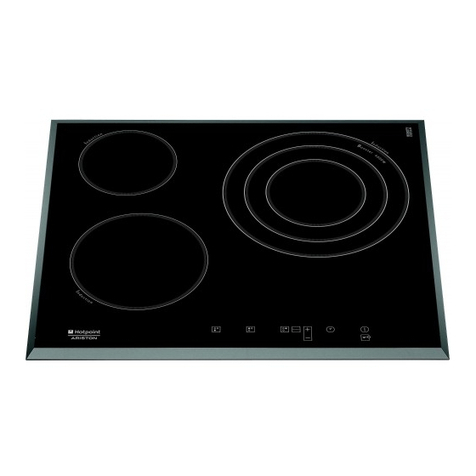
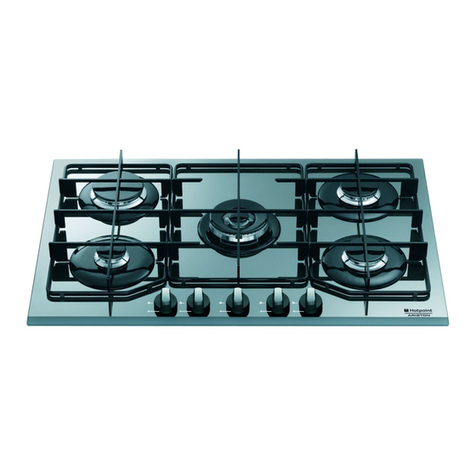
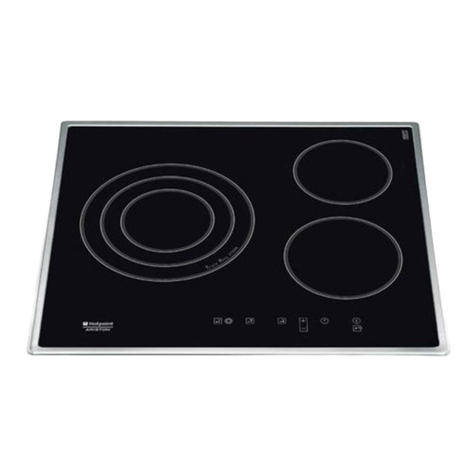
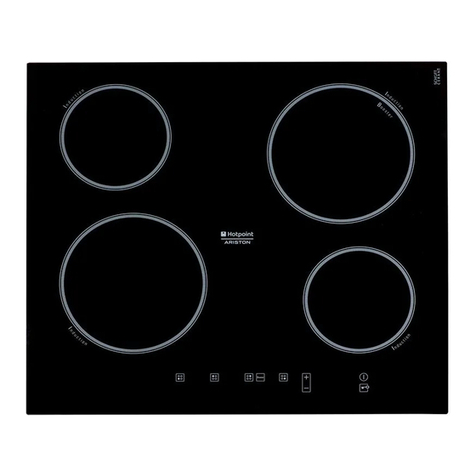
  9. Hotpoint Ariston 642 PCN /HAWH User manual

Hotpoint Ariston 642 PCN /HAWH User manual

This manual suits for next models

3

Other Hotpoint Ariston Hob manuals

Hotpoint Ariston TQG 641/HAEE User manual

Hotpoint Ariston

Hotpoint Ariston TQG 641/HAEE User manual

Hotpoint Ariston CISTD 640S User manual

Hotpoint Ariston

Hotpoint Ariston CISTD 640S User manual

Hotpoint Ariston THC 642 W/IX/HA TK User manual

Hotpoint Ariston

Hotpoint Ariston THC 642 W/IX/HA TK User manual

Hotpoint Ariston KIX 644 C E User manual

Hotpoint Ariston

Hotpoint Ariston KIX 644 C E User manual

Hotpoint Ariston PK 644 D GH X User manual

Hotpoint Ariston

Hotpoint Ariston PK 644 D GH X User manual

Hotpoint Ariston PH 940MS HA User manual

Hotpoint Ariston

Hotpoint Ariston PH 940MS HA User manual

Hotpoint Ariston PC 750 T X /HA User manual

Hotpoint Ariston

Hotpoint Ariston PC 750 T X /HA User manual

Hotpoint Ariston PCN 642 U User manual

Hotpoint Ariston

Hotpoint Ariston PCN 642 U User manual

Hotpoint Ariston KIC 644 C User manual

Hotpoint Ariston

Hotpoint Ariston KIC 644 C User manual

Hotpoint Ariston PCN 752 T/EX/HA User manual

Hotpoint Ariston

Hotpoint Ariston PCN 752 T/EX/HA User manual

Hotpoint Ariston PKLL 751 T/IX/HAR User manual

Hotpoint Ariston

Hotpoint Ariston PKLL 751 T/IX/HAR User manual

Hotpoint Ariston PC 604 /HA User manual

Hotpoint Ariston

Hotpoint Ariston PC 604 /HA User manual

Hotpoint Ariston PKQ 755 D GH (CF) /HA User manual

Hotpoint Ariston

Hotpoint Ariston PKQ 755 D GH (CF) /HA User manual

Hotpoint Ariston PL 640S P (IX) TK/HA User manual

Hotpoint Ariston

Hotpoint Ariston PL 640S P (IX) TK/HA User manual

Hotpoint Ariston PA 200I EBK0 User manual

Hotpoint Ariston

Hotpoint Ariston PA 200I EBK0 User manual

Hotpoint Ariston PCN 642 IX/HAR User manual

Hotpoint Ariston

Hotpoint Ariston PCN 642 IX/HAR User manual

Hotpoint Ariston PCN 642 T/EX/HA User manual

Hotpoint Ariston

Hotpoint Ariston PCN 642 T/EX/HA User manual

Hotpoint Ariston TD 640 IX/HA User manual

Hotpoint Ariston

Hotpoint Ariston TD 640 IX/HA User manual

Hotpoint Ariston PCN 642 T User manual

Hotpoint Ariston

Hotpoint Ariston PCN 642 T User manual

Hotpoint Ariston FTGHL 751 D/IX/HA LPG User manual

Hotpoint Ariston

Hotpoint Ariston FTGHL 751 D/IX/HA LPG User manual

Hotpoint Ariston KIA 641 C User manual

Hotpoint Ariston

Hotpoint Ariston KIA 641 C User manual

Hotpoint Ariston CISKBH 6004 IX/1/HA User manual

Hotpoint Ariston

Hotpoint Ariston CISKBH 6004 IX/1/HA User manual

Hotpoint Ariston PKL 641 D2/IX/HA User manual

Hotpoint Ariston

Hotpoint Ariston PKL 641 D2/IX/HA User manual

Hotpoint Ariston 9YTDR 645T CH X/HA User manual

Hotpoint Ariston

Hotpoint Ariston 9YTDR 645T CH X/HA User manual

Popular Hob manuals by other brands

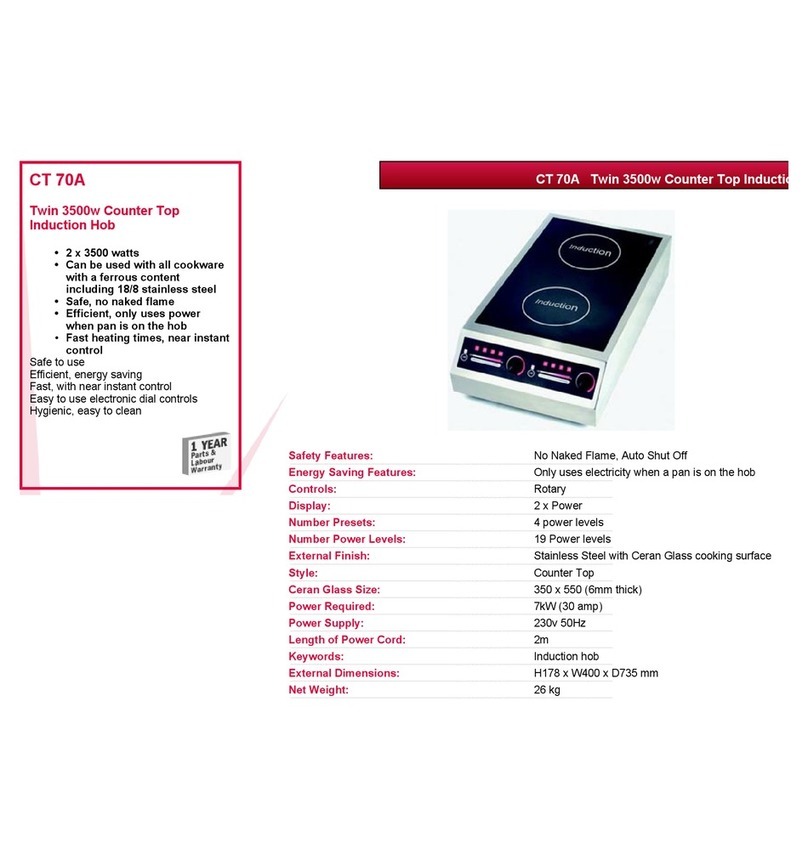
PreCise BI-2000T user manual

PreCise

PreCise BI-2000T user manual

AEG HK884400XG user manual

AEG

AEG HK884400XG user manual

KKT KOLBE IFZ772EDF Instruction and installation manual

KKT KOLBE

KKT KOLBE IFZ772EDF Instruction and installation manual

premiere PG4VQ255FTN instruction manual

premiere

premiere PG4VQ255FTN instruction manual

AEG HK614000CB user manual

AEG

AEG HK614000CB user manual

Klarstein 10033282 manual

Klarstein

Klarstein 10033282 manual

Zanussi ZGF 782 CTN Instruction booklet

Zanussi

Zanussi ZGF 782 CTN Instruction booklet

Asko H6 Use and care guide

Asko

Asko H6 Use and care guide

Eurotech ED-C3 02 instruction manual

Eurotech

Eurotech ED-C3 02 instruction manual

IKEA Livsgnista manual

IKEA

IKEA Livsgnista manual

Dacor DTT36M974 user manual

Dacor

Dacor DTT36M974 user manual

AEG HKP75410XB user manual

AEG

AEG HKP75410XB user manual

Siemens EX875KYV1E INFORMATION FOR USE

Siemens

Siemens EX875KYV1E INFORMATION FOR USE

AEG CERAMIC HOB 6010 K Installation and operating instructions

AEG

AEG CERAMIC HOB 6010 K Installation and operating instructions

Zanussi ZGF 6420 Instruction booklet

Zanussi

Zanussi ZGF 6420 Instruction booklet

G3 Ferrari Energy user manual

G3 Ferrari

G3 Ferrari Energy user manual

Award H903BG user manual

Award

Award H903BG user manual

Bosch PIN64 T1 Series instruction manual

Bosch

Bosch PIN64 T1 Series instruction manual

manuals.online logo
manuals.online logoBrands
  • About & Mission
  • Contact us
  • Privacy Policy
  • Terms and Conditions

Copyright 2025 Manuals.Online. All Rights Reserved.

English
Operating Instructions
HOB
Contents
Operating Instructions,1
Warnings,2
Assistance,4
Description of the appliance,5
Installation,6
Start-up and use,10
Precautions and tips,10
Maintenance and care,11
Troubleshooting,11
642 PCN /HA(WH)
641 PCN IX/HA RU
PCN 641 T/IX/HA RU
PCN 642 IX/HA RU


























Warnings
WARNING: The appliance and its accessible parts
become hot during use. Care should be taken to
avoid touching heating elements. Children less than 8
years of age shall be kept away unless continuously
supervised. This appliance can be used by children
aged from 8 years and above and persons with
reduced physical, sensory or mental capabilities or
lack of experience and knowledge if they have been
given supervision or instruction concerning use of the
appliance in a safe way and understand the hazards
involved. Children shall not play with the appliance.
Cleaning and user maintenance shall not be made
by children without supervision.
WARNING: Unattended cooking on a hob with fat or





cooking surfaces.
Never use steam cleaners or pressure cleaners on
the appliance.
Remove any liquid from the lid before opening it. Do
not close the glass cover (if present) when the gas
burners or electric hotplates are still hot.
The appliance is not intended to be operated by
means of an external timer or separate remote
control system.
CAUTION: the use of inappropriate hob guards can
cause accidents.

     


  
      
    

 
     

    
    
   

      

   
      
        
    
     
   
    
   
    






     
    
 

     

2

     
 
   
    
    


      

     
   
   

     

    
    
    

     

    


    
    

    
   

   


3
Assistance
Communicating:
• the type of problem encountered.
• appliance model (Mod.)
• serial number (S/N)
This information is found on the data plate located on the appliance and/or
on the packaging.


 
 
 
        



• 
 
 
      

4
Description of the appliance
Overall view
1. Support Grid for COOKWARE
2. GAS BURNERS
 Control Knobs for GAS BURNERS
4. Ignition for GAS BURNERS
5. SAFETY DEVICES
• GAS BURNERS differ in size and power. Use the diameter of the cookware
to choose the most appropriate burner to cook with.
• Control Knobs for GAS BURNERS
• GAS BURNER IGNITION
• SAFETY DEVICE stops the gas flow if the flame is accidentally
extinguished.


1. 
2. 
 
4. 
5. 
• 
    

 
 

• 



1. 
2. 
3. 
4.  
5. 
• 

•    

• 

• 

1
3
5
4
2
5
Installation
!Before operating your new appliance please read this instruction booklet
carefully. It contains important information for safe use, installation and care
of the appliance.
!Please keep these operating instructions for future reference. Pass them on
to possible new owners of the appliance.
Positioning
!Keep packaging material out of the reach of children. It can become a choking
or suffocation hazard (see Precautions and tips).
!
instructions provided. Incorrect installation may cause harm to people and
animals or may damage property.
!This unit may be installed and used only in permanently ventilated rooms
in accordance with current national regulations. The following requirements
must be observed:
• The room must be equipped with an air extraction system that expels
any combustion fumes. This may consist of a hood or an electric fan that
automatically starts each time the appliance is switched on.
In a chimney stack or branched flue.
(exclusively for cooking appliances)
Directly to
the Outside
• The room must also allow proper air circulation, as air is needed for
/h
per kW of installed power.
The air circulation system may take air directly
from the outside by means of a pipe with an
inner cross section of at least 100 cm2
opening must not be vulnerable to any type
of blockages.
The system can also provide the air needed for
combustion indirectly, i.e. from adjacent rooms
      
above. However, these rooms must not be
communal rooms, bedrooms or rooms that

• Intensive and prolonged use of the appliance may necessitate
supplemental ventilation, e.g. opening a window or increasing the power
of the air intake system (if present).
 
rooms containing LPG cylinders must also be equipped with vents to allow
gas to escape in the event of a leak. As a result LPG cylinders, whether
partially or completely full, must not be installed or stored in rooms or
storage areas that are below ground level (cellars, etc.). It is advisable to
keep only the cylinder being used in the room, positioned so that it is not

etc. ) which could raise the temperature of the cylinder above 50°C.
A
Examples of
ventilation holes
for comburant air.
Enlarging the ventilation slot
between window and floor.
Adjacent
Room
Room to be
Vented
Fitting the appliance
The following precautions must be taken when installing the hob:
• Kitchen cabinets adjacent to the appliance and taller than the top of the
hob must be at least 200 mm from the edge of the hob.
• Hoods must be installed according to their relative installation instruction

• Place the wall cabinets adjacent to the hood at a minimum height of 420

If the hob is installed beneath a wall cabinet,

mm above the hob.
 
Fastening hooks are provided, allowing you to fasten the hob to tops that
are between 20 and 40 mm thick. To ensure the hob is securely fastened
to the top, we recommend you use all the hooks provided.
555 mm
55 mm
475 mm
Before the installation remove the grids and burners from the hob and turn it
upside down, making sure you don’t damage the thermocouples and spark
plugs.
Apply the seals that come with the
appliance along the outer edges of
the hob to prevent any passage of air,
humidity and water (see Figure).
For proper application make sure the
surfaces to be sealed are clean, dry and
free of any grease/oil.
Hook fastening diagram
Hooking position for top H=20mm Hooking position for top H=30mm
Front
Hooking position for top H=40mm Back
!Use the hooks contained in the “accessory pack”.
600mm min.
420mm min.
650mm min.
6
GB
• Where the hob is not installed over a built-in oven, a wooden panel must
be installed as insulation. This must be placed at a minimum distance of
20 mm from the lower part of the hob.
Ventilation
To ensure adequate ventilation, the back panel of the cabinet must be
removed. It is advisable to install the oven so that it rests on two strips of

mm (see diagrams).
560 mm.
45 mm.
Where a hob is installed above an oven without a forced ventilation cooling
system, adequate ventilation must be provided inside the cabinet by means

Electrical connection
Hobs equipped with a three-pole power supply cable are designed to operate
with alternating current at the voltage and frequency indicated on the data
plate (this is located on the lower part of the appliance). The earth wire in the
cable has a green and yellow cover. If the appliance is to be installed above
a built-in electric oven, the electrical connection of the hob and the oven must
be carried out separately, both for electrical safety purposes and to make
extracting the oven easier.
Connecting the supply cable to the mains
Install a standardised plug corresponding to the load indicated on the data
plate.
The appliance must be directly connected to the mains using an omnipolar

the appliance and the mains.
The circuit-breaker must be suitable for the charge indicated and must comply
with current electrical regulations (the earthing wire must not be interrupted
by the circuit-breaker). The supply cable must not come into contact with
surfaces with temperatures higher than 50°C.
!The installer must ensure that the correct electrical connection has been
made and that it is compliant with safety regulations.
Before connecting to the power supply, make sure that:
• the appliance is earthed and the plug is compliant with the law.
• the socket can withstand the maximum power of the appliance, which is
indicated on the data plate.
• the voltage is in the range between the values indicated on the data plate.
• the socket is compatible with the plug of the appliance. If the socket is
incompatible with the plug, ask an authorised technician to replace it. Do
not use extension cords or multiple sockets.
!Once the appliance has been installed, the power supply cable and the
electrical socket must be easily accessible.
!The cable must not be bent or compressed.
!The cable must be checked regularly and replaced by authorised technicians
only (see Assistance).
!The manufacturer declines any liability should these safety measures not
be observed.
Gas connection
The appliance should be connected to the main gas supply or to a gas
cylinder in compliance with current national regulations. Before carrying out
the connection, make sure the cooker is compatible with the gas supply you
wish to use. If this is not the case, follow the instructions indicated in the
paragraph “Adapting to different types of gas”.
When using liquid gas from a cylinder, install a pressure regulator which
complies with current national regulations.
!Check that the pressure of the gas supply is consistent with the values

         
energy consumption.
Attention!: Before connection remove a transport plug from the connecting
hole of the cooker gas pipeline.
Connection with a rigid pipe (copper or steel)
!Connection to the gas system must be carried out in such a way as not to
place any strain of any kind on the appliance.




Connecting a flexible jointless stainless steel pipe to a threaded
attachment

These pipes must be installed so that they are never longer than 2000 mm
when fully extended. Once connection has been carried out, make sure that

!Only use pipes and seals that comply with current national regulations.
Checking the tightness of the connection
!

Adapting to different types of gas
To adapt the hob to a different type of gas other than default type (indicated
on the rating plate at the base of the hob or on the packaging), the burner
nozzles should be replaced as follows:
1. Remove the hob grids and slide the burners off their seats.
 
with nozzles for the new type of gas (see table 1 “Burner and nozzle
characteristics”).
 
 
indicating the new type of gas used. Sticker are available from any of our
Service Centres.
GB
7
Replacing the Triple ring burner nozzles
1. Remove the pan supports and lift the burners out of their housing. The
burner consists of two separate parts (see pictures).
 

1). The two nozzles have the same hole diameter.
 
order.
• Adjusting the burners’ primary air
Does not require adjusting.
• Setting the burners to minimum
 
2. Remove the knob and adjust the adjustment
screw, which is positioned in or next to the tap

 
alight, quickly change the position of the knob from minimum to maximum

 


5. Once the adjustment has been made, replace the seals on the by-passes
using sealing wax or a similar substance.
!If the appliance is connected to liquid gas, the regulation screw must be
fastened as tightly as possible.
!            
indicating the new type of gas used. Stickers are available from any of our
Service Centres.
!Should the gas pressure used be different (or vary slightly) from the

inlet pipe (in order to comply with current national regulations).
Electrical
connections
DATA PLATE
ECODESIGN
see data plate
This appliance conforms to the EU Regulation no. 66/2014
implementing Directive 2009/125/EC.
standard EN 30-2-1
8
GB
Nominal (mbar)
Minimum (mbar)
Maximum (mbar)
28-30
20
35
37
25
45
20
17
25
Rapid (R)
Reduced Rapid (RR)
Semi Rapid (S)
Auxiliary (A)
Triple Crown (TC)
100
100
75
55
130
0.70
0.70
0.40
0.40
1.50
3.00
2.60
1.65
1.00
3.30
39
39
28
28
61
86
80
64
50
65x2
218
189
120
73
240
214
186
118
71
236
3.00
2.60
1.65
1.00
3.60
132 (H)
122 (H)
96 (Z)
79 (6)
103x2
286
248
157
95
343
Burner and nozzle specifications
* At 15°C and 1013,25 mbar - dry gas
** Propane P. C.S. = 50.37 MJ/Kg
*** Butane P. C.S. = 49.47 MJ/Kg
Natural P. C.S. = 37.78 MJ/m³
Table 1 Liquid Gas Natural Gas
Supply pressures
Burner
Diameter
(mm)
Thermal
Power
kW (p.c.s.*)
NominalReduced
By-pass
1/100
(mm)
Nozzle
1/100
(mm)
Nozzle
1/100
(mm)
Flow*
g/h
*** **
Flow*
l/h
Thermal
Power
kW (p.c.s.*)
Thermal
Power
kW (p.c.s.*)
Nominal
RS
S
A
RR TC
S
A
642 PCN /HA(WH)
641 PCN IX/HA RU
PCN 642 IX/HA RU
PCN 641 T/IX/HA RU
GB
9
Start-up and use
!The position of the corresponding gas burner or electric hotplate* is shown
on every knob.
Gas burners
            
corresponding control knob:
 
Maximum
Minimum
To light one of the burners, hold a lit match or lighter near the burner and, at
the same time, press down and turn the corresponding knob anti-clockwise
to the maximum setting.

     

When using models with an gas burner ignition, to light the selected burner press
down and turn the corresponding knob anticlockwise to maximum position,
keeping it pressed until the burner has ignited.
!
at least 1 minute before trying to relight it.
To switch off the burner, turn the knob in a clockwise direction until it stops

Practical advice on using the burners

 
do not extend beyond the bottom of the cookware.
 
• When the contents of the pan reach boiling point, turn the knob to minimum.
Rapid (R)
Reduced Rapid (RR)
Semi Rapid (S)
Auxiliary (A)
Triple Crown (TC)
Ø Cookware Diameter (cm)
24 - 26
24 - 26
16 - 20
10 - 14
24 - 26
Burner
Pans to be used on 60 cm hobs
To identify the type of burner, refer to the designs in the section entitled, “Burner

• For maximum stability, always make sure that the pan supports are

• Pan handles should be positioned in line with one of the support bars on
the pan support grid.
• Pan handle should be positioned so not to protrude beyond the front edge
of the hob.
The more variable aspect in terms of pan
stability can often be the pan itself, (or
the positioning of that pan during use).

are placed centrally over the burner,
with the pan handles aligned with one

greatest stability.
Precautions and tips
!This appliance has been designed and manufactured in compliance with
international safety standards. The following warnings are provided for safety
reasons and must be read carefully.
General safety
• This is a class 3 built-in appliance.
 
operation. When installing the hob, follow the instructions provided
in the paragraph on “Positioning” the appliance.
• These instructions are only valid for the countries whose symbols
appear in the manual and on the serial number plate.
• The appliance was designed for domestic use inside the home and is
not intended for commercial or industrial use.
• The appliance must not be installed outdoors, even in covered areas. It is
extremely dangerous to leave the appliance exposed to rain and storms.
• Do not touch the appliance with bare feet or with wet or damp hands and
feet.
• The appliance must be used by adults only for the preparation of food,
in accordance with the instructions outlined in this booklet. Any other
use of the appliance (e.g. for heating the room) constitutes improper
use and is dangerous. The manufacturer may not be held liable for
any damage resulting from improper, incorrect and unreasonable
use of the appliance.
• The openings used for ventilation and dispersion of heat must never be
covered.
 ” position when the appliance
is not in use.
• When unplugging the appliance always pull the plug from the mains socket,
do not pull on the cable.
• Never carry out any cleaning or maintenance work without having detached
the plug from the mains.
• In case of malfunction, under no circumstances should you attempt to repair
the appliance yourself. Repairs carried out by inexperienced persons may
cause injury or further malfunctioning of the appliance. Contact a Service
Centre (see Assistance).
• Do not close the glass cover (if present) when the gas burners or electric
hotplates are still hot.
• The appliance should not be operated by people (including children)
with reduced physical, sensory or mental capacities, by inexperienced
individuals or by anyone who is not familiar with the product. These
individuals should, at the very least, be supervised by someone who
assumes responsibility for their safety or receive preliminary instructions
relating to the operation of the appliance.
• Do not let children play with the appliance.
• The appliance is not intended to be operated by means of an external
timer or separate remote-control system.
Disposal
• When disposing of packaging material: observe local legislation so that
the packaging may be reused.
 

not be disposed of in the normal unsorted municipal waste stream. Old
appliances must be collected separately in order to optimise the recovery
and recycling of the materials they contain and reduce the impact on
human health and the environment.The crossed out “wheeled bin” symbol
on the product reminds you of your obligation, that when you dispose of
the appliance it must be separately collected.
Consumers should contact their local authority or retailer for information
concerning the correct disposal of their old appliance.
10
GB