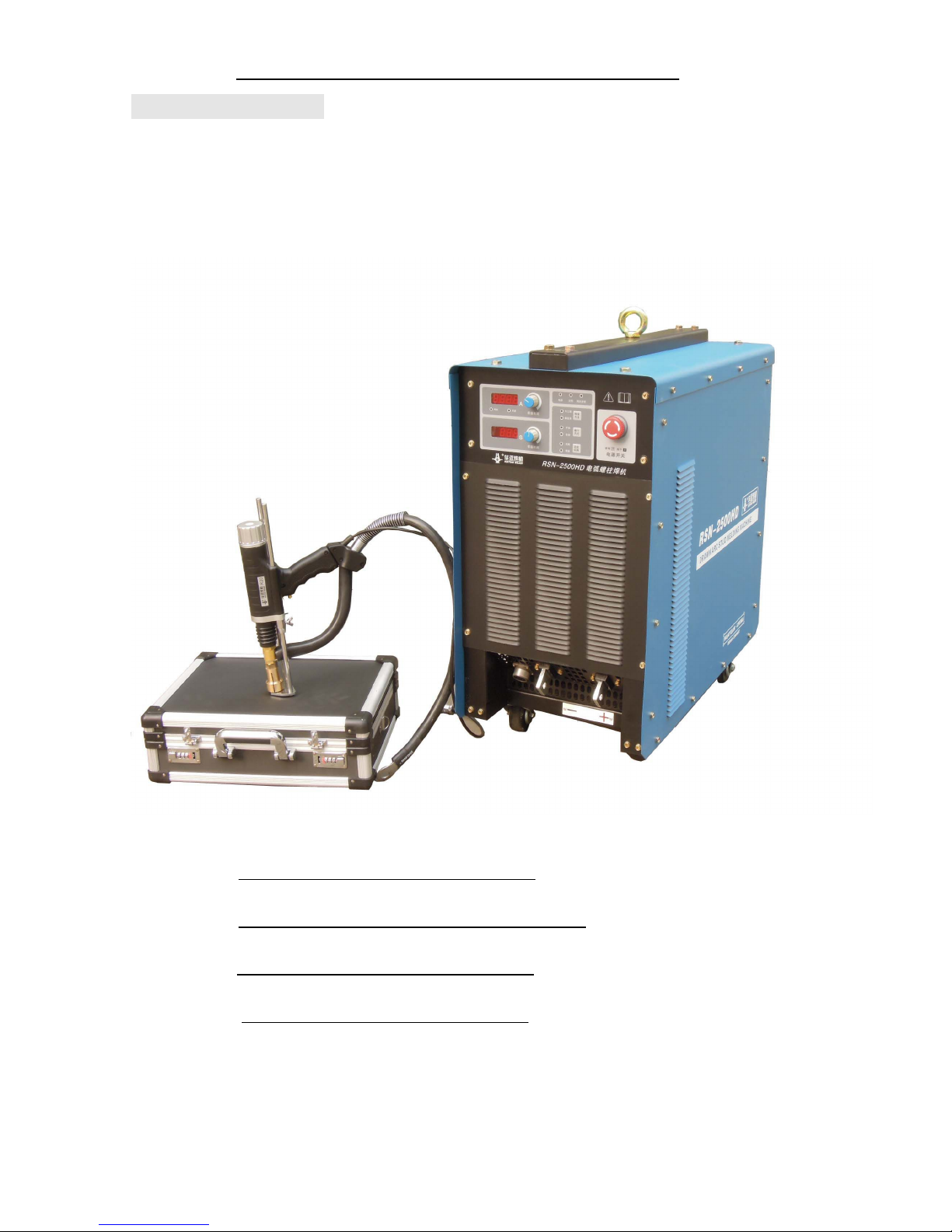
RSN-1600/2500/3150HD OPERATOR’S MANUAL
Shielding gases used for arc welding can displace air and cause injury or death. Always use enough
ventilation,especially in confined areas to insure breathing air is safe.
Do not weld in locations near chlorinated hydrocarbon vapors coming from degreasing, cleaning or spraying
operations.The heat and rays of the arc can react with solvent vapors to form phosgene, a highly toxic gas, and
other irritating products.
Read and understand the manufacturer’s instructions for this equipment and the consumables to be used,
including the material safety data sheet (MSDS) and follow your employer’s safety practices. Make sure they are
asepsis and innocuity.
4Spatter: Welding or cutting spatter can cause fire or explosion.
Remove fire hazards from the welding area.If this is not possible, cover them to prevent the
welding sparks from starting a fire. Remember that welding sparks and hot materials from
welding can easily go through small cracks and openings to adjacent areas. Avoid welding near hydraulic lines.
Have a fire extinguisher readily available.
Where compressed gases are to be used in the field, special precautions should be used to prevent explosion.
When not welding, make certain that no electriferous part is touching the work piece or the work stage.
Accidental contact can create a fire hazard.
Do not weld containers or lines, which are not proved to be innocuity.
Do not heat, cut or weld tanks, drums or containers until the proper steps have been taken to insure that such
procedures will not cause flammable or toxic vapors from substances inside. They can cause an explosion even
though they have been“cleaned”.
Spatter might cause burn. Wear leather gloves, heavy shirt, cuffless trousers, high shoes and a cap over your hair
to prevent from burning by spatter. Wear the ear shield when performing sideways or face up welding. Always
wear safety glasses with side shields when being in a welding area.
The welding cables should be as close to the welding area as possible, and the short, the better. Avoid welding
cables going through the building framework, lifting chains, AC or DC cables of other welding machines and
appliances. The welding current is strong enough to damage them while having short circuit with them.
5Cylinder may explode if damaged.
Make sure that the gas in the storage cylinder is qualified for welding, and the decompression
flowmeter, the adapter and the pipe are all in good condition.
Always keep cylinders in an upright position securely chained to an undercarriage or fixed support.
Be sure to put the cylinder in the working space with no crash or shake, and far from welding area.
Never allow the electrode, electrode holder or any other electrically“hot”parts to touch a cylinder.
Keep your head and face away from the cylinder valve outlet when opening the cylinder valve.
Valve protection caps should always be in place and hand tight except when the cylinder is in use or connected
6Power: (For electrically powered welding and cutting equipment) Turn off input power before
installation, maintenance and repair to avoid accidents.
Huanyuan welding equipment is Ι class safeguard equipment; please install the equipment in
accordance with the manufacturer’s recommendations by specific persons.
Ground the equipment perfectly in accordance with the manufacturer’s recommendations.
7Power:(For engine driven welding and cutting equipment)
Work in ventilated place or outdoors.