TESTING:
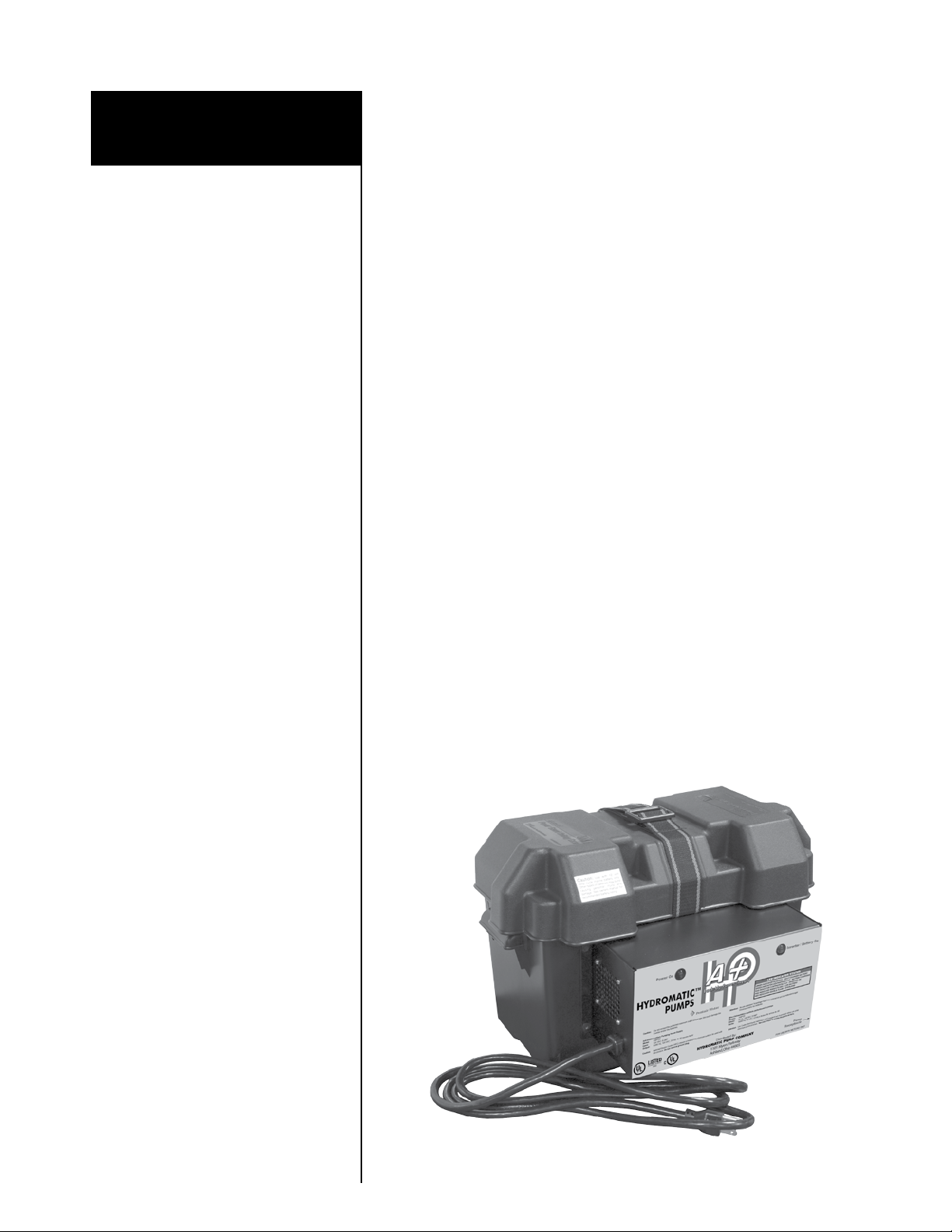
To test the Unit simply unplug
it from the receptacle add
water to sump until pump
pumps sump down. Only run
the Pump supplied with the
Battery Back-Up System for
a few cycles. You can repeat
this if you wish but it is not
necessary. If the Unit works
the rst time it is sure to work
time and time again. Be sure
that you remember to plug the
Unit back into the receptacle
after you have completed the
test. NOTE: If while testing
the Unit the Pump does not
turn on, the following steps
should be taken:
Check the green LED to see if
it is on.
Check the circuit breaker.
Plug the Pump you have
plugged into the Unit directly
into a live building receptacle.
If the Pump runs, recheck all
the battery connections, and
battery voltage.
Check sump water level to see
that Pump is being required to
run.
If the above items have been
thoroughly checked and your
pump will still not run when
plugged into the Unit, remove
the battery from the battery box
as described in the assembly
instructions and return the
Unit to the place of purchase
for repair or replacement.
TROUBLESHOOTING:
If the pump fails to operate while
in backup mode (Red LED is on
continuously) there may be the
possibility that the pump impeller is
stalled OR the pump is electrically
shorted internally. If the pump
is internally shorted the A+ will
1.
2.
3.
4.
5.
protect itself automatically by
disabling the output. Should this
situation occur, please consult a
qualied plumber to troubleshoot
and correct the problem.
TheA+ will need to be momentarily
disconnected from the battery
in order to reset the protection
circuitry! Please follow the
Installation Instruction guidelines
carefully when performing this
task.
Battery
Maintenance
Servicing of batteries should
be performed or supervised
by personnel knowledgeable
of batteries and the required
precautions.
Keep unauthorized personnel
away from batteries.
When replacing the battery,
use the same type of battery:
(see battery requirements for
ordering information)
CAUTION-Do not dispose of
battery in a re. The battery
may explode.
CAUTION-Do not open or
mutilate the battery. Released
electrolyte is harmful to the
skin and eyes. It may be toxic.
CAUTION-A battery can
present a risk of severe burn
and injury from high short
circuit current. The following
precautions should be observed
when working on batteries.
Remove watches, rings, or
other metal objects.
Use tools with insulated
handles.
Do not lay tools or metal
objects on top of batteries.
CAUTION-The electrolyte
is a dilute sulfuric acid that is
1.
2.
3.
4.
5.
6.
7.
8.
9.
harmful to the skin and eyes.
It is electrically conductive
and corrosive. The following
procedures should be
observed:
Wear full eye protection and
clothing.
If electrolyte contacts the skin,
wash it off immediately.
If electrolyte contacts the
eyes, ush thoroughly and
immediately with water. Seek
medical attention.
Spilled electrolyte should be
washed down with a suitable
acid neutralizing agent. A
common practice is to use a
solution of approximately one
pound (500 grams) bicarbonate
of soda to approximately one
gallon (4 liters) of water. The
bicarbonate of soda solution
be added until the evidence of
reaction (foaming) has ceased.
The resulting liquid should be
ushed with water and the area
dried.
CAUTION- Lead acid
batteries can present a risk
of re because they generate
hydrogen gas. The following
procedures should be
followed:
DO NOT SMOKE when near
batteries.
DO NOT cause ame or spark
in battery area.
Discharge static electricity
from body before touching
batteries by rst touching a
grounded metal surface.
See battery manufacturers
installation manual for
additional battery installation
and maintenance instructions.
Your Unit has been designed to be
virtually maintenance free. Just
make sure it is kept clean and dry
and that the Unit is periodically
tested.
a.
b.
c.
d.
e.
f.
g.
h.
11.
4