manuals.online logo
Brands
  1. Home
  2. •
  3. Brands
  4. •
  5. IBM
  6. •
  7. Software
  8. •
  9. IBM HS22V BLADECENTER - X5670 FOR SPEC CPU2006 User manual

IBM HS22V BLADECENTER - X5670 FOR SPEC CPU2006 User manual

This manual suits for next models

1

Other IBM Software manuals

IBM WebSphere Adapters User manual

IBM

IBM WebSphere Adapters User manual

IBM VIAVOICE 3-FOR MAC OS X User manual

IBM

IBM VIAVOICE 3-FOR MAC OS X User manual

IBM ZVSE ROADMAP User manual

IBM

IBM ZVSE ROADMAP User manual

IBM Nways 8260 User manual

IBM

IBM Nways 8260 User manual

IBM E027SLL-H - Tivoli Monitoring - PC User manual

IBM

IBM E027SLL-H - Tivoli Monitoring - PC User manual

IBM ZVSE V4.2 User manual

IBM

IBM ZVSE V4.2 User manual

IBM VIAVOICE 10-PRO USB EDITION User manual

IBM

IBM VIAVOICE 10-PRO USB EDITION User manual

IBM TIVOLI SC23-8765-00 User manual

IBM

IBM TIVOLI SC23-8765-00 User manual

IBM TransNote User manual

IBM

IBM TransNote User manual

IBM Professional Series User manual

IBM

IBM Professional Series User manual

IBM ZVM - FOR LINUX V6 RELEASE 1 User manual

IBM

IBM ZVM - FOR LINUX V6 RELEASE 1 User manual

IBM PERFORMANCE MANAGEMENT FOR POWER SYSTEMS - INTERACTIVE GRAPHING SUPPORT FOR ... User manual

IBM

IBM PERFORMANCE MANAGEMENT FOR POWER SYSTEMS - INTERACTIVE GRAPHING SUPPORT FOR ... User manual

IBM AH0QXML - Lotus Domino Messaging User manual

IBM

IBM AH0QXML - Lotus Domino Messaging User manual

IBM Hub/Switch User manual

IBM

IBM Hub/Switch User manual

IBM Tivoli and Cisco User manual

IBM

IBM Tivoli and Cisco User manual

IBM VIAVOICE 10-STANDARD EDITION User manual

IBM

IBM VIAVOICE 10-STANDARD EDITION User manual

IBM E02D1LL-E - Rational Rose Enterprise User manual

IBM

IBM E02D1LL-E - Rational Rose Enterprise User manual

IBM TIVOLI ADSTAR 5697-VM3 User manual

IBM

IBM TIVOLI ADSTAR 5697-VM3 User manual

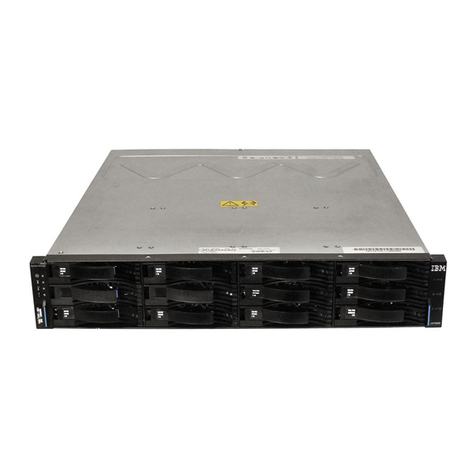
IBM System Storage DS3000 User manual

IBM

IBM System Storage DS3000 User manual

IBM PERFORMANCE MANAGEMENT FOR POWER SYSTEMS User manual

IBM

IBM PERFORMANCE MANAGEMENT FOR POWER SYSTEMS User manual

IBM ZOS V1.12 User manual

IBM

IBM ZOS V1.12 User manual

IBM E16RMLL-I - Tivoli Storage Manager User manual

IBM

IBM E16RMLL-I - Tivoli Storage Manager User manual

IBM LOTUS NOTES MAIL RELEASE 6 User manual

IBM

IBM LOTUS NOTES MAIL RELEASE 6 User manual

IBM NETCOOL 4.3-W User manual

IBM

IBM NETCOOL 4.3-W User manual

Popular Software manuals by other brands

Red Hat ENTERPRISE LINUX 4 -  FOR X86-ITANIUM AND... installation guide

Red Hat

Red Hat ENTERPRISE LINUX 4 - FOR X86-ITANIUM AND... installation guide

Avaya OAISYS NetSuite 4.2 Application notes

Avaya

Avaya OAISYS NetSuite 4.2 Application notes

Asante SmartBridge V1.0 user manual

Asante

Asante SmartBridge V1.0 user manual

Xerox Wide Format 6204 installation guide

Xerox

Xerox Wide Format 6204 installation guide

SAS Scalable Performance Data Server 4.5 Administrator's guide

SAS

SAS Scalable Performance Data Server 4.5 Administrator's guide

Lucid FM2A85X Extreme6 installation guide

Lucid

Lucid FM2A85X Extreme6 installation guide

Juniper JUNOS PUS MOBILE SECURITY SUITE datasheet

Juniper

Juniper JUNOS PUS MOBILE SECURITY SUITE datasheet

GRASS VALLEY NETCONFIG V2.0.12 instruction manual

GRASS VALLEY

GRASS VALLEY NETCONFIG V2.0.12 instruction manual

Epson Stylus Pro 9880 ColorBurst Edition - Stylus Pro 9880... Getting started

Epson

Epson Stylus Pro 9880 ColorBurst Edition - Stylus Pro 9880... Getting started

COMPRO COMPROFM manual

COMPRO

COMPRO COMPROFM manual

Muratec OFFICEBRIDGE ONLINE user guide

Muratec

Muratec OFFICEBRIDGE ONLINE user guide

Oracle Contact Center Anywhere 8.1 installation guide

Oracle

Oracle Contact Center Anywhere 8.1 installation guide

Avaya NULL One-X for RIM Blackberry user guide

Avaya

Avaya NULL One-X for RIM Blackberry user guide

HP ProLiant BL420c user guide

HP

HP ProLiant BL420c user guide

PS Audio PowerPlay Programming manual

PS Audio

PS Audio PowerPlay Programming manual

Brady LOCKOUT PRO 3.0 Administrator's guide

Brady

Brady LOCKOUT PRO 3.0 Administrator's guide

Avaya Interaction Center user guide

Avaya

Avaya Interaction Center user guide

Texas Instruments TI-83 Plus Silver Edition Guide book

Texas Instruments

Texas Instruments TI-83 Plus Silver Edition Guide book

manuals.online logo
manuals.online logoBrands
  • About & Mission
  • Contact us
  • Privacy Policy
  • Terms and Conditions

Copyright 2025 Manuals.Online. All Rights Reserved.

1
IBM i™ on a Power Blade Read-me First
Vess Natchev
Cloud | Virtualization | Power Systems
IBM Rochester, MN
[email protected]
July 14th, 2010
2
This “read-me first” document provides detailed instructions on using IBM i on a Power blade. It
covers prerequisites, supported configurations, preparation for install, hardware and software
install, firmware updates and post-install tasks such as backups. The document also contains
links to many additional information sources.
Table of Contents
1. Prerequisites
1.1.1. IBM BladeCenter PS701 Express
1.1.2. IBM BladeCenter PS700 Express
1.1.3. IBM BladeCenter PS702 Express
1.1.4. IBM BladeCenter JS23 Express
1.1.5. IBM BladeCenter JS43 Express
1.1.6. IBM BladeCenter JS22
1.1.7. IBM BladeCenter JS12
1.1.8. Logical Partitioning (LPAR)
1.1.9. Overview of I/O concepts for IBM i on blade
1.2. Review terminology
1.3. Supported environments
1.4. Plan for necessary IP addresses
1.5. Install System i Access for Windows
1.6. Install PuTTY
2. Prepare for the hardware installation
2.1. Verify or obtain BladeCenter hardware
2.2. Verify or obtain I/O switch modules
3. Hardware installation and BladeCenter firmware updates
3.1. Assemble the BladeCenter and blade server hardware
3.2. Configure the Advanced Management Module (AMM)
3.2.1. Initial AMM configuration
3.2.2. AMM user profiles
3.2.3. AMM LAN configuration
3.3. Download BladeCenter firmware
3.4. Download BladeCenter management module firmware
3.5. Download the BladeCenter Fibre Channel I/O module firmware
3.6. Download the BladeCenter Ethernet I/O module firmware
3.7. Download the BladeCenter SAS I/O module firmware
3.8. Download the BladeCenter S DSM firmware
3.9. Update the BladeCenter management module firmware
3.10. Update Firmware on the BladeCenter I/O modules
3.10.1. Assigning an IP address to I/O modules
3.11. Update the firmware on the BladeCenter S DSM(s)
3.12. Installing and configuring an Intelligent Copper Pass-through Module (ICPM)
4. Storage management
4.1. Storage concepts for IBM i on Power blade in BladeCenter H
4.1.1. Storage concepts for JS12 and JS22 in BladeCenter H
4.1.2. Storage concepts for JS23, JS43, PS700, PS701 and PS702 in BladeCenter H
4.2. Best practices for BladeCenter H and Fibre Channel storage
4.3. Create LUNs for the IBM i partition(s) in BladeCenter H
4.4. Multi-path I/O (MPIO) for IBM i in BladeCenter H
4.4.1. MPIO drivers
4.5. Storage concepts for IBM i on Power blade in BladeCenter S
3
4.5.1. Storage concepts for JS12 and JS22 in BladeCenter S
4.5.2. Storage concepts for JS23, JS43, PS700, PS701 and PS702 in BladeCenter S
4.6. Best practices for BladeCenter S and SAS storage
4.6.1. Best practices when using the SAS Connectivity Module
4.6.2. Best practices when using the SAS RAID Controller Module
4.7. Configuring storage in BladeCenter S using the SAS Connectivity Module
4.7.1. SAS I/O modules configurations
4.7.2. Activate a pre-defined SAS I/O module configuration
4.7.3. Create a custom SAS I/O module configuration
4.8. Configuring storage in BladeCenter S using the SAS RAID Controller Module
4.8.1. SAS zoning for RSSM
4.8.1. Configuring RSSM with SCM
4.9. Using the DVD drive in the BladeCenter with VIOS and IBM i
4.9.1. USB 2.0 access
4.9.2. Writing to DVD-RAM media in BladeCenter H
4.10. Creating multiple Virtual SCSI adapters per IBM i partition
4.10.1. Mapping storage to new Virtual SCSI adapters
4.10.2. Removing Virtual SCSI adapters
4.10.4. Multiple Virtual SCSI adapters and virtual tape
4.11. Fibre Channel over Converged Enhanced Ethernet (FCoCEE)
4.11.1. Requirements for FCoCEE
4.11.2. Implementing FCoCEE
5. Software installation
5.1. Obtain the VIOS and IBM i installation media and fixes
5.2. Install VIOS
5.2.1. Prerequisites in the AMM
5.2.2. Opening a console for VIOS
5.2.3. Powering on the blade
5.2.4. Accessing the SMS menus
5.2.5. Installing VIOS from DVD
5.2.6. Installing VIOS from NIM
5.2.7. Completing the install
5.2.8. Mirroring of VIOS
5.3. Configure networking in VIOS (if necessary)
5.4. Update the system firmware on the SP of the Power blade (if necessary)
5.5. Update VIOS (if necessary)
5.6. Update the microcode on the I/O expansion cards on the blade (if necessary)
5.6.1. Displaying the current microcode level of the expansion adapters on the blade
5.6.2. Downloading the latest available level of expansion adapter microcode
5.6.3. Updating the adapter microcode
5.7. Verify disks for IBM i are reporting in VIOS
5.8. Configure the Virtual Ethernet bridge for IBM i LAN Console
5.9. Memory recommendations for VIOS and the Hypervisor
5.9.1. CPU recommendations for VIOS
5.10. Create the IBM i partition(s) using IVM
5.11. Create the LAN Console connection on the console PC
5.12. Install IBM i
5.13. Configure mirroring in IBM i (if necessary)
5.13.1. Disk protection for IBM in BladeCenter H
5.13.2. IBM i mirroring in BladeCenter S
5.13.3. Identifying SAS disk units in different DSMs
5.13.4. Configuring mirroring
5.14. Install IBM i PTFs (if necessary)

4
6. Post-install tasks and considerations
6.1. Configure IBM i networking
6.2. Configure Electronic Customer Support (ECS) over LAN
6.3. How to perform IBM i operator panel functions
6.4. How to display the IBM i partition System Reference Code (SRC) history
6.5. IBM i on Power blade considerations and limitations
6.6. Moving the BladeCenter DVD drive to another Power blade
7. Backup and restore
7.1. Overview of backup and restore for IBM i on a Power blade
7.2. Save and restore with a single LTO4 SAS tape drive
7.2.1. Technical overview
7.2.2. Support statements and requirements for a single LTO4 SAS tape drive
7.2.3. Making the tape drive available to VIOS
7.2.4. Sharing a tape drive among multiple blades
7.2.5. Assigning the tape drive to IBM i
7.2.6. Error logs for tape virtualization
7.2.7. Performing an IBM i save
7.2.8. Performing an IBM i restore
7.2.9. Performing a D-mode IPL from virtual tape
7.3. Save and restore with a Fibre Channel-attached tape library
7.3.1. Technical overview
7.3.2. Support statements and requirements for FC tape libraries
7.3.3. Creating the VFC configuration
7.3.4. Making the tape library available to IBM i
7.3.5. Performing an IBM i save
7.3.6. Performing an IBM i restore
7.3.7. Performing a D-mode IPL from a FC tape library
7.4. Backup and restore of VIOS and IVM
7.4.1. Backing up VIOS to tape
7.4.2. Restoring VIOS from tape
8. i Edition Express for BladeCenter S
8.1. Overview
9. IBM i preinstall on BladeCenter S
9.1. IBM i preinstall overview
9.1.1. IBM i preinstall with the SAS Connectivity Module
9.1.2. IBM i preinstall with the SAS RAID Controller Module
9.2. Requirements
9.2.1. Requirements for NSSM
9.2.2. Requirements for RSSM
9.3. Installation steps that must be performed by the implementing party
10. DS4000 or DS5000 Copy Services and IBM i
10.1. FlashCopy and VolumeCopy
10.1.1. Test scenario
10.1.2. FlashCopy and VolumeCopy support statements
10.2 Enhanced Remote Mirroring (ERM)
10.2.1. Test scenario
10.2.2 ERM support statements
11. Additional resources
12. Trademarks and disclaimers
5
1. Prerequisites
1.1. Review IBM i on Power blade concepts
1.1.1. IBM BladeCenter PS701 Express
The IBM BladeCenter PS701 Express is a single-wide blade server based on the POWER7™
processor. The PS701 contains 1 socket and 8 POWER7™ cores, which use IBM’s 45-nm
lithography and operate at 3 GHz. The PS701 also includes 4 MB of on-chip eDRAM (enhanced
Dynamic RAM) L3 cache per core (total of 32 MB per socket) and 256 KB of L2 cache per core.
Up to 16 DDR3 memory DIMMs are supported for a maximum of 128 GB. The blade server
includes 2 embedded 1Gb Ethernet ports, onboard SAS and USB controllers, EnergyScale™
power management and an FSP-1 service processor. A maximum of one onboard Serial-
attached SCSI (SAS) drive is supported. The PS701 supports 2 types of I/O expansion adapters:
Combination Form Factor – Horizontal (CFFh) and Combination I/O Form Factor – Vertical
(CIOv). For IBM i, the PS701 is supported in IBM BladeCenter H and BladeCenter S. The
following picture shows the PS701, identifying the major components:
1.1.2. IBM BladeCenter PS700 Express
The IBM BladeCenter PS700 Express is a single-wide blade server based on the POWER7™
processor. The PS700 is similar to the PS701, with only the following differences:
•The POWER7™ socket contains only 4 active processor cores. The remaining 4 cores
cannot be activated via Capacity on Demand
•Two memory interface modules are present instead of 4
•Up to 8 DDR3 memory DIMMs are supported for a maximum of 64 GB
•Two SAS drives are supported
•The blade SMP connector is not present
6
The I/O options and chassis support for IBM i for the PS700 are the same as those for the
PS701.
1.1.3. IBM BladeCenter PS702 Express
The IBM BladeCenter PS702 Express is a double-wide blade server based on the POWER7™
processor. The PS702 consists of the PS701 main blade unit and a Symmetric Multiprocessing
(SMP) expansion unit, which occupies an adjacent blade bay in an IBM BladeCenter. The PS702
has the following combined hardware characteristics:
•2 sockets and 16 POWER7™ cores operating at 3 GHz
•4 MB of L3 cache per core (total of 32 MB per socket) and 256KB of L2 cache per
core
•Up to 32 DDR3 memory DIMMs for a maximum of 256 GB
•4 embedded 1Gb Ethernet ports
•Onboard SAS and USB controllers, EnergyScale™ power management and FSP-1
service processor on the main blade unit
•Up to 2 SAS onboard drives
•Up to 2 CFFh and 2 CIOv I/O expansion adapters
For IBM i, the PS702 is supported in BladeCenter H and BladeCenter S.
Note that the I/O adapter options for IBM i on PS700, PS701 and PS702 are the same as
those on JS23 and JS43.
1.1.4. IBM BladeCenter JS23 Express
The IBM BladeCenter JS23 Express is a single-wide blade server based on the POWER6™
processor. The JS23 contains 2 sockets and 4 POWER6™ cores, which use IBM’s enhanced
65-nm lithography and operate at 4.2 GHz. The JS23 also includes 32 MB of shared L3 cache
per socket and 4 MB of dedicated L2 cache per core. Up to 8 DDR2 memory DIMMs are
supported for a maximum of 64 GB. The blade server includes 2 embedded 1Gb Ethernet ports,
onboard SAS and USB controllers, EnergyScale™ power management and an FSP-1 service
processor. A maximum of one onboard Serial-attached SCSI (SAS) or Solid State Disk (SSD)
drive is supported. The JS23 supports 2 types of I/O expansion adapters: Combination Form
Factor – Horizontal (CFFh) and the new Combination I/O Form Factor – Vertical (CIOv). For IBM
i, the JS23 is supported in IBM BladeCenter H and BladeCenter S. The following picture shows
the JS23, identifying the major components:
7
1.1.5. IBM BladeCenter JS43 Express
The IBM BladeCenter JS43 Express is a double-wide blade server based on the POWER6™
processor. The JS43 consists of the JS23 main blade unit and a Symmetric Multiprocessing
(SMP) expansion unit, which occupies an adjacent blade bay in an IBM BladeCenter. The JS43
has the following hardware characteristics:
•4 sockets and 8 POWER6™ cores operating at 4.2 GHz
•32 MB of L3 cache per socket and 4 MB of L2 cache per core
•Up to 16 DDR2 memory DIMMs for a maximum of 128 GB
•4 embedded 1Gb Ethernet ports
•Onboard SAS and USB controllers, EnergyScale™ power management and FSP-1
service processor on the main blade unit
•Up to 2 SAS or SSD onboard drives
•Up to 2 CFFh and 2 CIOv I/O expansion adapters
For IBM i, the JS43 is supported in BladeCenter H and BladeCenter S. The picture below shows
only the SMP expansion unit of the JS43, identifying the major components:
8
1.1.6. IBM BladeCenter JS22
The JS22 Power blade is a 4-core blade server based on the POWER6™ processor. The JS22
fits in a standard IBM BladeCenter chassis and has an integrated Service Processor (SP), two
Gigabit Ethernet ports, SAS and USB controllers and a SAS disk drive. The embedded Ethernet
ports are Integrated Virtual Ethernet (IVE) ports, also present on other POWER6-based servers.
Additional I/O is provided by CFFh and CFFv expansion cards, which allow connections to
external storage and tape via switches in the BladeCenter chassis. IBM i on the JS22 is
supported in BladeCenter H and BladeCenter S. The following picture shows the JS22,
identifying the major components:
9
1.1.7. IBM BladeCenter JS12
The JS12 Power blade is a 2-core blade server based on the POWER6™ processor. Its
hardware is very similar to that of the JS22, with several important differences:
•There is a single POWER6 socket with 2 processor cores
•The processor cores operate at 3.8 GHz, instead of the JS22’s 4 GHz
•Two integrated SAS drives are supported on the blade
•Four additional memory DIMM slots are supported, for a total of eight slots
The JS12 includes the same SP, embedded Gigabit Ethernet (IVE) ports, CFFv and CFFh I/O
expansion slots, and embedded SAS and USB controllers. The JS12 is capable of supporting
twice the number of memory DIMMs because of the new, shorter DIMM design, which allows the
DIMMs to be plugged in vertically. IBM i on the JS12 is supported in BladeCenter H and
BladeCenter S. The following picture shows the JS12, identifying the major components:
10
Note that all implementation instructions in the rest of the document apply to JS12, JS22,
JS23, JS43, PS700, PS701 and PS702 unless explicitly stated otherwise.
1.1.8. Logical Partitioning (LPAR)
Like other Power systems, Power blades can be partitioned into separate environments, or logical
partitions (LPARs). Power blades support IBM i, AIX and Linux partitions. Any physical hardware
the blade has access to is owned by a Virtual I/O Server (VIOS) LPAR, which virtualizes storage,
optical and network resources to the other LPARs. An IBM i LPAR on the blade does not have
direct access to any physical hardware on the blade or outside the BladeCenter chassis. IBM i is
a client to VIOS, using a Virtual SCSI (VSCSI) connection in the Hypervisor firmware residing on
the SP.
VIOS is always the first LPAR installed on a partitioned Power blade. Once VIOS is installed,
other LPARs can be created using the Integrated Virtualization Manager (IVM). IVM is part of
VIOS and provides a browser interface to the blade for managing LPARs and I/O virtualization.
The Power blade does not support a Hardware Management Console (HMC).
1.1.9. Overview of I/O concepts for IBM i on blade
IBM i LPARs on a Power blade can use Fibre Channel or SAS storage. The type of storage
used is determined by the I/O modules available in the BladeCenter chassis and the I/O
expansion adapters present on the blade, and not by the blade machine type and model.
All POWER6™ and POWER7™ processor-based blades are capable of connecting to both Fibre
Channel or SAS storage. The JS23, JS43, PS700, PS701 and PS702 would use one of several
CIOv adapters and/or the QLogic CFFh Fibre Channel/Ethernet adapter to connect to Fibre
Channel storage; they would use the CIOv SAS passthrough adapter to connect to SAS storage.
The JS12 and JS22 would use the QLogic CFFh Fibre Channel/Ethernet adapter to connect to