JM37 Description
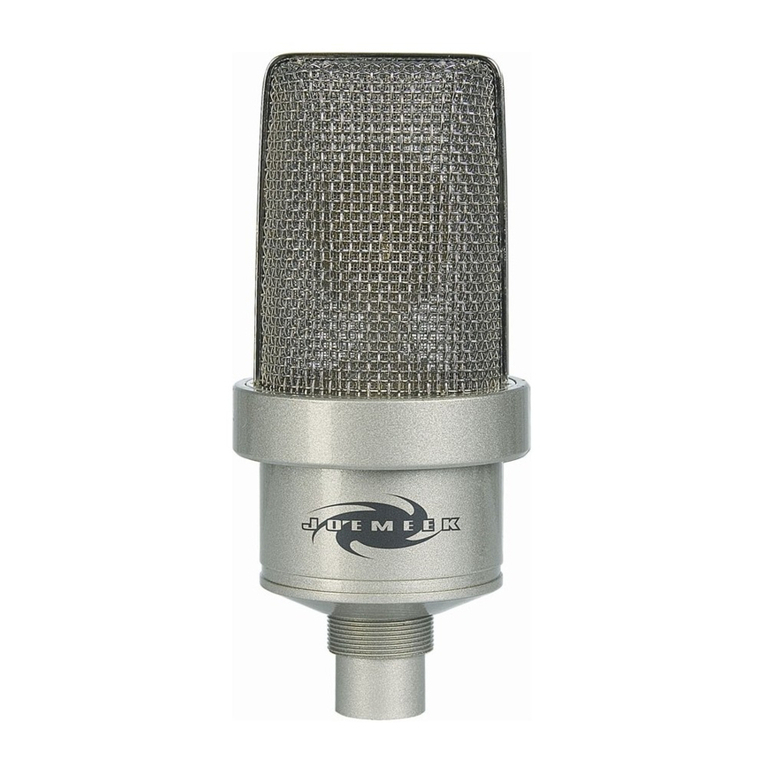
The JM37 is a microphone in the tradition of classic studio micro-
phones. It is a large sized diaphragm true capacitor microphone
with a xed Cardioid head(JM37-DP is Dual Pattern: Omni and
Cardioid). This feeds the FET type pre amplier for low noise.
The output balancing is handled by a solid state FET output.
The capacitor element is manufactured to the classic ‘con-
centric electrode’ design, which provides smooth extended
frequency response. Quality is further enhanced by utilizing
dynamic feedback at the capacitor element. This original tech-
nique eliminates distortion, which can occur when using this
type of microphone at high volume levels.
The capacitor membrane is micro ne Mylar with gold sput-
tering, voltage polarized by phantom power. The microphone
body is made of machined brass; Connection is via screened
balanced audio cable with 3 pin XLR connectors,
Care of Your JM37
Although the ‘Mylar’ membrane on the capacitor is more robust
that the gold foil used by the German originals of the 1930s, it
is still extremely ne and liable to damage if mishandled. There
are two safety factors that MUST be remembered when han-
dling these
1) Keep the microphone dry.
2) Avoid wind or air blasts directly onto the capsule.
NEVER blow into the capsule. This is the most important single
rule for capacitor microphones. Damage caused by blasts of
air on the capsule is often permanent and require the complete
replacement of the capacitor element (microphone head).
So, never use the microphone in the open air without substan-
tial wind protection. Use of a pop shield or windscreen in windy
environments is essential. With instrument recording indoors,
unprotected use will give the best sound.
All electronic equipment should be kept dry, but it is even more
important to avoid any damp conditions when using high quality
capacitor microphones. Damp can cause partial short circuits
in the polarizing voltage, which may cause crackling noises
and low output. The JM37 Series are capable of handling high
sound volume levels so they can be used safely close to musical
instrument ampliers. Close miking of instrument cabinets often
sounds best, so it is good to take advantage of the JM37 high
dynamic capability in these situations. It is also a very low noise
microphone and suitable for low level or distant miked instru-
ment recording.
For voice recording, avoid singing directly into the capsule un-
less an efcient pop shield is used. We suggest the Studio Proj-
ects SP-MPF Pop Screen. Sing about two to six inches from the
front face of the microphone.
Problems
Should the microphone accidentally become damp and fail to
operate properly (start crackling, or go very quiet) then place
it in a warm and very dry environment for 24 hours. The ideal
environment is an airing cupboard, or under a 100 watt light bulb
for a couple of hours.
The JM37 Series is extremely resistant to physical damage.
If the microphone fails to work after being dropped, it should
be returned in adequate packing to the supplier. A double test
and inspection system means that manufacturing faults are
almost unknown but should any fault occur, it will be repaired
(or replaced) free of charge excepting where the fault has been
caused by physical damage.
Connecting Up
Using a high quality balanced and screened audio cable, con-
nect the microphone head to the microphone amplier input
and switch on the 48V phantom power. NOTE: the microphone
will not operate unless 48V phantom power is provided. A few
seconds is often needed for the microphone to reach optimal
performance, but be sure to have all audio levels off for the st
30 seconds during power up.
arranty
Using the JM37
The JM37 Series gives a very true sound, meaning that the qual-
ity of a recording will depend on microphone placement, and of
course, the performer and the surroundings. The response of
the microphone is CARDIOID for the JM37, and the JM37-DP
has two patterns, both CARDIOID and OMNI; CARDIOID
means that it is much more sensitive to sounds from the front
than from the rear, and OMI picks up all around the capsule.
It is important to remember this when miking up instruments
that project sound from different parts; i.e. drums, piano, reed
instruments etc. The mic placement will affect the sound quite
a bit, so do plenty of experimenting before a take. Remember
that different areas of an instrument often produce very differ-
ent sounds. Instrument miking is a highly creative business
and a good technique can make all the difference to the nal
mix. Once again, do plenty of takes, and don’t be afraid to ex-
periment with the patterns on the JM37-DP. The JM37 Series
is an extremely capable recording tool: used properly, profes-
sional results will be achieved.
Pre amplication is also important to improve the microphone’s
sounds. Quality systems like the new Joemeek threeQ, sixQ,
oneQ, and TwinQ can optimize the JM37’s performance.
Specification
Frequency Response Sensitivity
25Hz-20KHz
Sensitivity
16mV/Pa-40+/-2dB (0dB= 1 V/Pa 1000Hz)
Polar pattern
JM37 Cardioid
JM37-DP Cardioid and OMNI with Selectable PAD
Impedance
200 ohms
Equivalent noise level
19dB (A Weighted)
Max SPL for O.5% THD@1OOOHz
128dB
Power Requirement
48V