5
EN
1. Description
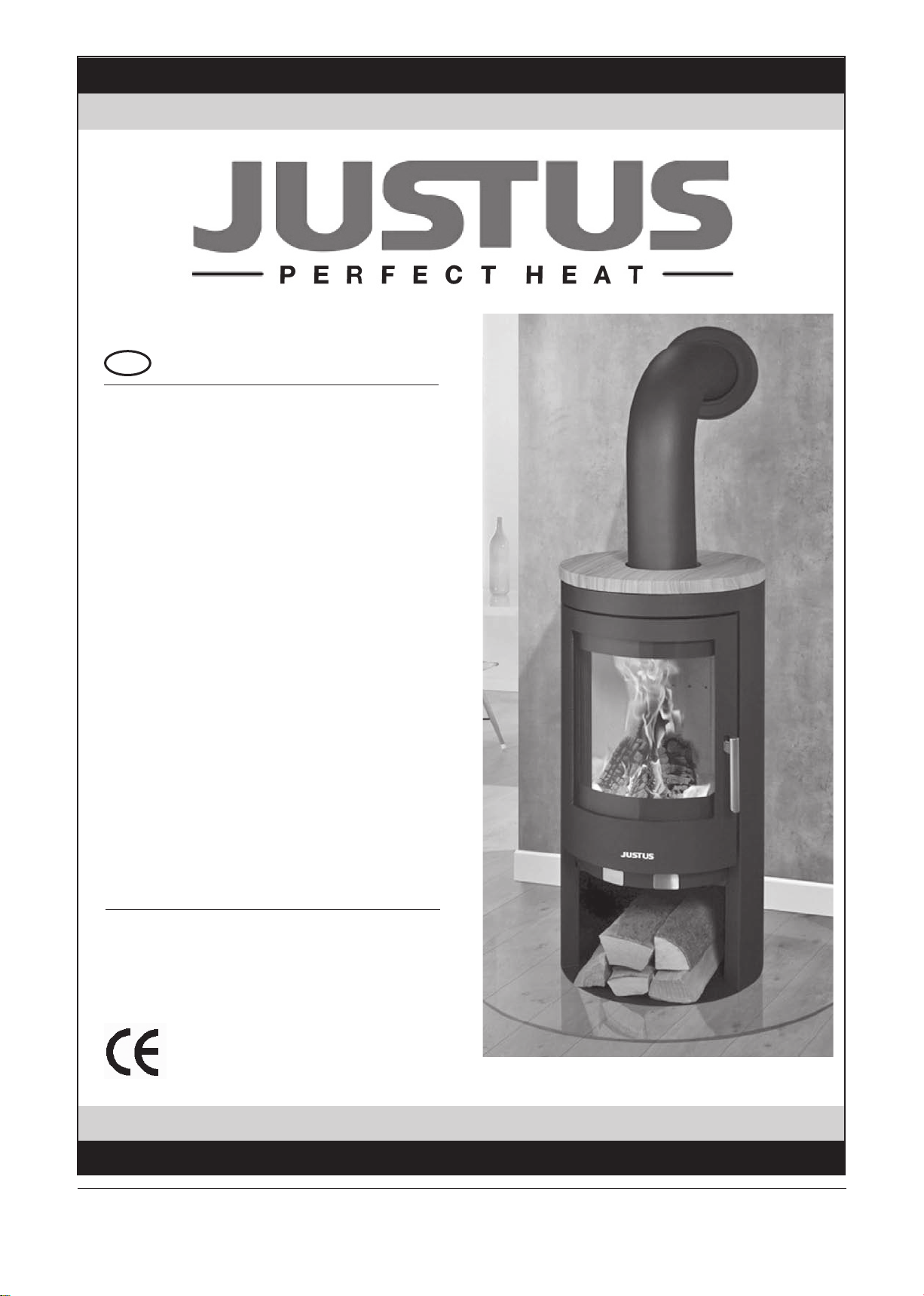
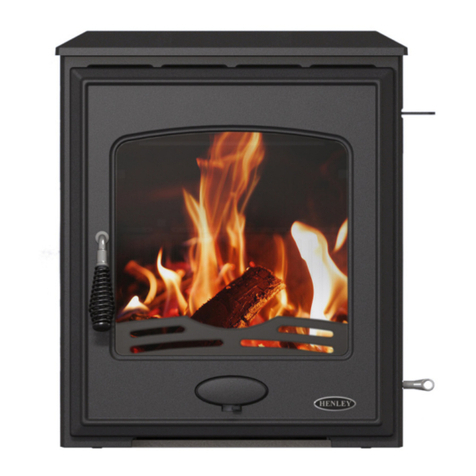
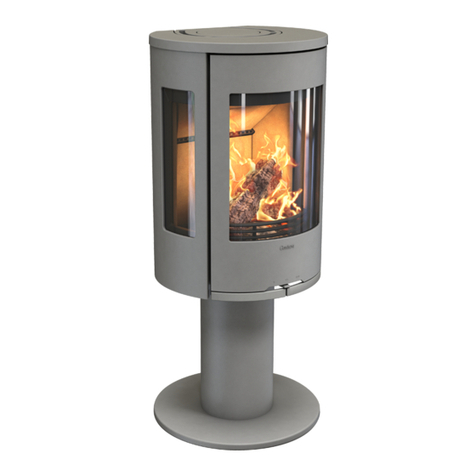
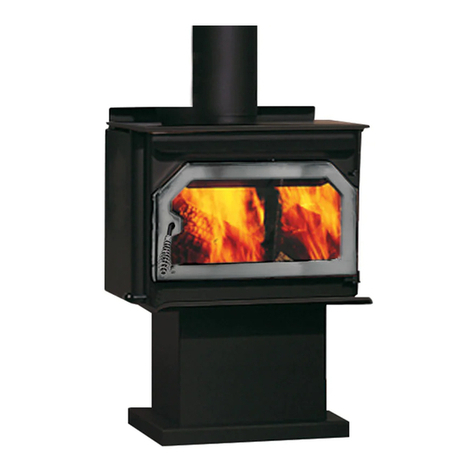
The wood burning stove is made of a welded
steel construction. The central section fea-
tures the rebox, which is lined with safety
panels. The ash box is located below a sturdy
cast iron trivet. Below this is a space for stor-
ing wood.
Woodburningstovesofthisdesign work using
convection, i.e. the surrounding air is sucked
in by the convection shafts built into the stove,
heated to a high temperature and then blown
back out into the living area.
This wood burning stove has been tested in
accordance with EN 13240.
2. General
Your wood burning stove must be set up with
strict adherence to the relevant regional build-
ing regulations and following consultation with
the local professional chimney sweep.
Once installed, he will also check that the re-
place is connected correctly.
During operation, a replace will draw oxygen
from the room in which it is set up. It is there-
fore absolutely essential to ensure an ade-
quate supply of fresh air to this room.
If the stove is set up in rooms with particularly
tightly-closing windows and doors, malfunc-
tions cannot be excluded.
If you are uncertain whether there is sufcient
air available for the stove in the room in which
you plan to set it up, ask your chimney sweep
for advice.
2.1 Externalcombustionairsupply
Ifnecessary,thewoodburningstovecan
beequippedwithaconnectionforanex-
ternal combustion air supply
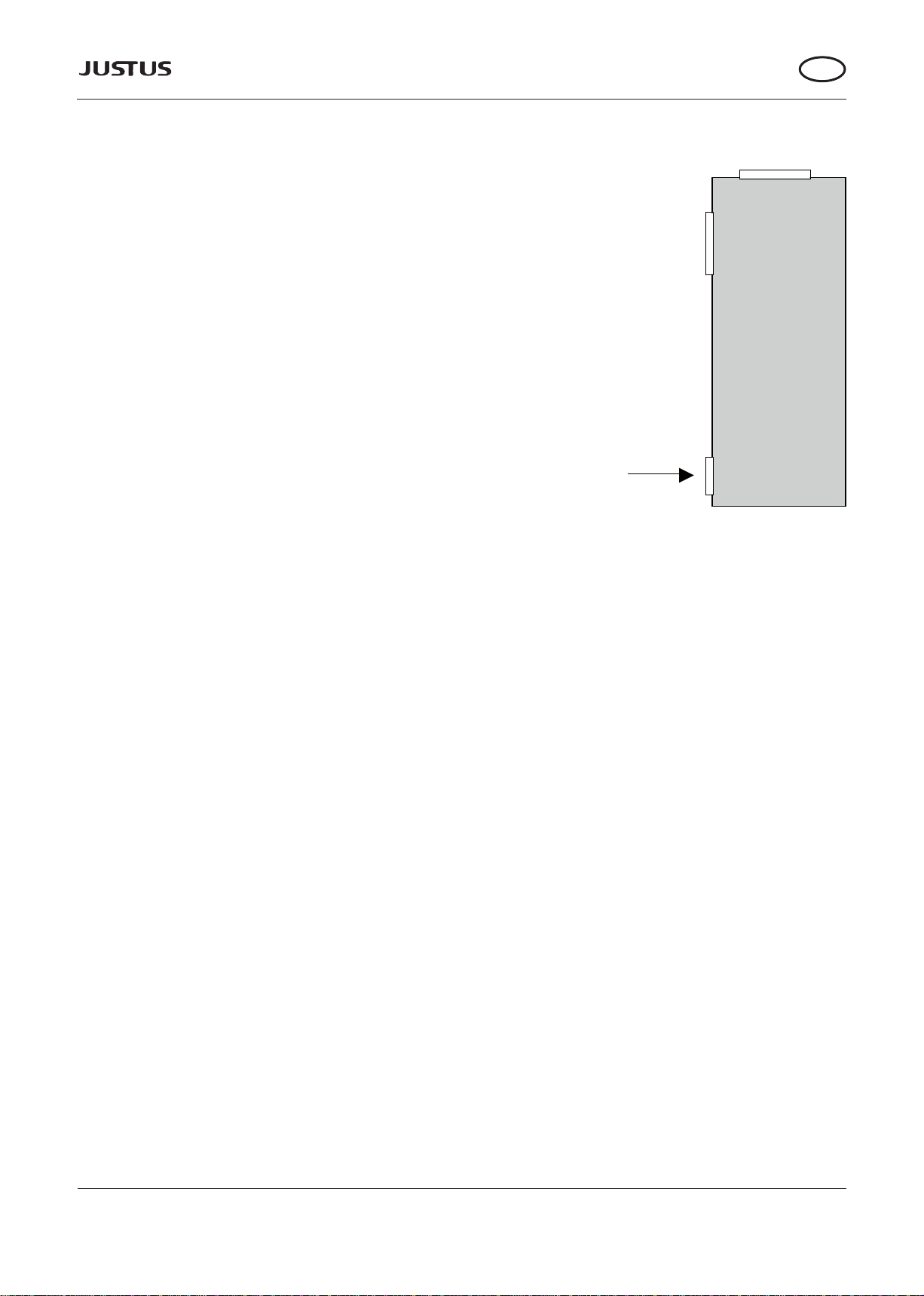
(See Fig. 1):
For especially well-insulated rooms, an air
supply from outside can be connected. The
connection pipe required for this is available
as an accessory.
Wood burning
stove
Connection for
external combustion
air supply
Rear ue
tube opening
Upper ue tube opening
Fig. 1
When attaching an external combustion
air supply, ensure that the pipes are tightly
sealed!
The combustion air is supplied exclusively via
a supply pipe with a ND of 100 mm, tted dur-
ing installation. The air pipe should be made
from smooth steel or plastic (drainage pipe).
The full length of the pipe should be no longer
than 6 m, have no reductions in the bore di-
ameter and include no more than 3 90° elbow
pieces.
A safety grille attached in front of the exter-
nal air supply opening must not be able to
accidentally restrict or occlude the supply air
cross-section.
It can be connected to a suitable air exhaust
chimney.
In every case, care must be taken to ensure
that the combustion air requirement of around
30 m3/h is met at a feed pressure of 4 Pa.
When not in use, all air slides should be kept
closed to ensure that no cold air is able to cir-
culate via the chimney. The potential build-up
of condensation can be avoided
by insulating the air pipe.
The chimney draught must be able to over-
cometheadditionalresistancesofaring
systemequippedwiththissetup.