manuals.online logo
Brands
  1. Home
  2. •
  3. Brands
  4. •
  5. K&K Sound
  6. •
  7. Amplifier
  8. •
  9. K&K Sound Pre-Phase User manual

K&K Sound Pre-Phase User manual

Other K&K Sound Amplifier manuals

K&K Sound ULTRAPURE User manual

K&K Sound

K&K Sound ULTRAPURE User manual

K&K Sound TRI-STAR User manual

K&K Sound

K&K Sound TRI-STAR User manual

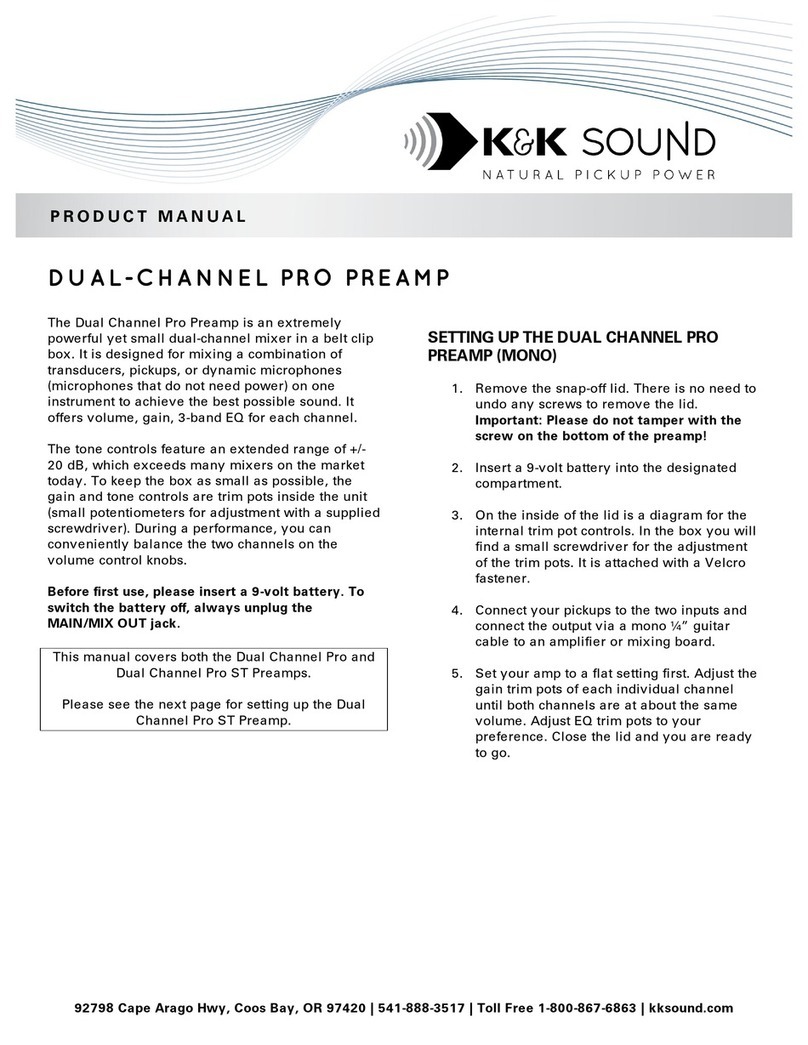
K&K Sound Dual Channel Pro User manual

K&K Sound

K&K Sound Dual Channel Pro User manual

K&K Sound Trinity Pro User manual

K&K Sound

K&K Sound Trinity Pro User manual

Popular Amplifier manuals by other brands

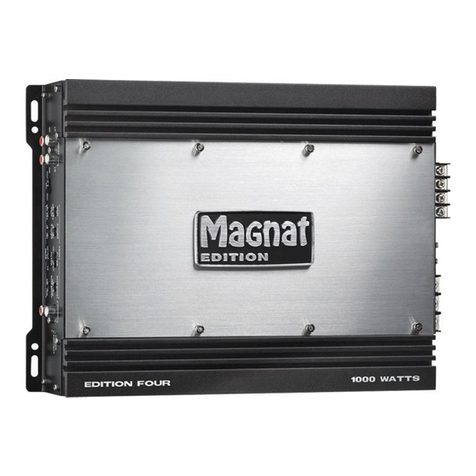
Magnat Audio EDITION FOUR Owner's manual/warranty document

Magnat Audio

Magnat Audio EDITION FOUR Owner's manual/warranty document

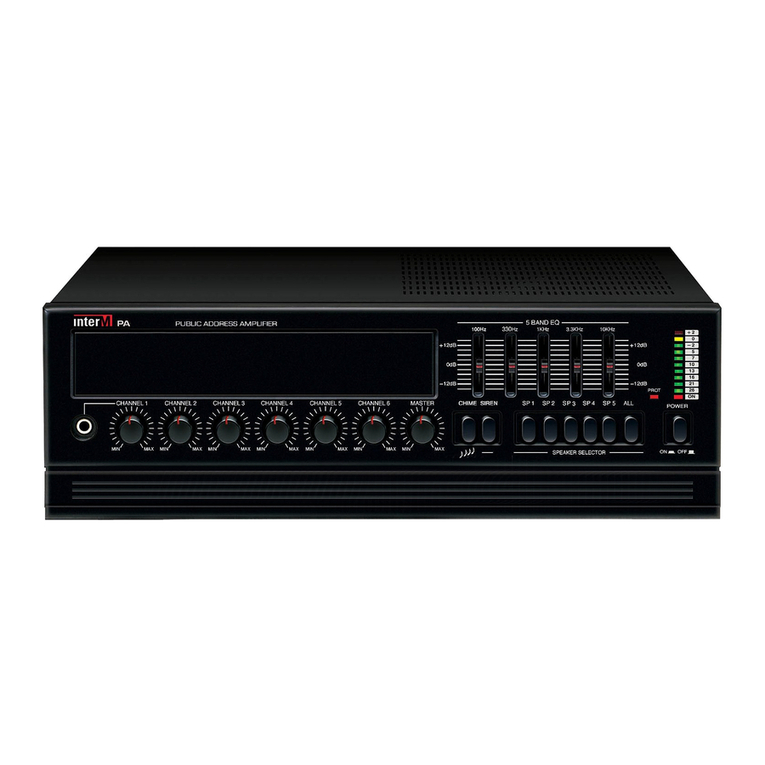
Inter-m PA-2000A Operation manual

Inter-m

Inter-m PA-2000A Operation manual

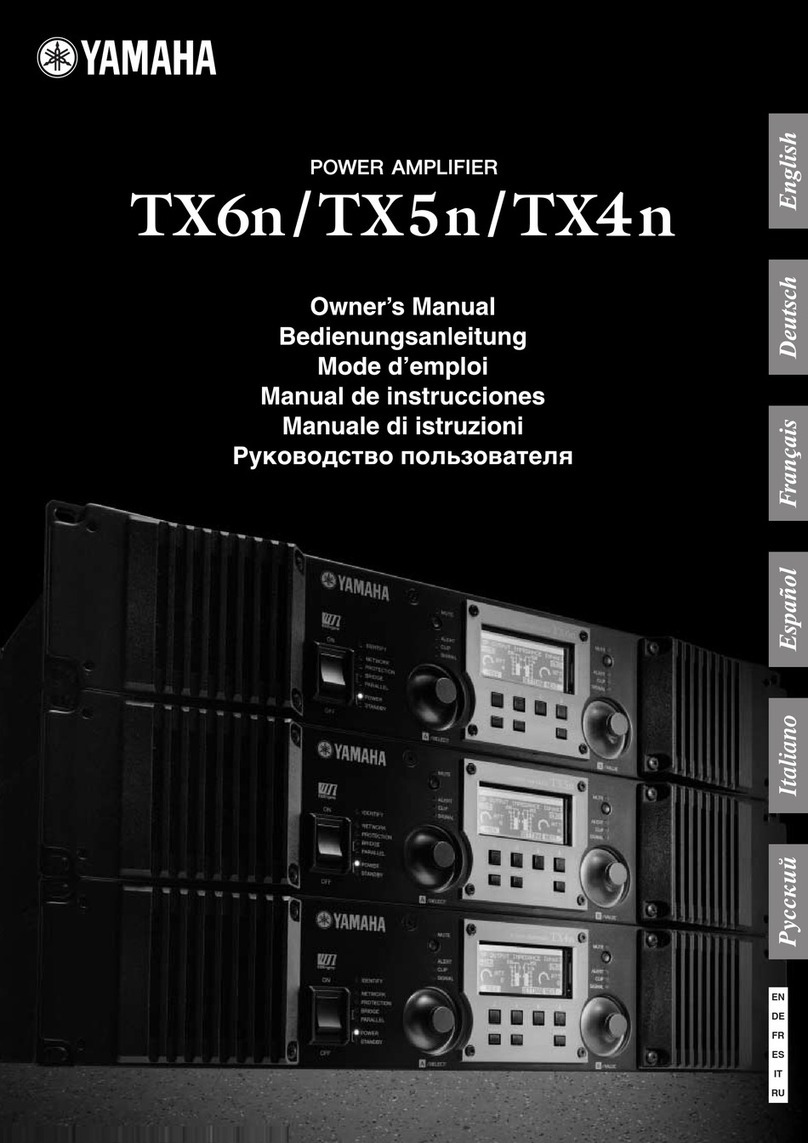
Yamaha TX6n owner's manual

Yamaha

Yamaha TX6n owner's manual

Peavey TNT 150 user guide

Peavey

Peavey TNT 150 user guide

Bosch LBB 1903/10 Installation and user instructions

Bosch

Bosch LBB 1903/10 Installation and user instructions

Avocent Emerge DA1200D Installer/user guide

Avocent

Avocent Emerge DA1200D Installer/user guide

Redgum RGi35 operating instructions

Redgum

Redgum RGi35 operating instructions

Cambridge Audio AXA25 user manual

Cambridge Audio

Cambridge Audio AXA25 user manual

Alpine MRP-M200 owner's manual

Alpine

Alpine MRP-M200 owner's manual

Technical Pro H1502UrBT user manual

Technical Pro

Technical Pro H1502UrBT user manual

FMS EMGZ307 operating manual

FMS

FMS EMGZ307 operating manual

Racal Instruments 5601 user manual

Racal Instruments

Racal Instruments 5601 user manual

Valcom V-1094A Technical specifications

Valcom

Valcom V-1094A Technical specifications

Cambridge Audio 851D user manual

Cambridge Audio

Cambridge Audio 851D user manual

QSC 3800 Specifications

QSC

QSC 3800 Specifications

NAD C300 owner's manual

NAD

NAD C300 owner's manual

Rotel RMB-1077 owner's manual

Rotel

Rotel RMB-1077 owner's manual

Peavey Monitor 300 Series operating guide

Peavey

Peavey Monitor 300 Series operating guide

manuals.online logo
manuals.online logoBrands
  • About & Mission
  • Contact us
  • Privacy Policy
  • Terms and Conditions

Copyright 2025 Manuals.Online. All Rights Reserved.

92798 Cape Arago Hwy, Coos Bay, OR 97420 | 541-888-3517 | Toll Free 1-800-867-6863 | kksound.com
PRE-PHASE PREAMP
Thank you for choosing the Pre-Phase! This little
preamp provides an astonishing sound quality. The
addition of the phase switch is one of the most
important tools for live sound amplification of any
acoustic instrument.
The super lightweight of the Pre-Phase will not affect
the acoustic tone of your instrument and the battery
life is about 150 hours with a standard alkaline
battery.
The volume control wheel allows for convenient
adjustment during performance. With the Pre-Phase
you should be able to plug your acoustic guitar into
any amp or PA directly. Simply use the EQ on the
amp or Mixer channel to adjust your tone.
HOW THE PHASE SWITCH WORKS
The Pre-Phase has a miniature phase switch
mounted on the left side of the volume wheel. It is a
sliding switch and you can slide the little white tab
left and right with your finger. There are only two
settings.
Phase switches are usually marketed as a feedback-
controlling device, but they accomplish more than
just that. Phase determines at what point in time a
sound wave has its peak or trough.
This picture shows two
(basically identical) waves,
but the wave on the right (2)
is inverted with respect to
the wave on the left (1). Interestingly, if these two
waves were played back simultaneously from the
same speaker source with the same volume, they
would completely cancel each other out and no
sound would be heard. There would be silence.
When you amplify your guitar, your sound will also
suffer from a degree of phase cancellations.
Amplification systems, effect units, or any electronic
audio device may or may not invert the phase of the
signal coming in. In most cases the manufacturers
do not specify.
Every acoustic instrument projects sound waves in a
certain phase when it is played unplugged. The
phase that is projected from the amplified speaker
source needs to be "in phase" with the acoustic
instrument's own sound waves or the result will not
be optimal.
An out-of-phase problem is indicated by early
feedback and tinny, unbalanced sound. This may be
tolerable in some tone ranges (positions on the fret
board) and quite noticeable in others, even resulting
in sound cancellations on some notes.
The Pre-Phase’s phase switch allows for instant
correction of this problem. By toggling the phase
switch back and forth, you will notice fuller, warmer
and nicely balanced tone with less feedback in one
setting. This is the correct phase switch setting.
Keep in mind that it may be different with different
amplification systems.

2
INSTALLING THE PRE-PHASE
This manual describes the installation of the add-on
version of the Pre-Phase in an acoustic guitar. You
might want to put it in a different instrument, in
which case you would have to adapt some
installation techniques.
1. Unscrew the existing endpin jack (of the pickup in
your guitar) and pull it out of the sound hole. Screw
the screw cap (the cap over the terminal end)
inward as far as it will go. Remove all nuts and
washers except the counter nut for the screw cap.
2. Pull the big soft Velcro piece off the battery
holder and stick it to the neck-block.
3. The preamp attaches with a peel-and-stick
adhesive to the inner edge of the sound-hole (see
picture). The adhesive is already attached to the
unit, simply peel off the backing and attach where
desired.
4. Locate the 3 Velcro strips (the loose ones)
provided in the package. There are 2 pieces hard
Velcro, and one longer piece of ¾” wide (20mm)
soft Velcro.
3
5. Stick the hard Velcro piece around the second
bottom brace in the lower bout of your guitar. Wrap
it around the brace length-wise (so that the long side
is going the same way as the brace).
TIP: The adhesive of the Velcro is very strong! If
you have an expensive guitar with soft wood
bracing, please tape a piece of masking tape
around the brace first and then the Velcro onto the
masking tape. This helps protecting the wood of
the brace if you would want to remove the Velcro
at a later date.
6. Now, both the ¼” plug and the endpin jack should
have soft Velcro tabs wrapped around them.
7. Stick the two pieces of hard Velcro around the
second bottom brace in the lower bout of your
guitar. Wrap them around the brace length-wise (so
that the long side is going the same way as the
brace).
8. Plug the ¼” plug into the pickup’s endpin-jack and
attach the connectors to the Velcro on the brace.
Make sure the cables of the pickup are looped free
in the air without touching anything in your guitar.
9. Attach the preamp circuit board and the battery
clip to their corresponding Velcro pieces.
4
10. Install the new endpin jack:
Unscrew the endpin jack's strap mount knob. Take
off the nut and washer. Find out the thickness of
your end block and set the nut on the cap
accordingly (see picture below).
Once in place, screw the cap against it to secure the
nut. Insert the jack from the inside into the endpin
hole.
Tip: A chopstick or something similar helps to get a
hold of the jack and pull it through the hole.
Attach outside washer and nut and tighten. Attach
the end knob.
Important: Make sure that the strap knob screws in
ALL THE WAY over the outer threaded part of the
jack, so that a tiny portion of the thread is exposed
when the strap-knob is tightened.
If you don’t do this, you might experience
insufficient signal transmission and sound, which is
cutting in and out.
11. Secure the long wire from Pre-Phase’s circuit
board to the endpin jack with the provided self-
adhesive cable clamps.