thickness of the detected wall. The calibration is finished when the sound stops. You can process
joists detection now and please always press the power button during the detecting course.
Notice:
1、when calibrating, the scanner cannot be directly put on the materials with high density
(e.g. metals, joists), or wet, new-painted and unsuitable places. Restart calibration by changing
another place.
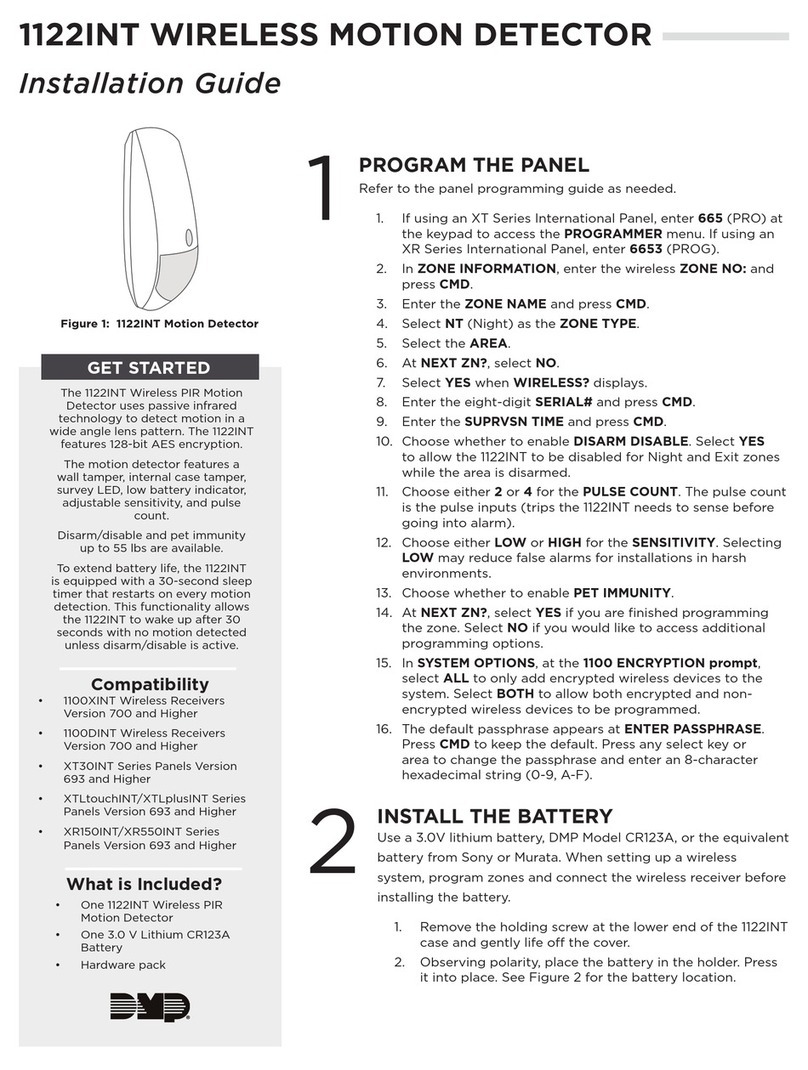
2、When approaching or detecting the AC live wire during calibration, the caution symbol
for live wires will indicate after calibration.
B. Detecting calibration for AC live wires
Set the mode switcher to the mode for AC live wire, and then calibrate the tool with reference to
the method of “detecting calibration for joists”.
Notice:
When calibrating, the tool will automatically set the degree of induction according to the
distance to the live wire. If distance to the AC live wire is far enough, the induction will be set to
the strongest degree; if close to the AC live wire, the tool will automatically set to the most ideal
induction according to the distance.
C. Detecting calibration for metal objects
Set the mode switcher to the mode for metal object, and then calibrate the tool with reference to
the method of “detecting calibration for joists”.
Notice:
1、when calibrating, the tool will automatically set the degree of induction according to the
existence of the metal object. If no metal object exists, the induction will be set to the strongest
degree; if metal object exists, the tool will automatically set to the most ideal induction according
to the type and size of the metal object.
2、When approaching or detecting the AC live wire during calibration, the caution symbol
for live wires will indicate after calibration.
zOperation
A. Joists detection---detecting wood joists through walls
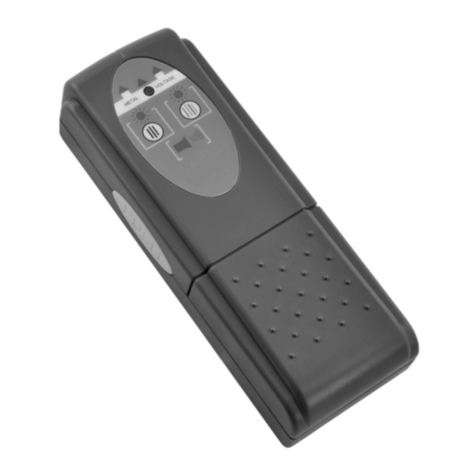
According to the calibration requirements for joists detection,
calibrate the tool to the ideal induction degree and process as per the
following steps:
a. Move the tool across the surface of the object in straight
line horizontally and slowly, and hold the tool firmly
against the surface.
b. When the tool moves horizontally and is close to the
detected object, the outer side of arrow symbol will
illumine and then slow down the moving speed, and the
arrow lights of both sides will light in turn towards the
center light (if the arrow symbols of both sides go out when moving, reset automatic
calibration and detection from another place).
c. If the edge of joists are detected, the center arrow symbol will illumine and the beeps will
rings, at this time, make a mark on edge of detected object through the marker slot by
pencil. Then continue to move the unit slowly in the same way until the arrow symbol
goes out and the beeps stop.
d. Repeat the steps above from the opposite direction to detect the other edge of the target
object and make a mark; the center of the two markers is just the center of the detected
object. Repeat the operations for several times to get the relatively precise result.
Notice: if the power button released incautiously, you must restart the calibration and repeat the
steps above to detect.
B. AC live wire detection---detecting the AC live wire through walls
3