manuals.online logo
Brands
  1. Home
  2. •
  3. Brands
  4. •
  5. LEGRAND
  6. •
  7. Projection Screen
  8. •
  9. LEGRAND DA-LITE Tensioned Advantage Series User manual

LEGRAND DA-LITE Tensioned Advantage Series User manual

Other LEGRAND Projection Screen manuals

LEGRAND Da-Lite Advantage Electrol User manual

LEGRAND

LEGRAND Da-Lite Advantage Electrol User manual

LEGRAND Da-Lite Fast-Fold Deluxe User manual

LEGRAND

LEGRAND Da-Lite Fast-Fold Deluxe User manual

LEGRAND Da-Lite C User manual

LEGRAND

LEGRAND Da-Lite C User manual

Popular Projection Screen manuals by other brands

Draper E Series Installation & operating instructions

Draper

Draper E Series Installation & operating instructions

Elite Screens Elite Tripod Series user guide

Elite Screens

Elite Screens Elite Tripod Series user guide

Laarhoven Companion II General assembly instructions

Laarhoven

Laarhoven Companion II General assembly instructions

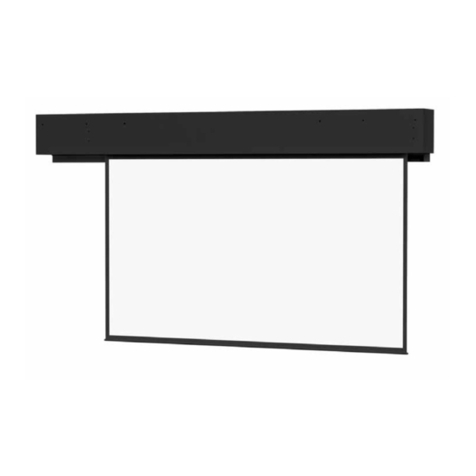
Da-Lite ExecutiveElectrol Instruction book

Da-Lite

Da-Lite ExecutiveElectrol Instruction book

FONESTAR PPTR-43100-FA quick start guide

FONESTAR

FONESTAR PPTR-43100-FA quick start guide

Slide Clear Varro XL installation instructions

Slide Clear

Slide Clear Varro XL installation instructions

OS РХ-090Н user manual

OS

OS РХ-090Н user manual

Niko 10-845 Product information

Niko

Niko 10-845 Product information

Speaka Professional 2357532 Important information

Speaka Professional

Speaka Professional 2357532 Important information

Sima XL-72 instruction manual

Sima

Sima XL-72 instruction manual

Jasic EVO 2.0 ET-200P Fitting instructions

Jasic

Jasic EVO 2.0 ET-200P Fitting instructions

Renogy RMS-LFPS-US manual

Renogy

Renogy RMS-LFPS-US manual

Elite Screens Starling 2 Series user guide

Elite Screens

Elite Screens Starling 2 Series user guide

InFocus SC-WALL GRY-92H Instruction guide

InFocus

InFocus SC-WALL GRY-92H Instruction guide

Samsung S*H65* user manual

Samsung

Samsung S*H65* user manual

Celexon UST operating instructions

Celexon

Celexon UST operating instructions

JONSBO D31 user guide

JONSBO

JONSBO D31 user guide

Draper Luma instructions

Draper

Draper Luma instructions

manuals.online logo
manuals.online logoBrands
  • About & Mission
  • Contact us
  • Privacy Policy
  • Terms and Conditions

Copyright 2025 Manuals.Online. All Rights Reserved.

Tensioned
Advantage®
Series
USER MANUAL
200076 Rev C
TABLE OF CONTENTS
Tensioned Advantage®(With Closure Door)
Previously Named: Tensioned Advantage Deluxe Electrol
Tensioned Advantage
Previously Named: Tensioned Advantage Electrol
Tensioned Advantage with SightLine
Tensioned Advantage (Over 14' W with Closure Door)
Previously Named: Tensioned Large Advantage Deluxe Electrol
Tensioned Advantage (Over 16' W)
Previously Named: Tensioned Large Advantage Electrol
2
13
27
41
51
Tensioned
Advantage®
(with Closure Door)
USER MANUAL
200072 Rev C
88585
4
DISCLAIMER IMPORTANT SAFETY INSTRUCTIONS
ORIGINAL INSTRUCTIONS
When using your video equipment, basic safety
precautions should always be followed, including the
following:
1. Read and understand all instructions before
using.
2. Position the cord so that it will not be tripped
over, pulled, or contact hot surfaces.
3. If an extension cord is necessary, a cord with a
current rating at least equal to that of the
appliance should be used. Cords rated for less
amperage than the appliance may overheat.
4. To reduce the risk of electric shock, do not
disassemble this appliance. Contact an authorized
service dealer when repair work is required.
Incorrect reassembly can cause electric shock
when the appliance is used subsequently.
5. The use of an accessory attachment not
recommended by the manufacturer may cause a
risk of fire, electric shock, or injury to persons.
6. Failure to provide adequate structural strength for
this component can result in serious personal
injury or damage to equipment! It is the installer’s
responsibility to make sure the structure to which
this component is attached can support the
weight of all equipment. Reinforce the structure
as required before installing the component.
7. Use this projection screen only for its intended
use as described in these instructions. Do not use
attachments not recommended by the
manufacturer.
Save These Instructions
Legrand AV Inc. and its affiliated companies and
subsidiaries (collectively, “Legrand AV”), intend to
make this manual accurate and complete. However,
Legrand AV makes no claim that the information
contained herein covers all details, conditions or
variations, nor does it provide for every possible
contingency in connection with the installation or use
of the products described herein. The content herein
is subject to change without notice or obligation of
any kind. To the maximum extent permitted by
applicable law, Legrand AV makes no representation
or warranty, expressed or implied, regarding the
information contained herein. Furthermore, Legrand
AV assumes no responsibility for accuracy,
completeness or sufficiency of the information
contained in this document.
Da-Lite® is a registered trademark of Legrand AV. All
rights reserved.

5
1. The case provides multiple attachment points for
bolts, cables, or threaded rod. Page 7 shows
threaded rod installed. The variable position-
mounting bracket may be located anywhere along
the length of the case. It is recommended to keep the
brackets spaced evenly enough to distribute the
weight of the screen.
The case has a self-trimming flange around the
bottom. Ceiling tiles or drywall may be placed on top
of this flange to provide a finished appearance.
2. After securing the case in the ceiling check that the
case is level and plumb.
3. Use supplied 1/8" hex key and a 1/4" wrench to
remove silver shipping brackets attached to slat and
screen case.
4. Install electrical connections that apply to your unit.
Refer to the following diagrams for proper
installation. The terminal block for the wall switch
connections is located under the metal housing
surrounding the junction box. Remove two screws
for access.
NOTE: Use provided knockouts for all electrical
connections. DO NOT drill additional holes into
screen case or end cap.
1. Carefully unpack screen and remove outer wrapping
from case.
2. Make sure to recheck measurements of screen
location before installation.
Figure 1
Fabric Door Access
Door
Screw For Securing
Roller Access Door
Knockouts For
Conduit Installation
PREINSTALLATION CASE INSTALLATION
6
If your screen was shipped with the motor and roller already installed proceed to step 6.
1. Remove the screw from each end of the access door
(front door) and open the door. See figure 1.
2. Carefully unpack screen and roller assembly. Leave
packing paper on the roller.
3. Place the roller assembly into the case with the
motor on the left side. The limit switches should be
facing down. Line up the square pin on the motor
with the square hole in the bracket. Secure with
cotter pin. See figure 2.
4. Lift the pin end (right end) of the roller into position
and slide the bracket onto the roller pin. Tighten two
nuts to secure the bracket. Secure pin end with
cotter pin. See figure 3.
5. Complete electrical hook-up by snapping motor wire
connector into case connector.
6. Remove shipping brackets by removing the hex head
screws from aluminum slat and case. Slat should
move freely. See figure 2. (Only if the roller assembly
is preinstalled.)
7. Test installation by operating the screen several
times. Be prepared to stop the screen. Standard Duty
Cycle: 1 MIN. ON/3 MIN. OFF. The fabric door (rear
door) will not close until the wall switch is placed in
the up position and when the screen motor stops at
its limit switch in the up direction.
CAUTION: Excessive continuous operation may
cause the motor to overheat. If this happens the
motor will shut off until it cools to a normal
operating temperature.
ATTENTION! Le fonctionnement continu et
excessif peut provoquer une surchauffe.Si cela se
produit, les moteurs s'arrêteront jusqu'à qu'ils se
soient refroidis à la température normale de
fonctionnement.
8. Remove any shipping foam attached to the inside of
the access and fabric doors before operation.
9. Run the screen down enough to open the fabric door.
Close the access door and reinstall the screws to
secure the door.
Figure 2 Figure 3
Screen Motor
Adjustment
Knob “Down”
Door
Microswitch
Door Motor
Hex Head Screws Shipping
Bracket
Adjustment
Knob “Up”
Fabric
Door
Access Door
Cotter Pin
Cotter Pin
Pin End
SCREEN AND ROLLER ASSEMBLY INSTALLATION
7
CAUTION: Contact Da-Lite at 800-622-3737 or 574-267-8101 if door motor needs adjustment.
ATTENTION: Contactez Da-Lite au 800-622-3737 ou au 574-267-8101 au cas le moteur de porte
doit être ajusté.
NOTE: Use a screw driver or 5/32" Allen wrench to make adjustments.
More Screen Drop
1. Place operating switch in “down” position.
2. When the screen stops, turn the “down” limit knob
(Fig. 2) one-quarter turn counterclockwise. Test by
raising picture surface approximately two feet, then
lower again. Repeat until desired picture surface
position is attained.
CAUTION: Do not adjust for more drop than what
was ordered. At least 1–1/2 wraps of fabric must
remain on the roller. This screen comes standard
with 12" black
at the top.
ATTENTION! N'effectuez pas de réglage pour
obtenir un déroulement supérieur à celui
commandé. Au moins 1 à 1/2 tour de toile doit être
maintenu sur le cylindre. Cet écran est doté de
série d'une bande noire supérieure de 0 cm (0 po)
ou 5 cm (2 po). Consultez la fiche technique pour
plus de renseignements.
Less Screen Drop
1. Raise picture surface approximately two feet above
desired level.
2. Place operating switch in “off” position.
3. Turn the “down” limit switch (Fig. 2) one-quarter turn
clockwise. Test by raising picture surface
approximately two feet, then lower again. Repeat
until desired picture surface position is attained.
CAUTION: Adjusting the down limit switch for less
drop by more than 6" can cause the screen
surface to lose proper tensioning.
ATTENTION! LE FAIT D'AJOUTER NE DÉROULEZ
PAS TROP L'ÉCRAN PLUS DE  CM PO AUX
INTERRUPTEURS DE FIN DE COURSE PEUT
FAIRE PERDRE LA BONNE TENSION À LA
SURFACE DE L'ÉCRAN.
SCREEN ADJUSTMENT
8
See Detail A
(Suggested) " Threaded
Rod (Not Included)
4.59"
Detail A
Hanger Bracket
Flat Bracket Mounting Method
Formed Bracket
Mounting Method
(Suggested) "
Threaded Rod
(Not Included)
Attached to Mounting
Bracket
9 "
Finished
Ceiling
Self-Trimming
Flange
8 "
7 "
8.75"
7. 2 1"
8.74"
Motor End
Variable Position
Mounting Brackets
7 "
7 "
Electrical
Junction Box
7 "
7 "
Case Length
TENSIONED ADVANTAGE WITH CLOSURE DOOR INSTALLATION
9
220/240V Wiring Diagram
120V Wiring Diagram
Screen Motor
Screen Motor
Door Motor
Black (Up)
Red (Up)
Red (Up)
Black (Down)
Black (Down)
WHITEWHITE (Common)
WHITEWHITE (Common)
Optional RF or IR
Remote Connector
Optional RF or IR
Remote Connector
WhiteWhite (Common)
Blue (Common)
Black (Hot)
Brown (Hot)
Green (Ground)
Green/Yellow (Ground)
Power Input
120VAC/60HZ
Power Input
240VAC/50HZ
Door Motor
DOWN
STOP
UP
Not Used
Not Used
AUX EYE
AUX EYE
Not Used
Not Used
WHITEWHITE (Common)
NOTE: 20-24AWG Wire
Recommended For Connecting Wall
Switch to the Dual Motor Controller
NOTE: 20-24AWG Wire
Recommended For Connecting Wall
Switch to the Dual Motor Controller
Door Microswitch
Front of
Wall
Switch
Front of
Wall
Switch
Back of
Wall
Switch
Back of
Wall
Switch
Black (Down)
WHITEWHITE (Common)
Red (Up)
Red (Down)
WHITEWHITE (Common)
Red (Up)
Black (Down)
Green (Ground)
WHITEWHITE (Common)
Red (Up)
Black (Down)
Green (Ground)
WHITEWHITE (Common)
Red (Down)
Black (Up)
Green (Ground)
WHITEWHITE (Common)
Red (Down)
Black (Up)
Green (Ground)
DOWN
STOP
UP
WHITEWHITE (Common)
Red (Up)
Black (Down)
Brown (Up)
Brown (Down)
Blue (Common)
Black (Up)
Black (Down)
Blue (Common)
Blue (Common)
Blue (Common)
Black (Up)
Black (Down)
Brown (Down)
Brown (Up)
Green/Yellow (Ground)
Blue (Common)
Blue (Common)
Black (Up)
Black (Down)
Brown (Down)
Brown (Up)
Green/Yellow (Ground)
Not Used
Not Used
Red (Up)
Black (Down)
WHITEWHITE (Common)
NOTE: Electrical connections
on left end of case.
Use provided knockouts for all
electrical connections. DO
NOT drill additional holes into
screen case or end cap.
NOTE: Electrical connections
on left end of case.
Use provided knockouts for all
electrical connections. DO
NOT drill additional holes into
screen case or end cap.
TENSIONED ADVANTAGE WITH CLOSURE DOOR INSTRUCTIONS
FOR STANDARD CONTROL
Door Microswitch
10
SYMPTOM CAUSE SOLUTION
Screen will not
operate or will not
go “down.”
Motor does not
hum.
Motor hums.
Incorrect line voltage. Verify 115-125V (or 220-240V). If insuicient voltage,
rewire incoming electric line.
Blown facility fuse. Replace facility fuse.
Tripped facility circuit breaker. Reset facility circuit breaker.
No power to operating switch
or junction box.
Check above. Tighten all loose wire connections.
Recheck wiring. See installation instructions.
“Down
”
Position.
Check for power across black and white leads.
Power at junction box.
Thermal overload tripped. Let motor cool down for 15 minutes. Try again.
Broken wire in the “down” position. Check for continuity.
Defective motor, limit switch or capacitor. Replace motor assembly. NOTE: Motor is a sealed assembly.
Capacitor burned out. Replace motor assembly.
Screen will not
move upward.
Motor does not
hum.
Motor hums.
Incorrect line voltage. Verify 115-125V (or 220-240V). If insuicient voltage,
rewire incoming electric line.
Blown facility fuse. Replace facility fuse.
Tripped facility circuit breaker. Reset facility circuit breaker.
No power to operating switch or junction box.
Check above. Tighten all loose wire connections. See above.
“Up” Position.
Check for power across red and white leads.
Open door limit switch. Replace switch.
Power at junction box. Thermal overload tripped. Let motor cool down for 15 minutes. Try again.
Broken wire in the “up” position. Check for continuity.
Defective motor, limit switch or capacitor. Replace motor assembly. NOTE: Motor is a sealed assembly.
Capacitor burned out. Replace motor assembly.
TROUBLESHOOTING