Lynx 10 User manual

RuggedTabletPC
Lynx10,4”
User’sGuide

2
1.
Please read these safety instructions carefully.
2.
Please keep this User’s Manual for later reference.
3.
Please disconnect this equipment from connecter before
cleaning. Don’t use liquid or prayed detergent for cleaning.
User moisture sheet or cloth for cleaning.
4.
Make sure the equipments are connected to the power source
with the correct voltage, frequency, and ampere.
5.
All cautions and warnings on the equipment should be noted.
6.
Never pour any liquid into opening: this could cause fire or
electrical shock.
7.
Never open the equipment. For safety reason, the equipment
should only be opened by qualified service personnel.
8.
If one of the following situations arises, get the equipment
checked by a service personnel:
a.
Liquid has penetrated into the equipment.
b.
The equipment has been exposed to moisture.
c.
The equipment has not worked well or you cannot get it
work according to user manual.
d.
The equipment has dropped and damaged. If the
equipment has obvious sign of breakage.
Introduction
Lynx 10,4
”
User

3
Lynx 10,4
”
9.
Caution on use of battery: User the battery recommended by
the manufacturer or the same type of battery installed by the
manufacturer. If incorrect battery is used, it may cause
explosion or fire hazard. Recycle or discard used batteries
according the manufacturer’s instruction or your local
authority.
10.
Thecomputers use nonvolatile memory that requires a battery
to retain system information when power is removed. The 3V
lithium battery is on the system board. The battery life
depends on the amount of time the computer is powered on. If
the computer does not display the correct time and date,
replace the battery.
IMPORTANT:Loss of BIOS settings occurs when the battery is
removed. BIOS settings must be reconfigured whenever the
battery is replaced.
WARNING:A risk of fire and chemical burn exists if the battery
is not handled properly. Do not disassemble, crush, puncture, or
short external contacts, or expose the battery to temperatures
higher than 60 °C (140 °F). Do not dispose of a used battery in
water or fire.
CAUTION:Dangerofexplosion if battery is incorrectly replaced.

4
Lynx 10,4
”
Replace only with same or equivalent type recommended by the
manufacturer. Discard used batteries according to the
manufacturer’sinstructions.
FCC Compliance Statement
This equipment has been tested and found to comply with the
limits for a class B digital device, pursuant to part 15 of the FCC
Rules. These limits are designed to provide reasonable protection
against harmful interference in a residential installation.
This equipment generates uses and can radiate radio frequency
energy and, if not installed and used in accordance with the
instructions, may cause harmful interference to radio
communications. However, there is no guarantee that
interference will not occur in a particular installation. If this
equipment does cause harmful interference to radio or television
reception, which can be determined by turning the equipment off
and on, the user is encouraged to try to correct the interference
by one or more of the following measures:
-- Reorient or relocate the receiving antenna.
-- Increase the separation between the equipment and receiver.
-- Connect the equipment into an outlet on a circuit different from
that to which the receiver is connected.
-- Consult the dealer or an experienced radio/TV technician for
help.

5
Lynx 10,4
”
FCC Caution: Any changes or modifications not expressly
approved by the party responsible for compliance could void the
user's authority to operate this equipment.
FCC RF Radiation Exposure Statement:
1.
This Transmitter has been demonstrated co-location
compliance requirements with Wi-Fi, Bluetooth and RFID
Modules. This transmitter must not be co-located or operating
in conjunction with any other antenna or transmitter.
2.
This equipment complies with FCC RF radiation exposure limits
set forth for an uncontrolled environment. This device was
tested for typical hand held operations with the device
contacted directly to the human body to the back side of the
tablet pc. To maintain compliance with FCC RF exposure
compliance requirements, avoid direct contact to the
transmitting antenna during transmitting.
E
Eu
ur
ro
op
pe
e
–
– E
EU
U
D
De
ec
cl
la
ar
ra
at
ti
io
on
n
o
of
f
C
Co
on
nf
fo
or
rm
mi
it
ty
y
This device complies with the essential requirements of the
R&TTE Directive1999/5/EC and EMC directive2004/108/EC. The
following test methods have been applied in order to prove
presumption of conformity with theessential requirementsof the
R&TTE Directive 1999/5/EC and EMC directive 2004/108/EC:

6
Lynx 10,4
”
EN55022:2006+A1:2007
EN61000-3-2:2006
EN61000-3-3:1995+A1:2001+A2:2005
EN55024: 1998 + A1:2001 + A2:2003
(IEC 61000-4-2: 2008;
IEC 61000-4-3: 2006 + A1:2007;
IEC 61000-4-4: 2004;
IEC 61000-4-5: 2005;
IEC 61000-4-6: 2003 + A1: 2004 +A2: 2006;
IEC 61000-4-8: 1993 +A1: 2000;
IEC 61000-4-11: 2004)
EN 60950-1: 2001
Safety of information technology equipment
EN300328V1.7.1:2006
EN301489-17V2.1.1:2009andEN301489-1V1.8.1:2008
EN62311:2008
This device is a 2.4GHz wideband transmission system
(transceiver), intended for use in all EU member states and EFTA
countries under the following conditions and/or with the following
restrictions:
InItalytheend-usershouldapplyforalicenseatthenational
spectrumauthoritiesinordertoobtainauthorizationtouse
the devicefor setting upoutdoorradiolinks and/orfor
supplying public access to telecommunications and/or

7
Lynx 10,4
”
network services.
This device may not be used for setting up outdoor radio links in
France and in some areas the RF output power may be limited to 10
mW EIRP in the frequency range of 2454 – 2483.5 MHz. For detailed
information the end-user should contact the national spectrum
authority in France.
VCCI statement

8
Lynx 10,4
”
Introduction............................................................2
Table of Contents ..................................................8
Chapter 1..............................................................12
General Information ............................................12
1.1.
Introduction ..........................................................................................12
1.2.
Specification.........................................................................................13
1.2.1. Main System...............................................................................................13
1.2.2. I/O Interface................................................................................................14
1.2.3. In Front Control...........................................................................................14
1.2.4. Power Management ...................................................................................15
1.2.5. Environment ...............................................................................................15
1.2.6. Material.......................................................................................................16
1.2.7. Operation OS...........................................................................................16
1.2.8. Certifications...............................................................................................16
1.2.9. Optional: Internal Module ...........................................................................17
Table of Contents

9
Lynx 10,4
”
1.2.10. Optional: External Accessories.................................................................17
1.3.
Packing List........................................................................................19
Chapter 2..............................................................20
System Setup.......................................................20
2.1.
Exploring Your LYNX 10,4“ ...............................................................20
2.1.1. The LYNX 10,4“ IO..........................................................................20
2.2.
Preparing for Installation .....................................................................26
2.2.1.Switch ON the main battery.........................................................................26
2.2.2.Plugging to the DC supply...........................................................................27
2.2.3.Starting Your System.................................................................................28
2.2.4.Connecting the keyboard and mouse .........................................................29
Chapter 3..............................................................30
Using the LYNX 10,4“ ........................................ 30
3.1.
troduction ............................................................................................30
3.2.
Using the USB Ports ..............................................................................30
3.3.
Using the External Audio System......................................................31
3.4.
talling the Battery (optional)...............................................................31
3.5.
Usinga SIMCard...............................................................................................................32

10
Lynx 10,4
”
3.5.1.Inserting a SIM Card ..........................................................................32
3.5.2.Removing a SIM Card........................................................................33
Chapter 4..............................................................36
The BIOS Setup Program....................................36
4.1.
Main Screen Setup Utility...................................................................37
4.2.
Advanced BIOS Features...................................................................39
4.3.
Security Chip Configuration ..............................................................40
4.4.
Management Setup.............................................................................42
4.5.
Exit Control............................................................................................43
Chapter 5..............................................................44
User Interface for LYNX 10,4
“
........................... 44
5.1.
troduction ............................................................................................44
5.2.
About the User Interface ....................................................................44
5.2.1.Enable or disable the User Interface ....................................................44
5.2.3.System Status Information...........................................................................45
5.3.
Using the Application...........................................................................48
5.3.1.Brightness Control ................................................................................48
This manual suits for next models
1
Table of contents
Other Lynx Tablet manuals

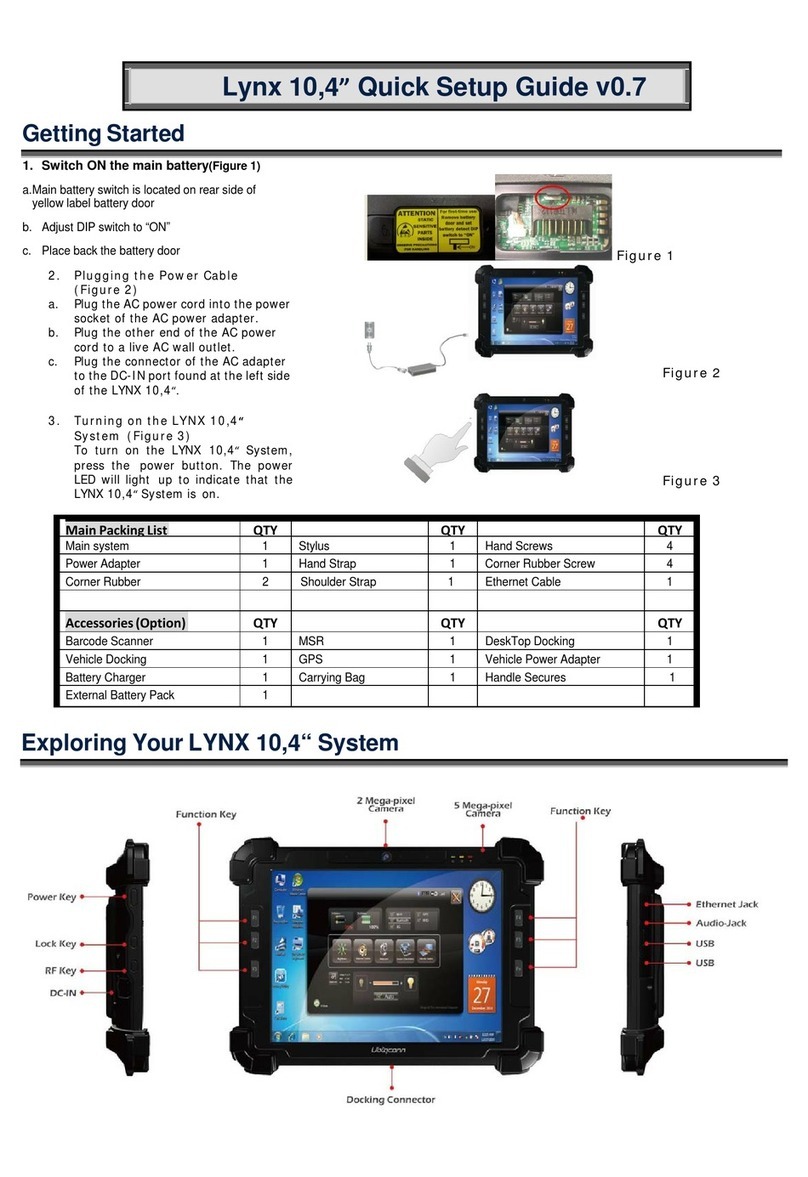
Popular Tablet manuals by other brands

Laser
Laser MID-1060 Quick operation guide

MUNBYN
MUNBYN IRT09J Easy setup guide
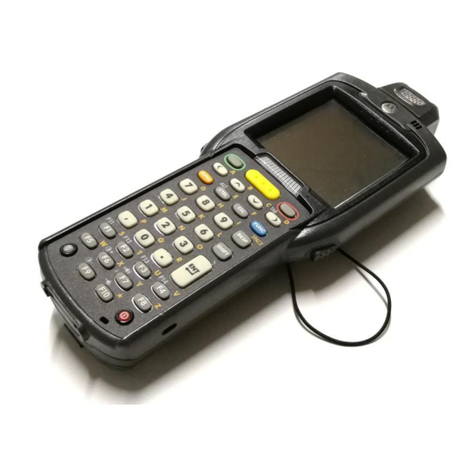
Motorola
Motorola MC3090R - Win CE 5.0 Professional 520 MHz quick start guide
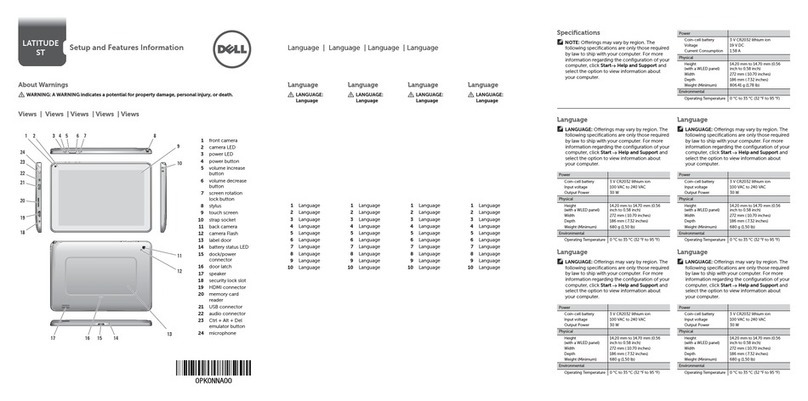
Dell
Dell Latitude ST Setup and features information

Lenovo
Lenovo IdeaTab S6000L Hardware Maintenance Manual
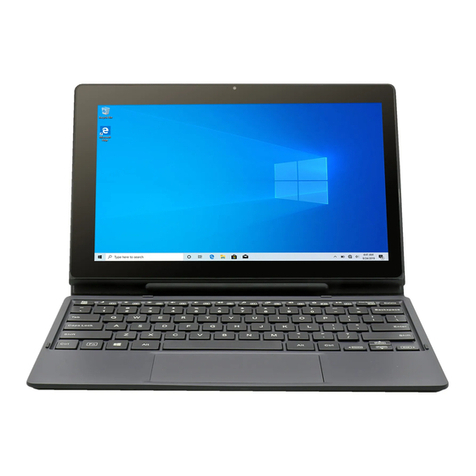
Venturer
Venturer WT9L11 quick start guide