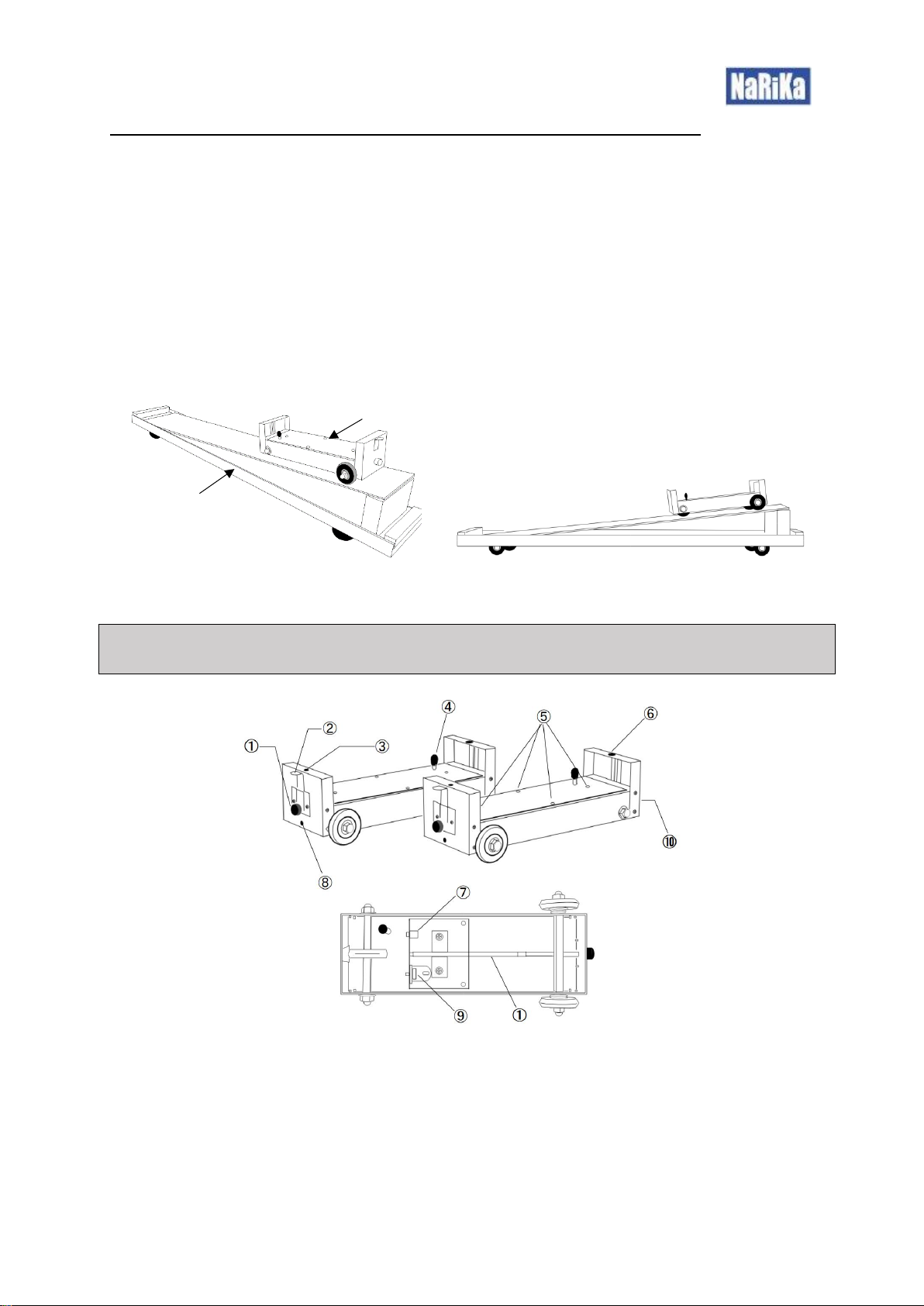
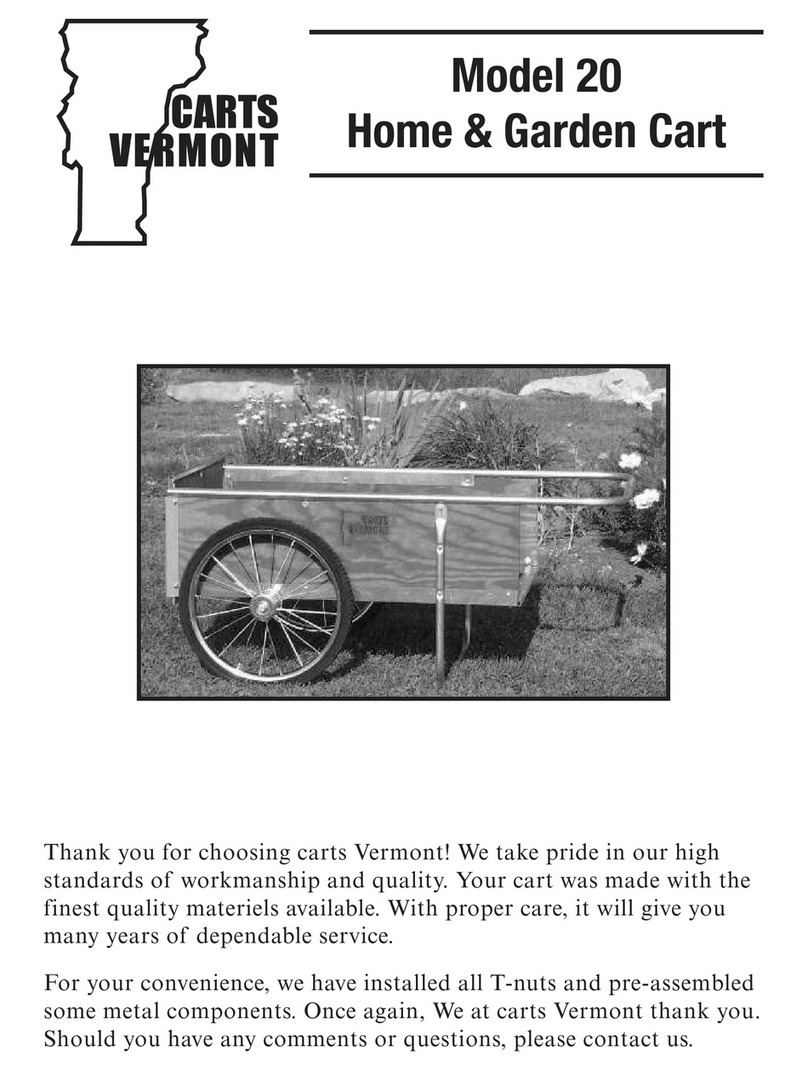
Fig.2
A. Experiment ofnormalcollisionbetweentwocartswhichhavethe samemass.
1)Setastickononeendofthelargewoodendynamiccartandsetananchoringrodofforcesensorto
themetallic dynamic cart. Note:Massof eachcart is 1 kg.
2) Tiethestick of woodencart to theanchoringrodofmetallic cartwitha rubberband (seeFig.2).
3) Place astickin themiddlebetweenthetwo carts(see Fig.2).
4) Move the carts apart around the same distance from where the stick is placed in the middle (the
recommended distancebetweenthemislessthan30cm).
5) Ifyoureleasethemat thesametime, thetwocarts are goingtocollide in the middle, and then each
cart isgoingtomovebackto itsoriginalposition.
B. Experiment ofcollisionbetweentwocarts withdifferent masses
1)Setastickononeendofthelargewoodendynamiccartandsetananchoringrodofforcesensorto
themetallic dynamic cart. Note:Massof eachcart is 1 kg.
2) Place the other metallic dynamic cart on the wooden dynamic cart (see Fig. 2) to double its mass.
Therefore, themass ratio of metallic cart and woodencart unit (withametalliccart ontop) is1: 2.
3) Tiethestick of woodencart to theanchoringrodofmetallic cartwitha rubberband (seeFig.2).
4) Place astick in the middle between twocarts (see Fig. 2).
5) Move the carts apart around the same distance from where the stick is placed in the middle (the
recommended distancebetweenthemislessthan30cm).
6) If youreleasethematthesametime,thetwocarts are going to collidein the middle, and theneach
cart isgoingtomovebackto itsoriginalpositioneventhoughtheir masses aredifferent.
Additional information: because the metallic cart on top of the wooden cart can move freely without
almost anyfriction,itsmassdoesnotplayanyroleinthecollisionduetothelawof inertia.On the other
hand, if we would fix the metallic cart (for example placed it upside down) onto the wooden cart, its
massdoesplayaroleinthecollisionandthenthecollisiondoesnotoccurinthemiddlewherethestick
is placed.