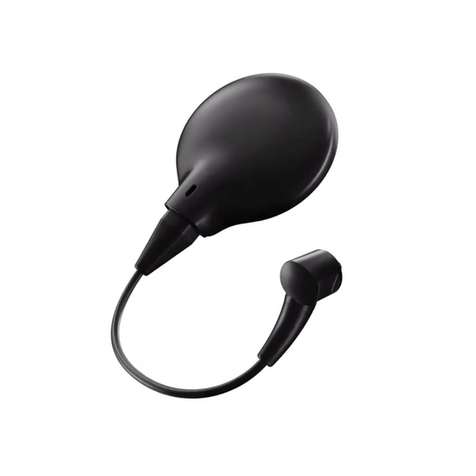
Nokia Loopset LPS-3 Guide

PAMS Technical Documentation
Issue 1 12/99 Nokia Mobile Phones Ltd.
Loopset LPS-3

-
Loopset LPS-3 PAMS Technical Documentation
Page 2 Nokia Mobile Phones Ltd. Issue 1 12/99
AMENDMENT RECORD SHEET
Amendment
Number Date Inserted By Comments
12/99 OJuntune

-
Loopset LPS-3
PAMS Technical Documentation
Page 3
Nokia Mobile Phones Ltd.
Issue 1 12/99
CONTENTS
Page No
Loopset LPS-3 4. . . . . . . . . . . . . . . . . . . . . . . . . . . . . . . . . . . . . . . . .
Introduction 4. . . . . . . . . . . . . . . . . . . . . . . . . . . . . . . . . . . . . . . . . .
Basic Specification 5. . . . . . . . . . . . . . . . . . . . . . . . . . . . . . . . . . .
List of Modules 5. . . . . . . . . . . . . . . . . . . . . . . . . . . . . . . . . . . . . . .
Technical Specifications 6. . . . . . . . . . . . . . . . . . . . . . . . . . . . . . .
Functional Description 6. . . . . . . . . . . . . . . . . . . . . . . . . . . . . . . .
Modes of Operation 6. . . . . . . . . . . . . . . . . . . . . . . . . . . . . . . .
Loopset detection 6. . . . . . . . . . . . . . . . . . . . . . . . . . . . . . . . . .
Loop Adapter 7. . . . . . . . . . . . . . . . . . . . . . . . . . . . . . . . . . . . . .
Magnetic Loop 7. . . . . . . . . . . . . . . . . . . . . . . . . . . . . . . . . . . . .
Specification 7. . . . . . . . . . . . . . . . . . . . . . . . . . . . . . . . . . . . . . . . .
Reception Specifications 7. . . . . . . . . . . . . . . . . . . . . . . . . . . .
Ratings 7. . . . . . . . . . . . . . . . . . . . . . . . . . . . . . . . . . . . . . . . . . .
Automatic Gain Control (AGC 7. . . . . . . . . . . . . . . . . . . . . . . .
Magnetic Field frequency response window 8. . . . . . . . .
Functional Blocks 8. . . . . . . . . . . . . . . . . . . . . . . . . . . . . . . . . .
Distortion and noise 8. . . . . . . . . . . . . . . . . . . . . . . . . . . . . .
Microphone response window 9. . . . . . . . . . . . . . . . . . . . .
External Signals and Connections 10. . . . . . . . . . . . . . . . . . . . . .
Exploded View of LPS-3 12. . . . . . . . . . . . . . . . . . . . . . . . . . . . . . .
Assembly parts of LPS-3 12. . . . . . . . . . . . . . . . . . . . . . . . . . . . . .
Parts List of LPS–3 13. . . . . . . . . . . . . . . . . . . . . . . . . . . . . . .

-
Loopset LPS-3 PAMS Technical Documentation
Page 4 Nokia Mobile Phones Ltd. Issue 1 12/99
Loopset LPS-3
Introduction
Hearing impaired people, who use hearing aids (HA), have problems in
using cellular phones. They can’t identify speech, partly due to poor
S/N–ratio and partly because of interference. Most HA have poor protec-
tion for interferences. By using the Loopset the interference problems are
minimized.
LPS–3 is designed for DCT3.5, DCT3.75 and DCT 4 series phones.
4–wire interface is implemented with 2.5mm diameter round plug/jack
which is otherwise like ”standard” stereo plug.
The Loopset has been developed for hearing aid users to allow them to
use mobile phones. It is based on induction technology. These kind of
induction devices are widely used with hearing aids, but never before im-
plemented with cellular phones.
All hearing aids have support for induction loop, ie. they have a little tele-
coil inside. This coil can capture the signal supplied to the loop.
Standard hearing aids have two operation modes; M–mode for normal
microphone use and T–mode for telecoil use
The T–mode is used in places where the inductive loop has been as-
sembled, for example in public halls, churches and places of assembly.
The reason for T–mode use is much better S/N–ratio.
The Loopset provides clear acoustic quality. The Loopset also dampens
backgroud noise to make it easier to converse in a noisy environment, in
the car for instance.
The Loopset can be used with all the mobile phones, which supports nor-
mal headset and vibra alarm. Vibra is needed just for call indication. The
earpiece of a headset is replaced by a wireloop. Loopset has also inte-
grated microphone.
The earpiece of a headset is replaced by a wireloop. Loopset has also
integrated microphone.
The function is very simple and the use is environmentally friendly. Loop-
set is passed around the neck. The system doesn’t disturb anybody due
to the silent service. When the phone is set to auto–answer mode, a user
don’t have to do anything but switch the hearing aid to T–mode.
Loopset is an economic and simple solution for hearing aid users. Most
hearing aids are compatible to this kind of wireless handsfree.

-
Loopset LPS-3
PAMS Technical Documentation
Page 5
Nokia Mobile Phones Ltd.
Issue 1 12/99
Basic Specification
Unit Max. dimensions (mm)
(W x H x D) Notes
LPS–3 37mm x 40mm x 17mm Weight 60g
List of Modules
Name of module Type name Material code Note
LPS–3 Product LPS–3 0630244
LPS–3 Module JL3 0201489
Assembly parts MLPS3 0262071

-
Loopset LPS-3 PAMS Technical Documentation
Page 6 Nokia Mobile Phones Ltd. Issue 1 12/99
Recommended batteries:
Type Size /
IEC–type Min Vout Max Vout Rated ca-
pacity Talk time. Dura-
tion of the bat-
tery continuing
3mA on load
Standby of dor-
mancy. Battery
continuing
20uA on load
Zinc Air
Hearing
Aid Bat-
tery
675 /
PR44 1.15 1,40 540 mAh 180 hour. 840 hour or
35 day (1)
Silver Ox-
ide Hear-
ing Aid
Battery
675 /
SR44 1.25 1,55 150 mAh 50 hour. 7 500 hour or
310 day.
Alkaline
Battery 675 /
LR44 1.25 1,45 110 mAh 36 hour. 5 500 hour or
230 day.
(1) Note: The capacity of the zinc–air battery will fall 20% in a month.
After the activation the zinc–air battery begins to self–discharge. The bat-
tery will be empty at the latest within 5 week.
Technical Specifications
The Nokia LPS–3 Loopset is powered by three hearing aid batteries and
comes pre–packaged with six zinc air batteries.
The ”auto answer” feature of the phone allows the users to be ”hands
free” while using either the Nokia LPS–3 Loopset or headset accessories.
The interface between Loopset and phone is similier to a headset. Except
the hight impedance input.
Name of function Specification
Supply voltage 2,7 ... 4,5 V
Supply current current peak 36 mA (nominal 3mA)
Functional Description
Modes of Operation
When the Loopset is identified the audio of the phone will be routed to the
Loopset and the identification voltage is turned ON. Mic bias voltage 2.1V
is turned ON only in call state.
When the phone is turned off also the Loopset is in off–mode.
Loopset detection
In XMIC line there is a (47 + 2.2) kpull–up in phone. A microphone is alow
resistance pull down compared to that.

-
Loopset LPS-3
PAMS Technical Documentation
Page 7
Nokia Mobile Phones Ltd.
Issue 1 12/99
When there is no call going, AUXOUT is in high impedance state and XMIC
is pulled up. When loopset is connected, XMIC is pulled down. XMIC is
connected to HeadsetInt line (in MAD), so an interrupt is given due to both
connection and disconnection.
Duringacallthereisbiasvoltage(1.5V)inAUXOUT.ThestateofHeadsetInt
can’tbesure.Itisbettertodisableloopsetinterruptduringacallandpollfrom
EADline(ADconverterinCCONT)toseeifloopsetisdisconnected.Actually
disconnection of a headset without remote control switch could be seen in
HookInt, but headset with the switch could not.
Loop Adapter
Connection resistance must be under 3mΩ.
Magnetic Loop
The magnet field is based on the IEC 118–4 and BS 6083 part 4 stan-
dard.
Specification
Reception Specifications
Type of Function Specification Notes
Impedance 100k ohm +/– 5 % at 1 kHz
Frequency responce See figure 1
Magnetic field 100mA/m (RMS) 3dB ref.
1kHz=0dB
400mA/m +12dB,125 ms RMS–
peaks
The strength of the magnetic
field measured next to the
ear. (or measured in the hor-
izontal plate and 170mm trip
from the curve of the loop.)
Loop Current 700mA(RMS) 3dB ref. 1kHz
=>0dB
2,8A (RMS), 125 ms RMS
peaks =>+12dB
Automatis Gain Control Response time <35 ms
Resetting time 0,5–5dB/s
Signal to Noise Ratio 855 dB nominal level (122 mVrms)/
1kHz
Maximum Ratings
Determined as defined by IEC 268 using signal limited to frequency range
300 ... 3400 Hz.

-
Loopset LPS-3 PAMS Technical Documentation
Page 8 Nokia Mobile Phones Ltd. Issue 1 12/99
Magnetic Field frequency response window
0
+5
+10
–5
–10
–15
–20
1k 2k 4k500250
–3 dB
300 Hz 3 kHz
–3 dB
–18 dB
+3 dB+3 dB+3 dB
–3 dB–3 dB
+3 dB
dBr
Functional Blocks
Table 1. Transmission Specifications
Object Specification Notes
Output impedance 1600 ohm +/– 30% 1kHz
Frequency response See Figure 2
Sensitivity –48 dB +6/–3 dB at 1kHz 0dBv/PA
Sensitivity dBm0 –13 dBm0 +6/–3 dBm0 at 1kHz 0dBv/PA – 4,7 dBPA
Sensitivity –59 dB +6/–3 dB at 1kHz 0dBv/PA.
Sensitivity dBm0 –24 dBm0 +6/–3 dBm0 at 1kHz
Directivity mic (acuctic) OMNI–directional
Signal to Noise Ratio 55 dB 1Pa/1kHz
Distortion and noise
Total distortion: Max 3 % 300...3400Hz with sound pressure 0 dBPa
at the microphone.

-
Loopset LPS-3
PAMS Technical Documentation
Page 9
Nokia Mobile Phones Ltd.
Issue 1 12/99
Microphone response window
0
+5
+10
–5
–10
–15
–20
1k 2k 4k500250
–3 dB
300 Hz 3 kHz
–3 dB
–5 dB
+3 dB+3 dB+3 dB
–3 dB–3 dB
+3 dB
dBr

-
Loopset LPS-3 PAMS Technical Documentation
Page 10 Nokia Mobile Phones Ltd. Issue 1 12/99
External Signals and Connections
LoopN
LoopP
Shutdown Mic
XEarP
XEarN
Low
signal +
RCOSC
VREF
Vbattery +
–
GND
COMP1
COMP3
= from Mobile
= Internal LOOPSET signals
COMP4
Vtoneout
XMicP
XMic
N
47R
COMP4
MicP
MicN
HF
HFCM
330R
100k
100k
10k
COMP2
Peep
Table of contents
Other Nokia Hearing Aid manuals