9
4. DESIGN AND PRINCIPLE
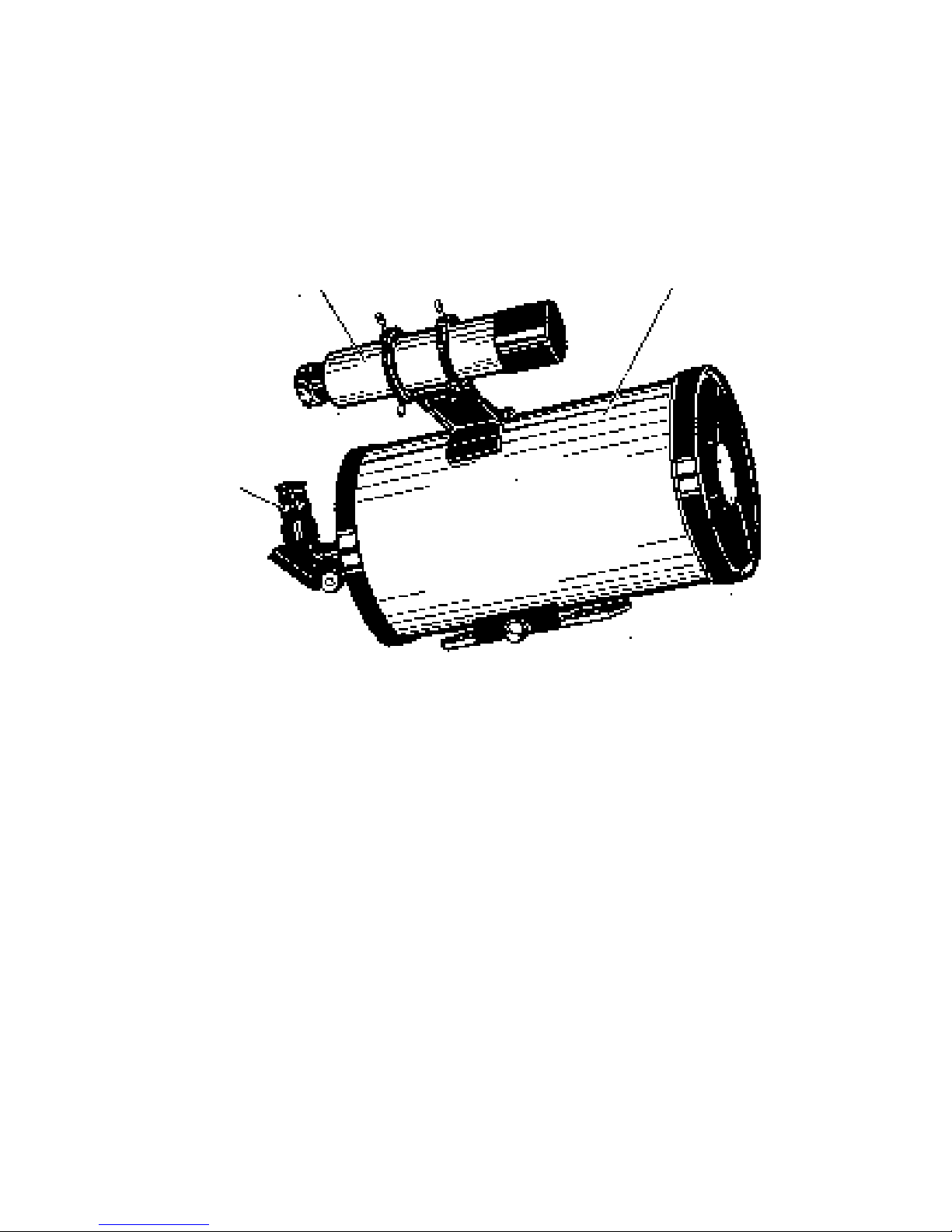
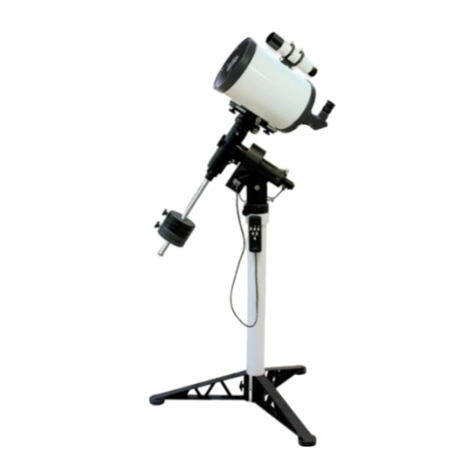
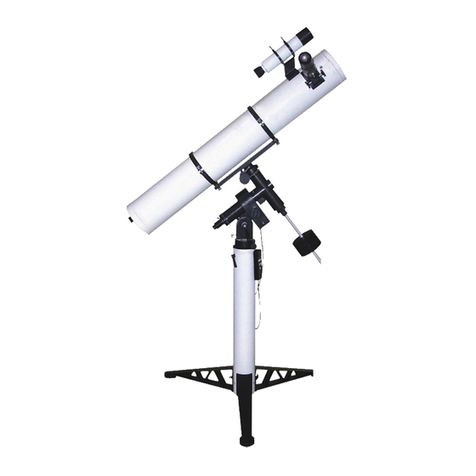
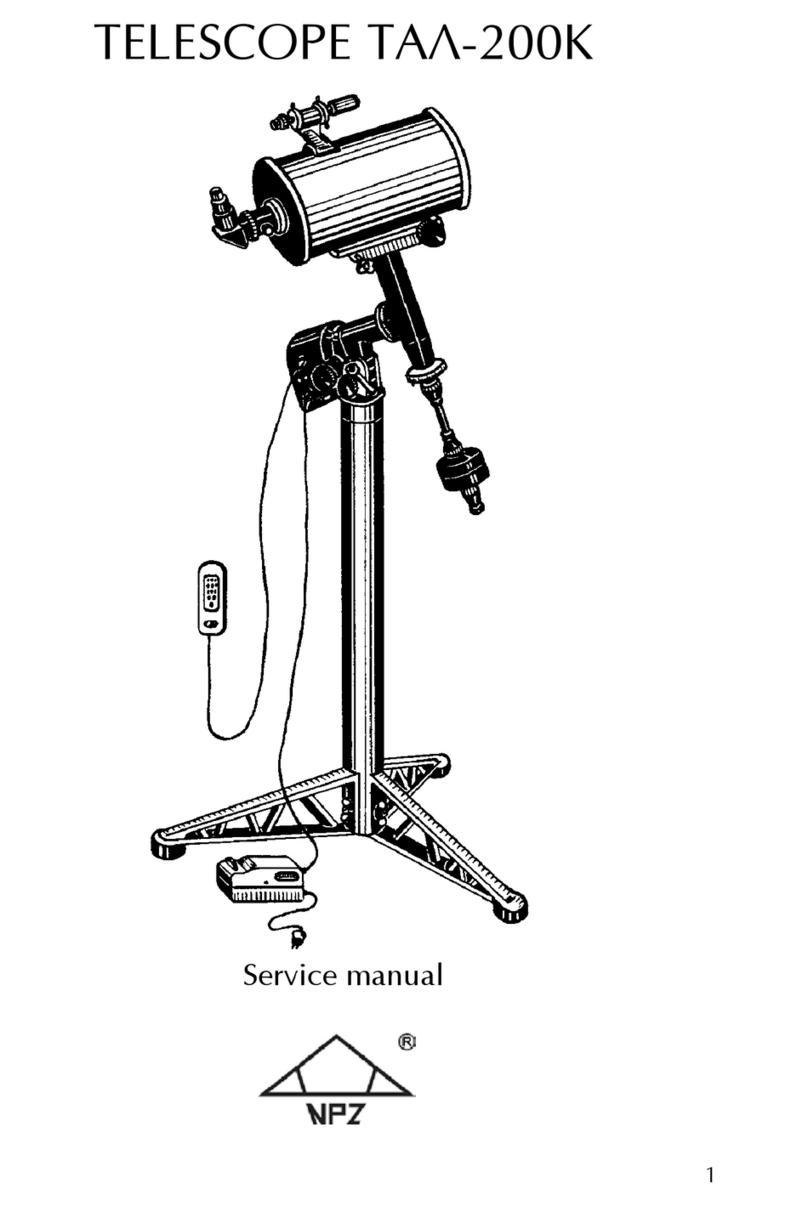
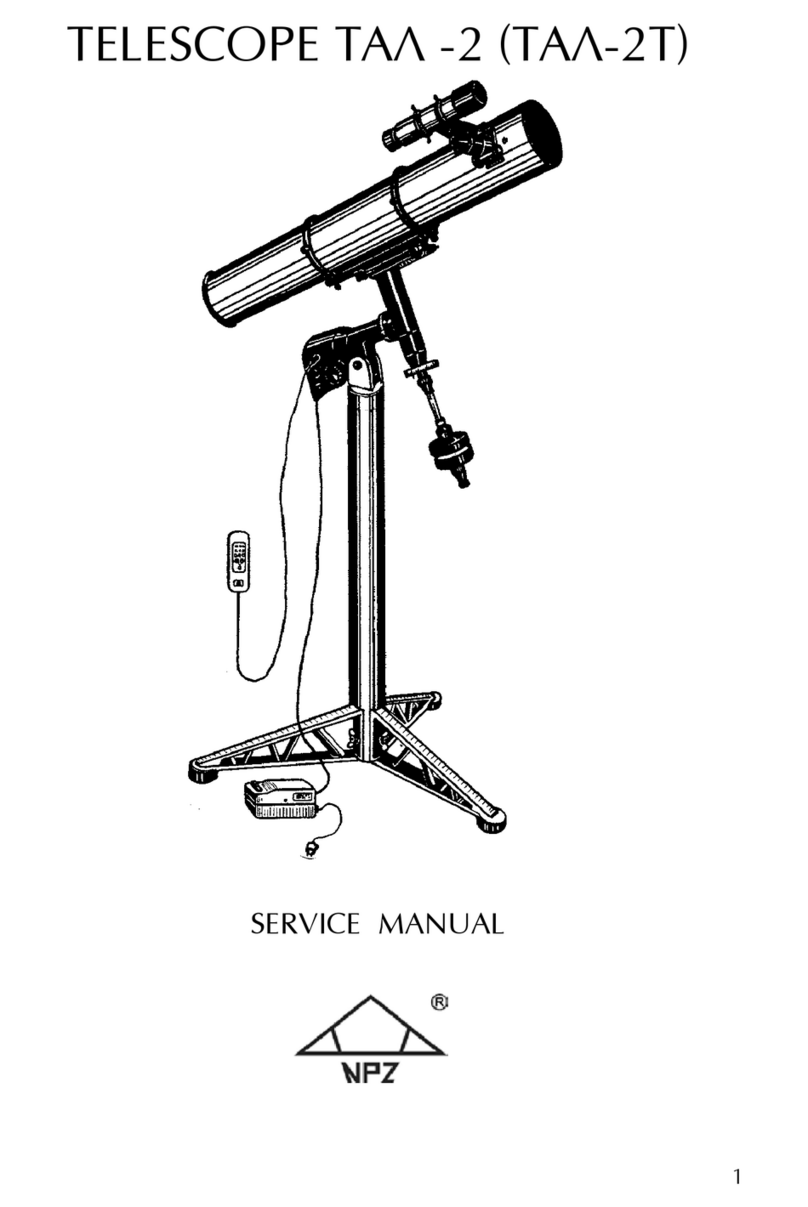
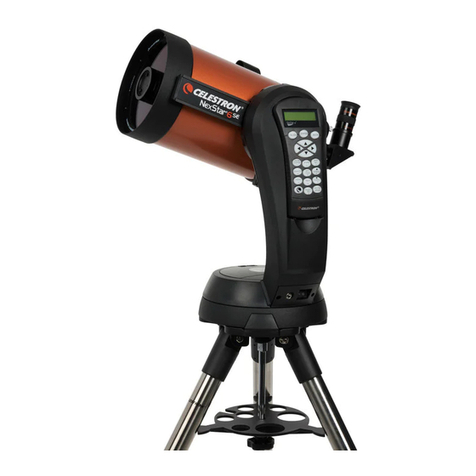
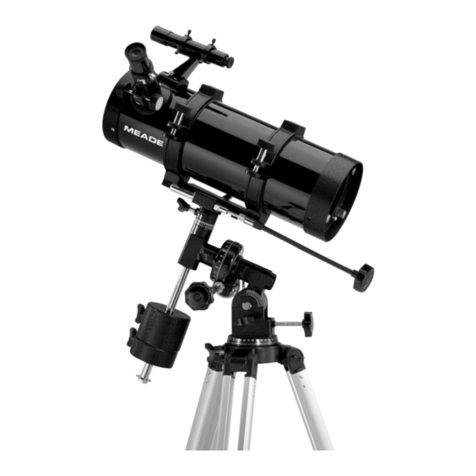
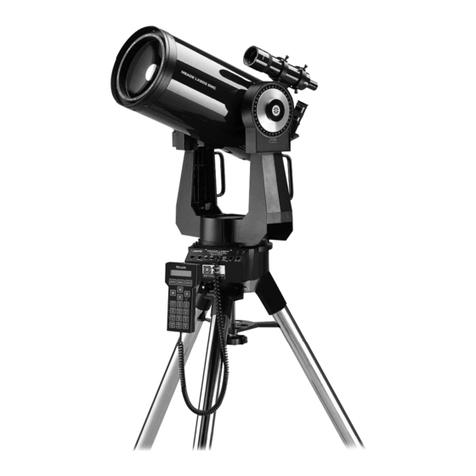
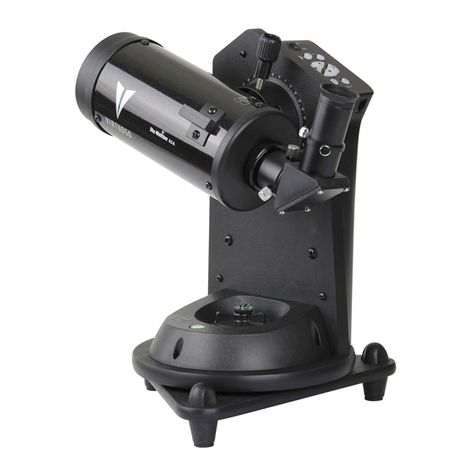
The tube 1 (fig.) is the basic part of the telescope, which embodies the optical
units such as a primary mirror, corrector, eyepiece set and finderscope.
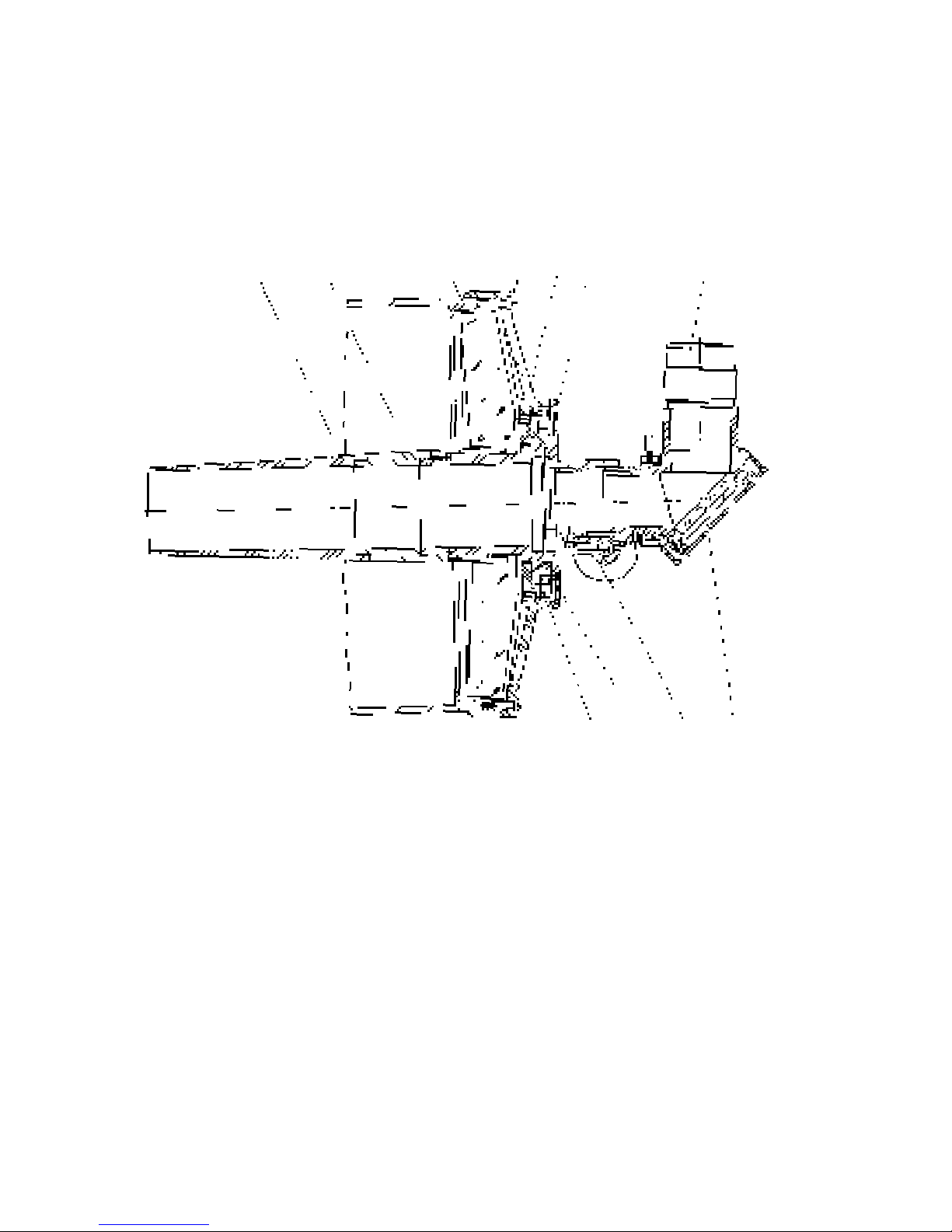
The primary mirror 1 (fig. 2) is fastened with the collet bushing 2 in the center
hole. The blending tube 3 on the collet bushing prevents stray light.
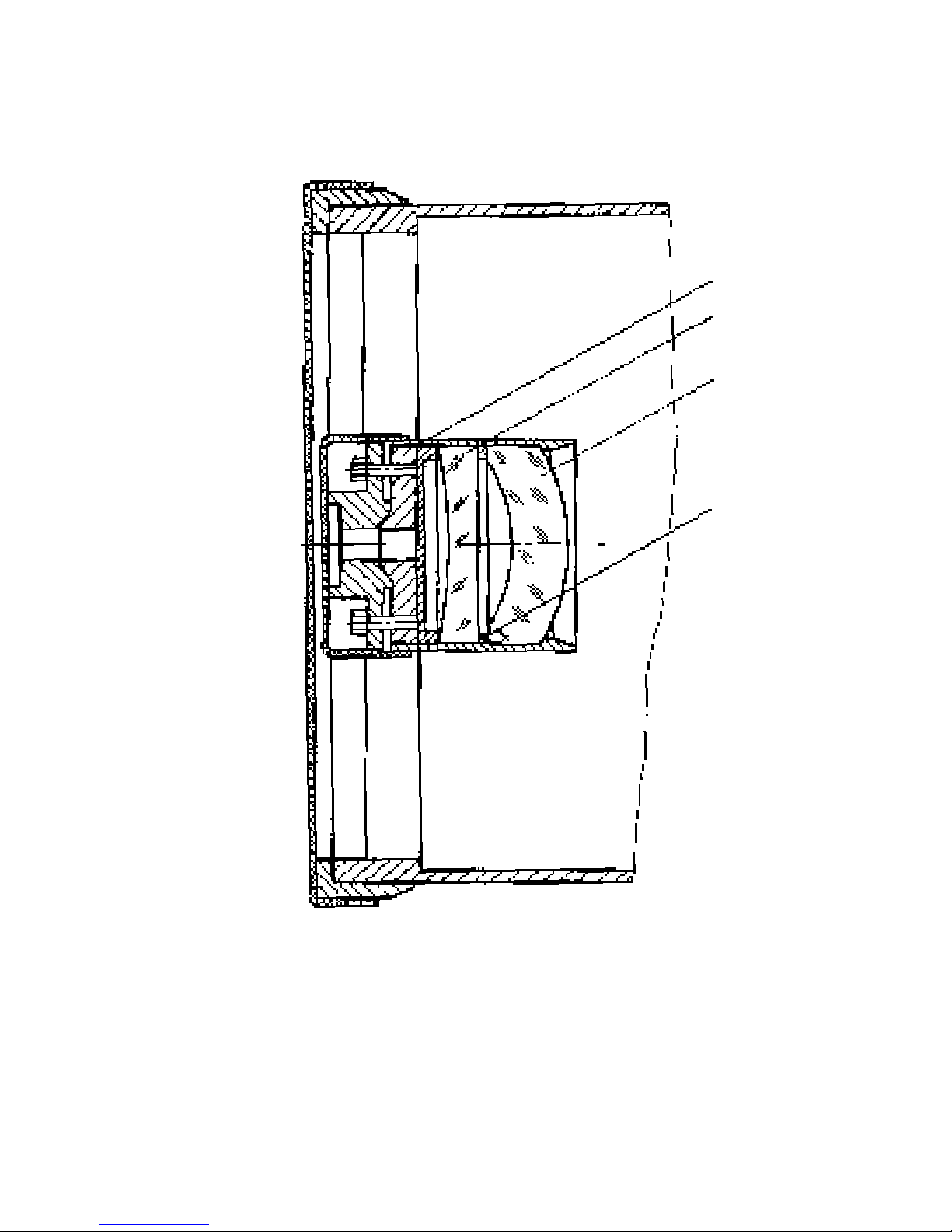
The corrector (fig.3) consists of reflecting lens 2 and meniscus lens 3 spaced
by means of padding rings 4 in the mounting .
Eyepiece set (fig.2) consists of focussing mechanism 6, diagonal mirror 7, set
of symmetrical eyepieces f'=25mm and f'=0mm with barrel diameter 3.8mm
(.25”), Barlow lens mounted in the same one.
Finderscope 9 (fig.) is a telescope with 6x (8x) magnification and view field
8° (7°).
5. OPTICAL TRAIN
Telescope is developed on the basis of Klevzov’s original optical train, which
does not use any aspherical surfaces. Klevzov’s optical train (fig.4) consists of
primary concave mirror and correcting unit consisting of two single lenses 4,5.
The lens 5 is made in form of negative meniscus directed by concave side to the
observed object. The lens 4 is negative one having a reflecting surface.
Reflecting from the primary mirror a beam passes through correcting lenses
4,5, reflects from the reflecting surface of lens 4, passes through correcting lens
forming an image of observed object in the focal plane which is located behind
a primary mirror .
In the main the Klevzov’s optical train is an improved Kassegran optical train,
which has a spherical primary mirror and double lens corrector having a reflect-
ing surface that to allow reducing an aberration. A meniscus 5 corrects a spherical
aberration and coma and fully compensates a little longitudional chromatic
aberration with the help of negative lens 4. Because two lenses of corrector are
made of the same mark of glass a secondary color of system is extremely little
one, and correction of the residual aberration is perfect that to allow obtaining
an image of observed object which can be compared with the image of object
obtained with the help of mirror telescope. Besides, Klevzov’s optical train is not
subject to unadjastment.