manuals.online logo
Brands
  1. Home
  2. •
  3. Brands
  4. •
  5. Panasonic
  6. •
  7. DVD Player
  8. •
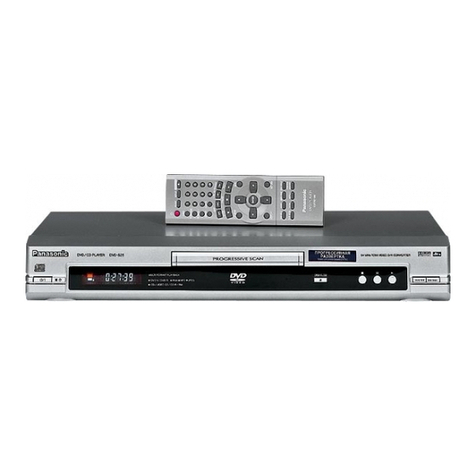
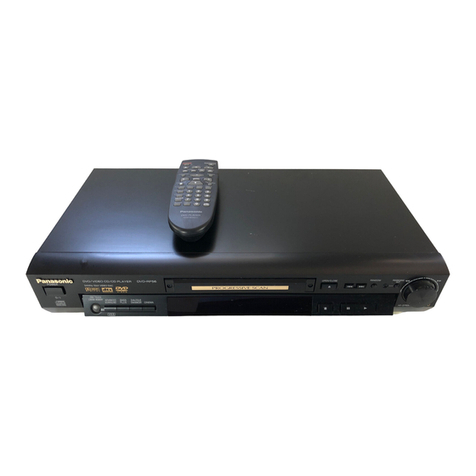
  9. Panasonic DVD-RP62P User manual

Panasonic DVD-RP62P User manual

This manual suits for next models

1

Other Panasonic DVD Player manuals

Panasonic DVD-S55 User manual

Panasonic

Panasonic DVD-S55 User manual

Panasonic DVD-S42 User manual

Panasonic

Panasonic DVD-S42 User manual

Panasonic DVD-CV52 User manual

Panasonic

Panasonic DVD-CV52 User manual

Panasonic DMP-UB900 Technical specifications

Panasonic

Panasonic DMP-UB900 Technical specifications

Panasonic DVD-RV20 User manual

Panasonic

Panasonic DVD-RV20 User manual

Panasonic DVD-K32GCS User manual

Panasonic

Panasonic DVD-K32GCS User manual

Panasonic DVDA100 - DVD User manual

Panasonic

Panasonic DVDA100 - DVD User manual

Panasonic DVDRV41 - DIG. VIDEO DISCPLAYE User manual

Panasonic

Panasonic DVDRV41 - DIG. VIDEO DISCPLAYE User manual

Panasonic DVD-CV51 User manual

Panasonic

Panasonic DVD-CV51 User manual

Panasonic DVD-S29EE User manual

Panasonic

Panasonic DVD-S29EE User manual

Panasonic DVD-S47S User manual

Panasonic

Panasonic DVD-S47S User manual

Panasonic DVD-S33 User manual

Panasonic

Panasonic DVD-S33 User manual

Panasonic DVD-S500GA User manual

Panasonic

Panasonic DVD-S500GA User manual

Panasonic PalmTheater DVD-PV40 User manual

Panasonic

Panasonic PalmTheater DVD-PV40 User manual

Panasonic DVD-S53EE User manual

Panasonic

Panasonic DVD-S53EE User manual

Panasonic DVDS58 - DVD/CD PLAYER - MULTI LANGUAGE User manual

Panasonic

Panasonic DVDS58 - DVD/CD PLAYER - MULTI LANGUAGE User manual

Panasonic DVDA300 - DVD User manual

Panasonic

Panasonic DVDA300 - DVD User manual

Panasonic DMP-BDT700 Technical specifications

Panasonic

Panasonic DMP-BDT700 Technical specifications

Panasonic DVD-S58GA User manual

Panasonic

Panasonic DVD-S58GA User manual

Panasonic CQ-DX200W5 User manual

Panasonic

Panasonic CQ-DX200W5 User manual

Panasonic DVD-KA84GA User manual

Panasonic

Panasonic DVD-KA84GA User manual

Panasonic DVDRV60 - User manual

Panasonic

Panasonic DVDRV60 - User manual

Panasonic DVD-K32 User manual

Panasonic

Panasonic DVD-K32 User manual

Panasonic DVD-S97EE User manual
Panasonic

Panasonic DVD-S97EE User manual

Popular DVD Player manuals by other brands

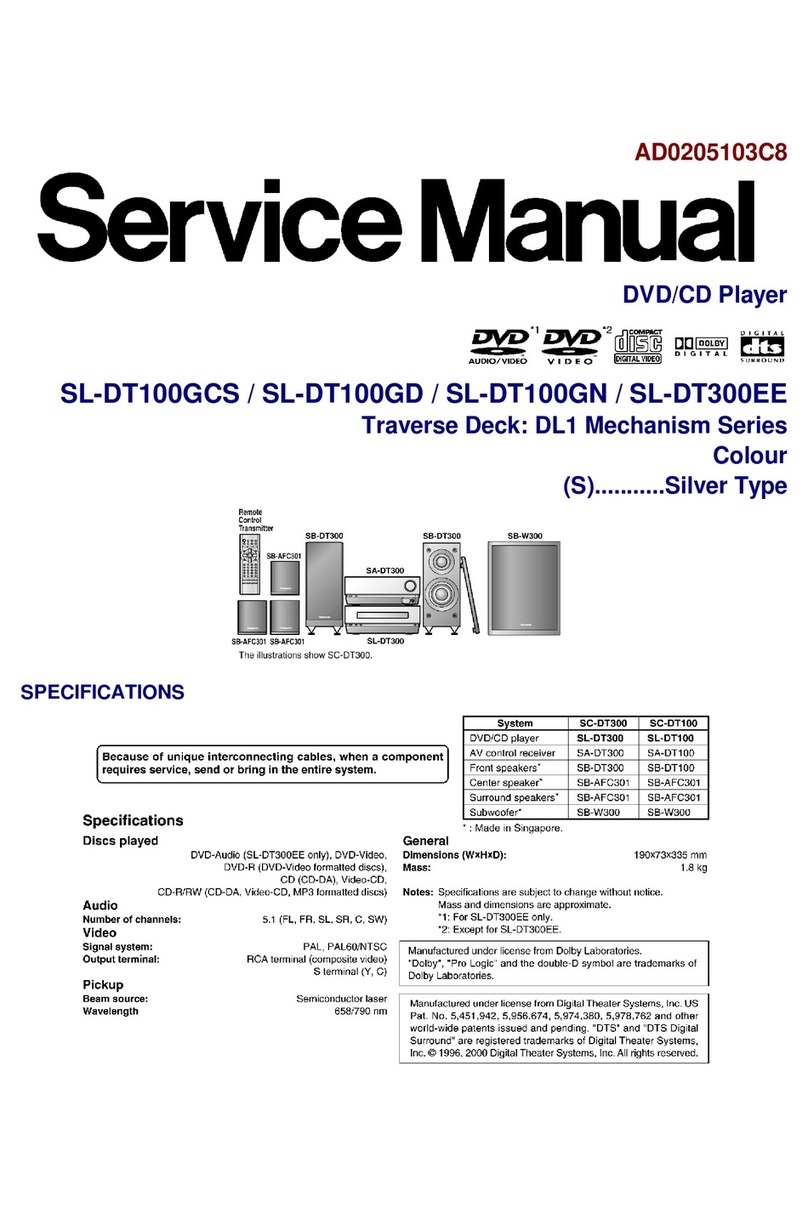
Yamaha DVD S540 - Progressive Scan DVD Player Service manual

Yamaha

Yamaha DVD S540 - Progressive Scan DVD Player Service manual

Yamakawa DVD-MP12i user manual

Yamakawa

Yamakawa DVD-MP12i user manual
Philips DVP3042/12 user manual
Philips

Philips DVP3042/12 user manual

Philips DVP5900/37B Quick use guide

Philips

Philips DVP5900/37B Quick use guide

Roadstar DVD-2020H Service manual

Roadstar

Roadstar DVD-2020H Service manual

Beko DVD 2006 user manual

Beko

Beko DVD 2006 user manual

Atak DVDA2015 instruction manual

Atak

Atak DVDA2015 instruction manual

LG DV257K owner's manual

LG

LG DV257K owner's manual

auna 10005069 manual

auna

auna 10005069 manual

Philips MCD700/61 user manual

Philips

Philips MCD700/61 user manual

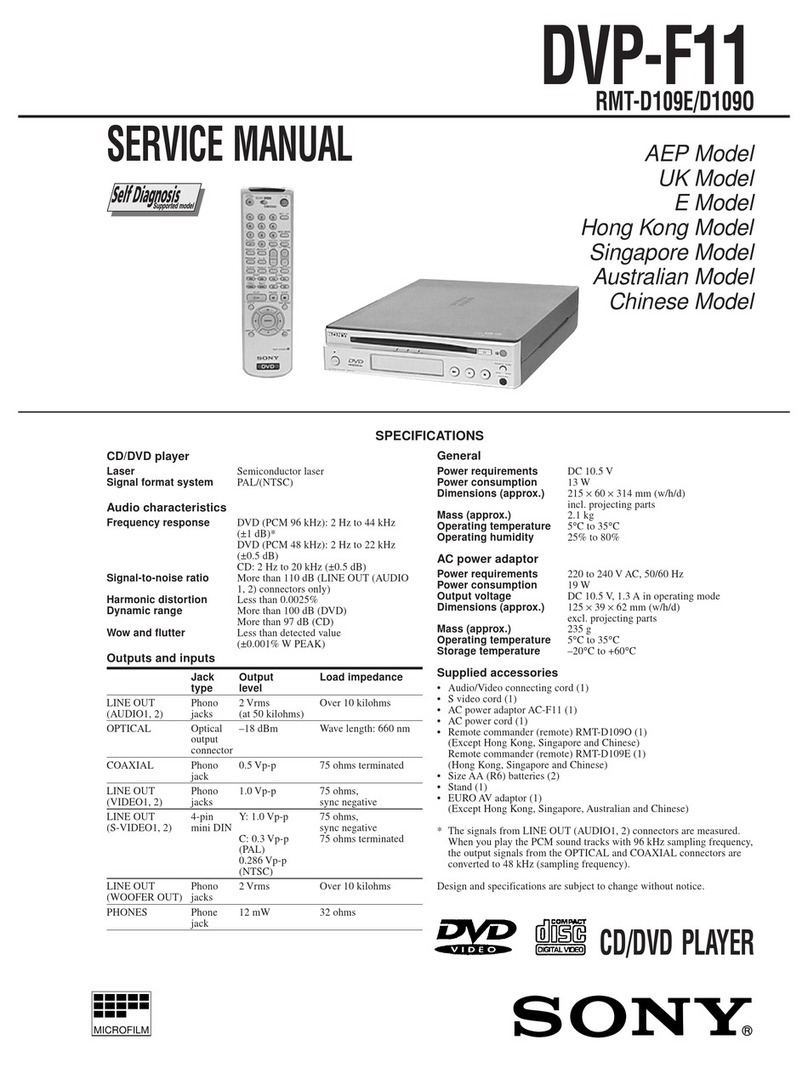
Sony DVP-F11 Service manual

Sony

Sony DVP-F11 Service manual

Toshiba SD-2300U owner's manual

Toshiba

Toshiba SD-2300U owner's manual

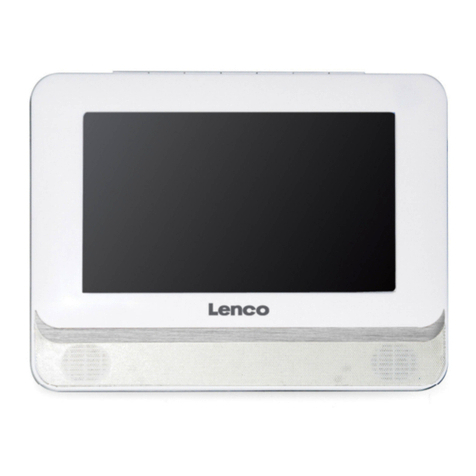
LENCO DVP-740 X2 user manual

LENCO

LENCO DVP-740 X2 user manual

Tevion 44330 user guide

Tevion

Tevion 44330 user guide

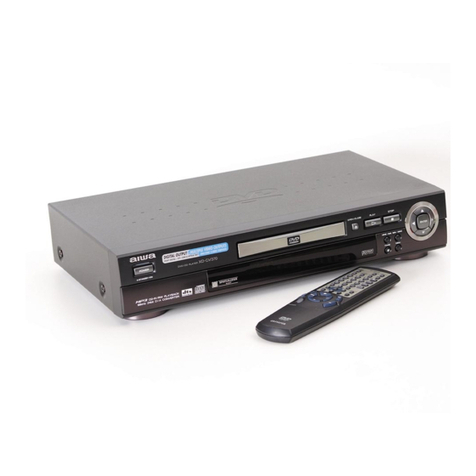
Aiwa XD-DV370 operating instructions

Aiwa

Aiwa XD-DV370 operating instructions

Sony DVP S530D operating instructions

Sony

Sony DVP S530D operating instructions

Denon DVM-1805 - DVD Changer operating instructions

Denon

Denon DVM-1805 - DVD Changer operating instructions

Toshiba SD-3815 owner's manual

Toshiba

Toshiba SD-3815 owner's manual

manuals.online logo
manuals.online logoBrands
  • About & Mission
  • Contact us
  • Privacy Policy
  • Terms and Conditions

Copyright 2025 Manuals.Online. All Rights Reserved.

ORDERNO.ODSD020421C1
B12
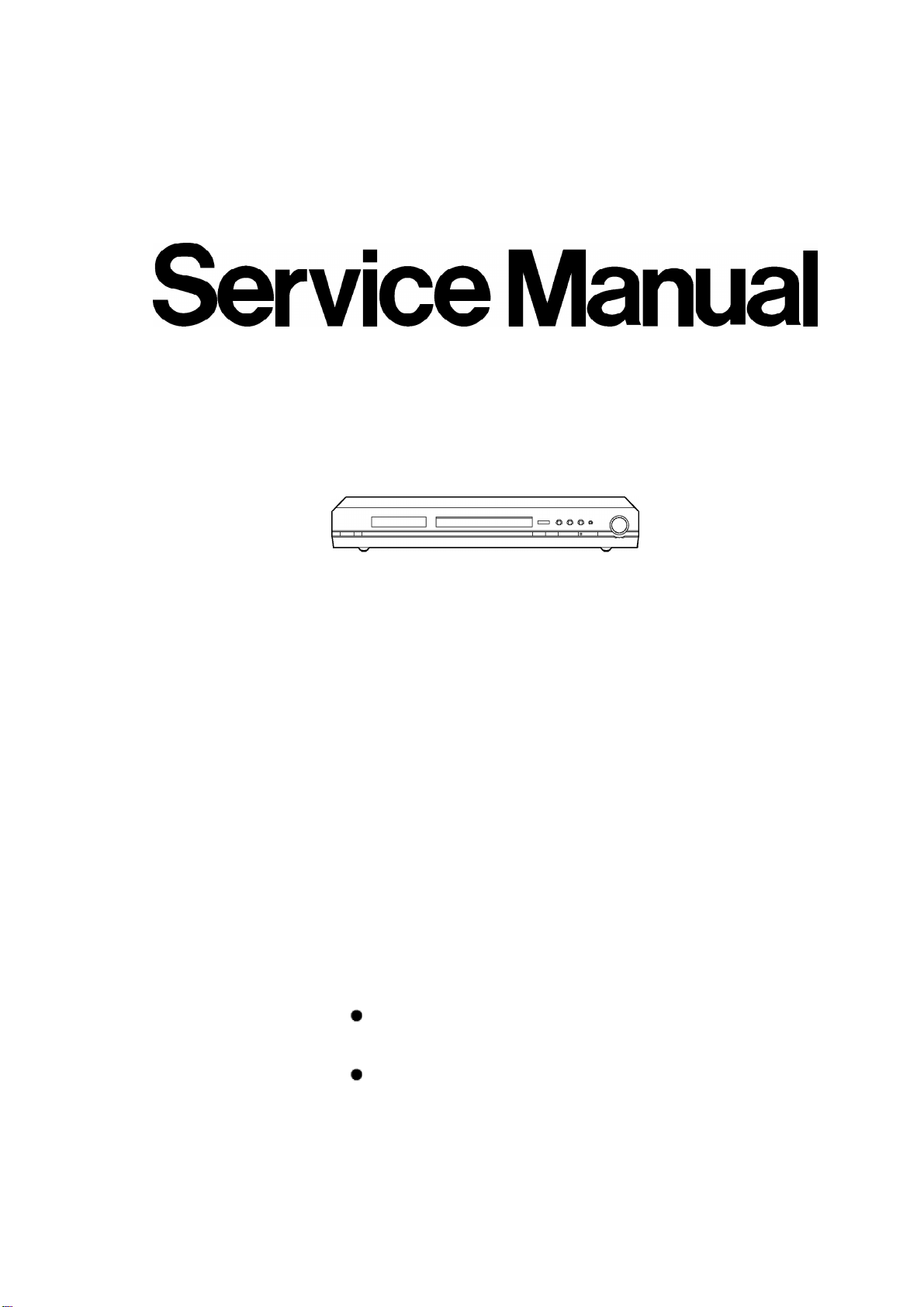
DVDPlayer
DVD-RP62P / DVD-RP62PC
Colour
(K).......................Black Type
(S).......................Silver Type
SPECIFICATIONS
Specifications
Power supply: AC120 V, 60 Hz
Power consumption: 14 W
Dimensions: 430 (W)×267 (D)×60 (H) mm
[1615 /16 ”(W) x102/4”(D) x
26/16 ” (H)]
(excludingprotrusions)
Mass: 2.4kg(5.3lb.)
Signal system: NTSC
Operating temperature range: +5to+35°C (+41 to95°F)
Operating humidityrange: 5 to90 %RH (no
condensation)
Region number: Region No.1
Discs played[8cm (3”) or12 cm (5”)]:
(1) DVD-Video
(2)DVD-R (DVD-Videocompatible)
(3)CD-Audio(CD-DA)
(4)VideoCD
(5)CD-R/CD-RW(CD-DA, VideoCD formatteddiscs)
(6)MP3/WMA
Maximumnumber of tracks and groupsrecognizable:
999 tracks and 99 groups
Compatiblecompression rate:
MP3: between32 kbpsand 320
kbps
WMA: between48 kbpsand 192
kbps
1
Videooutput:
Output level: 1Vp-p(75 )
Output terminal: Pinjack
Number of terminals: 1 systems
S videooutput:
Y output level: 1Vp-p(75 )
C output level: 0.286 Vp-p(75 )
Output terminal: S terminal
Number of terminals: 1 system
Component videooutput (480P/480I):
Y output level: 1Vp-p(75 )
PBoutput lebel: 0.7Vp-p(75 )
PRoutput level 0.7Vp-p(75 )
Output terminal: Pinjack
(Y:green, PB:blue, PR:red)
Number of terminal: 1system
Audiooutput:
Output level: 2Vrms (1kHz, 0dB)
Output terminal: Pinjack
Number of terminals:
2CH: 1system
Subwoofer output
(0.1channel):
1system
Audioperformance:
(1)Frequencyresponse:
DVD (linear audio): 4Hz-22 kHz (48 kHz
sampling)
4Hz-44 kHz (96 kHz
sampling)
CD audio: 4Hz-20 kHz
(2)S/N ratio:
CD audio: 115 dB
(3)Dynamicrange:
DVD (linear audio): 102 dB
CD audio: 98 dB
(4)Total harmonicdistortion:
CD audio: 0.0025 %
Digital audiooutput:
Optical digital output: Optical terminal
Pickup
Wavelength: 658 nm/790 nm
Laser power: CLASS 2a/CLASS 1
Power consumption instandbymode:
approx. 2W
Note:
Specificationsare subject tochangewithout notice.
Mass and dimensionsare approximate.
2
2002 Matsushita ElectricIndustrial CO., Ltd. All rights reserved.
Unauthorized copying and distribution isaviolation of law.
1. SAFETY PRECAUTIONS
1.1. GENERALGUIDELINES
1. When servicing, observe the original lead dress. Ifashort circuit
isfound, replace all parts which have been overheated or
damaged bythe short circuit.
2. After servicing, see to itthat all the protective devices such as
insulation barriers, insulation papers shields are properly
installed.
3. After servicing, make the following leakage current checks to
prevent the customer from being exposed to shock hazards.
1.1.1. LEAKAGE CURRENTCOLD CHECK
1. Unplug the AC cord and connect ajumper between the two
prongs on the plug.
2. Measure the resistance value, with an ohmmeter, between the
jumpered AC plug and each exposed metalliccabinet part on the
equipment such as screwheads, connectors, control shafts, etc.
When the exposed metallicpart has areturn path to thechassis,
the reading shouldbe between 1M and 5.2M . / When the
exposed metal does not have areturn path to the chassis, the
reading must be . Figure 1
3
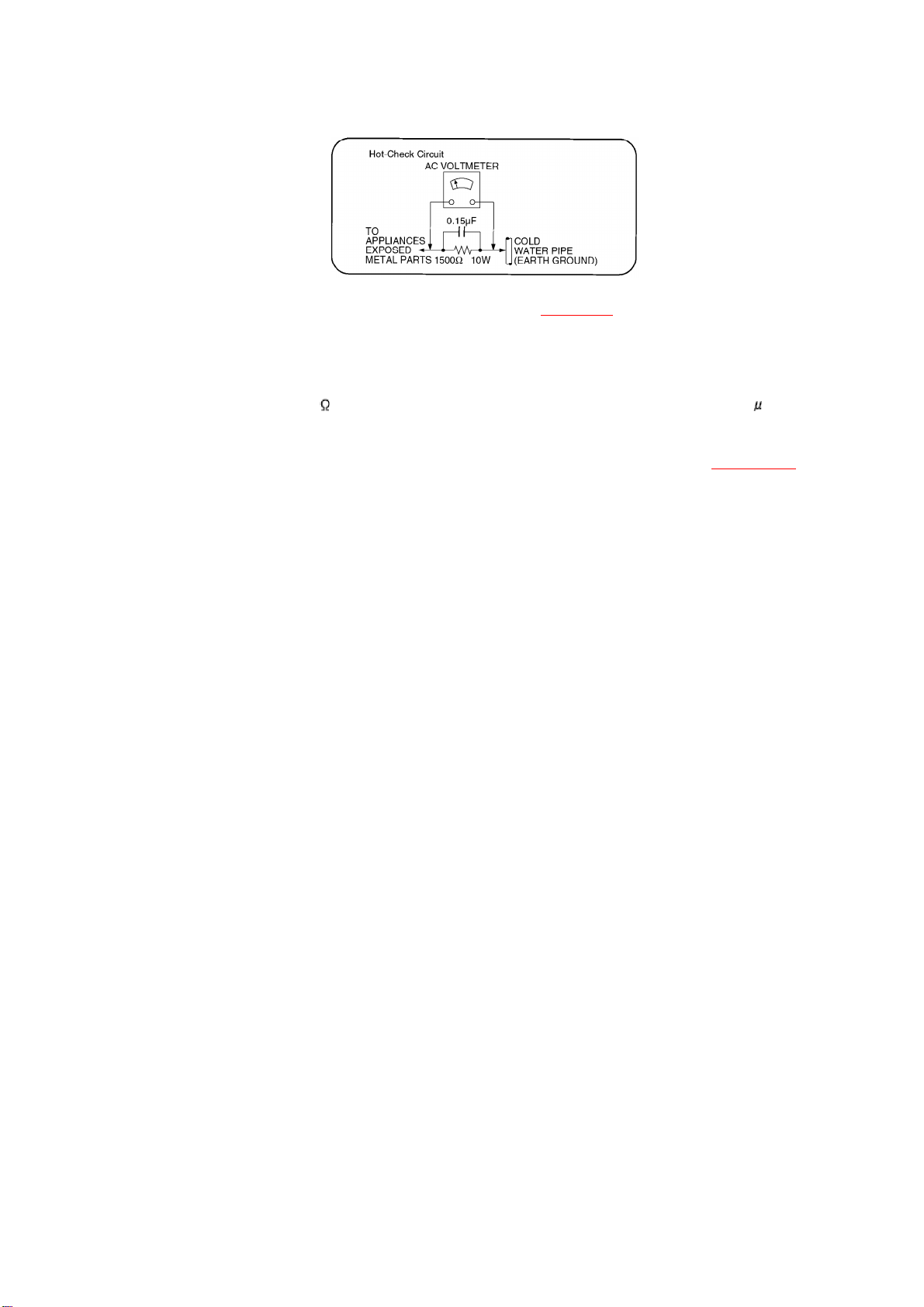
1.1.2. LEAKAGE CURRENTHOTCHECK (See Figure 1 .)
1. Plug the AC cord directlyinto the AC outlet. Donot use an
isolation transformer for thischeck.
2. Connect a1.5k , 10 watts resistor, inparallel with a0.15 F
capacitors, between each exposed metallicpart on the set and a
good earth ground such as awater pipe, as shownin Figure 1 .
3. Use an AC voltmeter, with 1000 ohms/voltor more sensitivity, to
measure the potential across the resistor.
4. Check each exposed metallicpart, and measure the voltage at
each point.
5. Reverse the AC plug inthe AC outlet and repeat each of the above
measurements.
6. The potential at anypoint shouldnot exceed 0.75 volts RMS. A
leakage current tester (Simpson Model 229 or equivalent) maybe
used to make the hot checks, leakage current mu3st not exceed 1/
2milliamp. Incase ameasurement isoutsideof the limits
specified, there isapossibilityof ashock hazard, and the
equipment shouldbe repaired and rechecked before itisreturned
to the customer.
2. PREVENTION OF ELECTRO STATIC DISCHARGE
(ESD) TO ELECTROSTATICALLY SENSITIVE (ES)
DEVICES
Some semiconductor(solidstate) devices canbe damagedeasilybystatic electricity. Such
components commonlyare calledElectrostaticallySensitive (ES) Devices. Examples of typical
ES devices are integratedcircuits and some field-effect transistorsand semiconductor"chip"
components. The following techniques shouldbe usedtohelpreduce the incidence of
component damage causedbyelectrostatic discharge (ESD).
1. Immediatelybefore handling anysemiconductor component or
semiconductor-equipped assembly, drainoff anyESDon your
4
bodybytouching aknownearth ground. Alternatively, obtainand
wear acommerciallyavailabledischargingESDwrist strap, which
shouldbe removed for potential shock reasons prior to applying
power to the unitunder test.
2. After removing an electrical assemblyequipped with ES devices,
place the assemblyon aconductive surface such as alminum foil,
to prevent electrostaticcharge buildup or exposure of the
assembly.
3. Use onlyagrounded-tipsoldering iron to solder or unsolder ES
devices.
4. Use onlyan anti-staticsolder removal device. Some solder
removal devices not classified as "anti-static(ESDprotected)"
can generate electrical charge sufficient to damage ES devices.
5. Donot use freon-propelled chemicals. These can generate
electrical charges sufficient to damage ES devices.
6. Donot remove areplacement ES device from its protective
package until immediatelybefore you are readyto install it. (Most
replacement ES devices are packaged with leads electrically
shorted together byconductive foam, alminum foil or
comparableconductive material).
7. Immediatelybefore removing the protective material from the
leads of areplacement ES device, touch the protective material to
the chassisor circuitassemblyinto which the device will be
installed.
Caution
Besure no power isapplied to the chassisor circuit, and observe
all other safetyprecautions.
8. Minimize bodilymotions when handling unpackaged replacement
ES devices. (Otherwise hamless motion such as the brushing
together of your clothes fabricor the lifting of your foot from a
carpeted floor can generate staticelectricity(ESD)sufficient
todamage an ES device).
5
3. Precaution of Laser Diode
4. General Description
4.1. Operating instructions
5. PREVENTION OF STATIC ELECTRICITY
DISCHARGE
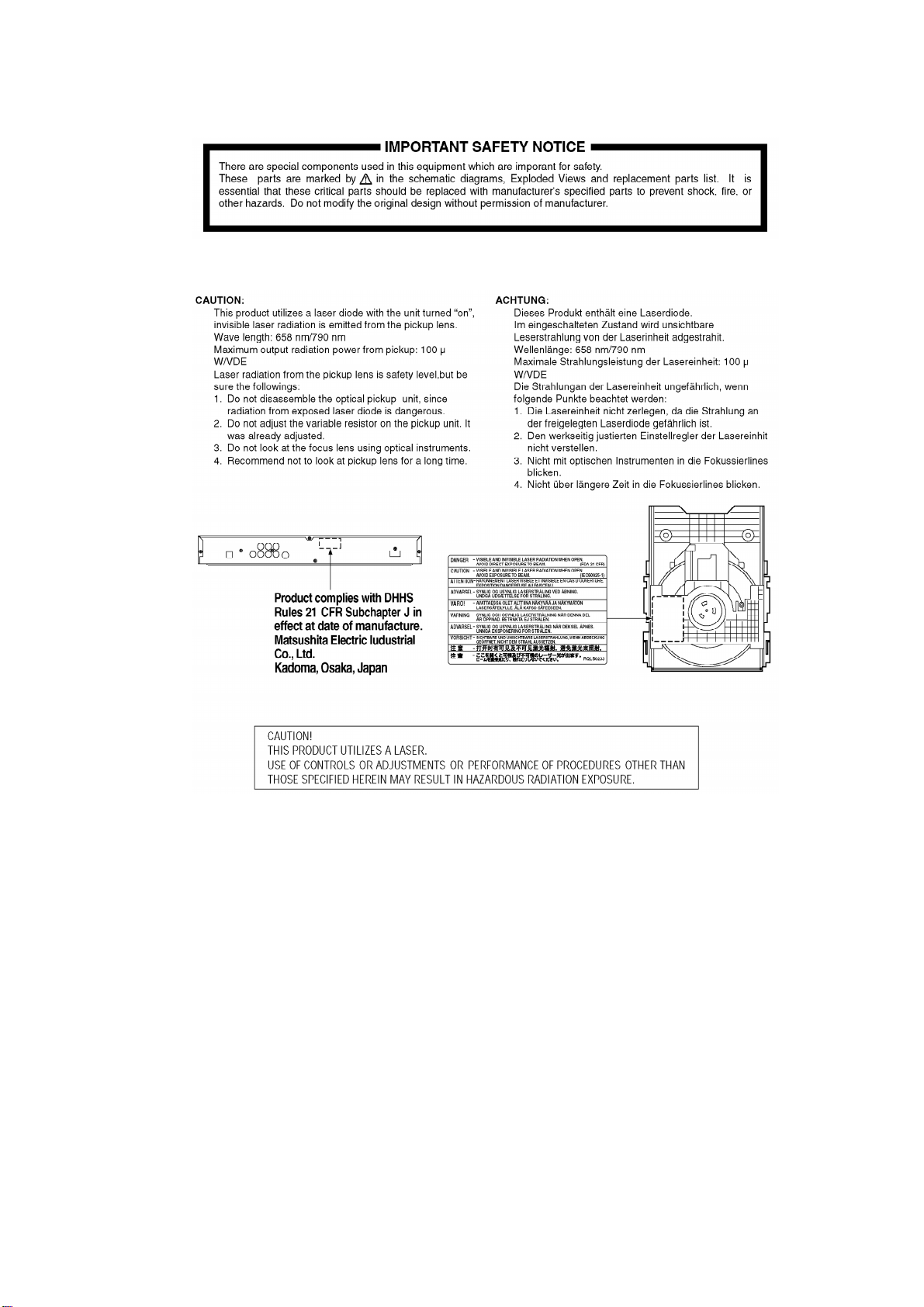
The laserdiode inthe traverse unit (optical pickup) maybrake downdue tostatic electricityof
clothes orhumanbody. Use due caution toelectrostatic breakdownwhenservicing and
handling the laserdiode.
5.1. Grounding for electrostaticbreakdownprevention
Some devices suchas the DVD playeruse the optical pickup (laserdiode) and the optical
pickup will be damagedbystatic electricityinthe working environment. Proceedservicing
works underthe working environment where grounding works is completed.
5.1.1. Worktablegrounding
6
1. Put aconductive material (sheet) or iron sheet on the area where
the optical pickup isplaced, and ground the sheet.
5.1.2. Human bodygrounding
1. Use the anti-staticwrist strap to discharge the staticelectricity
form your body.
5.1.3. Handling of optical pickup
1. To keep the good qualityof the optical pickup maintenance parts
during transportation and before installation, the both ends of the
laser diode are short-circuited. After replacing the parts with new
ones, remove the short circuitaccordingto the correct procedure.
(See thisTechnical Guide.)
2. Donot use atester to check the laser diode for the optical pickup.
Failure to do so will damage the laser diode due to the power
supplyinthe tester.
5.2. Handling Precautions for Traverse Unit(Optical Pickup)
1. Donot give aconsiderableshock to the traverse unit(optical
pickup) as ithas an extremelyhigh-precise structure.
2. When replacing the optical pickup, install the flexiblecableand
cut its short land with anipper. See the optical pickup
replacement procedure inthisTechnical Guide. Before replacing
the traverse unit, remove the short pinfor preventingstatic
electricityand install anew unit. Connect the connector as short
times as possible.
3. The flexiblecablemaybe cut off ifan excessive force isapplied to
it. Use caution when handling the cable.
4. The half-fixed resistor for laser power adjustment cannot be
adjusted. Donot turn the resistor.
7
6. Disassembling the Casing and Checking P.C.B.s
6.1. DissasemblyProcedure
6.2. Caseing Parts and P.C.B. Positions
6.3. Top Panel
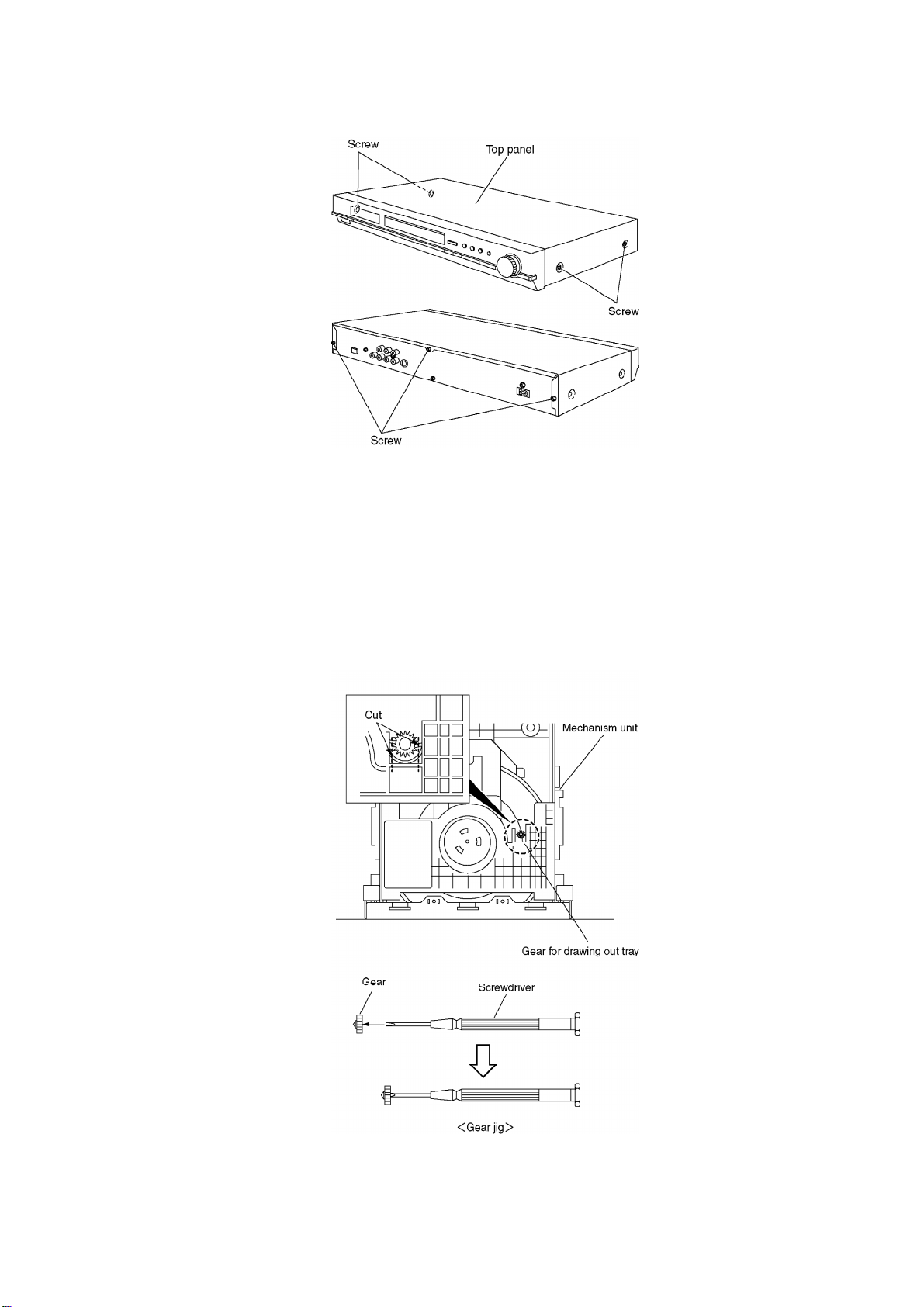
1. Unscrew the screws.
8
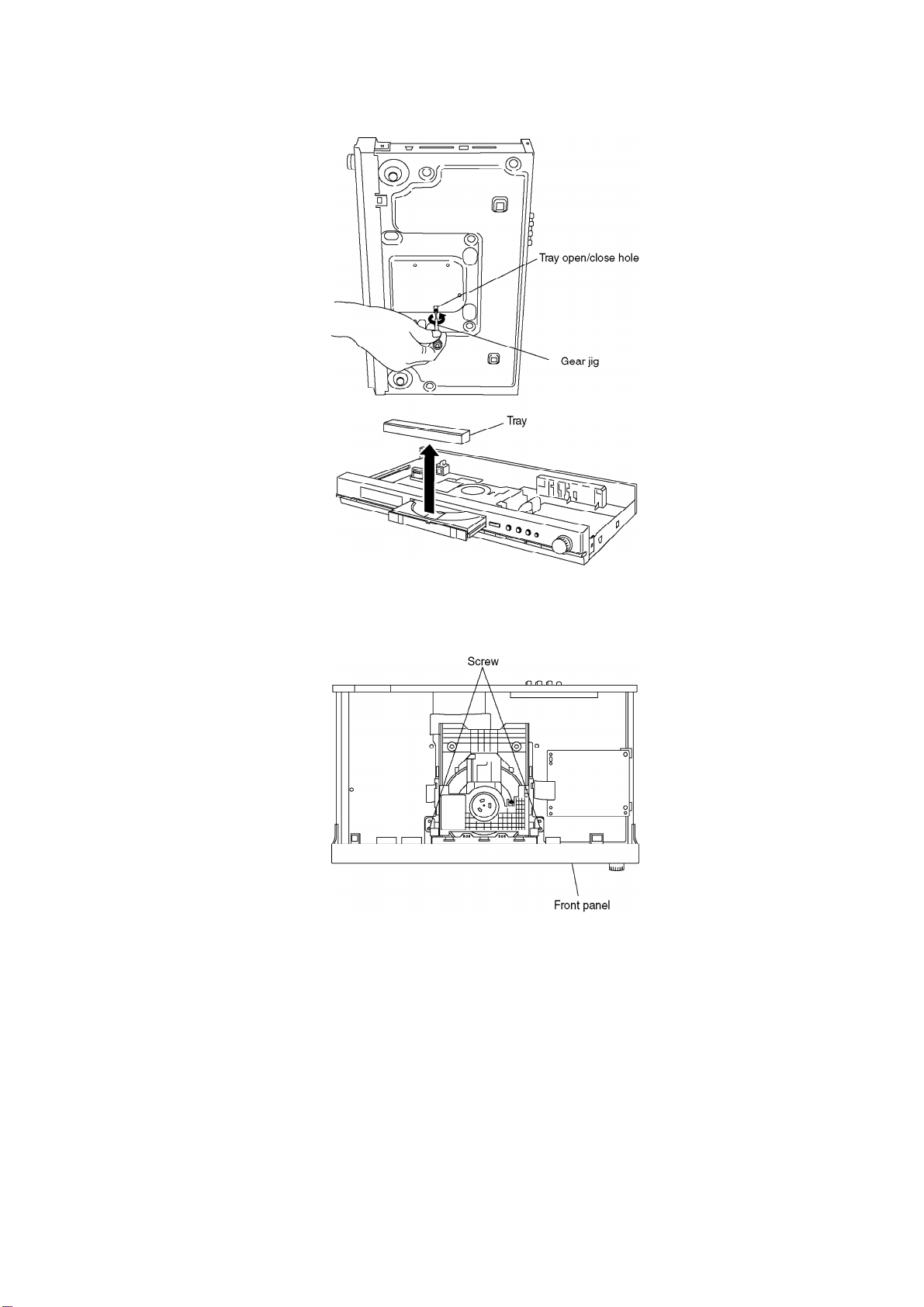
6.4. Tray
1. Pull the trayout of the mechanism unit. Remove the gear and
install itonto ascrewdriver to make agear jig.
2. Insert the gear jiginto the trayopen/close hole.
3. Turn the gear jigcounterclockwise to open the tray.
4. Remove the trayfrom the traysection.
9
6.5. Front Panel
1. Unscrew the screws.
2. Release the tabs.
3. Remove the connectors.
10