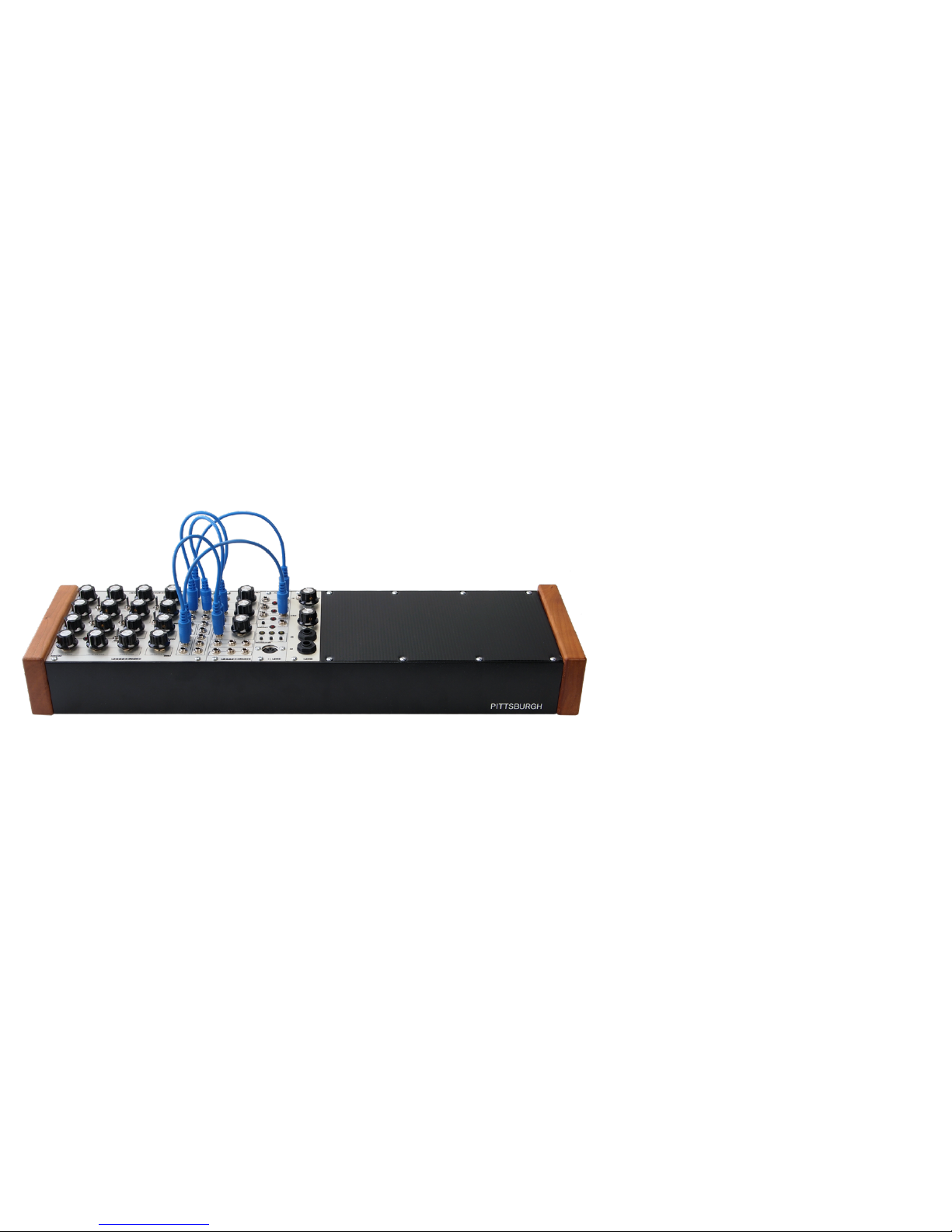
The System 10 signal path is divided into two types of signals: audio signals and control voltages.
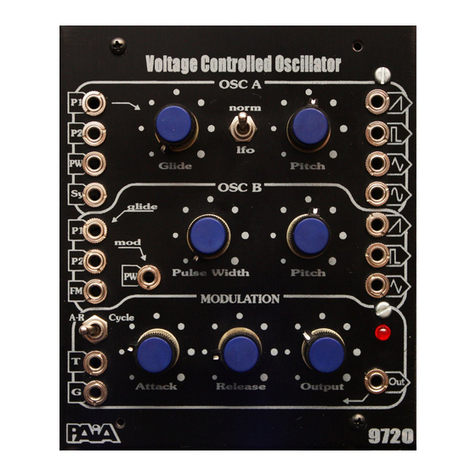
The audio signal is the sound that is produced. The audio signal path starts at a sound source such as a Synthesizer
Box oscillator, LFO running at audio rate, or the resonance of a self oscillating filter. The audio signal is then patched
through other modules used to shape the sound such a mixer, filter, or amplifier.
Control voltages (CV) manipulate the audio signal in several different ways.
Gates are represented by a high or low control voltage. A gate can be generated using a pulse or square
wave from an oscillator or LFO, or by using the GATE output from the Midi 3 module. A gate can be
shaped using an envelope generator to control the attack, decay, sustain, and release of the gate. The
modified gate signal can then be sent to any CV input on the System 10.
A second use for control voltages is as a modulation source. For example, a control voltage from the CV
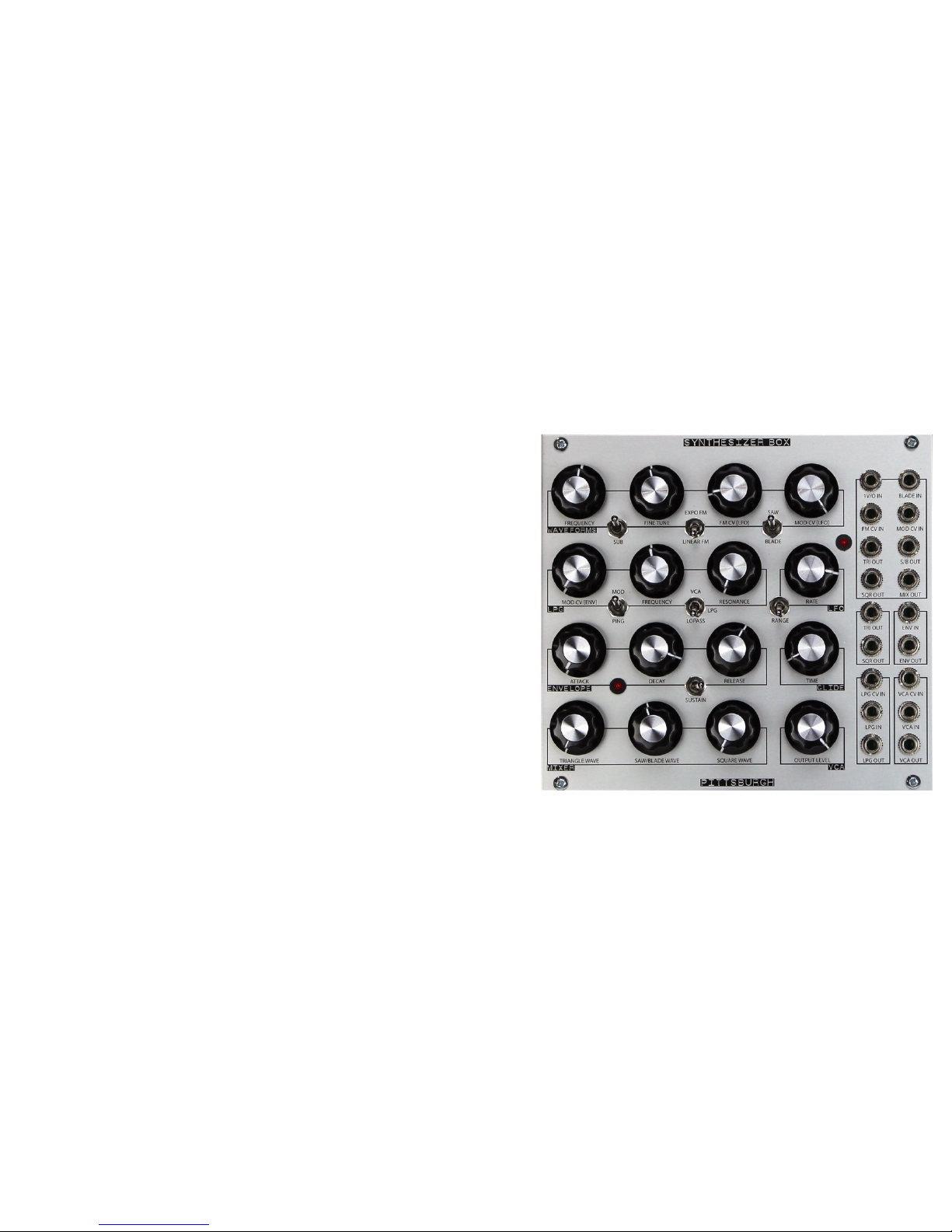
output of the Midi 3 module patched into the 1V/O input on the Synthesizer Box oscillator module
controls the frequency of the oscillator based on the midi note received. The LFO section of the
Synthesizer Box provides a separate low frequency oscillator that makes a perfect control voltage
modulation source. Audio signals also make a great control voltage source for oscillator FM (frequency
modulation).
As always, experimentation is essential to getting the most out of the System 10.!