10
traveler is a short (3 foot) length of gray line with a single block in the
middle. The line is attached to each side of the rudder pedestal, to eyestraps,
with bowlines. The mainsheet goes through the traveler then back up to the
becket block on the boom end. From there, it leads to the mid-boom
mainsheet block, then down to the mainsheet ratchet block on the
centerboard trunk. Be sure to install the mainsheet through the ratchet block
so the block clicks, then through the camcleat, and end with a figure 8 knot.
Now you are ready to put the sails on.
The Mainsail
The mainsail is a loose-footed sail, so it is only attached to the boom at the
clew, or back corner. First, locate the tack of the sail, or front lower corner.
There is one sail slide near the tack, which slides into the short length of
sailtrack just above the gooseneck. There is a grommet in the mainsail about
6” above the tack. This is for the downhaul, or Cunningham (see above).
Next, rig the outhaul, by passing the red outhaul line through the clew
grommet, then tying the end of the outhaul to the eyestrap with a bowline.
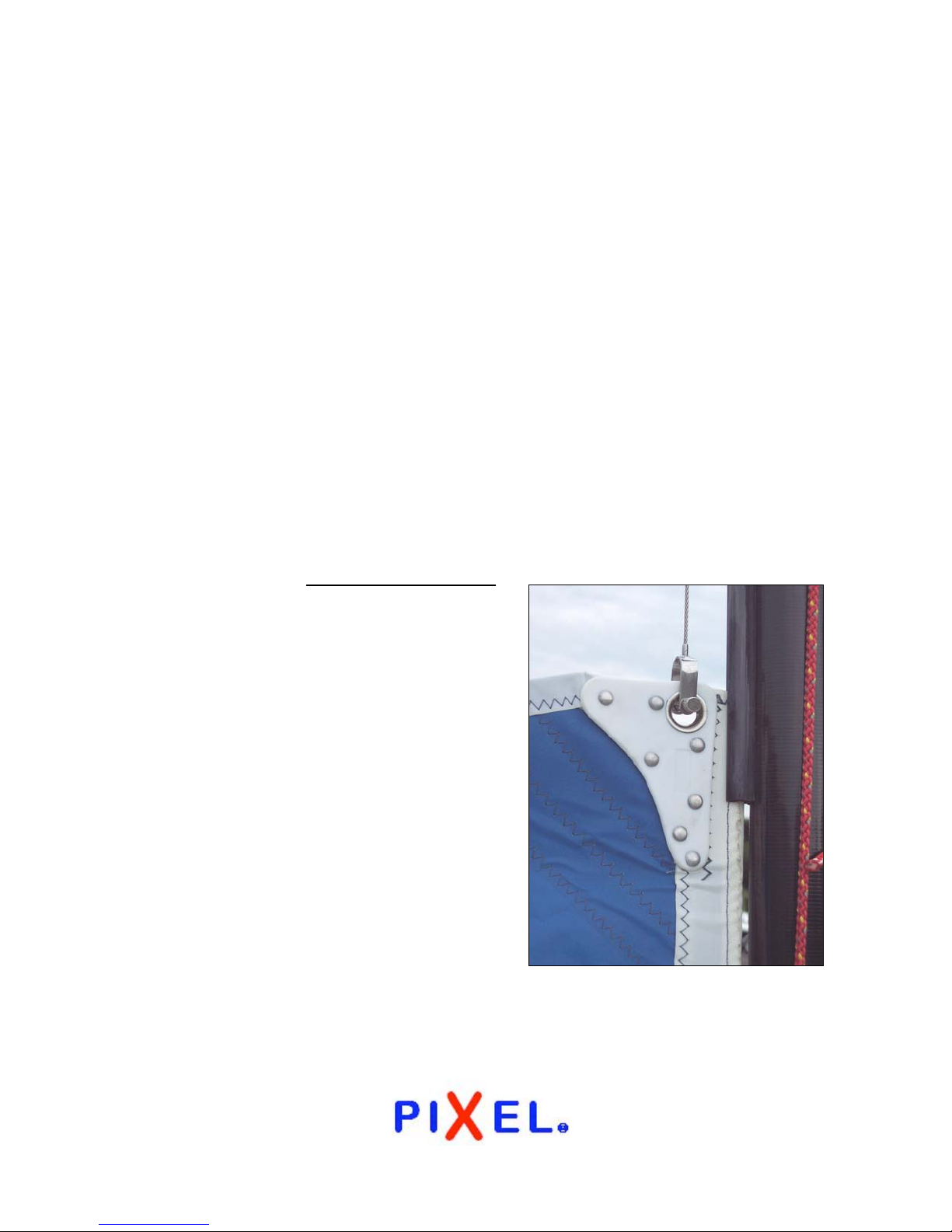
You will find a Velcro strap through the clew grommet of the mainsail. (See
photo above under The Mainsail Outhaul).
This strap should go around the boom and
secure back on itself. Its purpose is to
hold the clew of sail down to the boom.
The main job of the outhaul is to control
foot tension on the sail, being pulled taut
in a heavier breeze and eased in lighter
winds. The Velcro strap needs no
adjustment once set up for the day.
Now attach the halyard shackle to the
head (top) of the sail. Check carefully to
make sure the halyard is clear and not
tangled in other lines. Once the halyard is
attached, you are ready to raise the sail.
Remember to ease the vang, the downhaul
and the sheet to be able to raise the
mainsail completely. When fully hoisted,
place the halyard ball lock (ball on the halyard wire) into the halyard lock on
the mast.