Ref. NTH540/380 7 Index 03.
Safety instructions:
WARNING. Read all safety warnings and all instructions. Failure to abide by warnings and instructions could
lead to an electric shock, fire and/or serious injury.
Keep all safety warnings and instructions so that you can refer to them at a later date.
The term “tool” in the warnings refers to your electrical battery-operated tool.
Safety measure:
Cover the blade with its protective cover every time you handle or transport the appliance.
Keep the working area clean and well lit. Accidents often occur in untidy, dark areas.
Never use the appliance at night or in poor light without setting up extra lighting.
Do not operate electrical tools in an explosive atmosphere, e.g. in the presence of inflammable liquids, gas or dust.
Electrical tools produce sparks that may ignite dust or fumes.
Keep children and other people present at a safe distance when using the tool. Distractions may make you lose control of
the tool.
Use the appropriate, adapted means (scaffolding, platform, etc.) when working at a height.
Do not try to cut wood of too large a diameter or materials other than wood (tree branches only).
The electrical tool’s connectors must be adapted to the base. Never modify the connector in any way whatsoever.
Never use adaptors with earthed tools. Unmodified connectors and adapted bases will reduce the risk of electric
shock.
Do not expose tools to rain or damp conditions. Water penetration inside the tool will increase the risk of electric shock.
Treat the electrical lead with care. Never use it to carry, pull or disconnect the tool. Keep the lead away from heat,
lubricants, sharp edges and moving parts. Damaged or tangled leads increase the risk of electric shock.
Never carry the charger by the lead and do not pull the lead to disconnect the plug. . Keep the lead away from heat, oil and
sharp edges.
Never place the charger in contact with water.
If your charger lead is damaged, you should change it using an original lead or unit from the INFACO factory or from an
approved ELECTROCOUP retailer.
Never leave your battery on charge for more than 24 hours. Do not charge the battery in the case: allow air to circulate
around it.
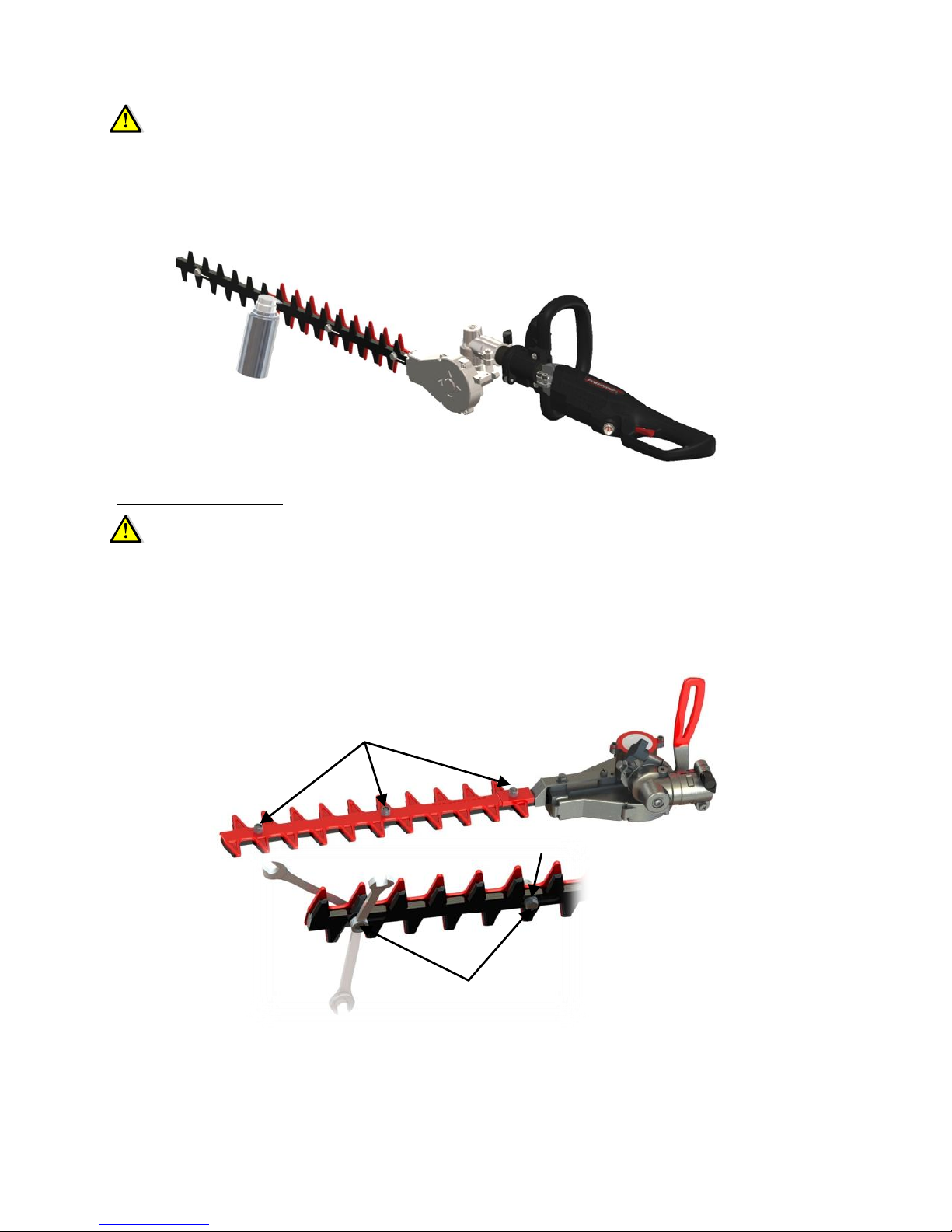
Take care to avoid the cutting edge of the blade when dismantling and adjusting it.
When the appliance is in operation, always keep your hands away from the cutting head.
Avoid switching on the machine unexpectedly. Make sure the switch is in the “Off”position before connecting the tool to
the mains supply and/or battery block, picking it up or carrying it. Accidents may be caused by carrying tools with a finger
on the switch or connecting tools to the mains supply when the switch is in the “On” position.
Remove all adjustment keys before switching to tool on. A key left attached to a rotating part of the tool could injure
someone.
Remain vigilant, watch what you are doing and show common sense in the way in which you use the tool. Do not use a toll
when you are tired or under the influence of drugs, alcohol or medication. A moment’s lack of attention when using a tool
can lead to serious physical injury.
Do not force the tool. Use the appropriate tool for the job you are doing. The appropriate tool will do the job better and
more safely at the speed for which it was built.
Do not use the tool if the switch does not allow you to go from “On” to “Off” and vice versa. Any tool that cannot be
controlled by the switch is dangerous and should be repaired.
Disconnect the plug from the mains supply and/or battery block before carrying out any adjustments, changing accessories
or putting the tool away. This will reduce the risk of the tool starting up accidentally.
Keep tools that are switched off away from children and do not allow people who do not know the tool or these instructions
to operate it. Tools are dangerous in the hands of inexperienced users.
Keep the tool well maintained. Check that moving parts are not badly aligned or obstructed, and that there are no broken
parts or other problem that may affect the tool’s operation. If the tool is damaged, have it repaired before using it again.
Many accidents are caused by poorly maintained tools.
Keep cutting tools sharpened and clean. Properly maintained cutting tools with sharp cutting edges are less likely to block
and are easier to control.