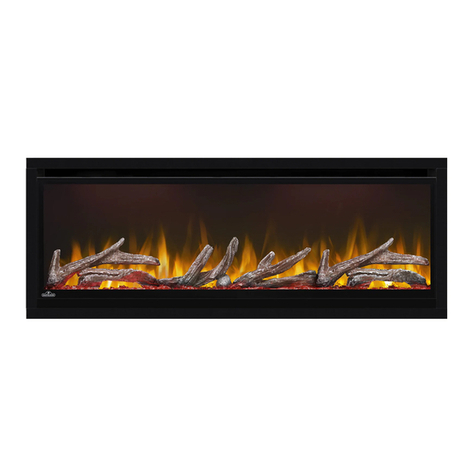
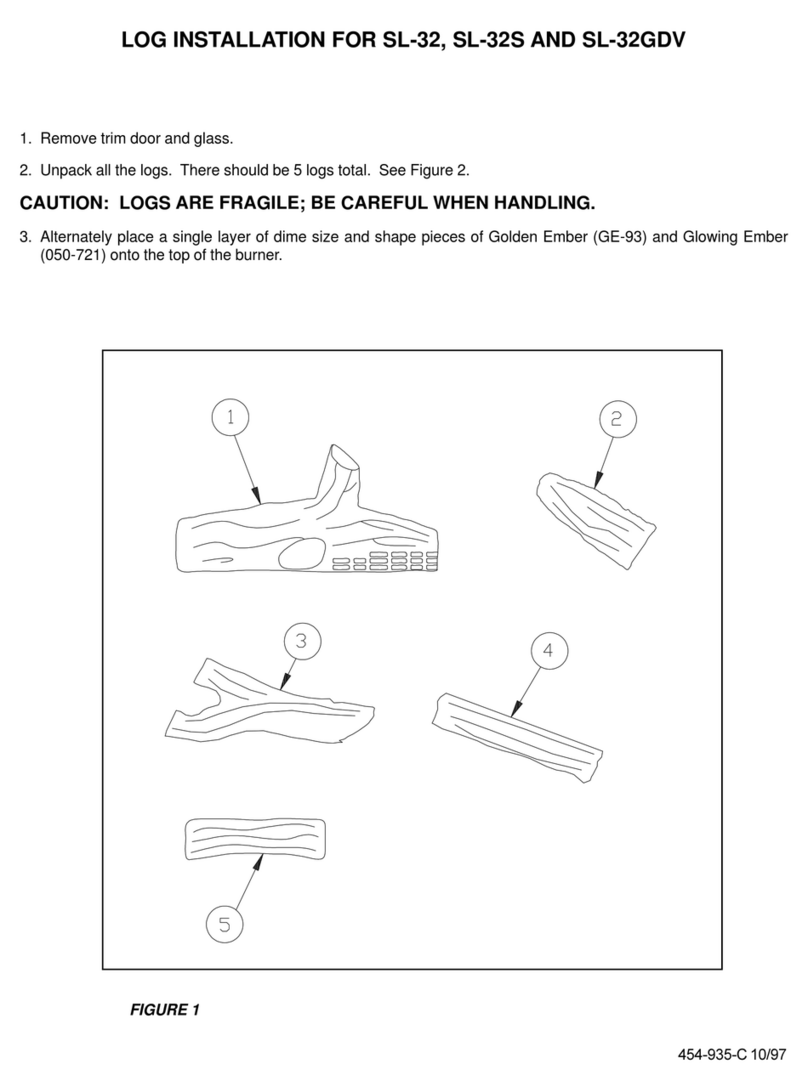
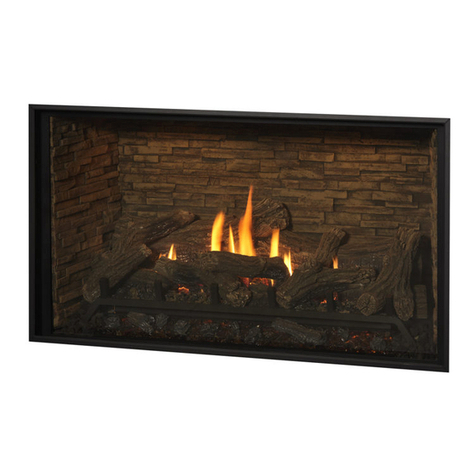
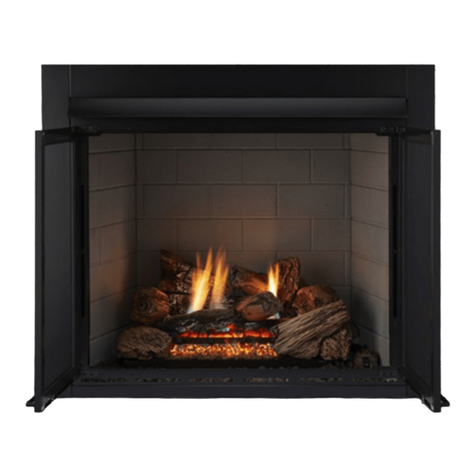
FUEL BED LAYOUT
Please see the relevant section of the user instructions.
FITTING THE DECORATIVE FRAME //FFIREFRONT
Chloe, JJuliet aand CChurchill mmodels;
Remove the decorative frame from it’s protective packaging. The frame is supplied
with pre attached magnets. Simply place the frame onto the front of the firebox and
slide the ashpan door into place.
Heat WWave, NNew wwave aand MMedia mmodels;
The side pieces of the clip on assembly should be pushed into position first, fol-
lowed by the top bar, which should overlap the sides.
IMPORTANT NNOTE: DDue tto
the ppossibility oofssharp eedges,,ccare sshould bbettaken wwhen hhandling tthe tthree ppiece
frame ccomponents. TThe uuse oofpprotective ggloves iisrrecommended.
Place the deco-
rative firefront in front of the fire and slide the ashpan door into place. The firefront
shown in these instructions may be different to the one supplied with the appli-
ance.
GAS CONNECTION
Purge the gas supply thoroughly to remove air and dirt/debris
BEFORE
connection. Now disconnect the inlet restrictor elbow from the inlet
pipe. Connect the previously installed gas supply to inlet restrictor elbow, and re-fit the restrictor elbow to the inlet pipe of the appliance.
If using an across hearth connection, ensure the decorative fireframe and firefront will clear the supply route.
If the data/control plate is not already fitted, attach with two screws, ensuring the control knob is free to be depressed fully.
TESTING AND COMMISSIONING
Turn on and test the gas supply up to the fire for any leaks, in accordance with current edition of BS6891.
When the appliance is first used, protective oils coating the firebox may burn off. It is advisable to ventilate the room during this period for
at least one hour.
OPERATING THE APPLIANCE
The pilot is visible through the left hand side of the matrix. Rotate the coals or pebbles for good viewing. Push in and turn the control knob
to the SPARK position, and hold there for a few seconds.
Continue turning anti-clockwise through the spark click to the PILOT light position, ensuring the
pilot has lit. If not, return the knob clockwise, and repeat.
When the pilot lights after the spark, keep the knob depressed for approximately ten seconds.
Now release the knob and the pilot should stay alight. If the pilot is extinguished during use, wait
three minutes before repeating the ignition procedure. To achieve the HIGH setting, push the con-
trol knob in slightly and continue turning anti-clockwise to the high position. The main burner
should light after a few seconds. To decrease the setting to LOW, turn the control knob clockwise
to the low setting.
To turn to the PILOT position from the HIGH or LOW positions, press the control knob in, and
return to the pilot position and release. To turn the fire OFF, keep the knob pressed in, return to
the off position and release.
SPARK FAILURE
The gap between the spark electrode and the pilot should be 3.5 - 4.5mm to produce a good spark. There should be no need to adjust this.
If under any circumstances the electric spark fails, the pilot may be lit manually by proceeding with the ignition sequence as previously
described, and after turning the control knob through the spark position, the knob should be held in and the pilot lit with a taper.
SETTING PRESSURE
Remove the screw from the pressure test point.
The ttest ppoint iisssituated oontthe mmain iinjector ppipe
Attach a U gauge. Light the fire on the HIGH setting. The setting pressure should
be in accordance with the figures stated on page 2 of these instructions. The fire
is factory set to achieve these pressures, and any significant variation could indi-
cate a supply problem.
If the pressure is too high, the gas supply meter may be set incorrectly. This
should be checked with the fire running and if necessary reset by the gas sup-
plier. If the pressure is too low, then check the meter governor pressure with the
appliance running. If this is incorrect it will need to be reset by the gas supplier.
If the setting pressure is too low, but the meter pressure is acceptable, then a
problem in the supply pipework is to be suspected. This will be dirt and debris,
kinked or inadequate size pipes, restriction in a fitting or solder flashing across a
joint. (NOTE: you will not get an accurate reading of the inlet pressure with a pressure gauge on the end of the supply pipe - this is the static
pressure in the system. You must use a T piece and measure the supply pressure with the fire on High - the dynamic pressure). Refit and tight-
en the screw into the pressure test point when the test is complete.
8
12.0
13.0
13.1
14.0
14.1
14.2
14.3