Loose clothes, jewelry, or long hair can be caught
in moving parts. Keep handles dry, clean and
free from oil and grease. Rubber gloves and non-
skid footwear are recommended when working
outdoors.
- AVOID ACCIDENTAL STARTING. BE SURE SWITCH IS
“OFF” BEFORE PLUGGING IN. Carrying tools with your
finger on the switch or plugging in tools that have
the switch “ON” invites accidents. Do not use a tool
if the power switch does not turn it “ON” and “OFF”.
- REMOVE ALL ADJUSTING KEYS AND WRENCHES. Make
a habit of checking that adjusting keys, wrenches,
etc. are removed from the tool before turning it
“ON”.
- DO NOT OVERREACH. KEEP PROPER FOOTING AND
BALANCE AT ALL TIMES. Proper footing and balance
enable better control of the tool in unexpected
situations.
- USE SAFETY EQUIPMENT. ALWAYS WEAR EYE
PROTECTION. DUST MASK, non-skid safety shoes,
hard hat, or hearing protection may be used for
appropriate conditions.
- KEEP GUARDS IN PLACE AND IN WORKING ORDER.
- NEVER STAND ON TOOL OR ITS STAND. Serious injury
could occur if the tool is tipped or if the cutting tool
is unintentionally contacted.
- KEEP HANDS AWAY FROM ALL CUTTING EDGES AND
MOVING PARTS.
- IF DEVICES ARE PROVIDED FOR THE CONNECTION
OF DUST EXTRACTION AND COLLECTION FACILITIES,
ENSURE THESE ARE CONNECTED AND PROPERLY USED.
Use of these devices can reduce dust-related
hazards.
4.TOOL USE AND CARE
- USE CLAMPS OR OTHER PRACTICAL WAYS TO
SECURE AND SUPPORT THE WORK-PIECE TO A STABLE
PLATFORM. Holding the work by hand or against your
body is unstable and may lead to loss of control.
- DO NOT FORCE TOOL. USE THE CORRECT TOOL FOR
YOUR APPLICATION. The correct tool will do the job
better and safer at the rate for which it is designed.
Excessive force only causes operator fatigue,
increased wear and reduced control.
- DO NOT USE TOOL IF SWITCH DOES NOT TURN IT “ON”
OR “OFF”. A tool that cannot be controlled with the
switch is dangerous and must be repaired.
- DISCONNECT THE TOOL FROM THE POWER SOURCE
BEFORE MAKING ANY ADJUSTMENTS, CHANGING
ACCESSORIES, OR STORING THE TOOL. Such
preventative safety measures reduce the risk of
starting the tool accidentally.
- STORE IDLE TOOLS OUT OF REACH OF CHILDREN AND
OTHER UNTRAINED PERSONS. Tools are dangerous in
the hands of untrained users.
- MAINTAIN TOOLS WITH CARE. KEEP CUTTING TOOLS
SHARP AND CLEAN. Properly maintained tools, with
sharp cutting edges, are less likely to bind and
easier to control.
- CHECK FOR MISALIGNMENT OR BINDING OF MOVING
PARTS, BREAKAGE OF PARTS, AND ANY OTHER
CONDITIONS THAT MAY AFFECT THE TOOL’S OPERATION.
IF DAMAGED, HAVE THE TOOL SERVICED BEFORE USING.
Many accidents are caused by poorly maintained
tools.
- USE ONLY ACCESSORIES THAT ARE RECOMMENDED BY
THE MANUFACTURER FOR YOUR MODEL. Accessories
that may be suitable for one tool may create a risk
of injury when used on another tool.
- Use the right tool. Do not force the tool or
attachment to do a job for which it was not
designed.
- DIRECTION OF FEED. Feed work into a blade or cutter
against the direction of rotation of the blade or
cutter only.
- THE DUST GENERATED BY CERTAIN WOODS AND
WOOD PRODUCTS CAN BE INJURIOUS TO YOUR HEALTH.
Always operate machinery in well ventilated areas
and provide for proper dust removal. Use wood dust
collection systems whenever possible.
5. SERVICE
- TOOL SERVICE MUST BE PERFORMED ONLY
BY QUALIFIED REPAIR PERSONNEL. Service or
maintenance performed by unqualified personnel
could result in a risk of injury.
- WHEN SERVICING A TOOL, USE ONLY IDENTICAL
REPLACEMENT PARTS. FOLLOW INSTRUCTIONS IN
THE MAINTENANCE SECTION OF THIS MANUAL. Use of
unauthorized parts or failure to follow Maintenance
Instructions may create a risk of electric shock or
injury.
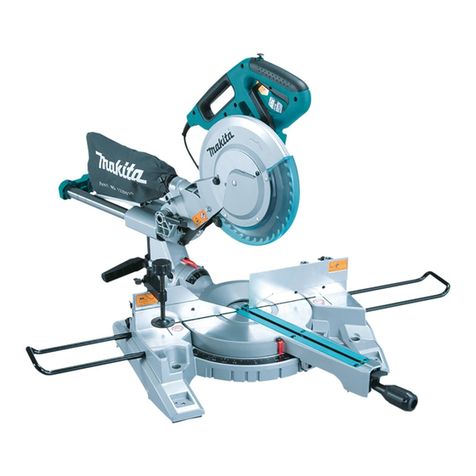
ADDITIONAL SAFETY RULES - FOR
MITER SAWS
WARNING! FAILURE TO FOLLOW THESE RULES MAY
RESULT IN SERIOUS PERSONAL INJURY.
1. DO NOT OPERATE THIS MACHINE UNTIL IT IS
ASSEMBLED AND INSTALLED ACCORDING TO THE