9
GB
starter handle when rope retracts. Never allow rope to snap
back from extended position. This could cause rope to snag or
fray and also damage the starter assembly.
앬STOPPING THE ENGINE
Emergency Stopping Procedure. When it is necessary to
stop blower engine immediately, DEPRESS the switch to stop.
Normal Stopping Method. For normal stopping, push down
the throttle lock, the throttle trigger will back to the nomal
position and allow engine to return to idle speed. Then
DEPRESS and HOLD the “OFF” switch until the engine stops
completely.
앬STARTING A WARM ENGINE (Engine has been stopped
for no more than 15-20 minutes)
1. Pull starter rope again. Engine should start with ONE or
TWO pulls. If engine fails to start after 6 pulls, repeat steps
2 through 6 (see Starting a cold engine).
2. If engine does not start, or starts and then stops after 5
rope pulls, follow procedure “STARTING A COLD
ENGINE”.
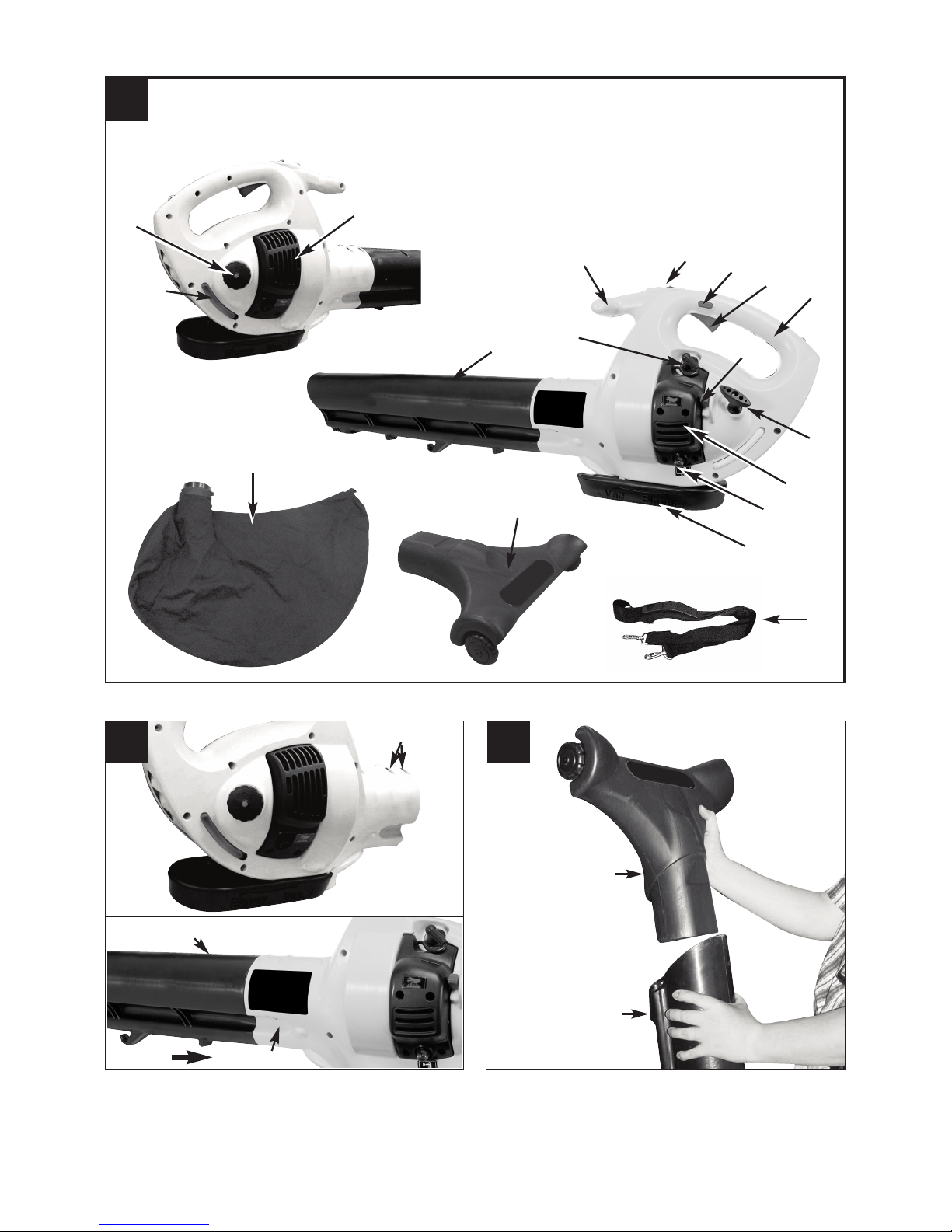
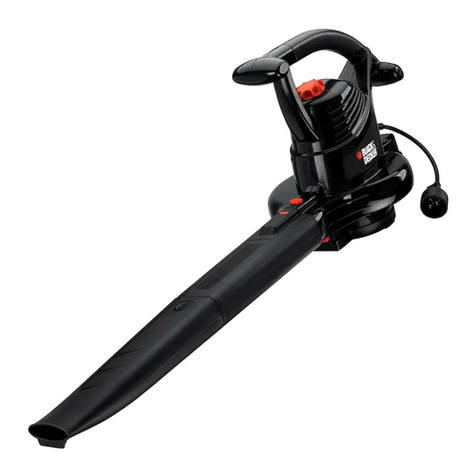
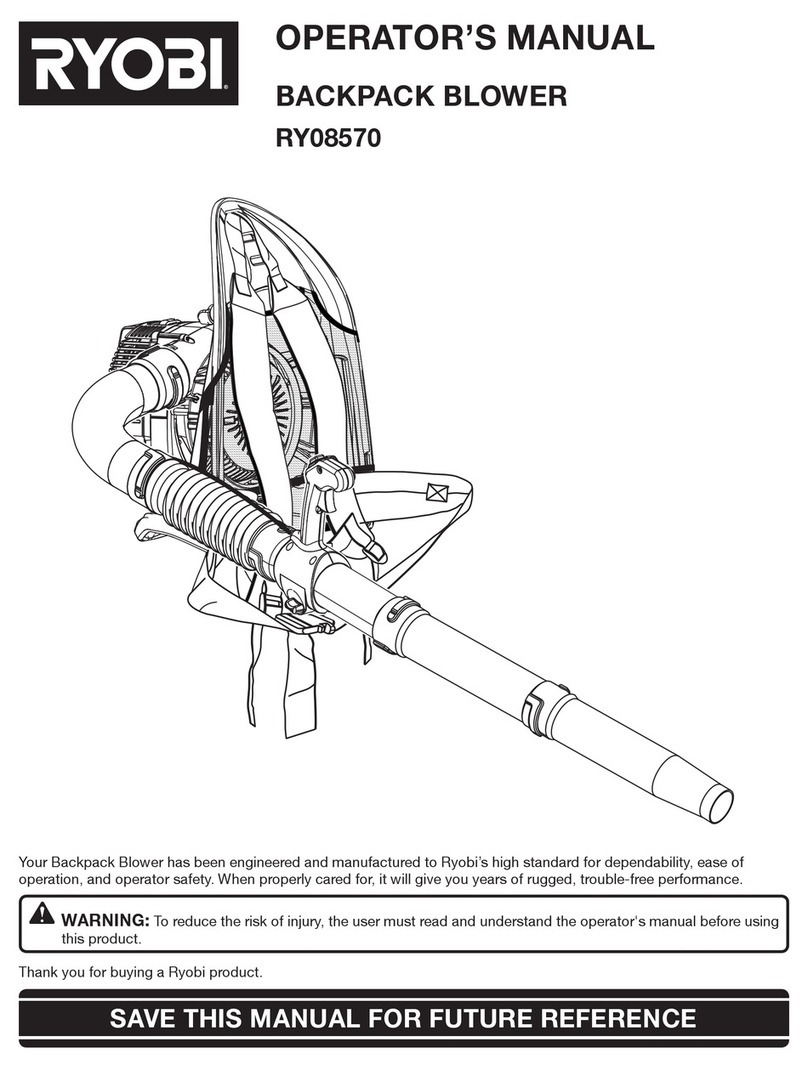
앬BLOWER OPERATIONS (FIG. 5)
Your blower is designed to easily remove debris from patios,
walkways, lawns, bushes, etc., and many hard to reach areas
where debris may accumulate.
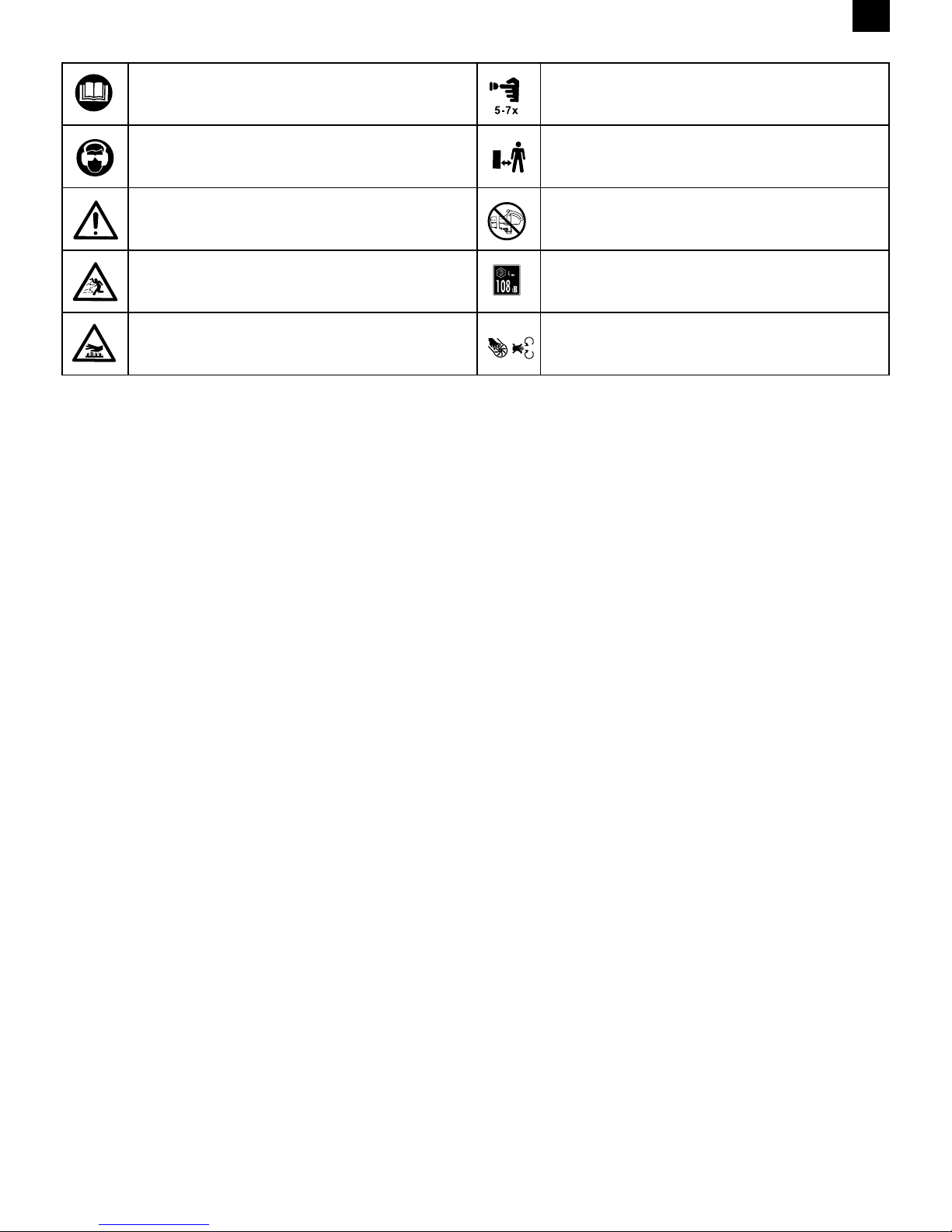
WARNING: Because of flying debris, always wear American
National Standards Institute (A.N.S.I.) approved shielded safety
glasses or face shield when operating blower.
Before using your blower, review Safety Precautions in your
User Manual, and all regulations for operation of the unit.
These precautions and regulations are for your protection.
CAUTION: Hold the blower so that hot exhaust does not
damage clothing and fumes are not inhaled by operator.
DO NOT operate the blower with other people or animals in
the immediate vicinity. Allow a minimum of 30 feet (9 meters)
between operator and other people or animals.
We recommend that a face mask be worn when operating
blower in dusty areas.
Stand away from the debris, at a distance that will easily allow
you to control the direction of blown debris. Never blow debris
in direction of bystanders.
To control velocity of airstream, blower can be operated at any
speed between idle and full throttle. Experience with the unit
will help you determine the amount of airflow necessary for
each application.
앬VACUUM OPERATIONS
WARNING: NEVER OPERATE VACUUM WITHOUT
VACUUM BAG PROPERLY ATTACHED, AS FLYING
DEBRIS COULD CAUSE INJURY TO OPERATOR AND
BYSTANDERS. ALWAYS MAKE SURE VACUUM BAG
ZIPPER IS CLOSED BEFORE OPERATING UNIT.
Do not vacuum hot or burning materials (e.g. hot ash, glowing
cigarettes) from outdoor fireplaces or barbecue pits. always
wait for these materials to be cool enough. Do not vacuum
lighted smoking material such as discarded cigars or
cigarettes. Do not operate unit near open flame.
CAUTION: This unit is designed to vacuum up debris such as
leaves, small bits of paper, small twigs, weeds, grass
clippings, etc. Do not use this unit for any other purpose.
Do not attempt to vacuum rocks, broken glass, bottles, tin
cans or other such objects. Damage to impeller and unit as
well as operator injury could result.
If vacuum tube is level with power unit horizontal, rocks or
large objects may be drawn into tube, damaging the impeller.
To Operate Vacuum:
1. Follow correct starting procedures as explained in this
manual.
2. Allow engine to return to idle. Put the shoulder harness on
so the strap is over your right shoulder. Put the vacuum
bag strap on so it is over your left shoulder.
CAUTION: Do not allow shoulder harness to cover, block, or
come in contact with exhaust outlet during operation. The
muffler generates heat and could burn, melt, or damage
harness strap.
3. Place your left hand on the top handle and right hand on
side handle as shown (Fig. 6).
4. Swing unit side to side to vacuum debris.
CAUTION: To avoid clogging vacuum tube. DO NOT FORCE
OR PLACE SUCTION TUBE INTO A PILE OF DEBRIS.
앬VACUUM TUBE CLOGGING
To Unclog Vacuum Tube:
1. Turn engine “OFF”. Promptly compress vacuum bag while
it is still inflated, expelling air out of the suction tube.
This reverse airflow is usually sufficient to dislodge most
obstructions. If the obstruction cannot be cleared by
compressing vacuum bag, follow this procedure:
2. Remove and inspect vacuum tubes.
3. Carefully clean out nozzle.
4. Reinstall vacuum tubes.
Helpline No: UK 0151 649 1500 / IRE 189 094 6244