manuals.online logo
Brands
  1. Home
  2. •
  3. Brands
  4. •
  5. Toshiba
  6. •
  7. All In One Printer
  8. •
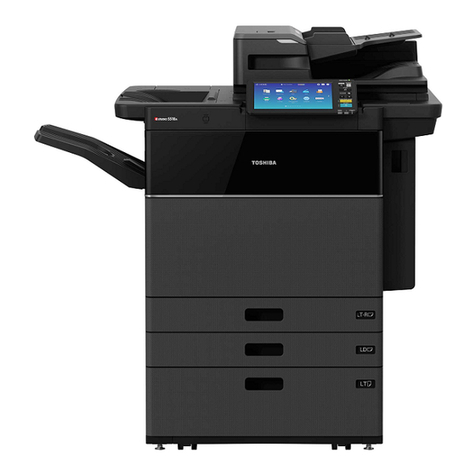
  9. Toshiba e-STUDIO556 User manual

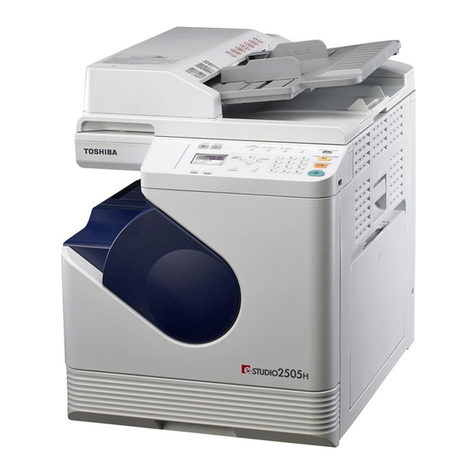
Toshiba e-STUDIO556 User manual

Other manuals for e-STUDIO556

3

This manual suits for next models

11

Other Toshiba All In One Printer manuals

Toshiba e-STUDIO206L User manual

Toshiba

Toshiba e-STUDIO206L User manual

Toshiba E-studio 281c User manual

Toshiba

Toshiba E-studio 281c User manual

Toshiba e-STUDIO556 User manual

Toshiba

Toshiba e-STUDIO556 User manual

Toshiba e-studio 2040c User manual

Toshiba

Toshiba e-studio 2040c User manual

Toshiba E-STUDIO2822AF User manual

Toshiba

Toshiba E-STUDIO2822AF User manual

Toshiba E-STUDIO 2500C User manual

Toshiba

Toshiba E-STUDIO 2500C User manual

Toshiba E-STUDIO 2500C User manual

Toshiba

Toshiba E-STUDIO 2500C User manual

Toshiba e-studio205L How to use

Toshiba

Toshiba e-studio205L How to use

Toshiba e-STUDIO355 User manual

Toshiba

Toshiba e-STUDIO355 User manual

Toshiba E-STUDIO 2303A User manual

Toshiba

Toshiba E-STUDIO 2303A User manual

Toshiba E-STUDIO2000AC User manual

Toshiba

Toshiba E-STUDIO2000AC User manual

Toshiba e-STUDIO330AC User manual

Toshiba

Toshiba e-STUDIO330AC User manual

Toshiba E-STUDIO202S User manual

Toshiba

Toshiba E-STUDIO202S User manual

Toshiba TF 861 User manual

Toshiba

Toshiba TF 861 User manual

Toshiba e-STUDIO287CS User manual

Toshiba

Toshiba e-STUDIO287CS User manual

Toshiba Copier User manual

Toshiba

Toshiba Copier User manual

Toshiba e-STUDIO 603 Parts list manual

Toshiba

Toshiba e-STUDIO 603 Parts list manual

Toshiba MJ-1101 Installation and operating instructions

Toshiba

Toshiba MJ-1101 Installation and operating instructions

Toshiba e-studio 160 User manual

Toshiba

Toshiba e-studio 160 User manual

Toshiba E-STUDIO2000AC User manual

Toshiba

Toshiba E-STUDIO2000AC User manual

Toshiba E-studio5540c User manual

Toshiba

Toshiba E-studio5540c User manual

Toshiba E-STUDIO 2500C User manual

Toshiba

Toshiba E-STUDIO 2500C User manual

Toshiba e-STUDIO FASTstart 200L User manual

Toshiba

Toshiba e-STUDIO FASTstart 200L User manual

Toshiba e-Studio 350 Parts list manual

Toshiba

Toshiba e-Studio 350 Parts list manual

Popular All In One Printer manuals by other brands

Kyocera FS-1100 null

Kyocera

Kyocera FS-1100 null

Xerox PHASER 6130 null

Xerox

Xerox PHASER 6130 null

Triumph Adler DC 2016 Instruction handbook

Triumph Adler

Triumph Adler DC 2016 Instruction handbook

Epson WorkForce WF-2510 Basic guide

Epson

Epson WorkForce WF-2510 Basic guide

Epson Stylus Scan 2000 Product information guide

Epson

Epson Stylus Scan 2000 Product information guide

Epson PictureMate Snap PM 240 Start here

Epson

Epson PictureMate Snap PM 240 Start here

Konica Minolta bizhub C35 user guide

Konica Minolta

Konica Minolta bizhub C35 user guide

Brother MFC-J430w user guide

Brother

Brother MFC-J430w user guide

Konica Minolta BIZHUB 558 Quick reference guide

Konica Minolta

Konica Minolta BIZHUB 558 Quick reference guide

Lexmark MX710 Series setup sheet

Lexmark

Lexmark MX710 Series setup sheet

Brother MFC-9760 owner's manual

Brother

Brother MFC-9760 owner's manual

Lexmark XC8155 user guide

Lexmark

Lexmark XC8155 user guide

Lexmark X642E Service manual

Lexmark

Lexmark X642E Service manual

Sharp MX-2310U Start guide

Sharp

Sharp MX-2310U Start guide

Aficio 200 manual

Aficio

Aficio 200 manual

Canon ImageCLASS 2300 setup sheet

Canon

Canon ImageCLASS 2300 setup sheet

Ricoh Pro C900 Brochure & specs

Ricoh

Ricoh Pro C900 Brochure & specs

Lexmark X925 Installation

Lexmark

Lexmark X925 Installation

manuals.online logo
manuals.online logoBrands
  • About & Mission
  • Contact us
  • Privacy Policy
  • Terms and Conditions

Copyright 2025 Manuals.Online. All Rights Reserved.

SERVICEMANUAL
MULTIFUNCTIONAL DIGITAL SYSTEMS
e-STUDIO556/656/756/856
e-STUDIO556SE/656SE/756SE/856SE
e-STUDIO557/657/757/857
Model:DP-5560/6560/7560/8560/5570/6570/7570/8570
Publish Date: September 2011
File No. SME110012G0
R110421J4504-TTEC
Ver07 F_2014-08
Trademarks
• The official name of Windows XP is Microsoft Windows XP Operating System.
• The official name of Windows Vista is Microsoft Windows Vista Operating System.
• The official name of Windows 7 is Microsoft Windows 7 Operating System.
• The official name of Windows 8 is Microsoft Windows 8 Operating System.
• The official name of Windows Server 2003 is Microsoft Windows Server 2003 Operating System.
• The official name of Windows Server 2008 is Microsoft Windows Server 2008 Operating System.
• The official name of Windows Server 2012 is Microsoft Windows Server 2012 Operating System.
• Microsoft, Windows, Windows NT, and the brand names and product names of other Microsoft
products are trademarks of Microsoft Corporation in the US and other countries.
• Apple, AppleTalk, Macintosh, and Mac are trademarks of Apple Inc. in the U.S. and other countries.
• PostScript is a trademark of Adobe Systems Incorporated.
• NOVELL, NetWare, and NDS are trademarks or registered trademarks of Novell, Inc.
• Molykote is a registered trademark of Dow Corning Corporation.
• Mylar is a registered trademark of DuPont Teijin Films U.S. Limited Partnership.
• FLOIL is a registered trademark of Kanto Kasei Ltd. CORPORATION
• iCLASS is a trademark of HID Corporation.
• MIFARE is a trademark of Royal Philips Electronics.
• Other company names and product names in this manual are the trademarks of their respective
companies.
© 2011 - 2014 TOSHIBA TEC CORPORATION All rights reserved
Under the copyright laws, this manual cannot be reproduced in any form without prior written permission
of TOSHIBA TEC CORPORATION.
GENERAL PRECAUTIONS REGARDING THE SERVICE FOR
e-STUDIO556/656/756/856/557/657/757/857
The installation and service shall be done by a qualified service
technician.e-STUDIO556/656/756/856, e-STUDIO556SE/656SE/756SE/
856SE and e-STUDIO557/657/757/857 are the same models.
1. Transportation/Installation
- When transporting/installing the equipment, employ four persons and be sure to move it by the
casters while lifting the stoppers.
The equipment is quite heavy and weighs approximately 203 kg (447 lb.), therefore pay full
attention when handling it.
- Be sure not to hold the movable parts or units (e.g. the RADF) when transporting the equipment.
- Be sure to use a dedicated outlet with AC 110 V / 16 A, AC 115 V / 16 A, 127 V / 16 A, 220 V or
220-240 V / 9 A for its power source.
- The equipment must be grounded for safety.
- Select a suitable place for installation. Avoid excessive heat, high humidity, dust, vibration and
direct sunlight.
- Provide proper ventilation since the equipment emits a slight amount of ozone.
- To insure adequate working space for the copying operation, keep a minimum clearance of 80
cm (32”) on the left, 80 cm (32”) on the right and 10 cm (4”) on the rear.
- The equipment shall be installed near the socket outlet and shall be accessible.
- Be sure to fix and plug in the power cable securely after the installation so that no one trips over
it.
- When the equipment is used after the option is removed, be sure to install the parts or the covers
which have been taken off so that the inside of the equipment is not exposed.
2. General Precautions at Service
- Be sure to turn the power OFF and unplug the power cable during service (except for the service
should be done with the power turned ON).
- Unplug the power cable and clean the area around the prongs of the plug and socket outlet once
a year or more. A fire may occur when dust lies on this area.
- When the parts are disassembled, reassembly is the reverse of disassembly unless otherwise
noted in this manual or other related documents. Be careful not to install small parts such as
screws, washers, pins, E-rings, star washers in the wrong places.
- Basically, the equipment should not be operated with any parts removed or disassembled.
- The PC board must be stored in an anti-electrostatic bag and handled carefully using a wristband
since the ICs on it may be damaged due to static electricity.
- Avoid expose to laser beam during service. This equipment uses a laser diode. Be sure not to
expose your eyes to the laser beam. Do not insert reflecting parts or tools such as a screwdriver
on the laser beam path. Remove all reflecting metals such as watches, rings, etc. before starting
service.
- Be sure not to touch high-temperature sections such as the exposure lamp, fuser unit, damp
heater and areas around them.
- Be sure not to touch high-voltage sections such as the chargers, transfer belt, IH control circuit,
developer, high-voltage transformer, exposure lamp control inverter, inverter for the LCD
backlight and power supply unit. Especially, the board of these components should not be
touched since the electric charge may remain in the capacitors, etc. on them even after the
power is turned OFF.
- Make sure that the equipment will not operate before touching potentially dangerous places (e.g.
rotating/operating sections such as gears, belts pulleys, fans and laser beam exit of the laser
optical unit).
- Be careful when removing the covers since there might be the parts with very sharp edges
underneath.
Caution: Before using the wristband, unplug the power cable of the equipment and
make sure that there are no charged objects which are not insulated in the
vicinity.
- When servicing the equipment with the power turned ON, be sure not to touch live sections and
rotating/operating sections. Avoid exposing your eyes to laser beam.
- Use designated jigs and tools.
- Use recommended measuring instruments or equivalents.
- Return the equipment to the original state and check the operation when the service is finished.
- Be very careful to treat the touch panel gently and never hit it. Breaking the surface could cause
malfunctions.
3. General operations
- Check the procedures and perform them as described in the Service Manual.
- Make sure you do not lose your balance.
- Avoid exposure to your skin and wear protective gloves as needed.
4. Important Service Parts for Safety
- The breaker, door switch, fuse, thermostat, thermofuse, thermistor, batteries, IC-RAMs including
lithium batteries, etc. are particularly important for safety. Be sure to handle/install them properly.
If these parts are short-circuited and their functions become ineffective, they may result in fatal
accidents such as explosion or burnout. Do not allow a short-circuit and do not use the parts not
recommended by Toshiba TEC Corporation.
5. Cautionary Labels
- During servicing, be sure to check the rating plate and cautionary labels such as “Unplug the
power cable during service”, “CAUTION. HOT”, “CAUTION. HIGH VOLTAGE”, “CAUTION.
LASER BEAM”, etc. to see if there is any dirt on their surface and if they are properly stuck to the
equipment.
[1] Explanatory label
[2] Warning for grounding wire
[3] Identification label
[4] Certification label (For U.S.A. and Canada)
[5] Warning label (High voltage)
[6] Warning for high temperature areas
[7] Warning label (Laser)
[5]
[6]
[7]
[1]
[2]
[3]
[4]
6. Disposal of the Equipment, Supplies, Packing Materials, Used Batteries and IC-RAMs
- Regarding the recovery and disposal of the equipment, supplies, packing materials, used
batteries and IC-RAMs including lithium batteries, follow the relevant local regulations or rules.
Caution:
Dispose of used batteries and IC-RAMs including lithium batteries according to this manual.
Attention:
Se débarrasser de batteries et IC-RAMs usés y compris les batteries en lithium selon ce manuel.
Vorsicht:
Entsorgung des gebrauchten Batterien und IC-RAMs (inclusive der Lithium-Batterie) nach diesem Handbuch.
1. Precautions for Transporting Equipment Once Unpacked
1.1 General Description
It is recommended to follow the procedure below when you transport equipment that has already been
unpacked but has not been packed again. Note that the following procedure cannot guarantee the
operation of the transported equipment.
[A] Fixing the carriage
(1) Perform the PM code: 03-261 (Scan motor ON Automatically stops at limit position) so that
the carriage is moved to the fixing position.
(2) Tighten the 2 screws to fix the carriage.
[B] Checking gaskets in the RADF
(1) Check that gaskets are not installed in the RADF.
(If they are installed, remove them.)
2. Notes
• The installation of gaskets to the RADF, which is described in the Unpacking Instructions, must not
be performed when the equipment is unpacked but must be when it is reinstalled at a userÅfs office.
Do not install the gaskets in the equipment before transporting it because if it is transported with the
gaskets installed, the screws fixing the scanner may contact with the gaskets and thus damage
them.
• The installation of grounding screws in the RADF, which is described in the Unpacking Instructions,
must not be performed when the equipment is unpacked but must be when it is reinstalled at a
user’s office.
ALLEGEMEINE SICHERHEITSMASSNAHMEN IN BEZUG
AUF DIE WARTUNG FÜR e-STUDIO556/656/756/856/557/657/
757/857
Die Installation und die Wartung sind von einem qualifizierten Service-
Techniker durchzuführen.
1. Transport/Installation
- Zum Transportieren/Installieren des Gerätes werden 4 Personen benötigt. Nur an den in der
Abbildung gezeigten Stellen tragen.
Das Gerät ist sehr schwer und wiegt etwa 203 kg (447 lb.); deshalb muss bei der Handhabung
des Geräts besonders aufgepasst werden.
- Beim Transportieren des Geräts nicht an den beweglichen Teilen oder Einheiten (z.B. das
Bedienungsfeld, die Duplexeinheit oder die automatische Dokumentenzuführung) halten.
- Eine spezielle Steckdose mit Stromversorgung von AC 110 V / 16 A, AC 115 V / 16 A, 127 V / 16
A, 220 V oder 220-240 V / 9 A als Stromquelle verwenden.
- Das Gerät ist aus Sicherheitsgründen zu erden.
- Einen geeigneten Standort für die Installation wählen. Standorte mit zuviel Hitze, hoher
Luftfeuchtigkeit, Staub, Vibrieren und direkter Sonneneinstrahlung sind zu vermeiden.
- Für ausreichende Belüftung sorgen, da das Gerät etwas Ozon abgibt.
- Um einen optimalen Kopierbetrieb zu gewährleisten, muss ein Abstand von mindestens 80 cm
links, 80 cm rechts und 10 cm dahinter eingehalten werden.
- Das Gerät ist in der Nähe der Steckdose zu installieren; diese muss leicht zu erreichen sein.
- Nach der Installation muss das Netzkabel richtig hineingesteckt und befestigt werden, damit
niemand darüber stolpern kann.
- Falls der Auspackungsstandort und der Installationsstandort des Geräts verschieden sind, die
Bildqualitätsjustierung (automatische Gammajustierung) je nach der Temperatur und
Luftfeuchtigkeit des Installationsstandorts und der Papiersorte, die verwendet wird, durchführen.
2. Allgemeine Sicherheitsmassnahmen in bezug auf die Wartung
- Während der Wartung das Gerät ausschalten und das Netzkabel herausziehen (ausser Wartung,
die bei einem eingeschalteten Gerät, durchgeführt werden muss).
- Das Netzkabel herausziehen und den Bereich um die Steckerpole und die Steckdose die
Umgebung in der Nähe von den Steckerzacken und der Steckdose wenigstens einmal im Jahr
reinigen. Wenn Staub sich in dieser Gegend ansammelt, kann dies ein Feuer verursachen.
- Wenn die Teile auseinandergenommen werden, wenn nicht anders in diesem Handbuch usw
erklärt, ist das Zusammenbauen in umgekehrter Reihenfolge durchzuführen. Aufpassen, dass
kleine Teile wie Schrauben, Dichtungsringe, Bolzen, E-Ringe, Stern-Dichtungsringe,
Kabelbäume nicht an den verkehrten Stellen eingebaut werden.
- Grundsätzlich darf das Gerät mit enfernten oder auseinandergenommenen Teilen nicht in
Betrieb genommen werden.
- Das PC-Board muss in einer Anti-elektrostatischen Hülle gelagert werden. Nur Mit einer
Manschette bei Betätigung eines Armbandes anfassen, sonst könnte es sein, dass die
integrierten Schaltkreise durch statische Elektrizität beschädigt werden.
- Setzen Sie sich während der Wartungsarbeiten nicht dem Laserstrahl aus. Dieses Gerät ist mit
einer Laserdiode ausgestattet. Es ist unbedingt zu vermeiden, direkt in den Laserstrahl zu
blicken. Keine reflektierenden Teile oder Werkzeuge, wie z. B. Schraubendreher, in den Pfad des
Laserstrahls halten. Vor den Wartungsarbeiten sämtliche reflektierenden Metallgegenstände, wie
Uhren, Ringe usw., entfernen.
- Auf keinen Fall Hochtemperaturbereiche, wie die Belichtungslampe, die Fixiereinheit, die
Heizquelle und die umliegenden Bereiche, berühren.
Vorsicht: Vor Benutzung der Manschette der Betätigung des Armbandes, das Netzkabel
des Gerätes herausziehen und prüfen, dass es in der Nähe keine geladenen
Gegenstände, die nicht isoliert sind, gibt.

- Auf keinen Fall Hochspannungsbereiche, wie die Ladeeinheiten, das Transferband, IH-
Kontrollstrom, die Entwicklereinheit, den Hochspannungstransformator, den Steuerumrichter für
die Belichtungslampe, den Umrichter für die LCD-Hintergrundbeleuchtung und das Netzgerät,
berühren. Insbesondere sollten die Platinen dieser Komponenten nicht berührt werden, da die
Kondensatoren usw. auch nach dem Ausschalten des Geräts noch elektrisch geladen sein
können.
- Vor dem Berühren potenziell gefährlicher Bereiche (z. B. drehbare oder betriebsrelevante
Bereiche, wie Zahnräder, Riemen, Riemenscheiben, Lüfter und die Laseraustrittsöffnung der
optischen Lasereinheit) sicherstellen, dass das Gerät sich nicht bedienen lässt.
- Beim Entfernen von Abdeckungen vorsichtig vorgehen, da sich darunter scharfkantige
Komponenten befinden können.
- Bei Wartungsarbeiten am eingeschalteten Gerät dürfen keine unter Strom stehenden, drehbaren
oder betriebsrelevanten Bereiche berührt werden. Nicht direkt in den Laserstrahl blicken.
- Ausschließlich vorgesehene Werkzeuge und Hilfsmittel verwenden.
- Empfohlene oder gleichwertige Messgeräte verwenden.
- Nach Abschluss der Wartungsarbeiten das Gerät in den ursprünglichen Zustand zurück
versetzen und den einwandfreien Betrieb überprüfen.
- Das berührungsempfindliche Bedienungsfeld stets vorsichtig handhaben und keinen Stößen
aussetzen. Wenn die Oberfläche beschädigt wird, kann dies zu Funktionsstörungen führen.
3. Allgemeine Sicherheïtsmassnahmen
- Die Verfahren sind zu überprüfen und wie im Wartungshandbuch beschrieben durchzuführen.
- Vorsichtig, dass Sie nicht umfallen.
- Um Aussetzung zur Haut zur vermeiden, tragen Sie wenn nötig Schutzhandschuhe.
4. Sicherheitsrelevante Wartungsteile
- Der Leistungsschutzschalter, die IH-Spule, der Türschalter, die Sicherung, der Thermostat, die
Thermosicherung, der Thermistor, der Akkus, die IC-RAMs einschließlich der Lithiumakkus usw.
sind besonders sicherheitsrelevant. Sie müssen unbedingt korrekt gehandhabt und installiert
werden. Wenn diese Teile kurzgeschlossen und funktionsunfähig werden, kann dies zu
schwerwiegenden Schäden, wie einer Explosion oder einem Abbrand, führen. Kurzschlüsse sind
zu vermeiden, und es sind ausschließlich Teile zu verwenden, die von der Toshiba TEC
Corporation empfohlen sind.