Revision 7 (Feb 2019)
4.0 OPERATION
4.1 The Control Panel
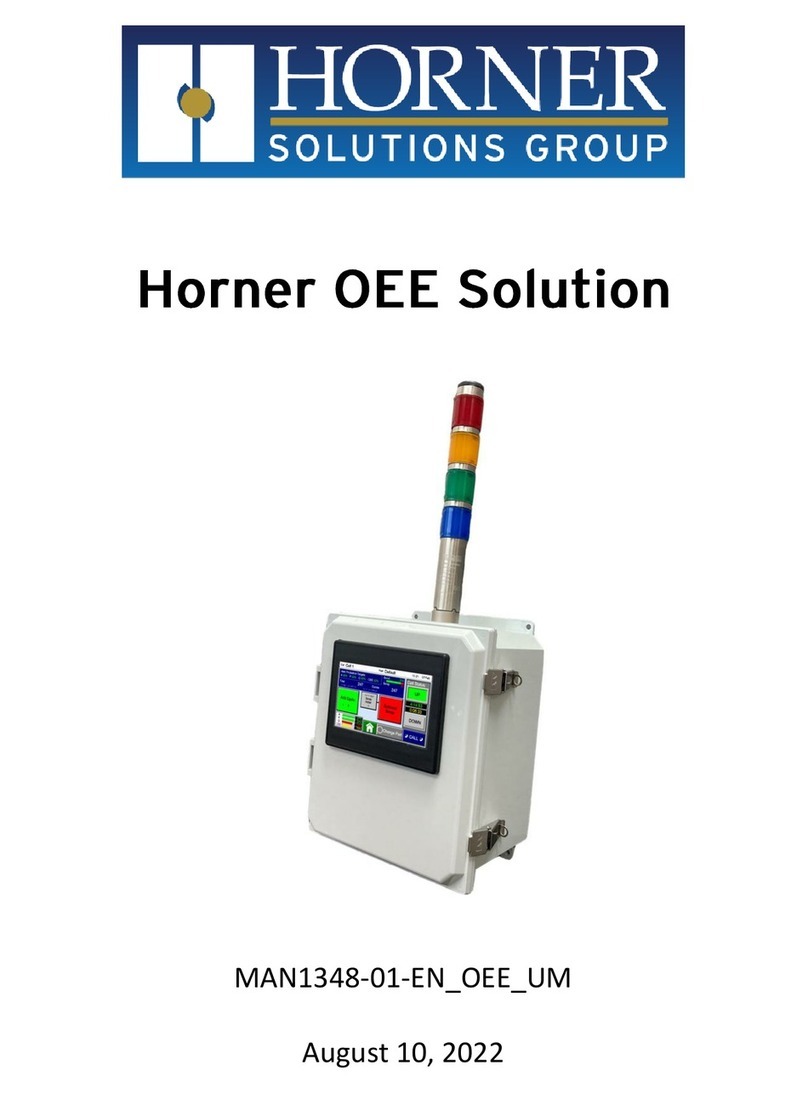
The Electronic Control converts AC current to DC, which the motors require. It contains controls for both
motors that are part of the unit, the Tool-drive Motor and the Reciprocation Motor. Note that the motor controls
are independent –modifying the running characteristics of one of the motors does not affect the other one.
4.1.1 Control of Tool-drive Motor-The right-side Switch is a two-way ON-OFF
toggle for the Tool-drive Motor. It has a choice for motor direction –UP for clockwise
(CW) rotation of the tool, and DOWN for counter clockwise (CCW) rotation of the
tool. The central position of the switch is OFF.
The Central Knob is a speed selector for the Tool-drive Motor. Most frequently, the
Tool-drive Motor is operated at full or close-to full speed.
4.1.2 Control of Reciprocation Motor-The left Knob combines both power and rate control for the
Reciprocation Motor. The extreme CCW position of the Knob is power OFF. Rotation starts and
increases rate as the Knob is rotated CW.
4.1.2.1Setting the Amplitude of the Reciprocation Motor-The amplitude (the in-line stroke) of the
Reciprocation Motor is variably adjustable, from the maximum stroke of 30 mm –over an inch
to a minimal stroke approaching 0. Commonly, a full stroke is used (and the unit is shipped that way),
but often, because of the length of the particular tool that is being used less than full stroke is
appropriate.
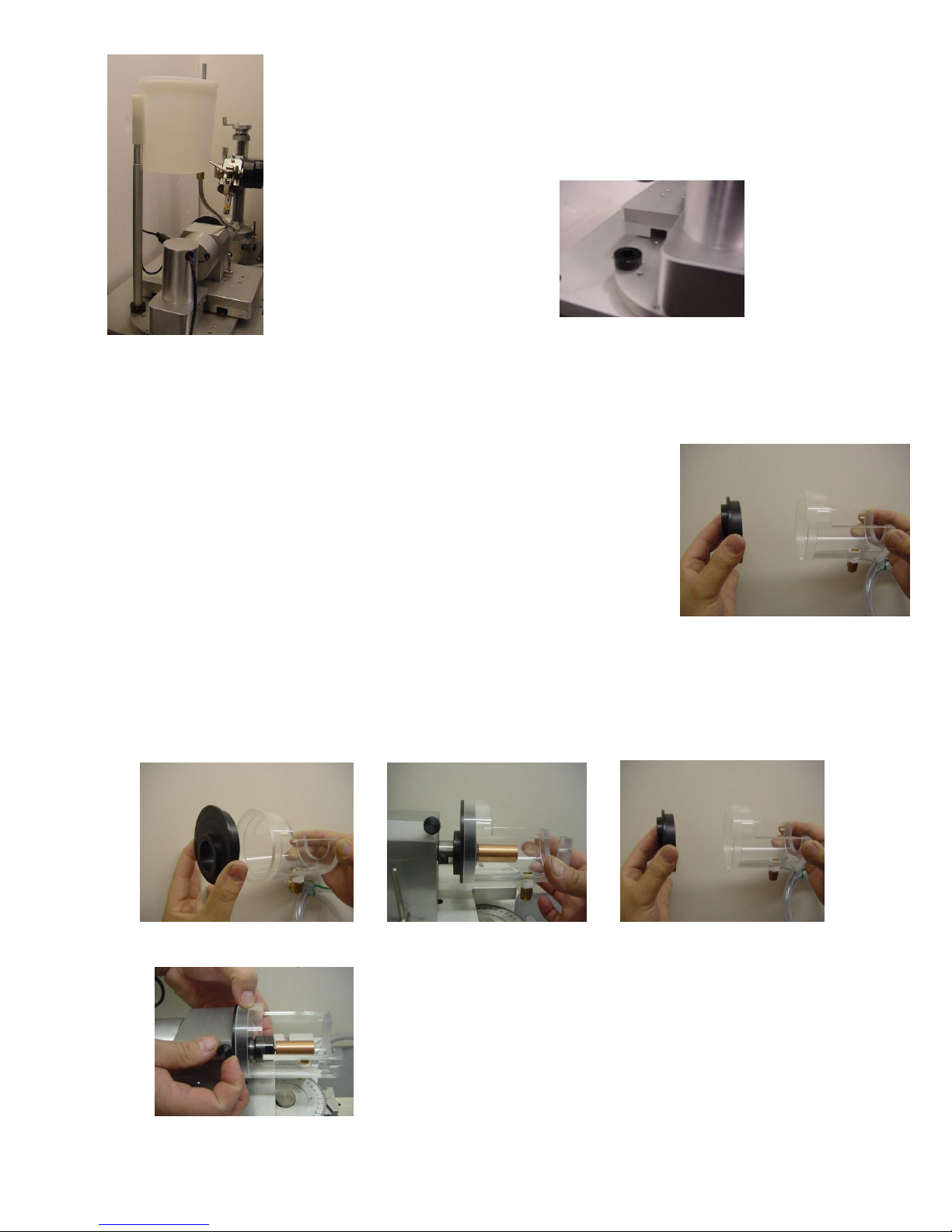
The setting is performed by engaging a screw that is visible in the side
“window”, as shown. The adjusting screw rotates with the rotation of
the motor –and to perform the adjustment, obviously, the head of the
screw must be visible (and so, reachable) in the window. A slow
jogging of the motor can bring the head into view, or…
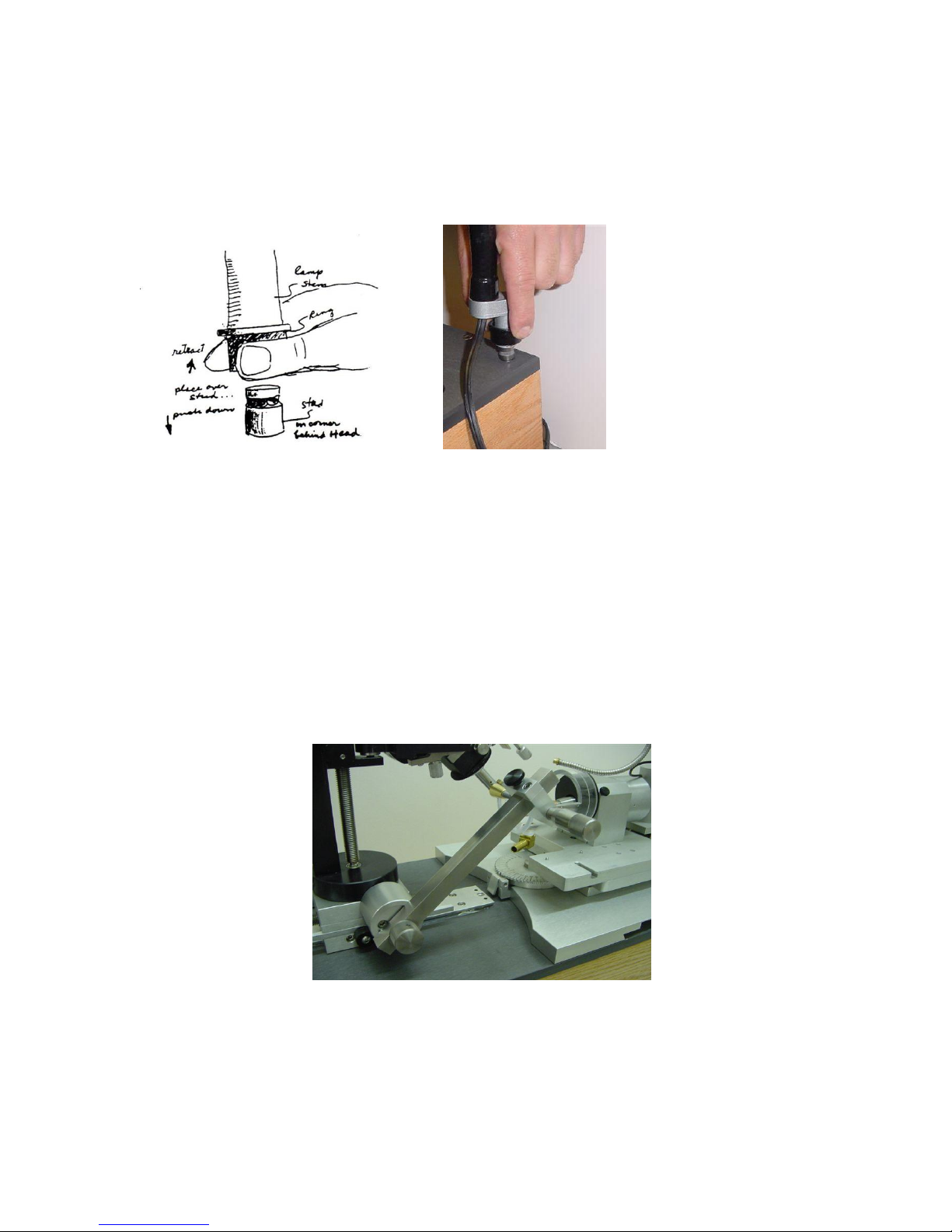
…it can be positioned by pushing or pulling the Tool-drive Motor Plate
(it’s OK to grip the Motor housing to do this as shown). This method
will not work if the head is located, by chance, in a straight line with the
reciprocation action (at an extreme of the reciprocation). If that
happens, jog the motor so that the reciprocation stroke moves to
About the half-way point, and try again.
In making the adjustment, CW rotation decreases the amplitude. CCW rotation increases the amplitude. The
Reciprocation Motor is independent from the Tool Drive Motor—and none of these adjustments have an effect
on the Tool Drive, and, the Reciprocation motor can be left in a power OFF condition, that is, with 0
reciprocation.