WindStream Technologies
8User GuideV2.01 Rev 11.3.13
Draft
SolarMill Siting
Siting of a SolarMill requires knowledge of the prevailing wind, an eye toward sun exposure, and an
assessment of the architecture available for mounting the units. Talk with a distributor, or see our
siting tools at www.windstream-inc.com for help with siting.
Prevailing winds
Most locations have a large proportion of their available wind power coming
from a single direction, (or sometimes 2 opposite directions). This is termed
the prevailing wind direction. The SolarMill turbines are omnidirectional, but
the row of turbines does result in some directionality. The line of SolarMills
should optimally be set up within 45 degrees of perpendicular to the
prevailing wind direction. Ultimately, the aerodynamics of the architectures
dictates positioning choices.
Architecture aerodynamics
The TurboMill is designed specically to mount directly to the roof
of a building or other structure. Consideration must be given to
the geometry of the roof structures and obstacles surrounding the
installation. Placing the turbines in a location where trees and other
structures would block the prevailing winds should be avoided.
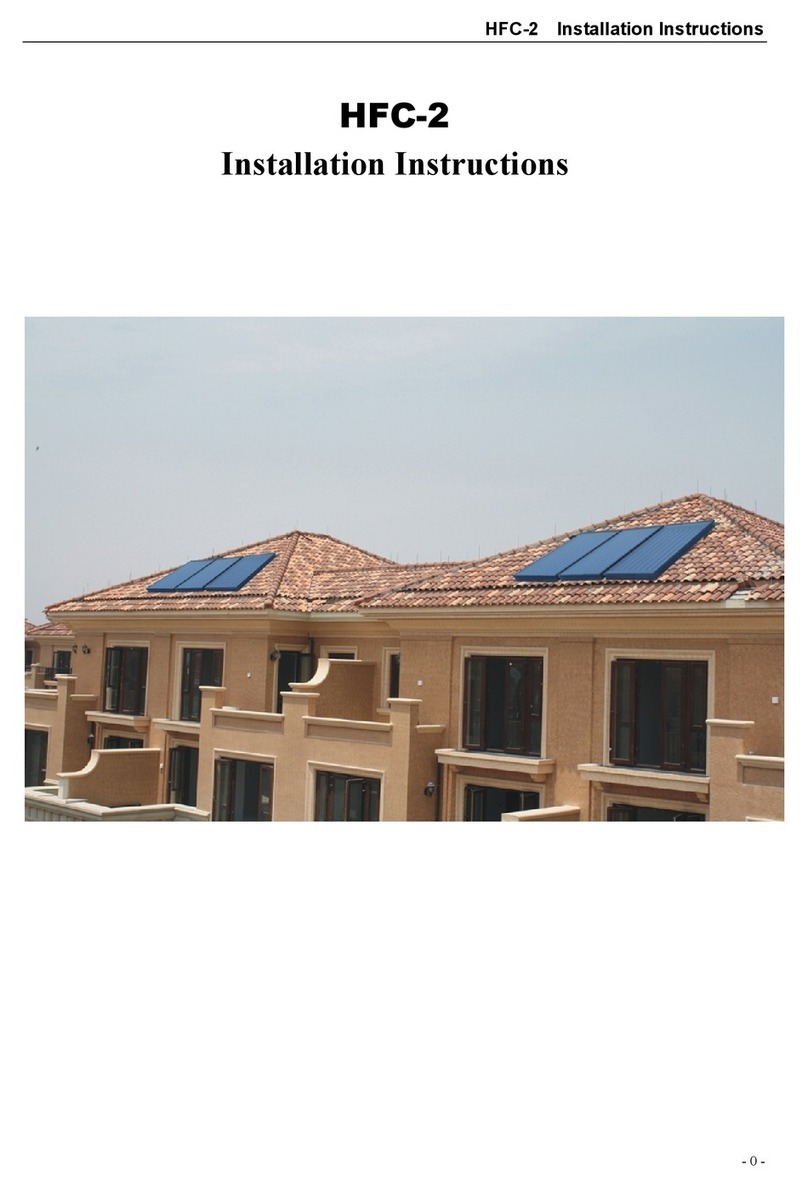
An ideal siting location for a building mounted turbine is on a
building that is taller than the surrounding buildings and natural
obstructions both upwind and downwind. This will minimize the
eect of the surroundings on the wind ow eects immediately
above the roof.
A location at the peak of
a pitched roof or on the
windward edge of a at
rooftop is optimal as the wind there is accelerated. Other
locations on the roof, as the gure shows, have only small
wind velocities and high turbulence. Following these siting
guidelines will help to minimize avoidable energy losses for
building-mounted wind systems.
Sun Exposure
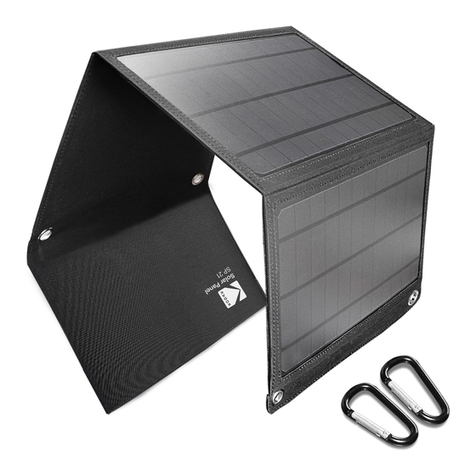
Solar panels need to be placed where they get sun exposure throughout the day. Shading for any
portion of the day will automatically eliminate power produced during that period.
In terms of direction, xed-angle solar installations are usually optimized when they face due
south in the northern hemisphere, and due north in the southern hemisphere. Furthermore, when
balanced for winter/summer exposure, panels are tilted up at the same angle as the latitude of the
100%
80%
60%
Expected power with wind
at suboptimal angles
The higher
the better
Downwind
eects
Upwind
eects