WZDS9100 #2
3
Installation Instructions
Caution: A qualified technician must install this refrigeration equipment. Please read, understand, and
follow all instructions in this manual prior to start up. Failure to install and adjust this refrigeration unit in
compliance with these instructions will void the warranty.
This unit is suitable for use with R-22 and Icor International’s NU-22B and other R-22 replacements such
as Arkema’s R-427A or DuPont’s R-438A (MO99). We suggest using NU-22B for the following reasons:
It is about 2% to 5% more efficient than R-22
ASHRAE Designated and safety classified A1: Nontoxic/Nonflammable
EPA Snap listed
Non-Ozone Depleting with Low Global Warming Impact
Compatible with all standard refrigeration oils so no oil change is necessary
R-22 like properties over a broad range
Low discharge temperatures
Stocking distributors nationwide
The refrigerant oil in the unit must be replaced with a like volume of POE oil when using R-427A,
R-438A and other blended refrigerants. Multiple oil changes are not necessary.
A temperature pressure chart for R-22, NU-22B, R-427A and MO99 can be found on page 26.
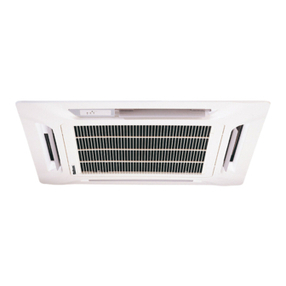
1. Select a suitable location for the evaporator with respect to air circulation, drain, refrigerant and electrical
lines. Adequate air circulation requires a 36” clearance in front of the unit, do not place any obstruction in
front of the evaporator. Do not attempt to duct this evaporator. Before installing any unit, the installer must
determine that the wall or ceiling can safely support the weight of the unit. Provide adequate clearance for
maintenance. Check local codes for additional precautions. The face of the evaporator should be within 4”
of the front of the racking, if placed in double deep racking you must bring the evaporator forward so it is
within 4” of the front of the rack.
2. Place the condenser at the desired location outside the wine cellar in a well-ventilated area or outdoors.
Indoor condensers must be placed in a space twice the volume of the wine cellar to prevent excessive
condensing temperatures. Check local codes for proper venting of mechanical rooms. Field supplied
vibration absorbing mounting pads and insulated compressor jackets effectively reduce noise transmitted
by the unit. Condenser face must be at least 12” from any obstruction and entering air must not exceed 110°
F. When installing an outdoor condenser, be sure that it is located so that leaves or snow do not accumulate
and block the airflow. This can be accomplished by setting the condenser on a concrete slab, blocks, etc.
Place the unit so prevailing winds do not blow rain, snow and debris into the open ends of the outdoor
cover. Avoid placing the outdoor condenser in direct sunlight, especially in warm climates. Condenser air
directed toward or away from the dwelling may cause undesirable noise for owners and their neighbors.
This must be considered when placing the unit outdoors.
3. Using a silver/phosphorus/copper alloy with between 5% and 15% silver, braze the refrigerant line set to
the evaporator and condenser with nitrogen flowing through the lines to eliminate carbon deposit build up
on the inside of the joints which could contaminate the refrigerant and restrict the drier and expansion
valve. To do this, open the system service ports. This will purge the nitrogen holding charge in the system.
Connect a nitrogen bottle to one valve and set pressure regulator to about 2 PSI. A small amount of
nitrogen will flow out the other valve.
You must install the line set according to Table 1 on the following page. Failure to do so voids the
warranty. The evaporator and/or condensing unit may have different fitting sizes than the line set, so field
supplied reducers are necessary. Run the line set according to Table 1, and reduce at the condenser and
evaporator connections.