4
User Guide
USB2CAN
1. Introduction
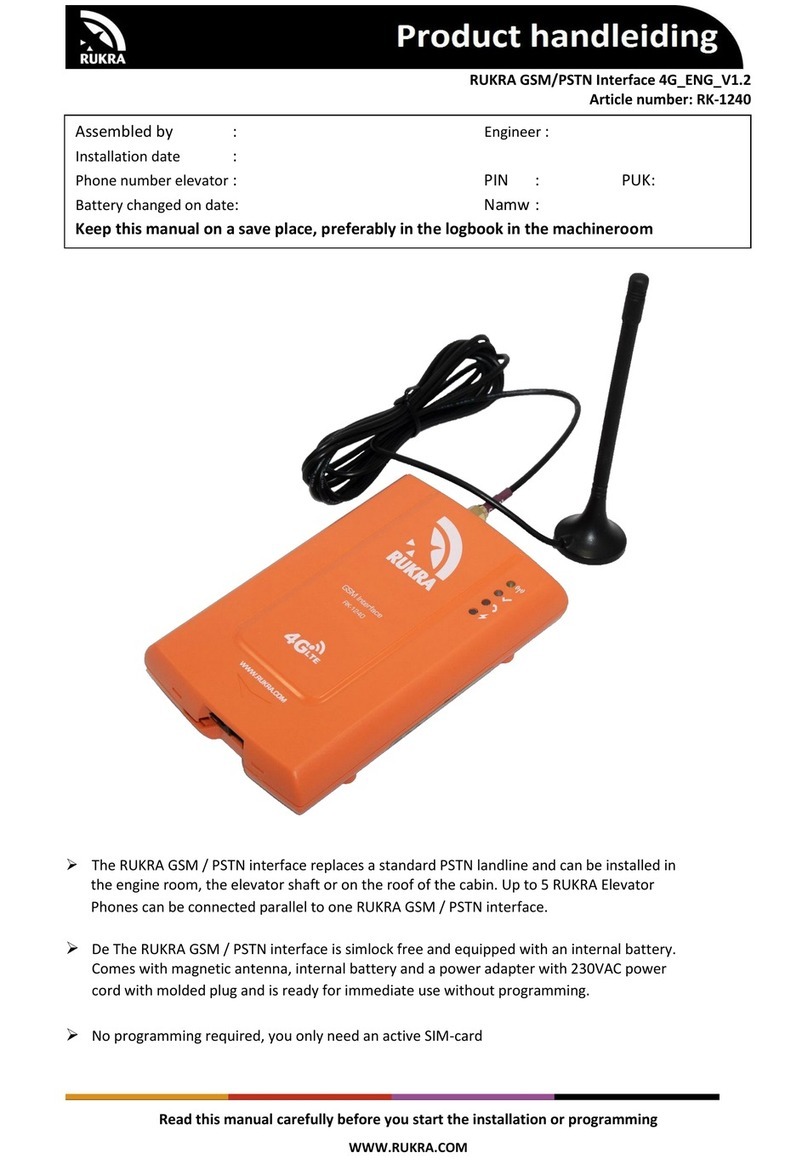
With Korlan USB2CAN you can monitor a CAN network, write a CAN program and communicate with industrial,
medical, automotive or other CAN based device. It comes in two dierent versions: DB9 or OBD2.
The Korlan CANBUS USB adapter connects a CAN bus to the USB port of any device running Linux or Windows
operating system, which also supplies the power to the adapter (no power supply needed). In the downloads section
now you can nd all the related drivers and software applications and even Windows 7 64-bit kernel driver, which was
added recently.
1.1 Usage warning
Your use of this device must be done with caution and a full understanding of the risks!
This warning is presented to inform you that the operation of this device may be dangerous. Your actions
can inuence the behaviour or a can-based distributed embedded system and depending on the application,
the consequences of your improper actions could cause serious operation malfunction, loss of information,
damage to equipment and physical injury to yourself or others.
1.2 Technical specification
Connectors
Computer USB 2.0 Full speed, Type A connector
CAN D-SUB, 9 pins. CAN-CIA standard interface pin assignment or OBD2, 16 pins.
Standard interface pin assignment.
CAN
Specication ISO 11898-2 High-speed CAN
2.0A (standard format) and 2.0B (extended format)
Bit rates 20, 50, 100, 125, 250, 500, 800, 1000 Kbit/s or user denable
Controller ARM 32bit Cortex-M0 (STM32F072)
Transceiver TI ISO1050
Galvanic isolation Up to 2.5kV, separate for each CAN channel
Termination None
Measures
Size 110 x 36.7 x 16.2 mm (L x W x H), no cable
Weight DB9 version: 100g with cable, OBD2 version: 140g with cable
Environment
Operating temperature From -35ºC to +55ºC
Relative humidity 15-90%, not condensing
Usage Indoor only
Other
Available drivers Windows 2000, Windows XP, Windows Vista, Windows 7, Windows 10, Linux
3rd party ptotocol support Driver for VSCP protocol
Open source CANAL API DLL for Windows
Linux SocketCAN compatible