BARDIC EMERGENCY LIGHTING
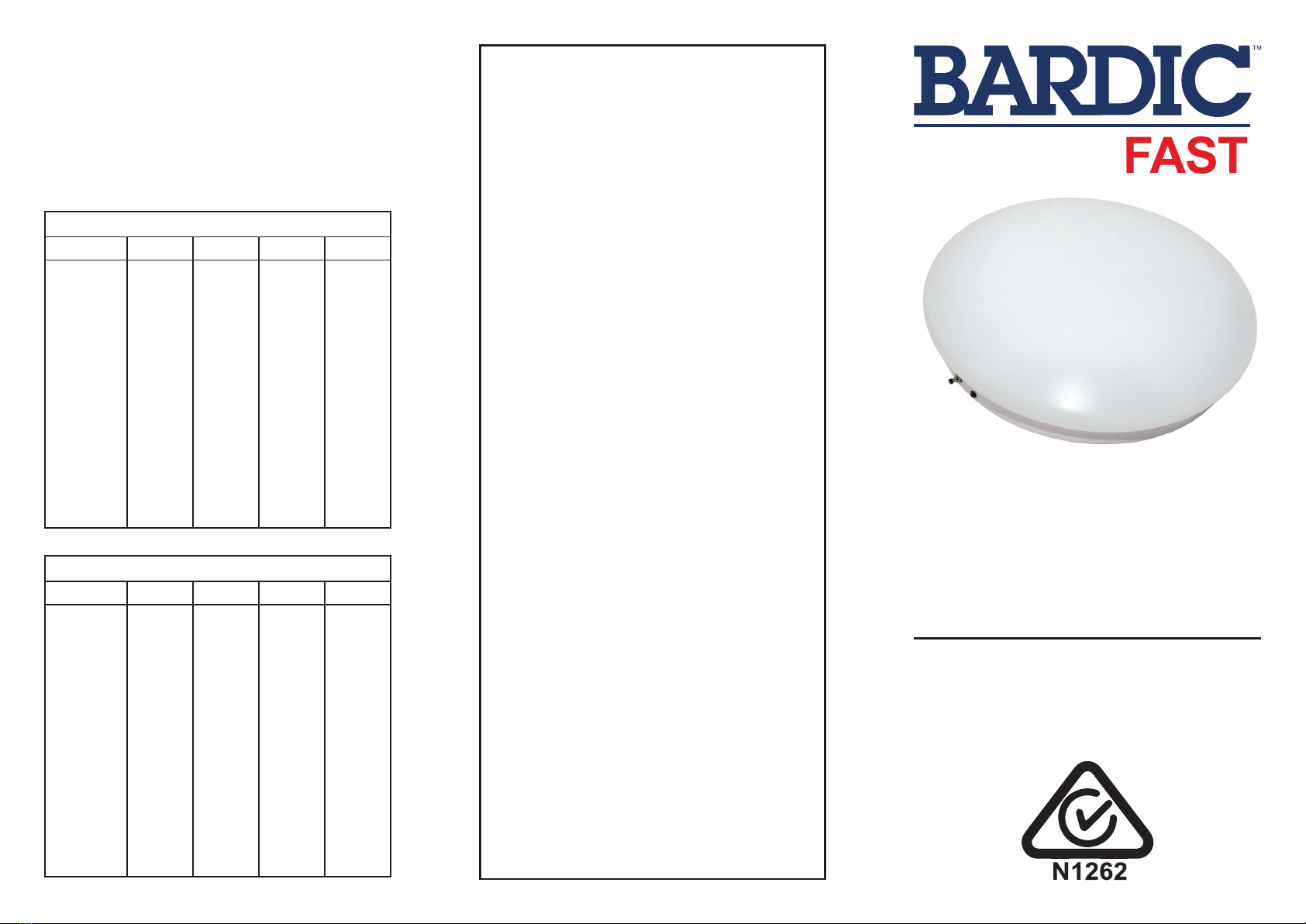
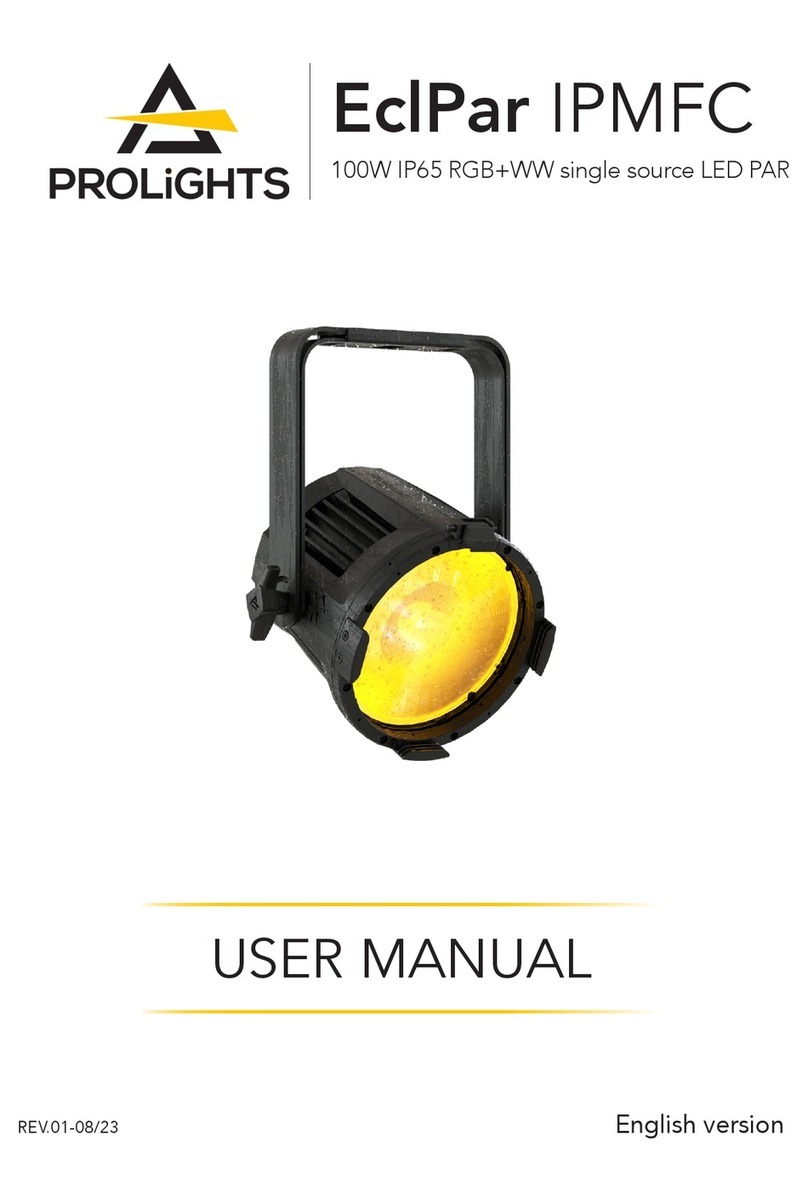
20W LED FAST OYSTER
BEL-FOYSTER
HIGH TEMP NICKEL CADMIUM POWERED
NICKEL-CADMIUM BATTERY POWERED
WARNING! DISCONNECT SUPPLY BEFORE
INSTALLING, DECOMMISSIONING OR MODIFYING
THIS FITTING! WARNING! The control box should not
be opened and should only be handled by a qualified
competent person. WARNING! This luminaire is intended
only for mounting in locations where the plug and socket
are protected from unauthorized disconnection.
DESCRIPTION
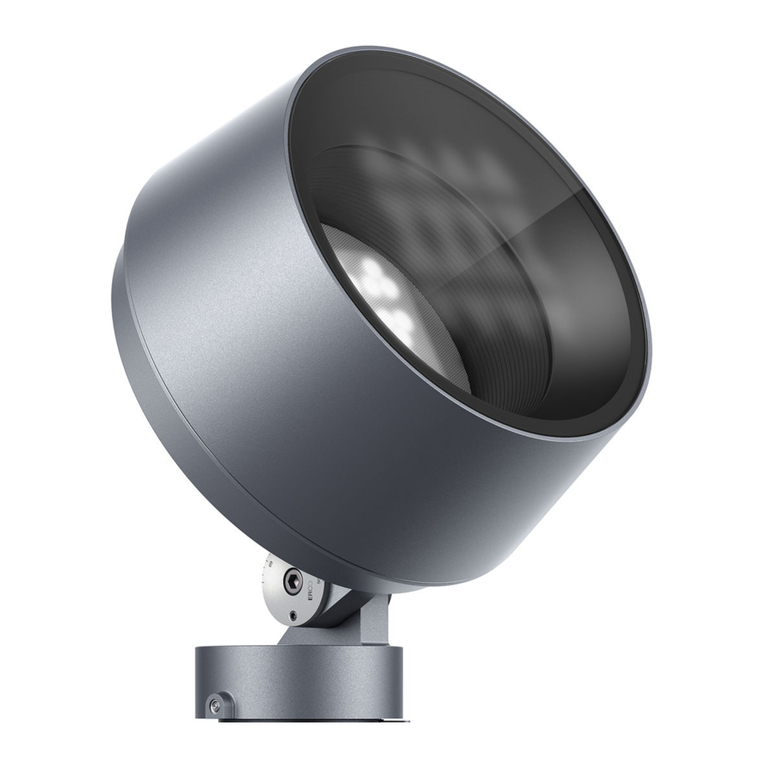
The Oyster provides aesthetically pleasing emergency lighting to
complement existing modern interiors, the oyster can be wall or ceiling
mounted and comes complete with high transmission diffuser, excess of
2hrs emergency lighting, automatic low voltage cut-out to prevent over-
discharge of batteries and is compliant with AS/NZS 2293.
MODEL
When the mains supply fails, a BARDIC 20W LED Oyster provides
illumination for two hours from a Premium 70oC high temperature NiCad
battery following a 16 hours charge. The Fast Oysters come with an
internal switch link to permit the connection of an external switch to control
the mains operated LEDs without affecting emergency operation.
The Foyster is not manufactured to accept the BARDIC SENTINEL
automatic tester or the BARDIC WI NET central monitoring module as an
option.
For further information about BARDIC SENTINEL or BARDIC WiNET,
contact your local dealer or visit www.mpower.com.au.
PRODUCT SPECIFICATIONS
Nominal Voltage: 240V AC
Nominal Frequency: 50Hz
IP Rating: IP21
Rated Maximum Ambient Temperature: 40oC
Power Consumption: 20W
FUNCTIONS
The unit is designed for connection to the mains supply via an unswitched
active, it comes complete with an automatic current and voltage regulated
charger, Nickel Cadmium battery and mains fail sensing capability. The
battery powers 20W LEDs which are switched on automatically when the
A.C. supply fails and are switched off when the battery reaches low voltage
cutout. Solid state circuitry switches off the LEDs and isolates the battery
when it is fully discharged and will not reset until mains supply is restored.
A RED light emitting diode (LED) charge monitor indicates a healthy mains
supply and functioning charger. A test switch to simulate a mains power
failure is included for testing an emergency operation when the mains
supply is healthy.
This product may also be ordered with an optional microwave sensor. If
fitted, please refer to the separate enclosed manual for the modes and
configuration settings of the sensor.
INSTALLATION
WARNING! Do not look directly at the LED when the LED is On. Doing so
for prolonged periods will cause harm to your eyes.
NOTE: This fitting can be used in both maintained and non-maintained
mode. Remove the K1 jumper to use fitting in non-maintained mode.
• Open the oyster by rotating the diffuser anticlockwise.
• Remove the white plastic screw securing the LED array panel and take
off the panel
• Mark three points on the wall/ ceiling in the desired mounting position
using the oyster base as a stencil.
• Pass mains lead through the cable entry hole.
• Secure the luminaire to the wall/ ceiling.
• Strip 5mm of insulation from the conductor ends and connect the active
conductor to terminal marked ‘A, neutral conductor to terminal marked
‘N’ and earth wire to earth terminal marked ‘E’.
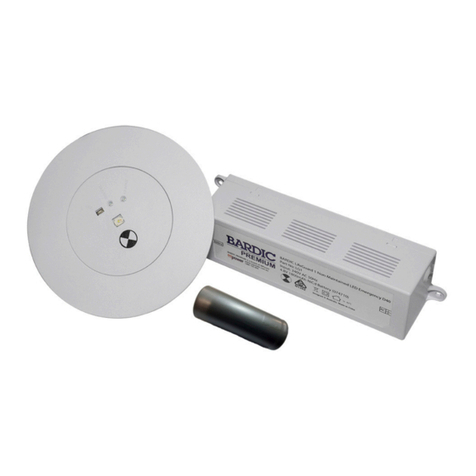
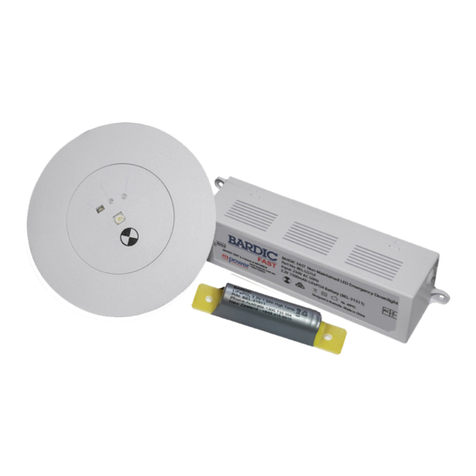
• Connect the batteries, test switch and LED connector.
• Write the installation date on the battery.
• Write a unique ID on the fitting label.
• Refit LED array panel and diffuser.
COMMISSIONING
1. Switch on mains supply. The Red charge LED indicator will illuminate.
2. Allow the unit to operate for 60 mins and then depress the test switch to
check emergency operation.
3. Release the test switch and allow the unit to operate for 16 hours to fully
charge the battery.
4. A 2 hour discharge test is required as part of the commissioning
process as per AS2293.
MAINTENANCE
1. MONTHLY - inspect to ensure charge monitor is illuminated.
2. SIX MONTHLY (or at the discretion of the enforcing Authority) -
isolate the mains supply to unit and allow it to operate until the lamp
extinguishes. Should the unit provide less than 90 minutes illumination
between 10°c and 40°C ambient temperature following a 16 hour
charge, the unit is faulty and steps should be taken to rectify the fault.
3. TWELVE MONTHLY - Clean all light-emitting/ reflecting surfaces.
4. FIVE YEARS - Check fitting runtime against L70 lifetime and determine
if it is still suitable for use.
NOTE: The 6 monthly test should be undertaken wherever possible at times
of least risk (e.g. during daylight hours). This is because of the possibility
of a failure of the normal lighting supply whilst the battery is discharged).
IMPORTANT!
A faulty battery can place severe overloads upon electrical components
in the fitting therefore it is important that the faulty battery be replaced as
soon as possible.
MAINTENANCE RECORD
OWNER: __________________________________________________
ADDRESS: _________________________________________________
INSTALLATION DATE: _____________ LOCATION: ________________
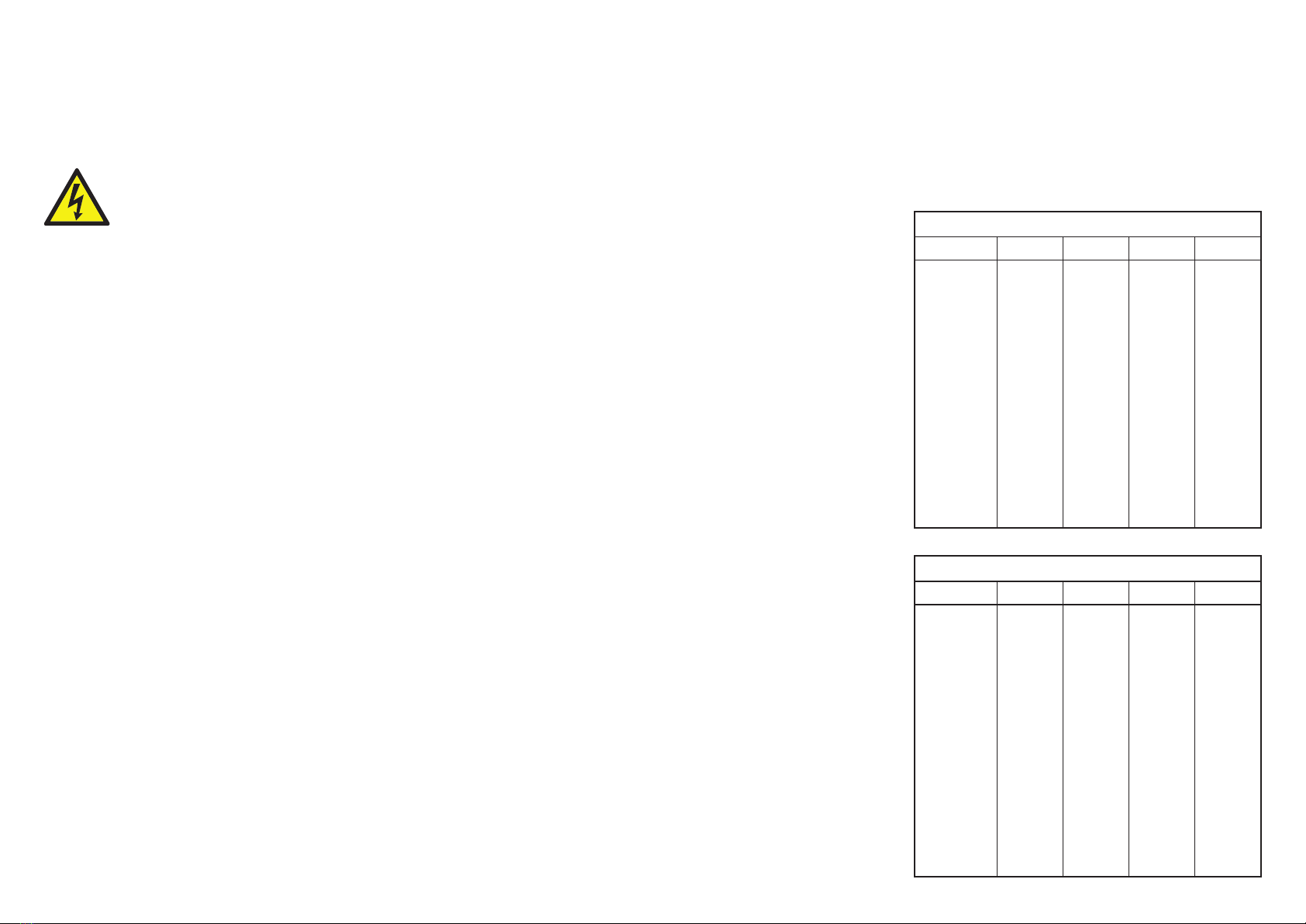
SIX MONTHS CHECK
DATE LIGHT TEST LED TEST LAMP CHECK TESTER
TWELVE MONTHS CHECK
DATE LIGHT TEST LED TEST LAMP CHECK TESTER