6
If led-light failure is flashing intermittently the device is verifying the failure. In case of being permanently bright the failure is definitive.
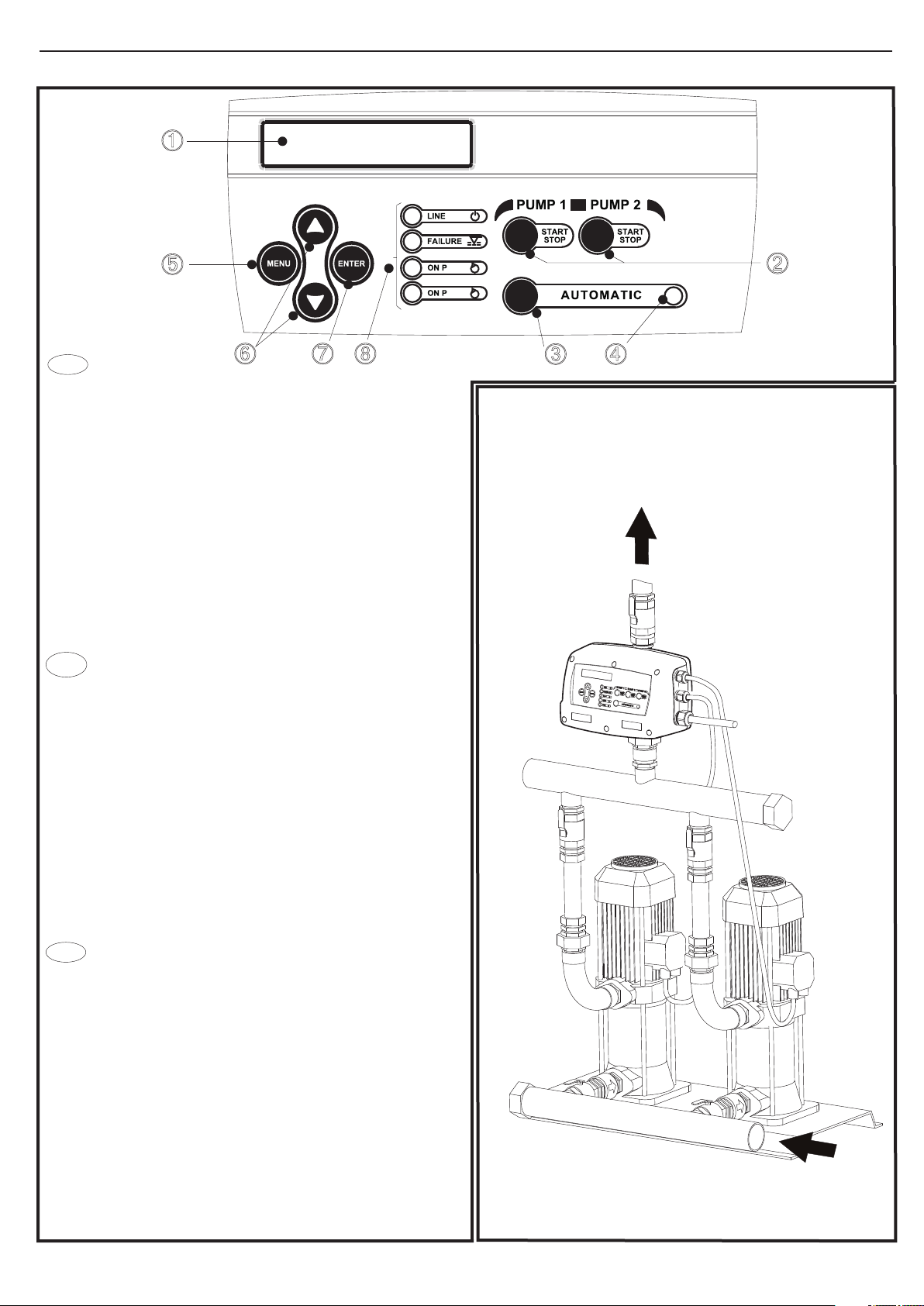
In case of simultaneous alarms, quit the automatic mode and go to manual mode, pressing the pushbutton "AUTOMATIC". Using key pwill be displayed the succesive alarms. If you want to exit from the menu press ENTER. To
restore manually a device turned off by an alarm quit the automatic mode by pressing the pushbutton "AUTOMATIC ON/OFF" and then press ENTER.
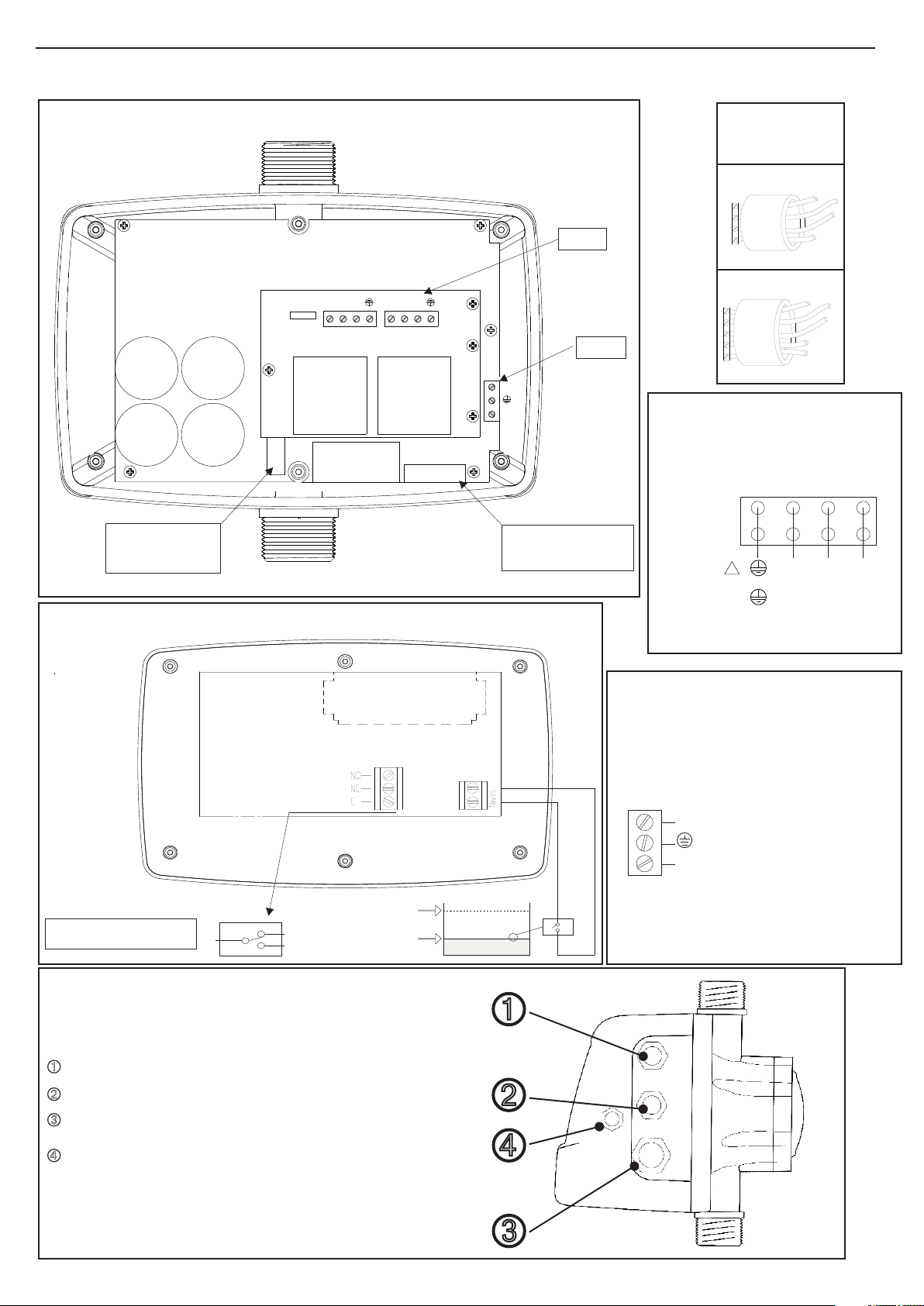
This device has a volt-free contact with 1A of maximum intensity for the transmission of diferent types of signal (optical, acoustics, etc). See connections diagram Fig. 3.
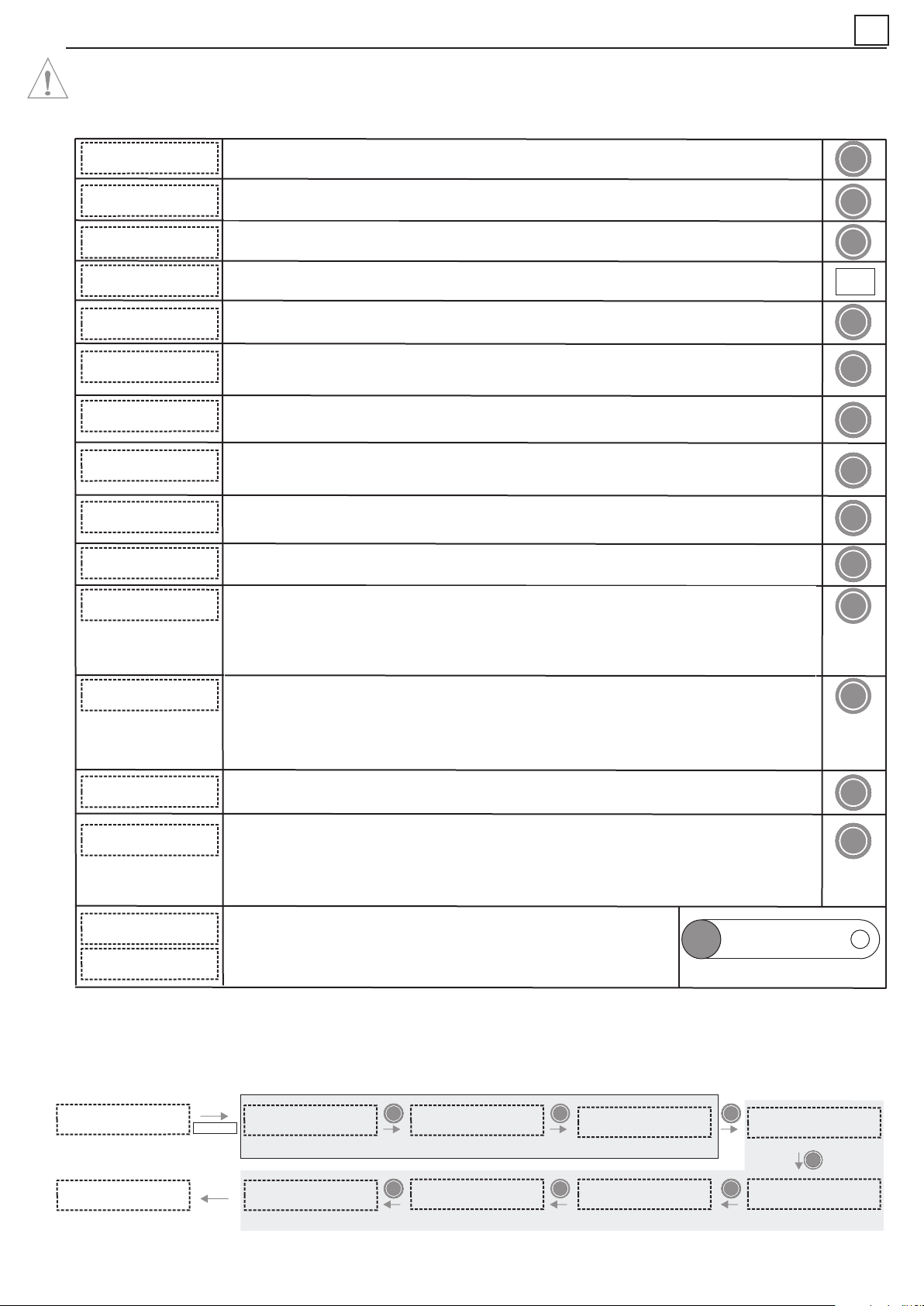
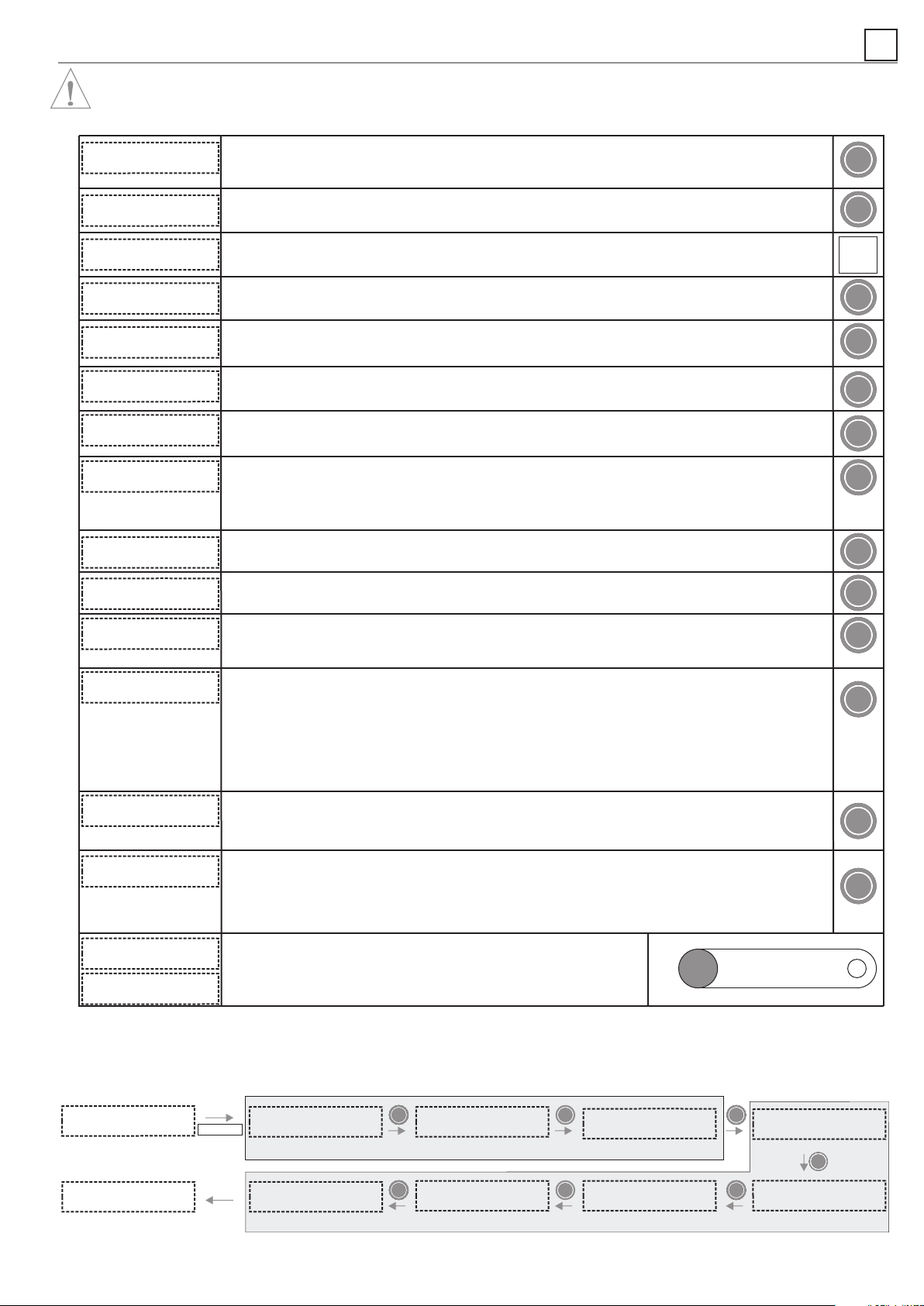
DESCRIPTION SYSTEM REACTION SOLUTION
If the system detects dry running during more than
10 seconds, it will stop the pumps and the ART will
be activated. If there is installed an external device
as a level sensor, when this one detects lack of
water it will stop inmediately the pumps.The system
will show the message of lack of water.
The system pumps are protected against over
currents by mean of the intensity values established
in the installation menu. These over currents are
produced generally by dysfunctions in the pump or
in the electric supply.
This device has an electronic safety system against
short circuits for the pumps as well as a 20Afuse.
The presure transducer damages are showed in the
LCD screen.
The system has a cooling device to keep the
INVERTER in optimum operating conditions. If an
excessive temperature is reached, the own system
leaves it out of service and as consequence the
pumps.
The system has an electronic system for protection
against short circuits as well as a fuse of 20A.
The system has an electronic safety system against
overvoltages.
This device has an electronic safety system against
too low supply voltages.
The temperature sensor is damaged, it can´t
measure the instantaneous temperature or the
measuring is wrong.
EEPROM memory damaged.
Blank screen.
After 5 minutes ART system will start again the first pump during 30 seconds, trying to restore
the system. In case of persistent dry running, it will try it again every 30 minutes for 24 hours. If
after all these cycles , the system still detects lack of water, pumps will remain permanently off
until the damage will be repaired.
In the case of having an external level sensor, if this device detects enough level of water again,
it will start up the system automatically.
When detecting the thermal failure, the affected pump will be automatically excluded. The
operating mode EW (Emergency Working) is activated and the other pump will continue
operating until the system will be pressurized. With a new operating cycle ( pump stopped and
new demand of water) the system will try again to restart the excluded pump. The control
system will carry out 4 attempts in this circumstances. If the system remain locked after the 4th
attempt, the damaged pump will remain definitively out of order and system will continue
operating provisionally in EW mode until the damage could be repaired.
The operating mode EW (Emergency Working) is activated allowing the system to continue
running.
The device operation is interrupted.
The device operation is stopped.
The pump remains stopped for 10". Then it starts again - 4 attempts. If the problem is not
solved, the pump will remain definitively out of order.
In case of overvoltage the system remains stopped during some seconds. Then the operation is
restored.
In case of undervoltage the system remains stopped until an adequate value of voltage is
reached. In this case the system is automatically restored.
The device operation is stopped.
The device operation is stopped.
There is a lack of water in the inlet, it has been activated the safety system:
you should verify the feeding of the hydraulic network. The pumps can be
primed using the push-button START/STOP ( the led light AUTOMATIC
should be off, if it is not, press the push-button to disable it).
Verify the state of the pump, for example the impeller could be blocked.
Verify intensity values introduced in the configuration menu ( it is always
recommended to introduce intensity values 15% over the nominal pump
intensity).
Verify if there is any fuse damaged.
Once the problem have been solved the operation will be restored going to the
INSTALLATION menu (see the chapter configuration) and insert suitable
intensity values.
Verify the wound of the motor and the pump consumption should be checked.
Once the problem have been solved the operation will be restored going to the
INSTALLATION menu (see the chapter configuration) and input the adequate
intensity values. Verify the 20 A fuses (see diagram 3), in case of being melt,
contact with technical service.
Contact with technical service.
Verify that the temperature of the water should be under 40 ºC and the
temperature environment should be under 55 ºC. Contact with technical service.
Check the pumps, if the problem persists, contact the technical service.
Check the electric supply.
Check the electric supply.
Contact with technical service.
Contact with technical service.
Check the electric supply 230 V. In case of being in right conditions, the general
fuse (20A), located in the main plate (fig 3) should be verified.
SUMMARY OF ALARMS
TYPE
BLANK SCREEN
A1
DRY RUNNING
A2
OVER-INTENSITY P2_4
A3
DISCONNECTED PUMP
A5
TRANSDUCER
A6
EXCESSIVE TEMP.
A7
SHORTCIRCUIT
A8
OVERVOLTAGE
A9
UNDERVOLTAGE
A10
T SENSOR
A11
EEPROM