ComfortFlame.US.com 900553-00NC6
AIR FOR COMBUSTION AND VENTILATION
PRODUCT FEATURES
OPERATION
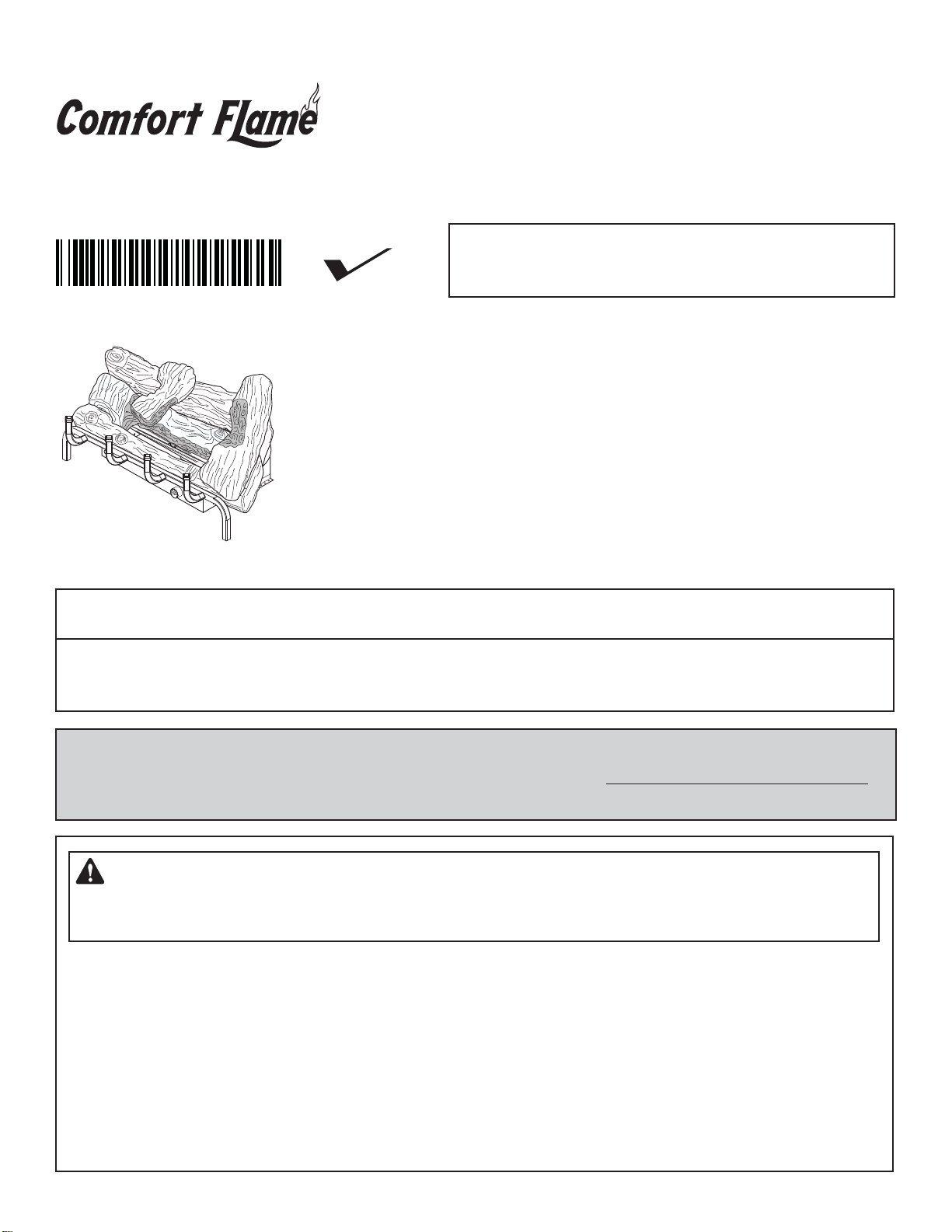
This heater is clean burning. It requires no
outside venting. There is no heat loss out a
vent or up a chimney. Heat is generated by
both realistic flames and glowing coals. This
heater is designed for vent-free operation
with flue damper closed. It has been tested
and approved to theANSI Z21.11.2 standard
for unvented heaters. State and local codes
in some areas prohibit the use of vent-free
heaters.
SAFETY DEVICE
Thisheaterhas a pilot withan Oxygen Deple-
tionSensing (ODS) safetyshutoffsystem.The
ODS/pilot is a required feature for vent-free
room heaters. The ODS/pilot shuts off the
heater if there is not enough fresh air.
PIEZO IGNITION SYSTEM
Thisheater has apiezoigniter.Thissystem re-
quiresno matches, batteries orother sources
to light heater.
WARNING: This heater shall
notbeinstalledinaroomorspace
unless the required volume of
indoorcombustionairisprovided
by the method described in the
National Fuel Gas Code, ANSI
Z223.1/NFPA54,theInternational
FuelGasCode,orapplicablelocal
codes.Readthefollowinginstruc-
tions to ensure proper fresh air
for this and other fuel-burning
appliances in your home.
Today’s homes are built more energy efficient
thanever. New materials,increasedinsulation
and new construction methods help reduce
heat loss in homes. Homeowners apply
weather strip and caulk around windows and
doors to keepthe cold air outand the warm air
in. During heating months, homeowners want
their homes as airtight as possible.
While it is good to make your home energy
efficient, your home needs to breathe. Fresh
air must enter your home.All fuel-burning ap-
pliancesneed fresh air forproper combustion
and ventilation.
Exhaust fans, some fireplaces, clothes dryers
and some fuel-burning appliances draw air
from the house to operate. You must provide
adequate fresh air for these appliances. That
will ensure proper venting of vented fuel-
burning appliances.
PROVIDING ADEQUATE
VENTILATION
Thefollowingare excerpts from NationalFuel
Gas Code, ANSI Z223.1/NFPA 54, Air for
Combustion and Ventilation.
All spaces in homes fall into one of the three
following ventilation classifications:
1. Unusually Tight Construction
2. Unconfined Space
3. Confined Space
The information on Pages 6 through 8 will
help you classify your space and provide
adequate ventilation.
Unusually Tight Construction
The air that leaks around doors and windows
may provide enough fresh air for combustion
and ventilation. However, in buildings of un-
usually tight construction, you must provide
additional fresh air.
Unusually tight construction is defined as
construction where:
a. walls and ceilings exposed to the out-
side atmosphere have a continuous
water vapor retarder with a rating of
one perm (6 x 10-11 kg per pa-sec-m2) or
less with openings gasketed or sealed
and
b. weather stripping has been added on
openable windows and doors and
c. caulking or sealants are applied to
areas such as joints around window
and door frames, between sole plates
and floors, between wall-ceiling joints,
between wall panels, at penetrations
for plumbing, electrical and gas lines
and at other openings.
If your home meets all three criteria above,
you must provide additional fresh air. See
Ventilation Air From Outdoors, Page 8.
If your home does not meet all three criteria
above,proceed to DeterminingFresh-AirFlow
For Heater Location, Page 7.