•TANK EXPLOSION WARNINGS •
Explosive failure of the tank, its components, or attachements to it, could result in
serious injury to self or others, or property damage from the following conditions:
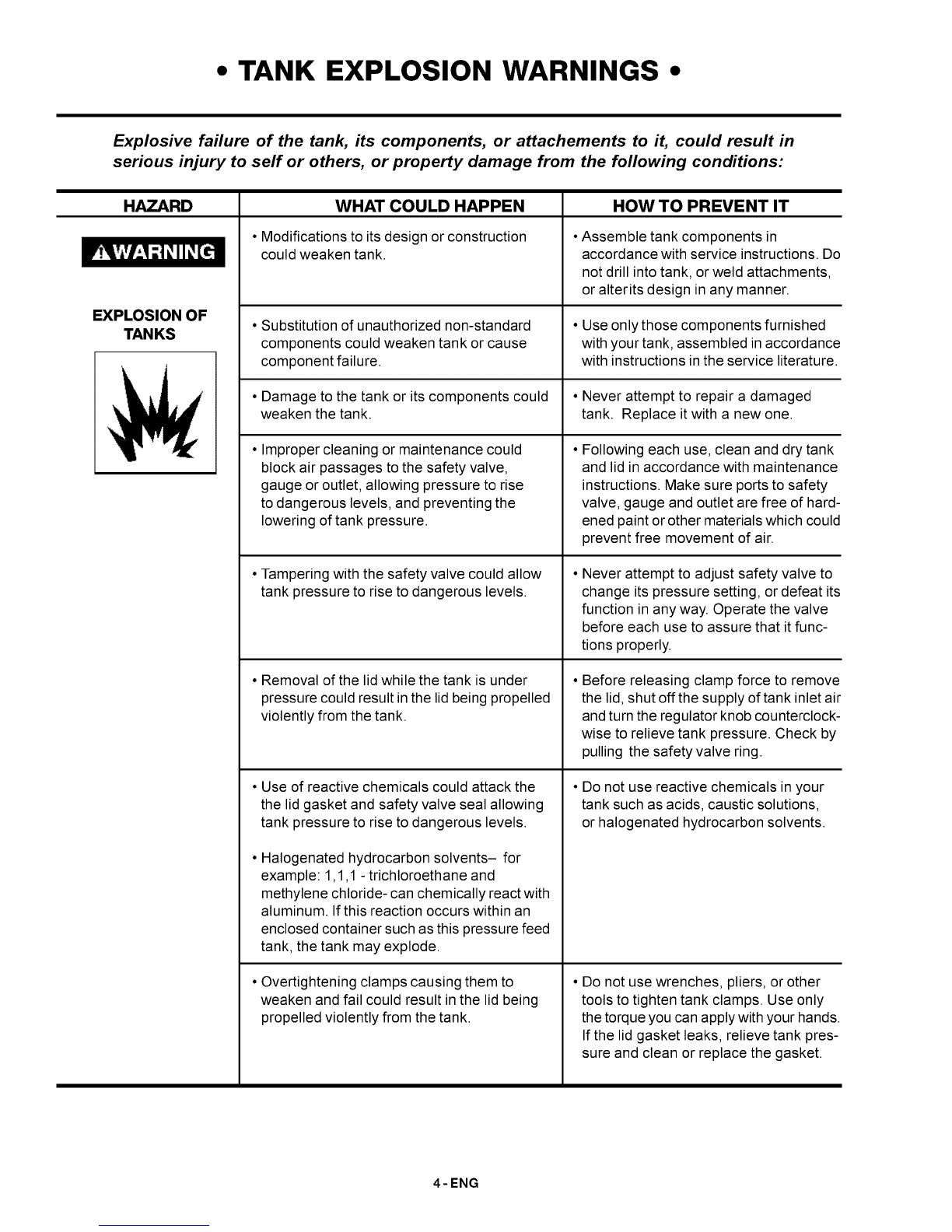
HAZARD
EXPLOSION OF
TANKS
WHAT COULD HAPPEN
•Modifications to its design or construction
could weaken tank.
• Substitution of unauthorized non-standard
components could weaken tank or cause
component failure.
• Damage to the tank or its components could
weaken the tank.
• Improper cleaning or maintenance could
block air passages to the safety valve,
gauge or outlet, allowing pressure to rise
to dangerous levels, and preventing the
lowering of tank pressure.
• Tampering with the safety valve could allow
tank pressure to rise to dangerous levels.
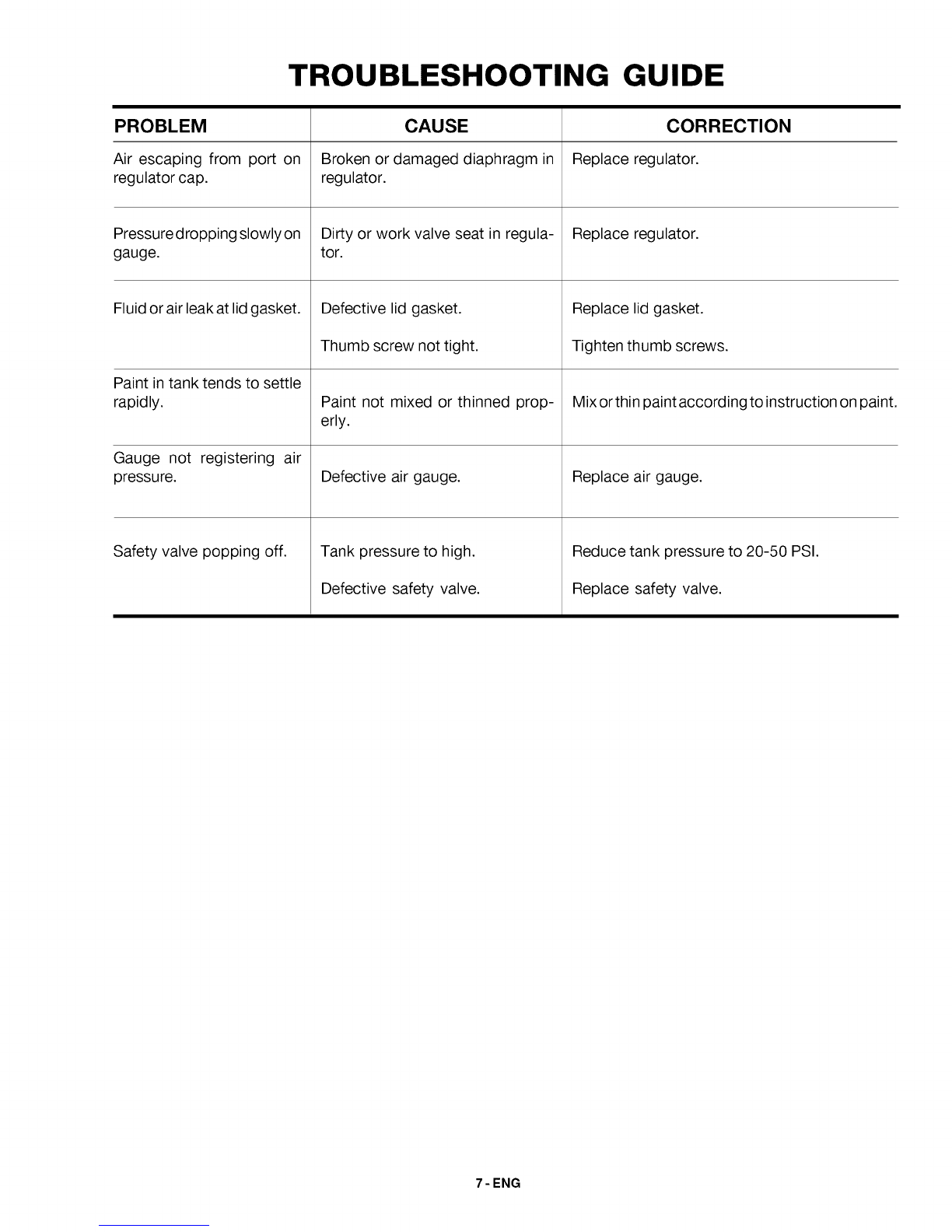
• Removal of the lid while the tank is under
pressure could result in the lid being propelled
violently from the tank.
• Use of reactive chemicals could attack the
the lid gasket and safety valve seal allowing
tank pressure to rise to dangerous levels.
• Halogenated hydrocarbon solvents- for
example: 1,1,1 - trichloroethane and
methylene chloride- can chemically react with
aluminum. If this reaction occurs within an
enclosed container such as this pressure feed
tank, the tank may explode.
• Overtightening clamps causing them to
weaken and fail could result in the lid being
propelled violently from the tank.
HOW TO PREVENT IT
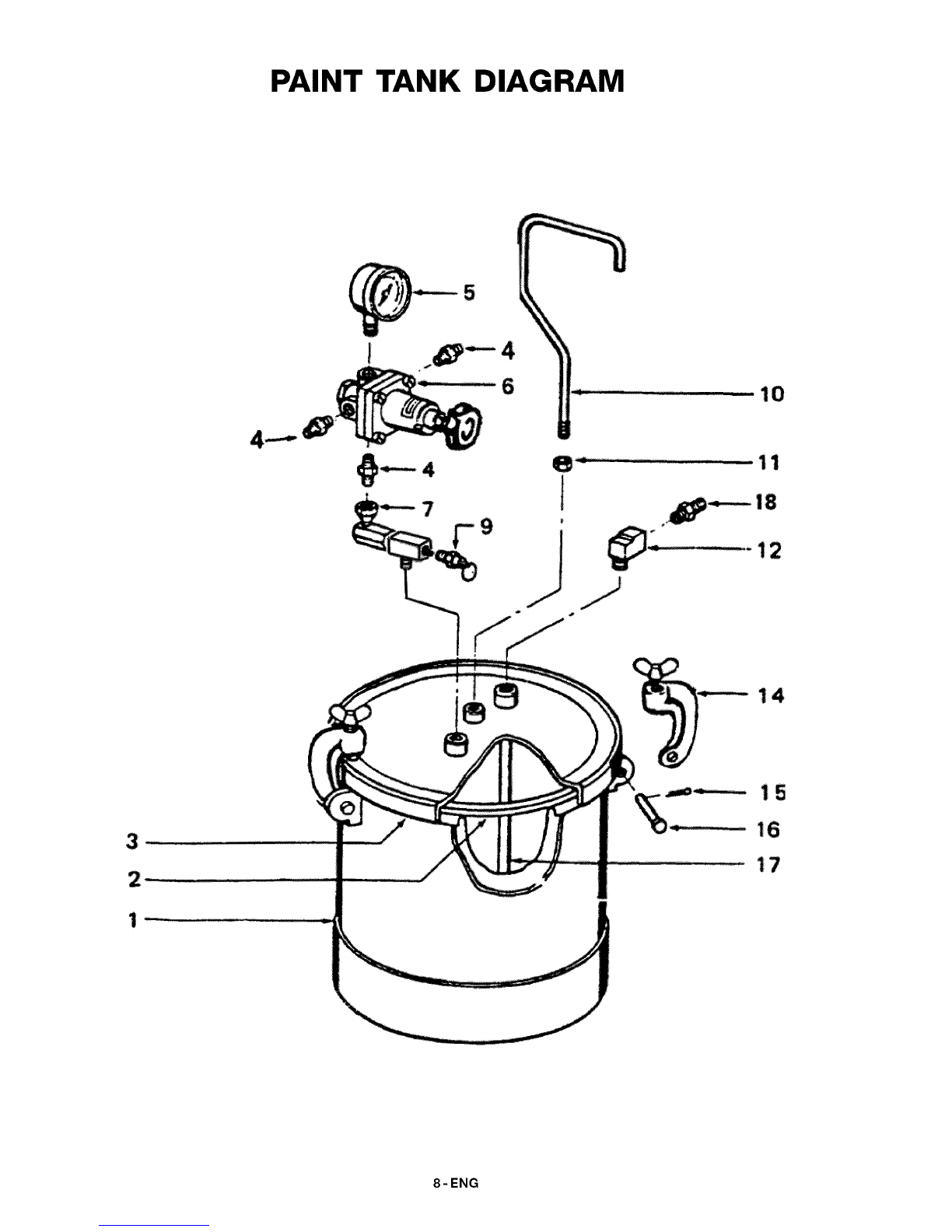
Assemble tank components in
accordance with service instructions. Do
not drill into tank, or weld attachments,
or alterits design in any manner.
• Use only those components furnished
with your tank, assembled in accordance
with instructions in the service literature.
• Never attempt to repair a damaged
tank. Replace it with a new one.
Following each use, clean and dry tank
and lid in accordance with maintenance
instructions. Make sure ports to safety
valve, gauge and outlet are free of hard-
ened paint or other materials which could
prevent free movement of air.
Never attempt to adjust safety valve to
change its pressure setting, or defeat its
function in any way. Operate the valve
before each use to assure that it func-
tions properly.
Before releasing clamp force to remove
the lid, shut off the supply of tank inlet air
and turn the regulator knob counterclock-
wise to relieve tank pressure. Check by
pulling the safety valve ring.
• Do not use reactive chemicals in your
tank such as acids, caustic solutions,
or halogenated hydrocarbon solvents.
• Do not use wrenches, pliers, or other
tools to tighten tank clamps. Use only
the torque you can apply with your hands.
If the lid gasket leaks, relieve tank pres-
sure and clean or replace the gasket.
4- ENG