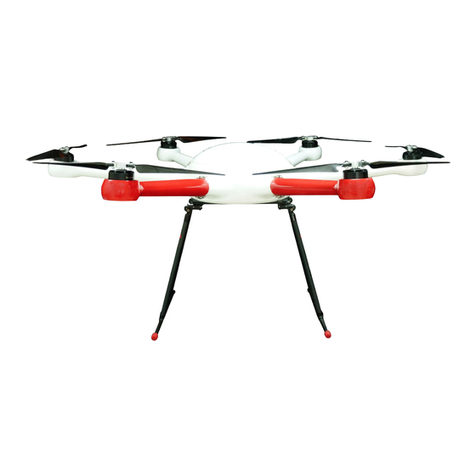
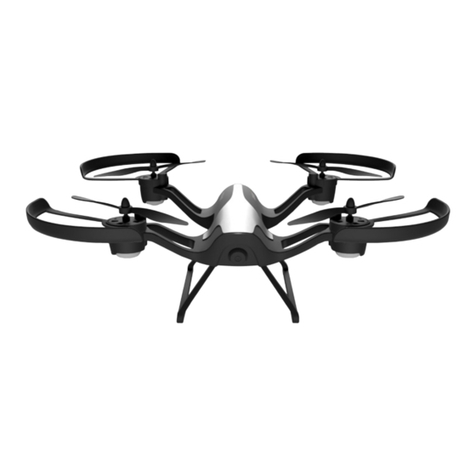
This is a quick guide for those new to Multi-Rotor craft offering some basic safety and operational procedures...and are recommended standard
operating procedures for those piloting Droidworx or any multi-rotor craft.
Please read the instructions for the relevant Flight Control electronics before proceeding. Go to the web site of your flight control system and make yourself
well acquainted with the correct procedure for the electronics installation and software operation.
Caution: never connect and start the engines for the first time with the propellers attached....and always balance your propellers; unbalanced
propellers can cause excessive vibration which may lead to material fatigue.
Note: check the orientation of the flight controller you are using (which way is front) and also the engine assignment configuration; for instance which is
engine 1,2,3 etc. and check also that your propellers, clockwise and counter clockwise, are also installed correctly before your first flight.
Before the first flight hand test your craft – arm and calibrate your electronics, hold the craft with both hands by the landing gear skids above your head
with the front facing away from, and to the front of you, make sure you are well clear of obstructions and other people. You may need the assistance of
another person for this test. Raise the throttle to around 25% and gently move the craft around the axis’ roll (tipping the craft left and right) and feel for a
steady and smooth resistance to your movements, do the same for pitch (tipping the craft forward and backward) and also yaw, rotating the craft clockwise
and anti-clockwise whilst keeping it horizontal. If the craft offers smooth resistance to your movements it will fly correctly.
Your first test flight should be in an open field in low or zero wind. A sports field (not currently in use) is a good option; choose a site with short or mown
grass. Do not takeoff from dry dusty sites. Make sure any onlookers or spectators do not gather about you…if so ask them to move away from you in a
perimeter not less than 50m (150 feet) diameter around you.
Make sure that you have fully charged your transmitter and onboard battery packs. Make sure that the antenna of your Radio (TX) is up and correctly
positioned; make sure the receiver (RX) for your craft is well positioned within the craft and secured and that the antenna is facing downward and to the
back of your craft and not touching any part of the craft.
Place the craft on level ground and turn on your transmitter – check that you have the correct model selected on your TX.
Set the transmitter timer to about 80% of the known flight duration.
Connect the battery to your crafts FC inputs and wait for the engine controller beeps to stop.
Stand about 4m away from your craft and behind the craft with the craft facing directly away from you.
Operation and Safety
4