manuals.online logo
Brands
  1. Home
  2. •
  3. Brands
  4. •
  5. Electro-Voice
  6. •
  7. Speakers System
  8. •
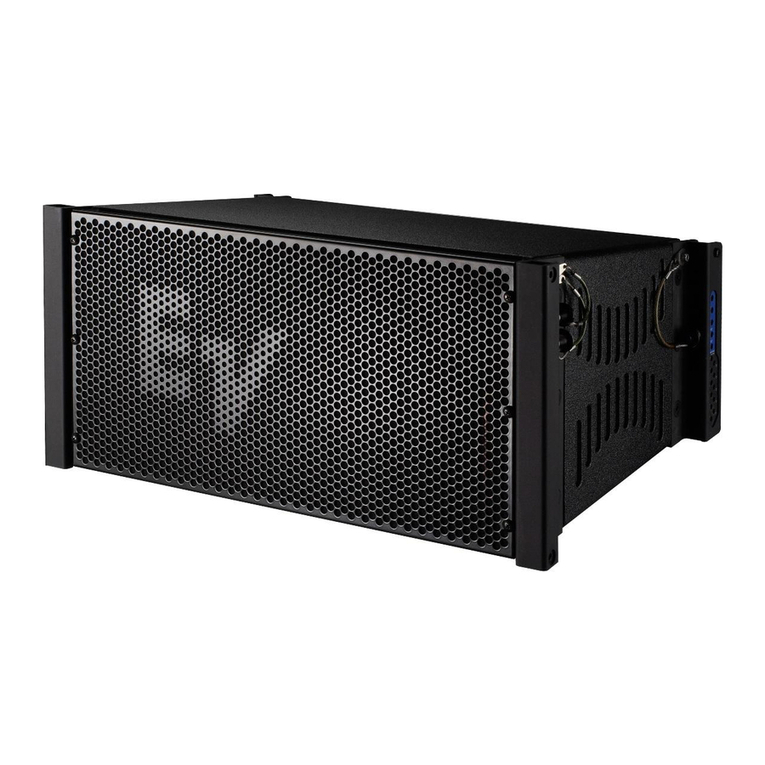
  9. Electro-Voice ELECTRO-VOICE X-Line TM Quick start guide

Electro-Voice ELECTRO-VOICE X-Line TM Quick start guide

This manual suits for next models

4

Other Electro-Voice Speakers System manuals

Electro-Voice EVERYWHERE FRI-122/64 User manual

Electro-Voice

Electro-Voice EVERYWHERE FRI-122/64 User manual

Electro-Voice PIM-152 User manual

Electro-Voice

Electro-Voice PIM-152 User manual

Electro-Voice E-V Seven Dimension Guide

Electro-Voice

Electro-Voice E-V Seven Dimension Guide

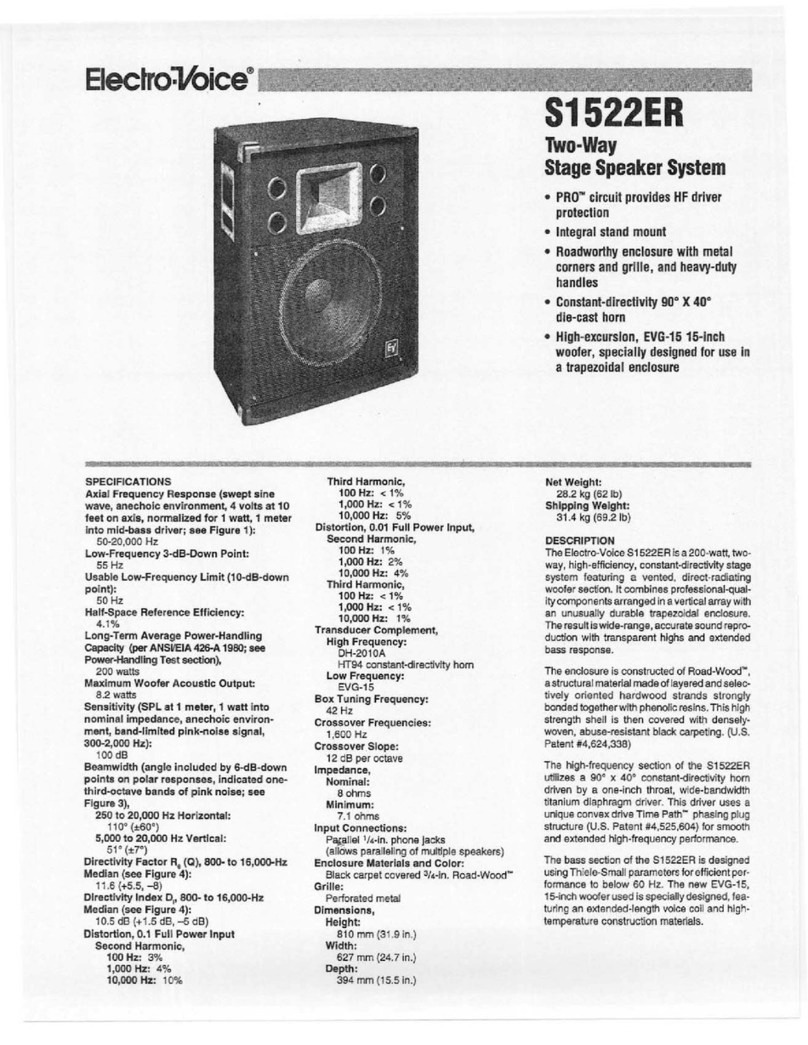
Electro-Voice S1522ER User manual

Electro-Voice

Electro-Voice S1522ER User manual

Electro-Voice LF118 User manual

Electro-Voice

Electro-Voice LF118 User manual

Electro-Voice FRi+ 152/66 User manual

Electro-Voice

Electro-Voice FRi+ 152/66 User manual

Electro-Voice SonicXS User manual

Electro-Voice

Electro-Voice SonicXS User manual

Electro-Voice FRI2082WHT User manual

Electro-Voice

Electro-Voice FRI2082WHT User manual

Electro-Voice E-V 14A Dimension Guide

Electro-Voice

Electro-Voice E-V 14A Dimension Guide

Electro-Voice MTH-4/42B User manual

Electro-Voice

Electro-Voice MTH-4/42B User manual

Electro-Voice Wide-Range Two-Way Speaker PRO-8A User manual

Electro-Voice

Electro-Voice Wide-Range Two-Way Speaker PRO-8A User manual

Electro-Voice SL12-2H User manual

Electro-Voice

Electro-Voice SL12-2H User manual

Electro-Voice T251+ User manual

Electro-Voice

Electro-Voice T251+ User manual

Electro-Voice FRI+152/94 User manual

Electro-Voice

Electro-Voice FRI+152/94 User manual

Electro-Voice TL550D User manual

Electro-Voice

Electro-Voice TL550D User manual

Electro-Voice FRX-122 User manual

Electro-Voice

Electro-Voice FRX-122 User manual

Electro-Voice Musicaster 100 User manual

Electro-Voice

Electro-Voice Musicaster 100 User manual

Electro-Voice EVU-2062/95 User manual

Electro-Voice

Electro-Voice EVU-2062/95 User manual

Electro-Voice PI115L User manual

Electro-Voice

Electro-Voice PI115L User manual

Electro-Voice FR200 User manual

Electro-Voice

Electro-Voice FR200 User manual

Electro-Voice FRi+ 122/94 User manual

Electro-Voice

Electro-Voice FRi+ 122/94 User manual

Electro-Voice SH-1810 User manual

Electro-Voice

Electro-Voice SH-1810 User manual

Electro-Voice TL3512 User manual

Electro-Voice

Electro-Voice TL3512 User manual

Electro-Voice TL606DMT User manual

Electro-Voice

Electro-Voice TL606DMT User manual

Popular Speakers System manuals by other brands

Monster MT-SB21 user manual

Monster

Monster MT-SB21 user manual

Monacor ESP-76AB/ WS manual

Monacor

Monacor ESP-76AB/ WS manual

Samsung HW-J430 user manual

Samsung

Samsung HW-J430 user manual

WILSON AUDIO WATT owner's manual

WILSON AUDIO

WILSON AUDIO WATT owner's manual

Hisense AX3125H user manual

Hisense

Hisense AX3125H user manual

EisSound KBSound iSelect user manual

EisSound

EisSound KBSound iSelect user manual

Boston Acoustics VRi793 manual

Boston Acoustics

Boston Acoustics VRi793 manual

Sven SPS-707bL Operation manual

Sven

Sven SPS-707bL Operation manual

Monacor DSM-26LAN instruction manual

Monacor

Monacor DSM-26LAN instruction manual

JVC CS-SR100 instructions

JVC

JVC CS-SR100 instructions

Samsung HW-C450 user manual

Samsung

Samsung HW-C450 user manual

TaoTronics evatronic ET-SK011 user guide

TaoTronics

TaoTronics evatronic ET-SK011 user guide

JVC HX-D7C instructions

JVC

JVC HX-D7C instructions

Pyle PBMSPG190 user manual

Pyle

Pyle PBMSPG190 user manual

Sven SPS-607 Operation manual

Sven

Sven SPS-607 Operation manual

iSP Technologies LT2 series owner's manual

iSP Technologies

iSP Technologies LT2 series owner's manual

Samsung Crystal Surround Air Track HW-F550 user manual

Samsung

Samsung Crystal Surround Air Track HW-F550 user manual

Bose Acoustimass 6 Series II owner's guide

Bose

Bose Acoustimass 6 Series II owner's guide

manuals.online logo
manuals.online logoBrands
  • About & Mission
  • Contact us
  • Privacy Policy
  • Terms and Conditions

Copyright 2025 Manuals.Online. All Rights Reserved.

ELECTRO-VOICE®
X-Line
TM
Rigging Manual
X-Line Rigging Manual
ELECTRO-VOICE®
X-Line
TM
Rigging Manual
1
Table of Contents
Rigging-Safety Warning.............................................................................................................................................. 2
0 Introduction .............................................................................................................................................................. 3
1 X-Line Rigging System ............................................................................................................................................ 4
1.1 Overview of the X-Line lying System ..................................................................................................... 4
1.2 Enclosure Rigging Hardware Details ....................................................................................................... 6
1.3 Rear Rigging Hinge Details ................................................................................................................... 10
1.4 ront Rigging Strap Details .................................................................................................................... 13
1.5 Xvbp Pull-Up Bar Details ....................................................................................................................... 16
1.6 ATM X-Line Grid Details ........................................................................................................................ 17
1.7 RS-1B Double-Stud Rigging itting ....................................................................................................... 18
2 X-Line Rigging and lying Techniques .................................................................................................................. 19
2.1 Array Considerations ............................................................................................................................. 19
2.2 Adjusting the Vertical Angles of the Enclosures..................................................................................... 19
2.3 Deciding Whether to Use an Xvhg or Xvhl at the Grid ........................................................................... 21
2.4 Rigging an Array with Boxes Using X-Line Dollies ................................................................................ 22
2.5 Pull-Up Techniques ............................................................................................................................... 25
3 Rigging-Strength Ratings, Safety actors, and Special Safety Considerations ..................................................... 26
3.1 Working-Load Limit (WLL) and Safety actors ...................................................................................... 26
3.2 Structural Rating Overview .................................................................................................................... 26
3.3 Simplified Structural-Rating Guidelines ................................................................................................. 27
3.4 Complex Structural-Rating Analysis ...................................................................................................... 30
3.5 Wind Loading ......................................................................................................................................... 38
3.6 Electro-Voice Structural-Analysis Procedures ....................................................................................... 38
4 Rigging Inspection and Precautions ...................................................................................................................... 39
References ............................................................................................................................................................... 41
Notes ........................................................................................................................................................................ 42
ELECTRO-VOICE®
X-Line
TM
Rigging Manual
2
Rigging-Safety Warning
This document details general rigging practices appropriate to the entertainment industry, as they
would apply to the rigging of Electro-Voice X-Line loudspeaker systems. It is intended to
familiarize the reader with standard rigging hardware and techni ues for suspending X-Line
loudspeaker systems overhead. Only persons with the knowledge of proper hardware and safe
rigging techni ues should attempt to suspend any sound systems overhead. Prior to suspending
any Electro-Voice X-Line loudspeaker systems overhead, it is essential that the user be familiar
with the strength ratings, rigging techni ues and special safety considerations outlined in this
manual. The rigging techni ues and practices recommended in this manual are, of necessity, in
general terms to accommodate the many variations in loudspeaker arrays and rigging
configurations. As such, the user is expressly responsible for the safety of all specific X-Line
loudspeaker array designs and rigging configurations as implemented in practice.
All the general rigging material contained in this manual is based on the best available
engineering information concerning materials and practices, as commonly recognized in the
United States, and is believed to be accurate at the time of the original printing. As such, the
information may not be directly applicable in other countries. Furthermore, the regulations and
re uirements governing rigging hardware and practices may be superseded by local regulations.
It is the responsibility of the user to ensure that any Electro-Voice loudspeaker system is
suspended overhead in accordance with all current federal, state and local regulations.
All specific material concerning the strength ratings, rigging techni ues and safety considerations
for the X-Line loudspeaker systems is based on the best available engineering information
concerning the use and limitations of the products. Electro-Voice continually engages in testing,
research and development of its loudspeaker products. As a result, the specifications are subject
to change without notice. It is the responsibility of the user to ensure that any Electro-Voice
loudspeaker system is suspended overhead in accordance with the strength ratings, rigging
techni ues and safety considerations given in this document and any manual update notices. All
non-Electro-Voice associated hardware items necessary to rig a complete X-Line loudspeaker
array (grids, chain hoists, building or tower supports and miscellaneous mechanical components)
are the responsibility of others.
Electro-Voice
July, 2002
The exclamation point within an equilateral triangle is intended to alert
the user to the presence of important operating and maintenance
(servicing) instructions in the literature accompanying the product.
ELECTRO-VOICE®
X-Line
TM
Rigging Manual
3
0. Introduction
The X-Line loudspeaker systems represent an important step in line-array technology for large-
scale sound reinforcement. The individual loudspeaker drivers, acoustic lenses, acoustic
waveguides, enclosures and rigging hardware were all designed specifically for the X-Line
product line to not only achieve the highest acoustic output with the highest fidelity, but also to
produce a precise wavefront from each element to achieve state-of-the-art line-array
performance. A brief description of the product line is included below.
Xvls: Three-way, LF/MB/HF loudspeaker system with a 90°H x 5.0°V coverage pattern. The
system includes two EVX155Plt 15-inch (381-mm) LF drivers, two ND08 8-inch (203-mm) MB
drivers and three ND6-16 3-inch (76-mm) HF drivers. The Xvls utilizes the standard rectangular
X-Line shell with rigging, and may be rigged or stacked right-side-up or upside-down for mirror
image arrays.
Xvlt: Three-way, LF/MB/HF loudspeaker system with a 120°H x 8.5°V coverage pattern. The
system includes two EVX155Plt 15-inch (381-mm) LF drivers, two ND08 8-inch (203-mm) MB
drivers and three ND6-16 3-inch (76-mm) HF drivers. The Xvlt utilizes a trapezoidal enclosure with
rigging that has the same outside dimensions as the rectangular X-Line shell. The enclosure is
trapezoidal in the vertical plane (with a 5.0° total included angle) to minimize space between
boxes with greater vertical splay angles. The Xvlt enclosures may be rigged or stacked right-side-
up or upside-down for mirror image arrays.
Xsub: Subwoofer loudspeaker system with two EVX180B 18-inch (457-mm) woofers. The Xsub
utilizes the standard rectangular X-Line shell with rigging, and may be rigged or stacked right-
side-up or upside-down for mirror image arrays.
Xfil1 & Xfil2: Three-way, LF/MB/HF downfill loudspeaker systems with a 120°H x 40°V coverage
pattern. The system includes two EVX155 15-inch (381-mm) LF drivers, two ND08 8-inch (203-
mm) MB drivers and two ND6-16 3-inch (76-mm) HF drivers. The Xfil1 and Xfil2 utilizes a front-
slanted enclosure with rigging that has the same outside dimensions as the rectangular X-Line
shell. The enclosure slant allows for maximum downward coverage with a minimum space
between it and the enclosure above. The Xfil systems may not be turned upside down so the Xfil1
and Xfil2 are mirror image systems. The Xfil1 has the HF on the right, while the Xfil2 has the HF
on the left.
ELECTRO-VOICE®
X-Line
TM
Rigging Manual
4
1. X-Line Rigging System
1.1 Overview of the X-Line Flying System
The X-Line loudspeaker systems have been designed to construct acoustic line arrays. Acoustic
line arrays typically consist of independent columns of loudspeaker systems. Additional columns
are sometimes added to cover different seating sections of a venue. Unlike cluster systems, when
multiple line arrays are used, they are physically separated to minimize the acoustic overlap. This
simplifies the rigging system.
The X-Line loudspeaker enclosures utilize a hinged rigging system that makes constructing arrays
easy, predictable and repeatable. This rigging concept allows arrays to be constructed with
minimal spacing between enclosures. The enclosures are hinged at the back corners using
rigging hardware specially designed for the X-Line system. Adjustable rigging straps are installed
at the front of the enclosure allowing the space between the front corners to be adjusted; hence,
adjusting the relative angle between the enclosures.
A basic array is shown in Figure 1 that illustrates the integral components that make up a typical
X-Line flying system. All of the flying X-Line loudspeaker systems utilize horizontal rigging-track
hardware on the back of the enclosure (at both the top and bottom) and vertical rigging-track
hardware on the front of the enclosures (at both the left and right sides).
Figure 1 illustrates an array column suspended with a grid. Like the loudspeaker systems, the grid
utilizes horizontal rigging-track hardware at the back and vertical rigging-track hardware at the
front like that on the enclosures. The top enclosure is secured to the grid with two uick-release
Xvhg grid hinges at the rear, and two uick-release Xvsg short chain rigging straps at the front.
The grid hinge has only one possible vertical attachment position on both the enclosure and the
grid. The front straps, however, have multiple vertical attachment positions to choose from on the
enclosure and one possible vertical attachment position on the grid. The grid hinges allow the
enclosure to pivot from its top back corner. The vertical angle of the top enclosure, relative to the
grid, is set by the linear position of the front rigging straps in the track on the front of the enclosure
and on the grid.
The second enclosure from the top, shown in Figure 1, is linked to the top enclosure with two
uick-release Xvhl linking hinges at the rear and two uick-release Xvsl long chain rigging straps
at the front. The linking hinges allow the lower enclosure to pivot from the back corner of the top
enclosure. The vertical angle of the bottom enclosure, relative to the top enclosure, is set by the
linear position of the front rigging straps in the track on the front of the top and bottom
enclosures. Additional enclosures may be linked together in the same fashion, as long as the
working-load limits for any of the enclosures, rigging hinges or straps are not exceeded. When
an Xfil1 or Xfil2 downfill is suspended from the bottom of the array, special-length Xvsd downfill
rigging straps are used at the front, while the standard Xvhl linking hinges are used at the rear.
An Xvbp pull-up bar may be attached to the rear rigging of the bottom box to adjust the vertical
tilt angle of the entire array.
ELECTRO-VOICE®
X-Line
TM
Rigging Manual
5
Figure 1:
Typical X-Line Flying System
Xvhg or Xvhl
Rigging Hinges
Xvsg
Rigging Strap
Xvsl
Rigging Straps
Xvsd
Rigging Strap
Optional Xvpb
Pull-Up Bar
ELECTRO-VOICE®
X-Line
TM
Rigging Manual
6
The grid is suspended by two hoist motors that are attached to two pickup points on the top of the
grid  one at the front and one at the back. The two grid pickup points are in line and are
adjustable front to back to help distribute the loads between the hoist motors. For smaller arrays
(8 boxes or less), two one-ton hoist motors are recommended. For larger arrays (more than 8
boxes), two two-ton hoist motors are recommended. Two one-ton hoist motors can be used;
however, the front-to-back distribution of the weight becomes much more critical than with two-ton
hoists.
Note that the weight of an array can be quite substantial and the grid, chain
hoists and building structural supports used to suspend the array must be
capable of supporting such a load with a sufficient safety factor. The reader is
directed to References section of this manual for a list of rigging references (for
background in general rigging practice) and mechanical engineering references
(for background in structural engineering analysis).
1.2 Enclosure igging Hardware Details
The X-Line loudspeaker systems have rigging at both the front and rear of the enclosures. The
Xvls, Xvlt and Xsub systems all have the same rigging hardware on both the front and rear of the
enclosures. While the Xfil1 and Xfil2 use the same rigging as the others on the rear of the
enclosures, they use different rigging at the front. Figure 2 shows key dimensions, weights and
centers of gravity for all of the X-Line loudspeaker systems. Figure 3 shows the enclosure rigging
hardware details and key dimensions.
A proprietary high-strength aluminum-alloy track is used at the rear of the enclosures near the top
and bottom for the attachment of two Xvhg rigging hinges, two Xvhl rigging hinges, two Xvhp pick-
up hinges, or one Xvbp pull-up bar. The track/bracket assembly is extruded as a single piece. One
assembly ties into the back and top of the enclosure, while a second assembly ties into the back
and bottom of the enclosure. Four high-strength, aluminum-alloy bars inside the enclosure tie the
top and bottom track/bracket assemblies together, minimizing the load applied to the enclosure
shell. The cutouts in the rear rigging track are shown in Figure 3a and 3b. The large cutout at the
end of the track is for inserting the rigging hinges. The small holes in the base of the track are for
locking the rigging hinges. The round cutouts are provided so two Electro-Voice RS-1B double-
stud swivel-ring fittings may be installed for light-duty lifting applications and for pull-ups. (The
track is also compatible with the New Haven NH32102-2 double-stud fittings.)
At the front of the Xvls, Xvlt and Xsub enclosures is another pair of proprietary high-strength,
aluminum-alloy track/bracket assemblies, which are also extruded as a single piece. One
assembly ties into the left side, top, bottom of the enclosure, while a second assembly ties into the
right side, top and bottom of the enclosure. The front track extends from the top to the bottom on
both sides of the enclosure, eliminating the load applied to the enclosure shell. On both sides of
the enclosure, the front rigging track has six cutouts near the top and bottom, as shown in Figure
3c. The triple-stud fittings on the Xvsg and Xvsl chain rigging straps may be installed at any of the
cutouts. The relative angle between a pair of enclosures (or the top enclosure and the grid) is set
by the position of the front rigging-strap fittings in the track cutouts.

ELECTRO-VOICE®
X-Line
TM
Rigging Manual
7
Figure 2a: Xvls Loudspeaker System
Figure 2b: Xvlt Loudspeaker System
13.30in
(338mm)
29.15in
(740mm)
9.73in
(247mm)
19.46in
(494mm)
49.00in
(1245mm)
Center of Gravity23.40in
(594mm)
Front View (Without rille) Front View (With rille)
Bottom View Side View
X-Line Xvls 90° x 5°
257 lbs (117 kg)
14.33in
(364mm)
29.11in
(739mm)
16.92in
(430mm)
Cent.

49.00in
(1245mm)
Center of Gravity
23.25in
(591mm)
Front View (Without rille) Front View (With rille)
Bottom View
Side View
X-Line Xvlt 120° x 8.5°
253 lbs (115 kg)
19.46in
(494mm)
8.46in
(215mm)
ELECTRO-VOICE®
X-Line
TM
Rigging Manual
8
Figure 2c: Xfil1 and Xfil2 Loudspeaker Systems
Figure 2d: Xsub Loudspeaker System
11.41in
(290mm)
29.15in
(740mm)
8.43in
(214mm)
19.46in
(494mm)
49.00in
(1245mm)
Center of Gravity
25.50in
(648mm)
Front View (Without rille) Front View (With rille)
Bottom View Side View
X-Line Xfil1 & Xfil2 120° x 40°
215 lbs (98 kg)
Xfil1 Shown. Xfil2 is Mirror Image of Xfil1.
15.40in
(391mm)
29.15in
(740mm)
9.73in
(247mm)
19.46in
(494mm)
49.00in
(1245mm)
Center of Gravity
24.50in
(622mm)
Front View (Without rille) Front View (With rille)
Bottom View
Side View
X-Line Xsub
202 lbs (92 kg)
20.10in
(511mm)
ELECTRO-VOICE®
X-Line
TM
Rigging Manual
9
Figure 3d:
Xfil1 & Xfil2 Front Rigging ith Xvsd or Xvhp Straps
39.42in
(1001mm)
CENT.
0.81in
(20.6mm)
TY .
47.38in
(1203mm)
CENT.
27.50in
(699mm)
TY .
50.50in
(1283mm)
CENT.
2.58in
(65.5mm)
TY .
Figure 3c:
Xvls, Xvlt & Xsub Front Rigging ith Xvsg, Xvsl Straps or Xvsf Fittings
Figure 3b:
Xvls, Xvlt, Xsub, Xfil1 & Xfil2 Rear Rigging ith Xvhg or Xvhp Hinges
Figure 3a:
Xvls, Xvlt, Xsub, Xfil1 & Xfil2 Rear Rigging ith Xvhl Hinges
39.42in
(1001mm)
CENT.
0.81in
(20.6mm)
TY .
8.04in
(204mm)
1.90in
(48.2mm)
TY .
1.00in
(25.4mm)
TY .
0.10in
(2.5mm)
21.80in
(554mm)
TY .